





What Is a Lectionary? A Biblical, Historical…
2 days, 2 hours ago
O Filii et Filiae (O Sons and Daughters, Let Us Sing!)
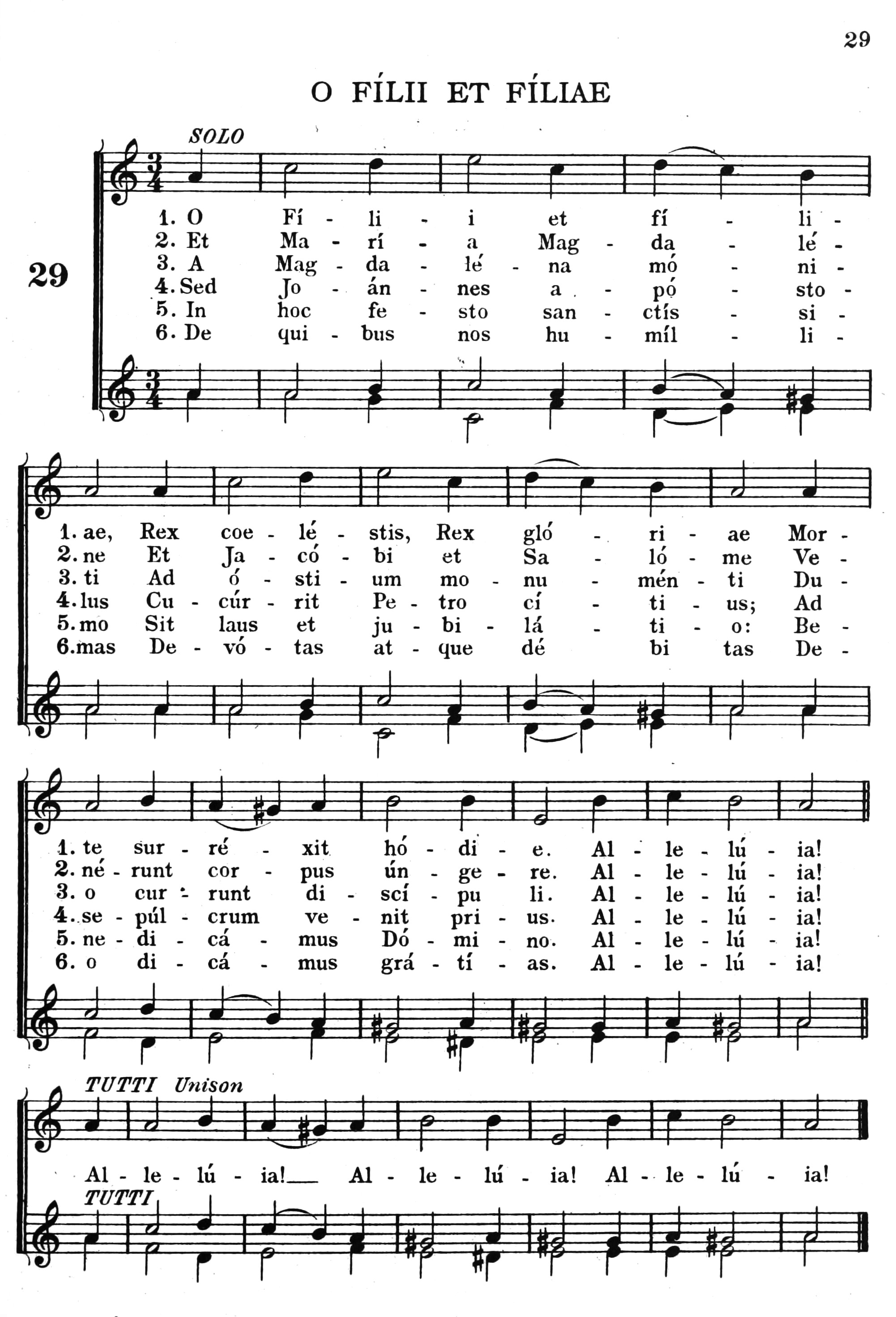
Lyrics
1. Ye sons and daughters of the Lord,
The King of heav'n,
The King adored,
From death this day Himself restored.
Alleluia.
The King of heav'n,
The King adored,
From death this day Himself restored.
Alleluia.
Chorus:
Alleluia, Alleluia, Alleluia.
Alleluia, Alleluia, Alleluia.
2. Alleluia! Alleluia! Alleluia!
All in the early morning gray,
Went holy women on their way,
To see the tomb where Jesus lay.
Alleluia!
All in the early morning gray,
Went holy women on their way,
To see the tomb where Jesus lay.
Alleluia!
3. Alleluia! Alleluia! Alleluia!
Of spices pure a precious store
In their pure hands these women bore,
To anoint the sacred Body o'er.
Alleluia!
Of spices pure a precious store
In their pure hands these women bore,
To anoint the sacred Body o'er.
Alleluia!
4. Alleluia! Alleluia! Alleluia!
Then straightway one in white they see,
Who saith, "Ye seek the Lord; but He
Is risen, and gone to Galilee."
Alleluia!
Then straightway one in white they see,
Who saith, "Ye seek the Lord; but He
Is risen, and gone to Galilee."
Alleluia!
5. Alleluia! Alleluia! Alleluia!
Now let us praise the Lord most high;
And strive His name to magnify,
On this great day, through earth and sky.
Alleluia!
Now let us praise the Lord most high;
And strive His name to magnify,
On this great day, through earth and sky.
Alleluia!
Bible Reference
Matthew 28:1-10; Mark 16:1-8; Luke 24:1-12; John 20:1-18
Lectionary & readings
Open today’s (or any date’s) assigned scriptures and find related hymns across church calendars. Useful when planning worship around this song’s themes or its Bible reference.
Hymn scripture: Matthew 28:1-10; Mark 16:1-8; Luke 24:1-12; John 20:1-18
About This Hymn
“O Filii et Filiae” is a historic Latin Easter hymn attributed to the Franciscan friar Jean Tisserand, who died in Paris in 1494. The hymn is traditionally associated with the celebration of Christ's resurrection and begins with the joyful proclamation, “O Filii et filiae,” meaning “O sons and daughters.” Hymnary identifies Jean Tisserand as the author and records the hymn in numerous hymnals in Latin and in English translations. The English translation represented in Hymnary's records includes Edward Caswall's familiar version, “Ye sons and daughters of the Lord.”
The hymn tells the Easter story through a series of short stanzas. It begins by proclaiming that the King of heaven and King of glory has risen from the dead. The women then go to the tomb early in the morning, carrying spices to anoint the body of Jesus. At the tomb they encounter the angel, who announces that they are seeking the Lord who has risen and gone before them into Galilee. The hymn therefore follows the Gospel accounts of the empty tomb and the angelic announcement of Christ's resurrection.
Each stanza returns to the repeated “Alleluia,” making the hymn especially suitable for Easter worship. The repeated acclamation transforms the narrative into an act of congregational praise. The final stanza moves from recounting the resurrection to calling the whole Church to magnify the name of the risen Lord throughout earth and heaven. The resurrection is therefore not merely remembered as a past event, but celebrated as the foundation of Christian praise and hope.
The hymn's historical use is closely connected with Easter. Hymnary's notes indicate that the Latin text was already found in a seventeenth-century French source as a “Joyous Chant for the time of Easter,” while the hymn has subsequently appeared in many Catholic and Protestant hymnals. Hymnary currently records it in 24 hymnals and identifies the text as public domain.
“O Filii et Filiae” remains one of the characteristic Easter hymns of the historic Christian tradition because of its simple proclamation of the empty tomb, its repeated Alleluias, and its call for God's people to rejoice in the risen Christ. Its central message is the victory of Jesus Christ over death and the joyful response of His people: Alleluia, Christ is risen.
From the Dictionary of Hymnology
Related terms and concepts automatically matched to this hymn.
Alleluia Hymnology
Comprehensive history of the liturgical acclamation "Alleluia," detailing its biblical origins, early Christian traditions, liturgical usage, and hymnological developments.
Read moreAeterna coeli gloria History
Hymnological profile of the fifth-century Friday Lauds hymn "Aeterna coeli gloria," detailing its manuscript sources, acrostic structure, and English translations.
Read moreAdeste fideles laeti triumphantes History
Comprehensive entry for the celebrated Christmas hymn "Adeste fideles," tracing its origin, Latin textual traditions, French and English centos, and numerous English translations.
Read moreStaff Visualizer
Open in MIDI StudioPowered by HTML MIDI PLAYER, MIDI FILE Made by Hymnal Library. · Study chords & lyrics in MIDI Studio
Want weekly hymns and devotionals?
⭐ Recommend This Hymn
Share this beautiful hymn with others
This hymn is found in these hymnals
Open the hymnal that contains this hymn:
Hymns with the same subject
More hymns about Closing of Worship, Easter, Eternal Life, Heaven, Jesus Christ, Praise, Worship
- Salvation Has Been Brought Down — Albert E. Brumley
- Christ the Lord is risen today — Charles Wesley
- Let All Together Praise Our God — Nikolaus Herman
- Because He Lives — Bill & Gloria Gaither
- How Great Thou Art — Carl Boberg
- Heaven Came Down and Glory Filled my Soul — John W. Peterson
- O God Beyond All Praising — Michael A. Perry
- Fairest Lord Jesus — Friedrich von Spee
More hymn subjects
Latest Updated Hymnals
-
Open
 The People's HymnalUpdated 12 minutes ago · 1961
 -
Open
 Book of Common Praise (BoCP1915)Updated 3 months ago · 1915
 -
Open
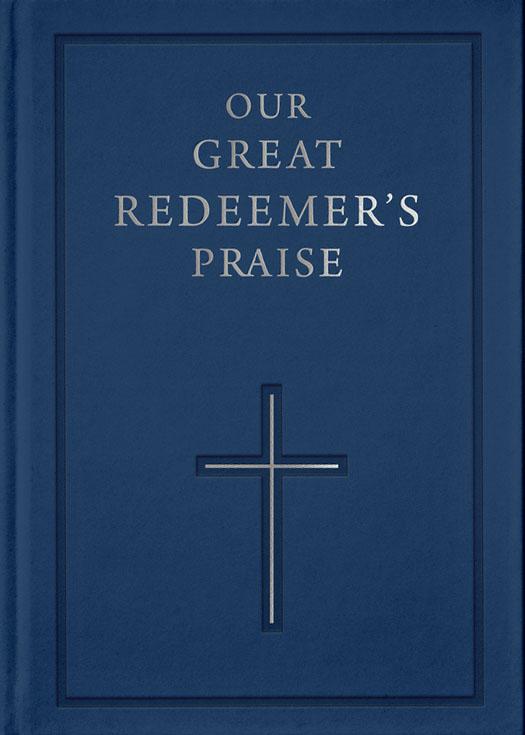 Our Great Redeemer's PraiseUpdated 4 months, 3 weeks ago · 2022
 -
Open
 The Parish Hymnal (1873)Updated 5 months ago · 1873
 -
Open
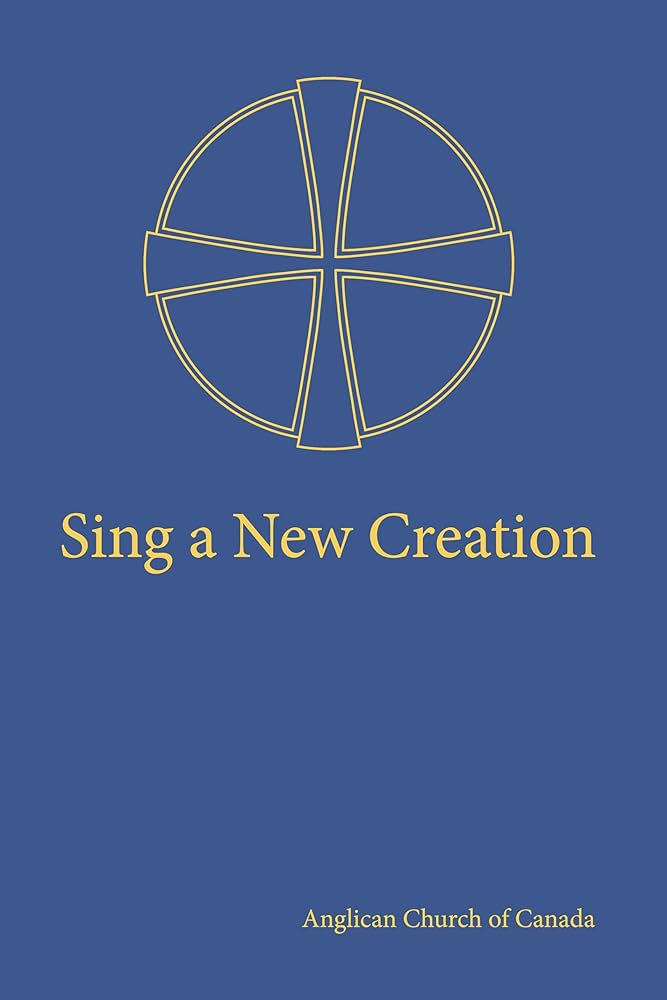 Book of Common Praise (BCP1998)Updated 5 months, 1 week ago · 1998
Hymn Information

To view the author's biography, click their name above.
MIDI File
More Hymns by Jean Tisserand
Hymns from 1450
Popular Hymns
Recent Blog Posts



Popular Blog Posts
-
 Lessons from the Book of Haggai: Putting God…4 months, 1 week ago
 -
 Easter vs Passover: How a Biblical Feast Bec…6 months, 1 week ago
 -
 The Full Story of the Birth of Jesus Christ:…10 months ago
 -
 The 30 Most Famous Christmas Hymns and Carols1 year, 1 month ago
 -
 The Story Behind the Hymn “Amazing Grace”9 months, 4 weeks ago
Visit Us on Social Media
Latest from X (Twitter)
Tweets by HymnalLibraryLatest from Facebook
Latest on YouTube
Loading latest video...
Daily Bible Verse
Disclaimer
The hymns, sheet music, MIDI files, and related content on this website are provided for educational and research purposes only.
- Public Domain: Many of the hymns featured here are in the public domain and may be freely used.
- Copyrighted Works: Some hymns may still be under copyright protection. Where applicable, permission has either been requested from the copyright owner, or the content is shared under the principles of fair use for educational purposes.
⚠️ Important Notice: If you wish to reproduce, distribute, or use any copyrighted hymn beyond personal study or educational use, you must obtain permission directly from the copyright holder. This website does not grant any rights for commercial use yet.
If there is any other question please address it to us in our Contact Page, for further assistance. Thank you for using the site. May God Bless You.