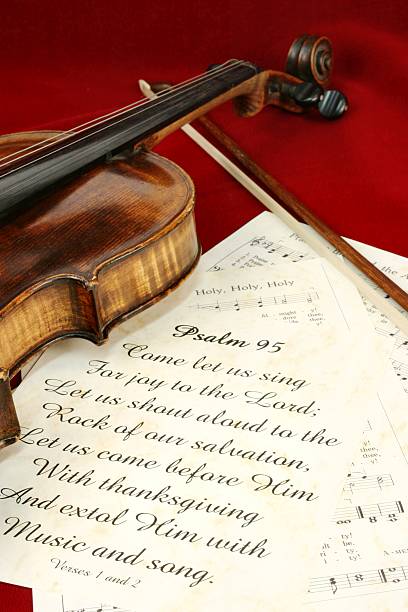
How to Create a Scripture Song From Start to Finish
A Scripture song begins with Scripture. That may sound obvious, but it is the most important principle in the entire process. A Scripture song is not simply a Christian song with a Bible verse added somewhere in the lyrics. The Word of God should be the foundation from which the song grows. The purpose is to take biblical truth and set it to music in a way that helps people remember it, understand it, sing it, and live it.
Colossians 3:16 says, “Let the word of Christ dwell in you richly in all wisdom; teaching and admonishing one another in psalms and hymns and spiritual songs.” Scripture and singing have always been closely connected. The Psalms themselves demonstrate this. God's people were not only instructed to read His Word, but to sing truth. A well-written Scripture song can therefore become a powerful way of putting God's Word into the memory and heart.
Begin With a Passage, Not a Melody
The first thing to do is choose the Scripture. Do not begin by opening a piano, guitar, recording program, or songwriting application and trying to come up with a Christian-sounding melody. Start with the Bible.
You might choose a single verse such as Psalm 119:105, “Thy word is a lamp unto my feet, and a light unto my path.” You might choose several verses from a Psalm, a promise from one of Paul's letters, a command of Christ, or an entire passage that contains a clear biblical theme.
Once you have chosen the passage, read it repeatedly. Read it slowly. Read the surrounding verses. Read the entire chapter if necessary. The songwriter needs to understand what the Scripture actually means before attempting to put it into music.
This is especially important because a verse can easily be taken out of context. Philippians 4:13 says, “I can do all things through Christ which strengtheneth me,” but Paul is not talking about being able to accomplish every personal dream. The surrounding passage deals with learning contentment in both abundance and suffering. A Scripture song based on that verse should therefore communicate the biblical truth rather than turn it into a motivational slogan.
The songwriter must first become a student of the passage before becoming a composer of the song.
Find the Main Truth
After studying the passage, reduce its central message to a simple statement. What is this passage actually teaching?
Psalm 119:105 teaches that God's Word provides light and direction. Psalm 23 presents the Lord as the Shepherd who provides, leads, protects, and cares for His sheep. Romans 8:1 declares the absence of condemnation for those who are in Christ Jesus. Philippians 4:4 commands believers to rejoice in the Lord.
This simple summary becomes the foundation for the song.
Ask yourself, What should someone remember after hearing this song once? If the answer is unclear, the song will probably become unclear as well. A Scripture song should have a biblical center. Everything else, including the melody, repetition, instrumentation, and arrangement, should serve that center.
Decide How Much Scripture Will Be Used
Not every Scripture song has to follow exactly the same format. Some songs simply put the biblical text to music. Others repeat a key phrase from the passage. Some use the Scripture as the verses and repeat a central biblical phrase as the chorus. Others faithfully paraphrase the passage while preserving its meaning.
There is nothing wrong with adding repetition for musical purposes. In fact, repetition can make Scripture easier to remember. The Psalms themselves contain repeated phrases and ideas. The important thing is to distinguish between the words of Scripture and words written by the songwriter.
If the song claims to be a direct setting of a particular Bible verse, the wording should be handled carefully. If you paraphrase the passage, do not present your paraphrase as though it were the exact biblical text.
The goal is not to make the Bible fit the song. The song should be built around the Bible.
Let the Words Shape the Melody
Once the Scripture has been studied and the structure determined, begin paying attention to the natural rhythm of the words. Read the verse aloud several times. Notice which words naturally receive emphasis.
Take Psalm 119:105:
“Thy word is a lamp unto my feet, and a light unto my path.”
There are already natural musical ideas within that sentence. “Thy word is a lamp unto my feet” forms one thought, while “and a light unto my path” provides a corresponding thought. The parallel structure of the verse can naturally become the structure of the melody.
Do not force the words into a rhythm that makes them sound unnatural. One of the easiest ways to weaken a Scripture song is to create a melody that places emphasis on insignificant words while rushing through the important ones.
The listener should be able to hear the words and understand them while they are being sung. If the melody makes the Scripture difficult to understand, the melody needs to change.
Write the Melody
Now the actual songwriting begins. Take the Scripture and experiment with different melodies. Speak the words rhythmically. Hum over them. Try different starting notes. Try a higher phrase followed by a lower response. Try singing the central phrase several different ways.
Do not settle immediately for the first melody that comes into your head. A melody can be technically correct and still be forgettable. It can also be beautiful but too difficult for ordinary people to sing.
For a Scripture song intended for congregational use, singability matters more than musical complexity.
The melody should have a comfortable vocal range and a clear shape. It should give important words enough space. It should have enough repetition to become memorable without becoming monotonous.
A good test is to sing the song without any instruments. If the melody still works when sung by itself, that is a good sign.
Choose the Key and Tempo
The key should be chosen for the people who will actually sing the song. A songwriter may be comfortable singing in a particular key, but that does not mean a congregation will be.
If the melody constantly reaches uncomfortable high notes, lower the key. If it sits too low, raise it. The objective is not to show how high or low someone can sing. The objective is to make the Scripture accessible.
Tempo matters as well. A joyful passage may work naturally with a brighter tempo, while a passage of prayer, repentance, or meditation may require more space. But the subject alone does not determine the tempo. The most important question is whether the tempo allows the words to be heard and understood.
Build the Structure of the Song
Once the melody begins to take shape, decide how the Scripture will move through the song. There is no requirement that every Scripture song use a modern verse-and-chorus format.
Some passages naturally work as a verse followed by a repeated refrain. Others can simply move continuously through the biblical text. A longer passage might have several verses with a short chorus built around its central truth.
For example, a song based on Psalm 119:105 could begin with “Thy word is a lamp unto my feet,” then repeat “and a light unto my path” as the central refrain.
The structure should make the Scripture easier to remember. If a chorus is included, it should normally contain the part of the passage that you most want the listener to remember.
Add the Chords and Musical Arrangement
After the basic melody works, begin building the harmonic foundation. Start simply. Piano, guitar, or another basic instrument is enough.
The chords should support the emotional character of the words without distracting from them. There is no need to use complicated chord progressions simply to make the song sound sophisticated. Some of the most effective congregational songs use relatively simple harmony because the simplicity leaves room for the words.
Once the basic chords work, you can begin arranging the instruments. Depending on the purpose of the song, you might use piano, acoustic guitar, bass, drums, strings, organ, choir, or other instruments.
But every instrument should have a purpose. A Scripture song can easily become so heavily produced that the listener notices the music more than the Word. When that happens, the arrangement is working against the purpose of the song.
Think About Dynamics
A good arrangement does not necessarily remain at the same volume and intensity from beginning to end. You can begin with a simple piano and vocal, introduce additional instruments as the song progresses, pull everything back for a quieter section, and then build toward the final declaration.
Dynamics can help the listener follow the message.
For example, the first verse might be quiet and intimate. The chorus could introduce additional instruments. The second verse might become fuller. A bridge could bring everything down before the final chorus returns with greater strength.
The production should give the Scripture room to breathe.
Test the Song Before Recording It Properly
Before spending significant time or money on a final recording, make a simple demo. Record the basic vocal and chords and listen to the entire song.
This is where many problems become obvious.
Perhaps the second verse is too long. Perhaps the chorus is not memorable. Perhaps one line contains too many words. Perhaps the melody works beautifully in the first verse but becomes awkward in the second.
Do not be afraid to rewrite.
A song is not finished simply because you have recorded it once. Sometimes the strongest part of songwriting is knowing what needs to be removed.
Try singing the song to someone who has never heard it before. Do not explain every part. Let them experience it naturally. See where they hesitate. Ask them afterward which words or phrases they remember.
That can tell you a great deal about whether the song is actually memorable.
Check the Theology Before Recording
This stage should never be skipped.
Take the finished lyrics and compare them carefully with Scripture. If you have paraphrased anything, compare your wording with the original passage. Make sure you have not removed something important or accidentally changed the meaning.
Sometimes a songwriter begins with a biblical verse but gradually adds ideas that sound Christian without actually coming from the passage. The final song may sound spiritual while teaching something different from the Scripture that inspired it.
That is especially dangerous with promises and doctrinal passages.
The Bible should remain the authority over the song. If the melody requires you to change the meaning of Scripture, change the melody.
Consider Copyright and Permissions
Before releasing the song publicly, determine what text and musical material you are legally permitted to use. The Bible itself is ancient, but not every modern Bible translation is public domain. Likewise, an old hymn may be in the public domain while a modern arrangement or recording is protected by copyright.
Keep accurate records of the Bible translation used, the source text, the songwriter, composer, arranger, performers, and ownership or licensing information.
If you are creating Scripture songs for a website, church, YouTube channel, hymnal, or commercial distribution, this becomes particularly important.
Record the Final Song
Once the composition is finished, the final recording can begin. Record the instruments and vocals carefully, preferably as separate tracks so they can be edited and balanced later.
The lead vocal deserves particular attention because it carries the Scripture. The singer should understand what they are singing. Clear pronunciation is more important than unnecessary vocal decoration.
A Scripture song is not primarily an opportunity for the singer to demonstrate vocal ability. The singer is carrying the words of Scripture to the listener.
Background vocals can be added to strengthen important sections. A simple harmony can make a chorus more memorable. A choir can create a powerful congregational sound. But the additional voices should support the words rather than bury them.
Mix the Recording Around the Scripture
When mixing the song, the most important question is simple: Can I clearly understand the words?
The vocal should not disappear underneath the instruments. The drums should not overpower the important phrases. Excessive effects should not make the lyrics difficult to understand.
A beautiful production that makes the Scripture difficult to hear has missed the point.
The goal of mixing is not simply to make the song loud or impressive. It is to create enough space for every important element while keeping the biblical message clear.
Create the Supporting Resources
A Scripture song can become much more useful when it is accompanied by practical resources.
Prepare the lyrics carefully. If appropriate, create chord charts, lead sheets, sheet music, piano arrangements, MIDI files, instrumental tracks, and presentation slides.
If the song is intended for church use, these materials allow other churches and musicians to learn and use it rather than simply listening to a recording.
It is also helpful to identify the Scripture source clearly. A song should tell listeners whether it is based on Psalm 119:105, Romans 8:1, John 14, or another passage. If several passages were used, list them.
That encourages people to open the Bible and study the passage for themselves.
Create the Video
A Scripture song can be released as an audio recording, lyric video, music video, congregational performance, or even a simple video displaying the Scripture while the song plays.
For a lyric video, readability matters. The words should be large enough to read and should remain on screen long enough for people to follow them.
The visual presentation should serve the song rather than compete with it. The listener should not have to choose between watching the video and reading the lyrics.
Publish and Share the Song
When the final recording is ready, publish it with accurate information. Include the song title, songwriter, composer, Scripture reference, Bible translation where appropriate, and copyright information.
The description can also explain the biblical passage behind the song. This gives listeners an opportunity to understand the Scripture rather than simply consuming the music.
If the goal is ministry, do not stop at uploading the recording. Make the song available to churches and individuals who want to sing it. Provide the lyrics and musical resources where legally appropriate.
Teach the Song
A Scripture song reaches its greatest usefulness when people actually sing it.
If you are introducing it in a church, read the biblical passage first. Explain what it means. Then teach the melody and allow the congregation to sing it several times.
This turns the song from a performance into a teaching tool.
The congregation is not merely learning a new song. They are learning Scripture.
A child may remember a verse because they learned it through a melody. A Christian may remember a promise during a difficult moment because they once sang it repeatedly. A congregation may carry a biblical truth with them throughout the week because it was placed into their memory through song.
That is why Scripture songwriting matters.
The Goal Is Not Simply to Make a Good Song
A Scripture song can have a beautiful melody, excellent musicians, professional production, and a powerful vocalist, but those things are secondary.
The first question is whether the song faithfully communicates God's Word.
The second is whether the music helps people remember and understand that Word.
Colossians 3:16 connects singing with teaching and admonishing. That means Christian singing is not merely about creating an emotional experience. There is a teaching function to biblical song.
A Scripture song should therefore be able to survive without the studio production. If you remove the drums, effects, backing vocals, and other instruments and sing it with a piano or guitar, the Scripture should still be there. The melody should still work. The truth should still be clear.
From the Bible to the Finished Song
The entire process can be thought of as one continuous movement.
You begin with Scripture. You study the context. You identify the truth. You select the key phrases. You shape the lyrics. You develop the melody. You choose the key and tempo. You build the chords and structure. You test and revise the song. You check its biblical accuracy. You arrange and record it. You mix and master it. You prepare the lyrics and musical resources. Finally, you release it and teach others to sing it.
The process may involve technology, instruments, recording software, musicians, vocalists, and production equipment, but the foundation never changes.
Start with the Word. End with the Word. Let everything in between serve the Word.
Psalm 119:105 says, “Thy word is a lamp unto my feet, and a light unto my path.” A Scripture song should do something similar. It should take the truth that God has already given us and put it into a form that can be remembered, repeated, taught, and carried into everyday life.
The melody may eventually fade from someone's memory. The production may become outdated. The recording may be replaced by another version. But if the song has done its job, the Scripture remains.
And that is the real purpose of creating a Scripture song.
A Scripture song is not Scripture being forced to fit music. It is music being built to serve Scripture. Start with the Bible, understand what it says, preserve its meaning, write a singable melody around its truth, and produce the song in a way that helps people remember and live the Word of God.
A Scripture song begins long before the first chord is played. It begins with choosing a biblical passage, understanding its context, identifying its central truth, and allowing the words of Scripture to shape the melody. From songwriting and arrangement to recording, mixing, publishing, and congregational singing, every stage should serve one purpose: helping God's Word dwell richly in us through song.













No comments yet. Be the first to share your thoughts!