

"Aeterna coeli gloria" is a fifth-century Latin hymn appointed for Friday Lauds in the Ferial Office from the Octave of the Epiphany to the first Sunday in Lent, and from the Octave of Corpus Christi to Advent. While sometimes ascribed to Saint Ambrose, it is not cited by early writers and was consequently omitted from the list of confirmed Ambrosian works by the Benedictine editors. However, hymnologists agree that if it was not authored by Ambrose directly, it is purely Ambrosian in style and structure.
The text is preserved across numerous early manuscript traditions and liturgical uses:
-
Manuscript Sources: The ancient text is found in an eighth-century manuscript at Trier, a tenth-century Rheinau manuscript, and two eleventh-century manuscripts in the British Museum (Harl. 2961 and Jul. A. vi). It was also printed from an eleventh-century Durham manuscript in The Latin Hymns of the Anglo-Saxon Church (Surtees Society, 1851, p. 27).
-
Acrostic Controversy: Franz Joseph Mone published the text in his Lateinische Hymnen des Mittelalters (1853, Vol. I) alongside a study arguing for an acrostic structure. Hermann Adalbert Daniel examined Mone's conclusions in his Thesaurus Hymnologicus (Vol. IV, p. 40), noting that while he rejected Mone's full theory, the arrangement is undeniably alphabetical, with minor exceptions such as two lines beginning with "c" and the ninth line opening with "o" (ortus) rather than "h" (hortus).
-
Liturgical Publications: Parallel prints of the ancient text alongside the revised Roman Breviary text appear in Daniel's Thesaurus Hymnologicus (1841, Vol. I, No. 46), with variants from Clichtoveus, Bebelius, and Fabricius. Variations from the Uses of York, Evesham, Worcester, St. Alban's, and Canterbury are recorded in the Hymnarium Sarisburiense (1851, pp. 55–56). Both early and revised forms were also included in John Henry Newman's Hymni Ecclesiae (1838, 1865).
The hymn entered English congregational use through four primary translations:
-
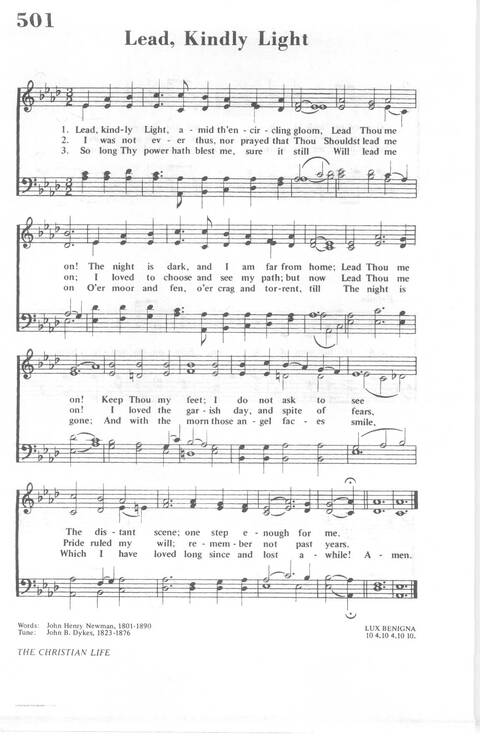
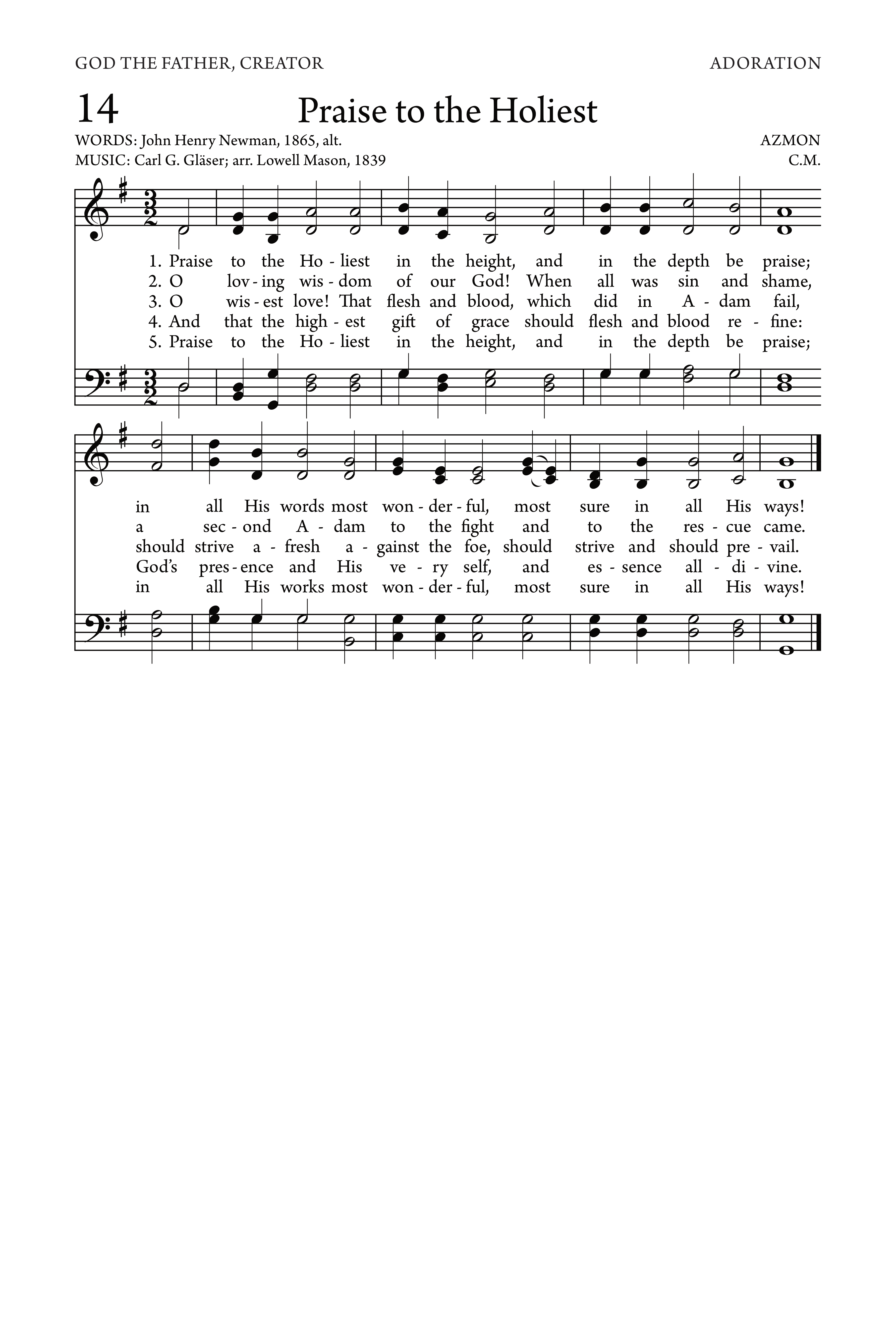
"Glory of the eternal heaven": Translated by John Henry Newman from the Roman Breviary text. It was published in his Verses (1853) and Verses on Various Occasions (1868), later appearing as No. 30 in The Hymnary (1872).
-
"Eternal glory of the heavens": Translated from the Roman Breviary by Edward Caswall in his Lyra Catholica (1849, p. 31) and Hymns and Poems (1873, p. 19). It was widely adopted in Roman Catholic hymnals for schools and missions.
-
"Eternal glory of the sky, Blest hope, &c.": Translated from the ancient text by John Mason Neale for the enlarged edition of the Hymnal Noted (1854, No. 25). It appeared, sometimes altered, in Skinner's Daily Service Hymnal (1864) and The Hymner (1882).
-
"Eternal glory of the heaven": Translated from the ancient text by John David Chambers in his Lauda Syon (1857, Vol. I, p. 29), and subsequently included in The People's Hymnal (1867, No. 430).
Five additional nineteenth-century translations were made for literary or devotional collections without passing into general hymnal usage: renderings by Bishop Richard Mant (1837), the Hymnarium Anglicanum (1844), Bishop Isaac Williams (1845), W. J. Copeland (1848), and Robert Campbell (1850).
Related Hymns
Hymns in the library connected to this dictionary topic.
Related Hymn Sheets
3 shown at a time — use the arrows to browse all 2 sheets.
Related Authors
Writers connected to this dictionary topic.
Keywords
Related terms for this dictionary entry.
Recent Dictionary Entries
Newly added terms from the Dictionary of Hymnology.
If you notice any mistake or have suggestions, please contact us on our contact page.