

"Aeterne Rex altissime, Redemptor" is a major Latin Ascension hymn whose complex textual evolution has generated extensive debate among hymnologists.
The history and authorship of its various textual traditions have been analyzed across several key works:
-
Textual Variants and Breviary Uses: Hermann Adalbert Daniel printed the early text in seven four-line stanzas with a doxology from a thirteenth-century Würzburg manuscript, alongside six interpolated stanzas from the Mozarabic Breviary (1502, f. 135) and the revised 1632 Roman Breviary text in parallel columns (Thesaurus Hymnologicus, Vol. I, No. 162). In the Roman Breviary, the hymn is appointed for Matins from Ascension Day to Whitsunday. The Hymnarium Sarisburiense (1851, pp. 101–102) records its use at Vespers on the Vigil of the Ascension and Matins on Ascension Day, documenting variations from the York, St. Alban's, and Worcester Breviaries as well as an Anglo-Saxon Canterbury manuscript.
-
Authorship Arguments: Franz Joseph Mone (Lateinische Hymnen des Mittelalters, No. 171–172) argued that stanzas I–IV of the early text were composed by Saint Ambrose, while stanzas V–VII were written by a later fifth-century author. He attributed the additional Mozarabic stanzas to a fifth-century Spanish imitator of Prudentius. Daniel subsequently published an extensive critique (Thesaurus Hymnologicus, 1855, Vol. IV, pp. 79–83) contesting Mone's attributions on verbal and metrical grounds.
-
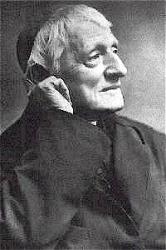
Manuscript Sources: The hymn is preserved in two eleventh-century manuscripts in the British Museum (Jul. A. vi, f. 51 and Vesp. D. xii, f. 756) and was printed from an eleventh-century Durham manuscript in The Latin Hymns of the Anglo-Saxon Church (Surtees Society, 1851, p. 90). The text "Tu Christe nostrum gaudium" represents a common cento formed from line 17 onward. Both early and revised forms were reprinted in John Henry Newman's Hymni Ecclesiae (1838, 1865).
The hymn entered English congregational use through eight notable translations:
-
"Eternal King of heaven on high": Translated by Bishop Richard Mant from the Roman Breviary in eight four-line stanzas for his Ancient Hymns (1837, p. 66), later appearing in abbreviated forms such as the Gainsburgh Collection (1854).
-
"O Thou Eternal King most high": Translated from the Roman Breviary by Edward Caswall in his Lyra Catholica (1849, p. 101) and Hymns & Poems (1873, p. 57). Adaptations appeared in the Scottish Episcopal Collection (1858), Chope's Hymnal (1864), The Hymnary (1872), and the Irvingite Hymns for the Use of the Churches (1864) under the opening "O Thou most high! Eternal King."
-
"King Eternal, power unbounded": Translated from the Roman Breviary by W. J. Copeland in Hymns for the Week (1848). It was included unaltered in Stretton's Church Hymns (1850) and altered as "King Supreme! of power unbounded" in Rorison's Hymns & Anthems (1851).
-
"O King eternal, Lord most High": Translated by J. A. Johnston in his English Hymnal (1852, No. 118).
-
"Eternal Monarch, King most High": Translated from the Sarum Breviary by John Mason Neale for the Hymnal Noted (1852, No. 31) and included in The Hymner (1882). Revised by the compilers of Hymns Ancient and Modern (1861, 1875), it became "O Lord most High, eternal King."
-
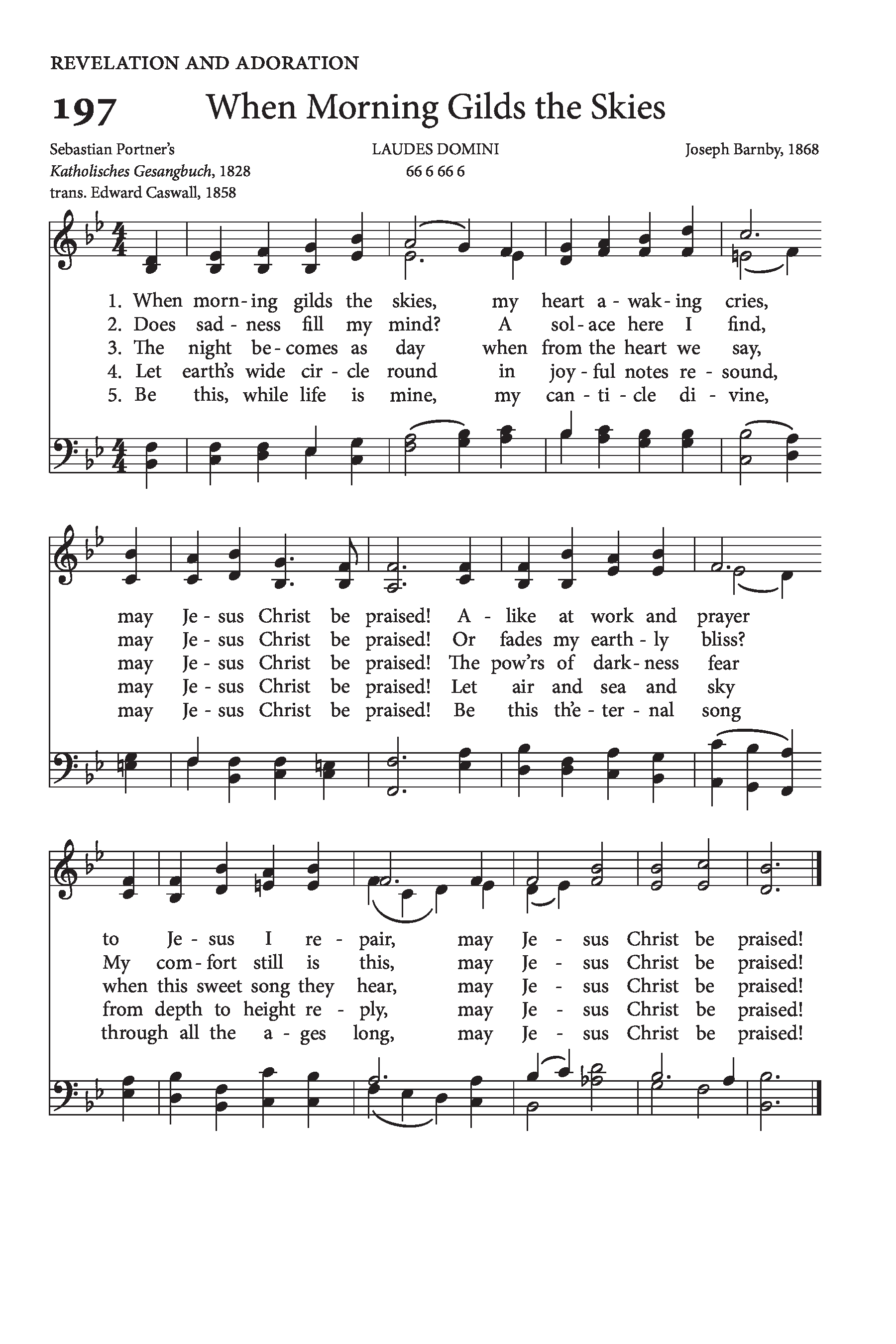
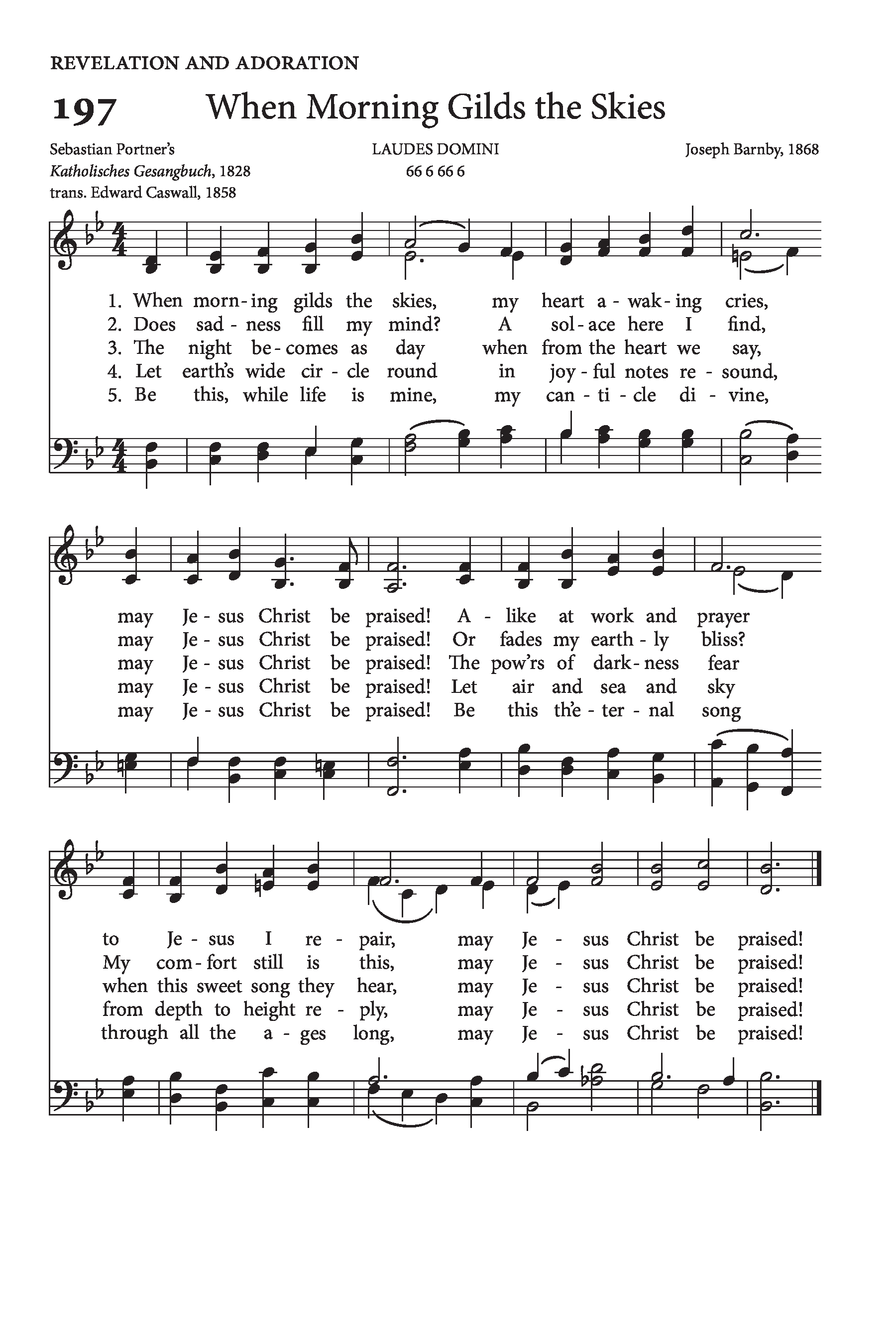
"Christ above all glory seated": Translated by Bishop James Russell Woodford in six four-line stanzas for Hymns Arranged for the Sundays (1852). Drawing slightly on Copeland's version, it became the most widely adopted English rendering, appearing in Chope's Hymnal (1857), the Parish Hymn Book (1863), S.P.C.K.'s Psalms and Hymns, the Sarum Hymnal, Church Hymns, and Thring's Collection. A composite cento combining Woodford's and Copeland's stanzas was also included in Murray's Hymnal (1852).
-
"Most High and Everlasting King": Translated from the Sarum Breviary by Richard Frederick Littledale for The People's Hymnal (1867, No. 140), signed "P. C. E."
-
"O King eternal, King most high": Translated from the Roman Breviary by S. Eugene Tolet for the Wellington College Hymn Book (1860).
Four additional non-congregational translations were published by the Primer (1706), W. J. Blew (1852), J. D. Chambers (1857), and F. Trappes (1865).
Related Hymns
Hymns in the library connected to this dictionary topic.

Related Hymn Sheets
3 shown at a time — use the arrows to browse all 5 sheets.
Related Authors
Writers connected to this dictionary topic.
Keywords
Related terms for this dictionary entry.
Recent Dictionary Entries
Newly added terms from the Dictionary of Hymnology.
If you notice any mistake or have suggestions, please contact us on our contact page.