"Alleluia" (Greek: Ἀλληλούϊα; Hebrew: הַלְלוּ-יָהּ) is an ascription of praise derived from two Hebrew words meaning "Praise Jah" or "Praise the Lord." It occurs frequently in the Book of Psalms (from Psalm 104 onwards), both in the body of the text and as a heading in the Vulgate. It also appears once in the Book of Tobit (13:18) and four times in the Book of Revelation (19:1, 3, 4, 6).
Early Christian Usage
The word passed at an early date into general use among Christians:
-
Daily Life: St. Jerome noted that Christian farmers sang it while plowing their fields (Ep. xviii. ad Marcellam).
-
Maritime Life: Sidonius Apollinaris referenced sailors using it as a celeusma, or chant of encouragement, while rowing (Lib. ii. Ep. 10).
-
Military Call: Christian soldiers adopted it as a battle cry, as demonstrated when the Britons under St. Germanus of Auxerre won the "Alleluia Victory" over the Picts and Scots in A.D. 429.
-
Easter Greeting: Tradition records that early Christians greeted each other on Easter morning with the exclamation, "Alleluia, the Lord is risen."
Liturgical Usage
Retained untranslated like other Hebrew words such as "Amen" and "Hosanna," the term assumed a fixed position in Christian worship across various traditions.
Eastern Rites
In the Eastern Church, the acclamation is closely tied to the Great Entrance:
-
It occurs once at the conclusion of the Cherubic Hymn in the Greek Liturgies of St. James and St. Mark, and three times in the same position in the Liturgy of Constantinople.
-
It appears frequently in the Greek Offices for the Dead and is retained even during Lent.
-
In the Greek Menaea, it is repeated thrice at the end of the Hexapsalmus at Orthros, and thrice following the Gloria Patri concluding the opening Psalms of the First, Third, and Sixth Hours.
Western Rites
-
Mozarabic Liturgy: Its position was after the Gospel at the beginning and end of the Lauda, continuing even in Masses for the Dead and on ferial occasions like the first day of Lent. It also appeared in the Sacrificium or Offertorium. Although originally retained year-round in the Spanish Church, Canon 11 of the Fourth Council of Toledo ordered its omission during Lent starting after the First Sunday in Lent.
-
Gallican Liturgy: While exact details are limited, its usage likely mirrored the Spanish rite.
-
African Liturgy: Its use was restricted primarily to Sundays, Eastertide, and Ascensiontide.
-
Roman Liturgy: Sung after the Gradual and before the Gospel. Originally restricted to Easter Day, its use expanded throughout the year except from Septuagesima Sunday to Holy Saturday. It is also omitted during ferial Masses in Advent, on the Feast of Holy Innocents (if falling on a weekday), on Vigils (except Easter and Pentecost), in Masses for the Dead, and on Ember Days.
-
Roman Breviary: Recited after the opening Gloria Patri at all Hours except from Septuagesima Sunday to Maundy Thursday, when "Laus tibi, Domine, Rex aeternae gloriae" replaces it. During Eastertide, it is added to antiphons, psalm verses, and responsories across the offices.
Notable Hymns, Sequences, and Proses
Numerous Latin and English sequences, proses, and hymns begin with or prominently feature the acclamation:
-
"Alle- cantabile sonet chorus cantorum et subjungat dulcibile -luya" (Sequence for the Feast of St. Bartholomew, Tropary of Ethelred, Bodleian MS 775).
-
"Alle-coeleste necnon et perenne -luya" (Prose attached to the Paschal Sequence Pangamus Creatoris, preserved in the Sarum, York, and Hereford Missals for the Nativity of the B.V.M.).
-
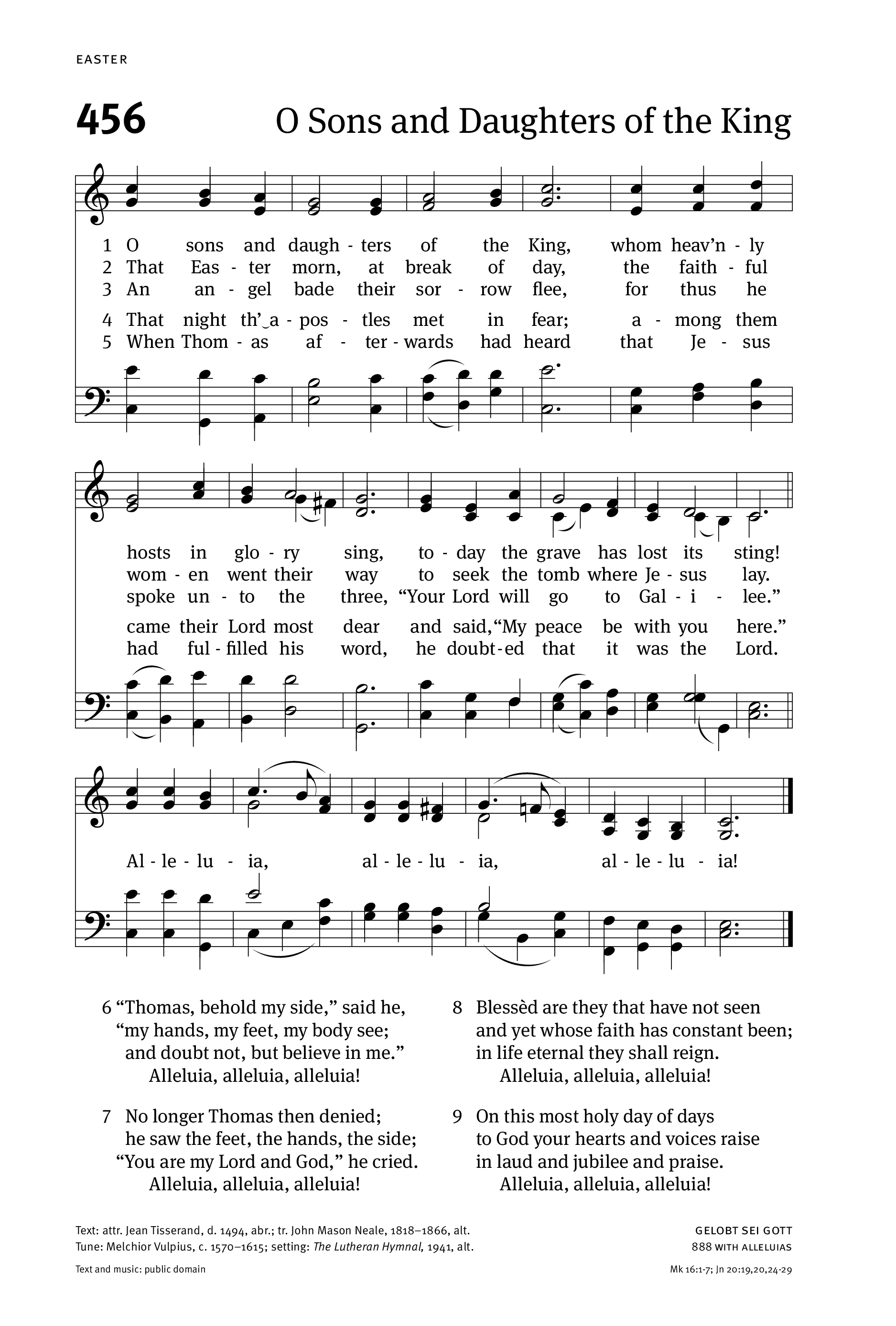
"Alleluia, Alleluia, Alleluia, O filii et filiae".
-
"Alleluia Christo decantet omnis lingua" (Sequence for St. Erhardus, 8th-century Bavarian Bishop, printed from a Ratisbon Missal).
-
"Alleluia, dulce carmen".
-
"Alleluia nunc decantet universalis ecclesia".
-
"Alleluia piis edite laudibus".
-
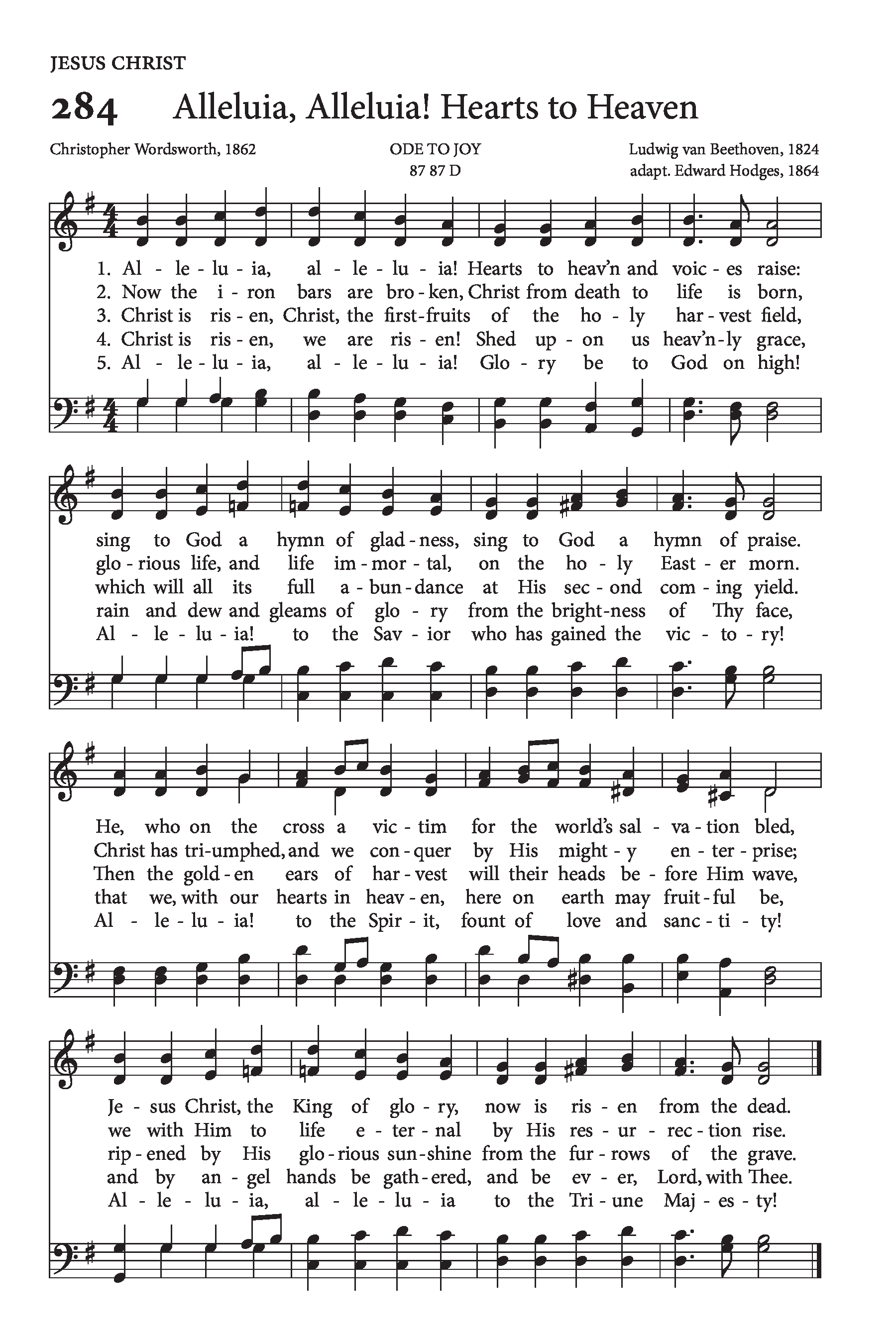
"Alleluia, Alleluia, hearts to heaven and voices raise" (Easter hymn by Bishop Christopher Wordsworth).
-
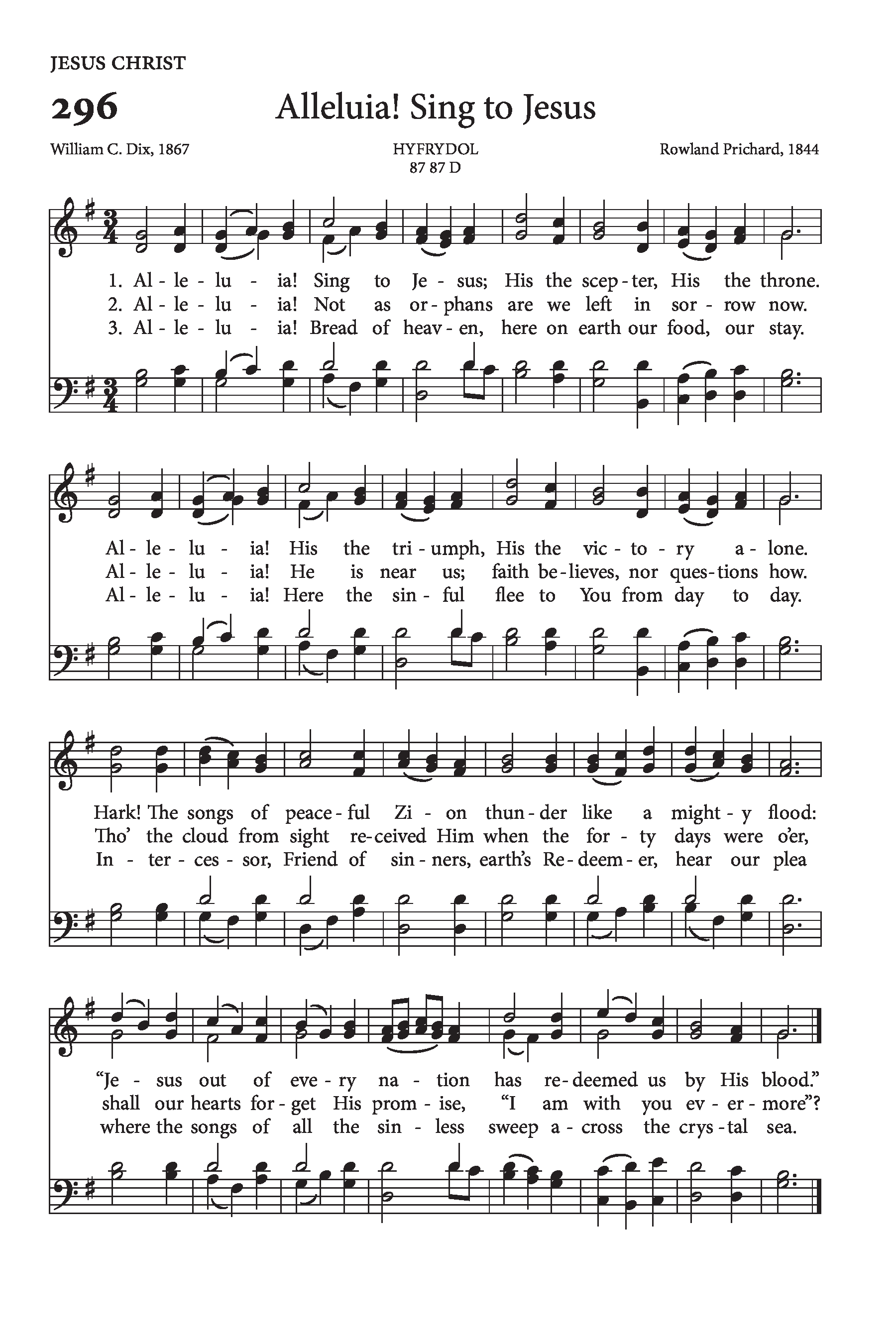
"Alleluia, sing to Jesus" (Eucharistic hymn by William Chatterton Dix).
Related Hymns
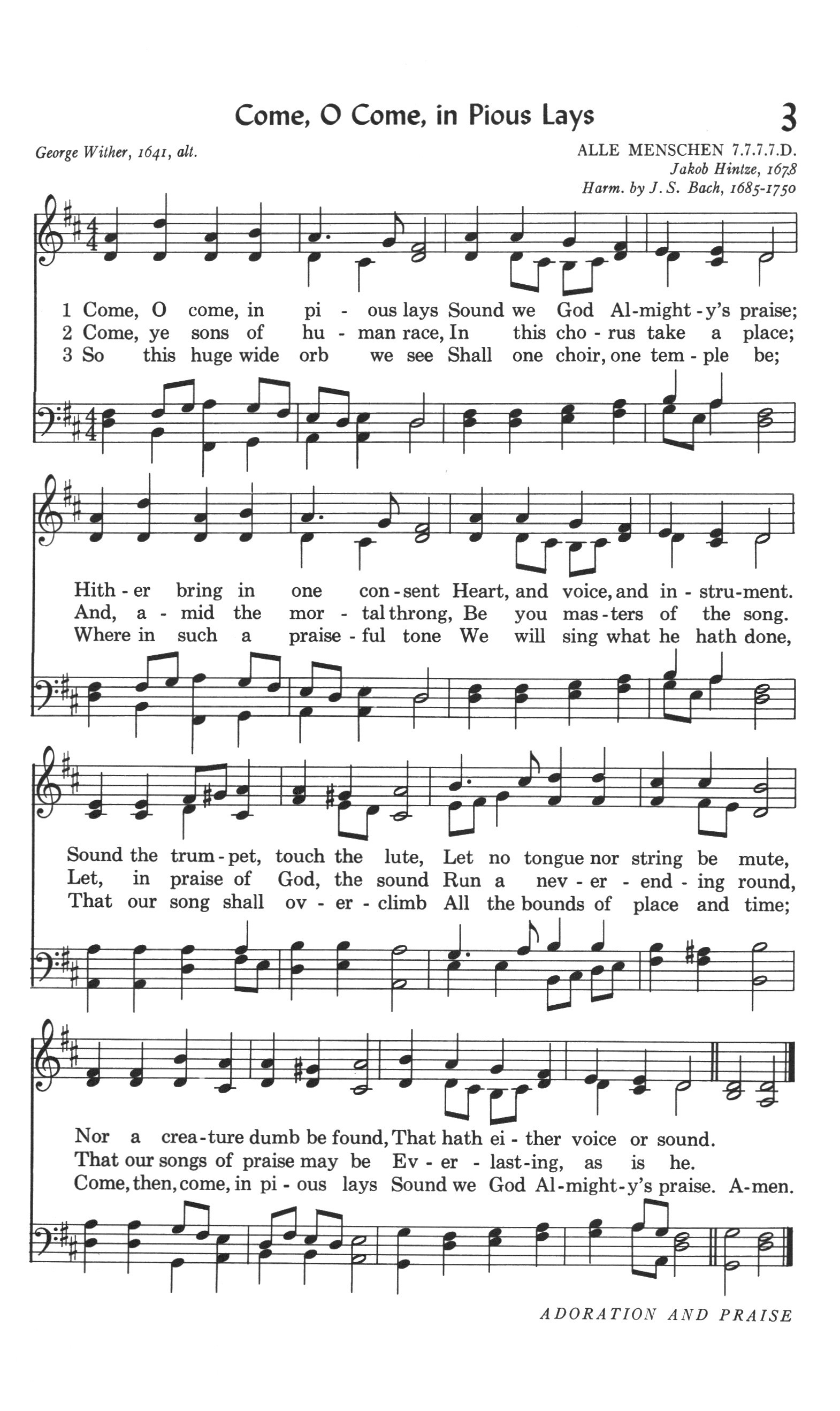
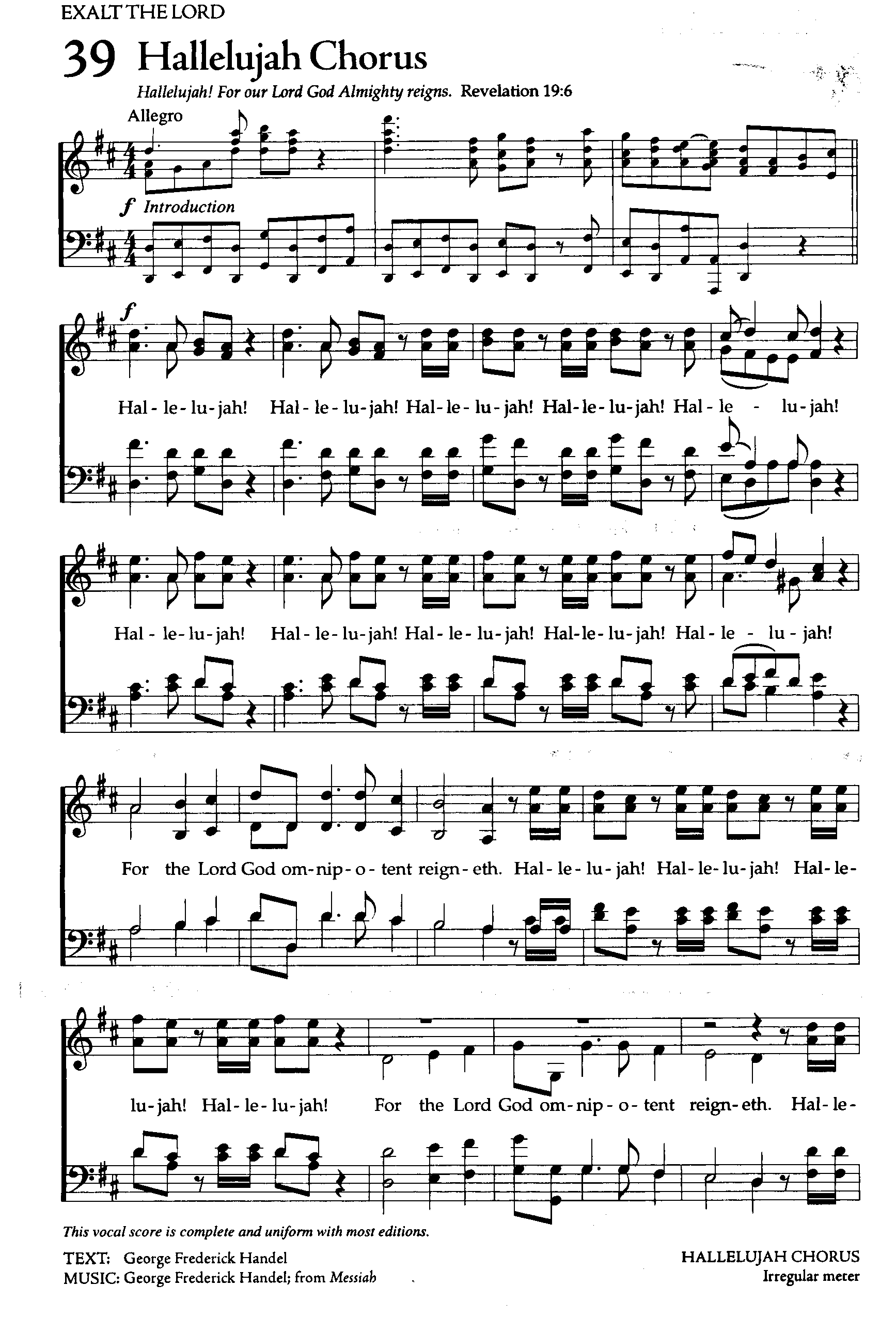
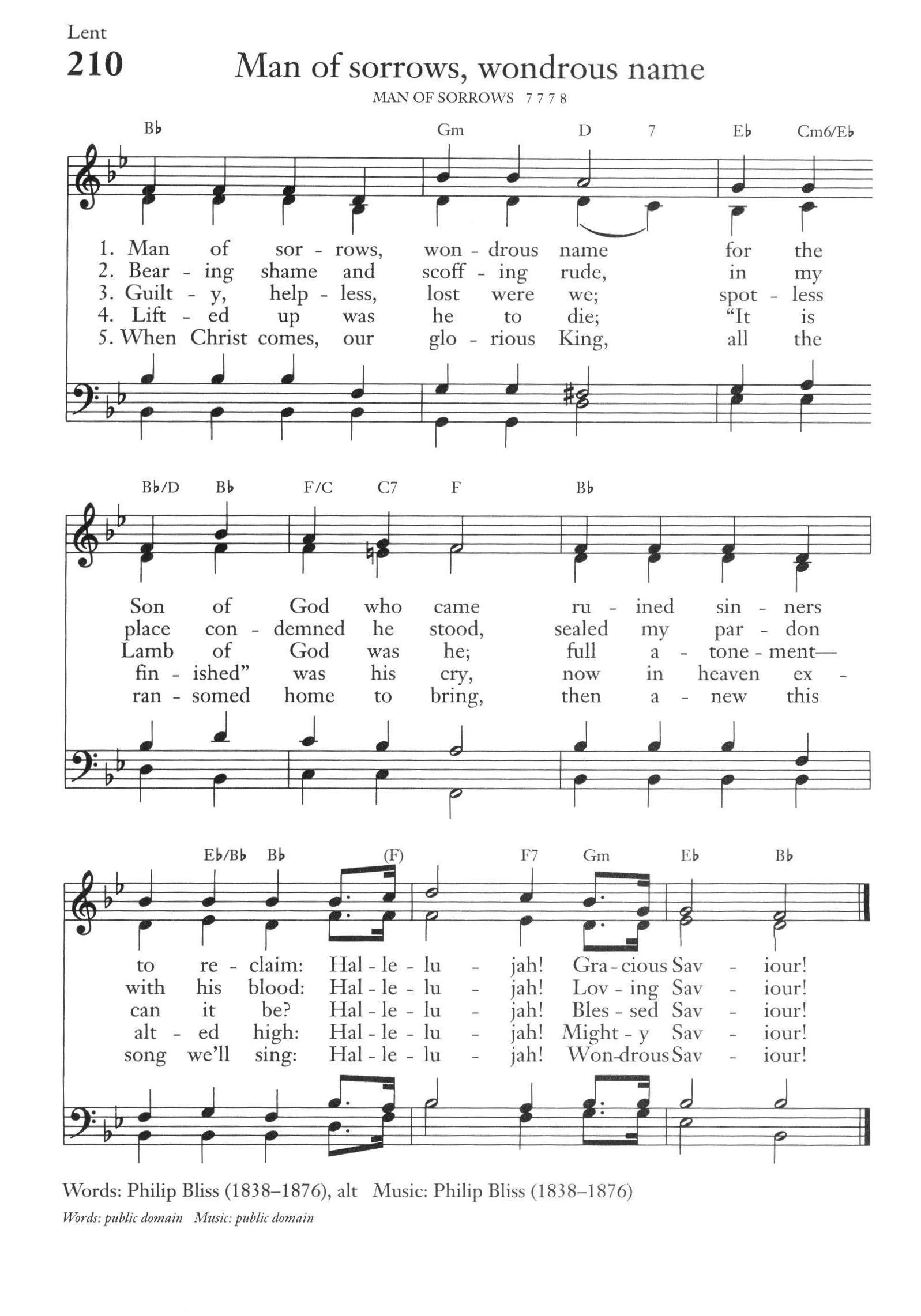
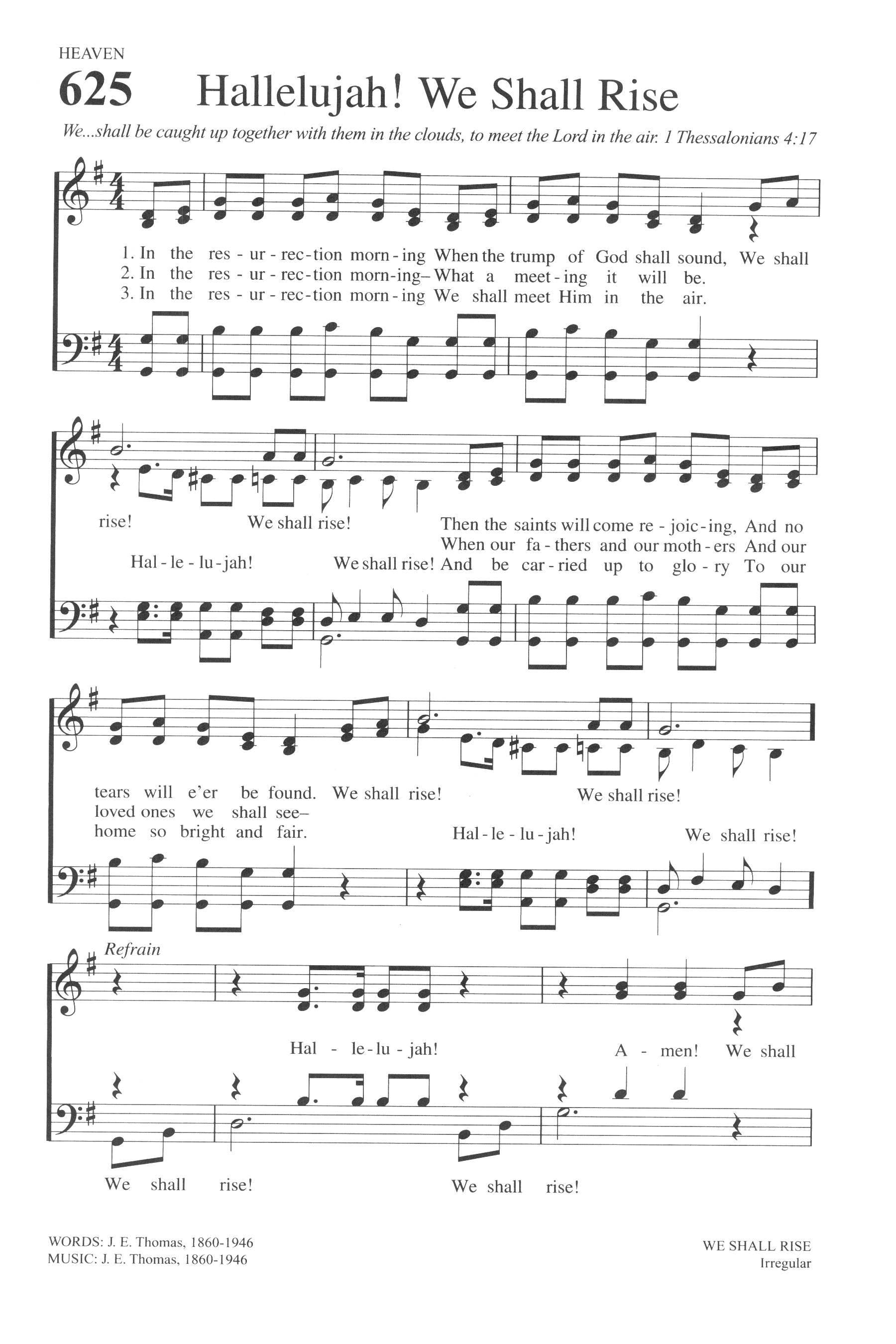
Hymns in the library connected to this dictionary topic.
-
 Alleluia! Sing to Jesus!
-
 O Sons and Daughters, Let Us Sing!
-
Alleluia, Alleluia! Hearts to Heaven
-
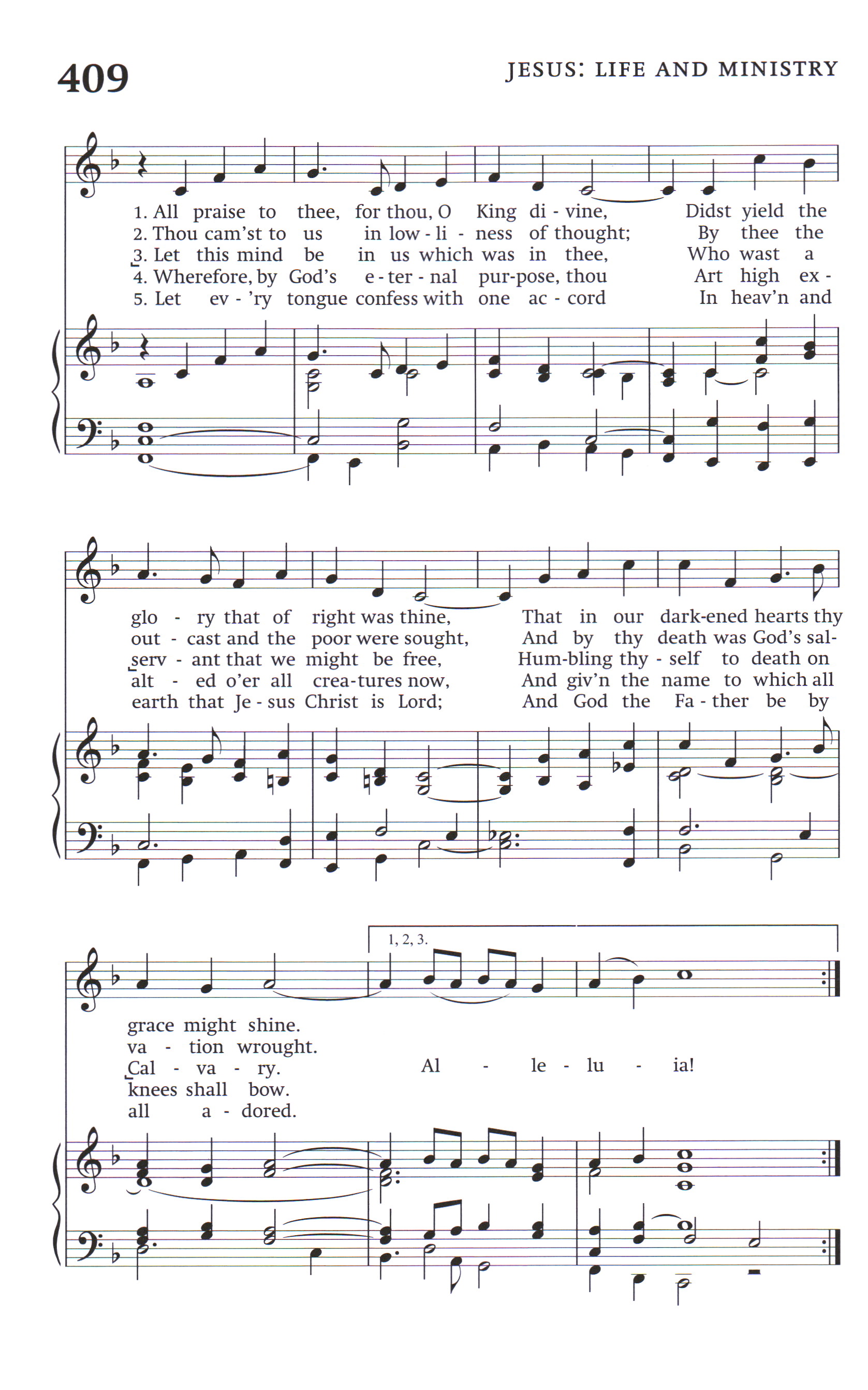
 All Praise to Thee, for Thou, O King Divine
-
 Come, O Come, Our Voices Raise
-
 Hallelujah!
-
 Hallelujah! What a Savior!
-
 Hallelujah, We Shall Rise
2 more related hymns below in the sheet gallery.
Related Hymn Sheets
3 shown at a time — use the arrows to browse all 10 sheets.
Related Authors
Writers connected to this dictionary topic.
Keywords
Related terms for this dictionary entry.
Recent Dictionary Entries
Newly added terms from the Dictionary of Hymnology.
If you notice any mistake or have suggestions, please contact us on our contact page.