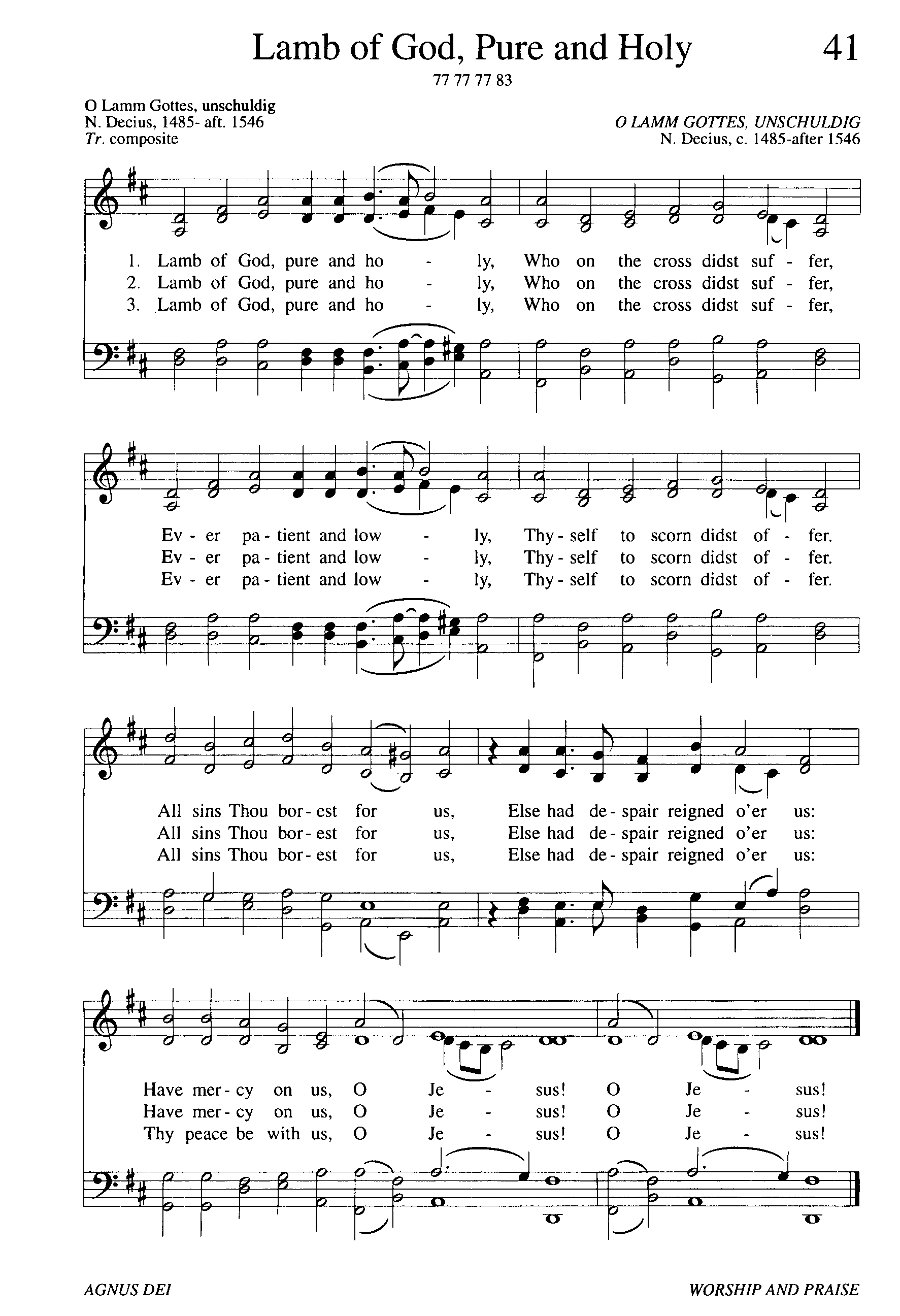



"Agnus Dei Qui tollis peccata mundi" is an ancient liturgical chant and prayer based on John 1:29, adapting a modified clause from the Gloria in Excelsis.
An early reference to its liturgical use appears in the rubric for Easter Eve within the Sacramentary of St. Gelasius (c. A.D. 492). During the pontificate of Pope Sergius I (687–701), Anastasius Bibliothecarius recorded that the Pope decreed it be sung by both clergy and choir at the time of the breaking of the bread (Statuit ut tempore confractionis Dominici Corporis Agnus Dei, &c., a clero et populo decantaretur). Cardinal Giovanni Bona maintained that Sergius ordered it sung three times, whereas Pierre Le Brun held that it was initially sung only once. By the eleventh century, the third repetition shifted its closing petition from "miserere nobis" to "dona nobis pacem." In Masses for the Dead, this final clause was altered to "dona eis requiem sempiternam," a form retained in the English uses of Sarum, York, and Hereford, as well as in the Roman Rite.
In the Sarum Use, the text was incorporated into the Litany, where it was sung twice with the third clause placed first. This structure was preserved in Archbishop Cranmer's English Litany of 1544 and in the First Prayer Book of Edward VI (1549) within the Communion Office. Although dropped from the 1552 revision, English devotional writers retained translations of the text in private Eucharistic manuals, including John Cosin's Collection of Private Devotions (1627) and the widely circulated New Week's Preparation (1739).
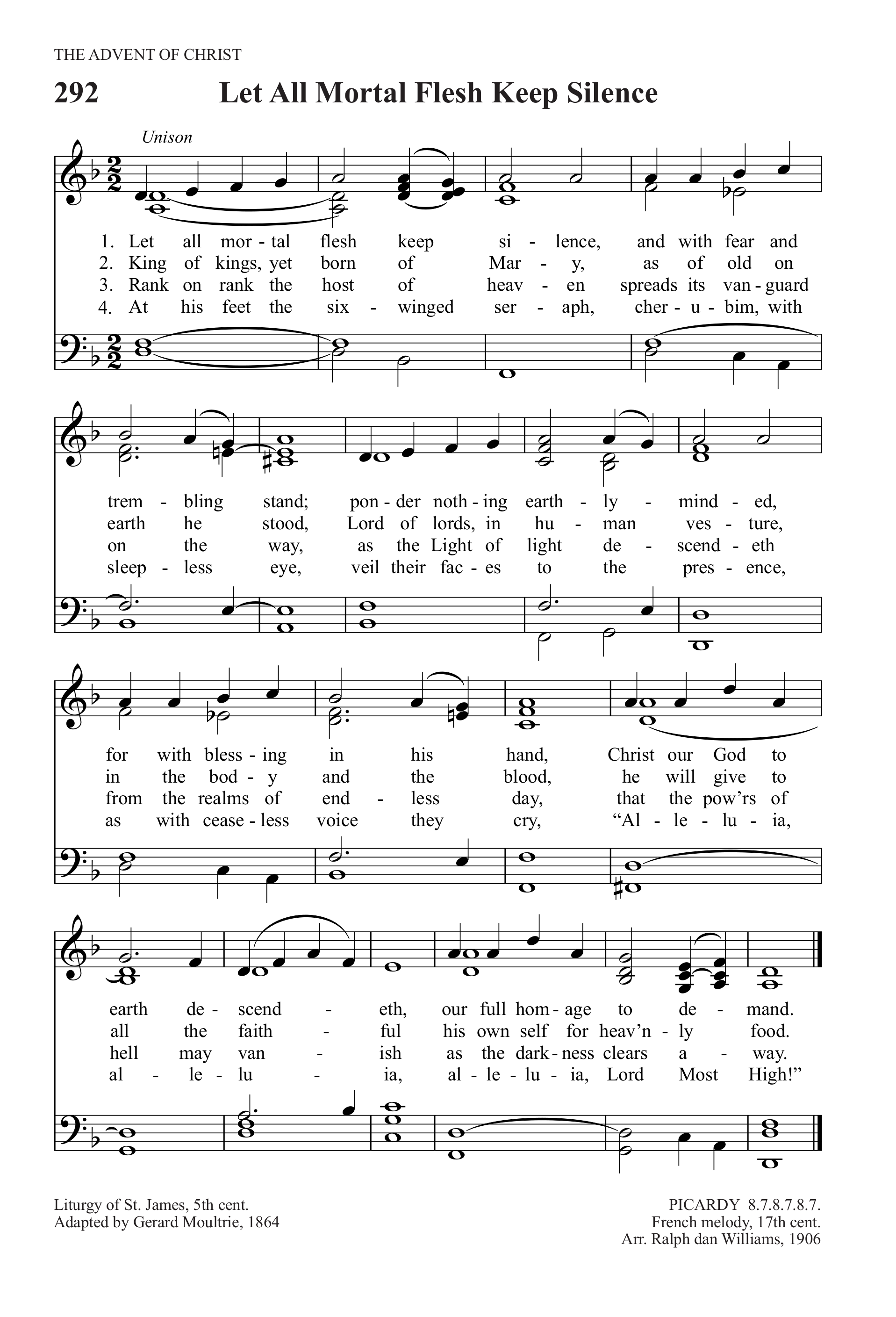
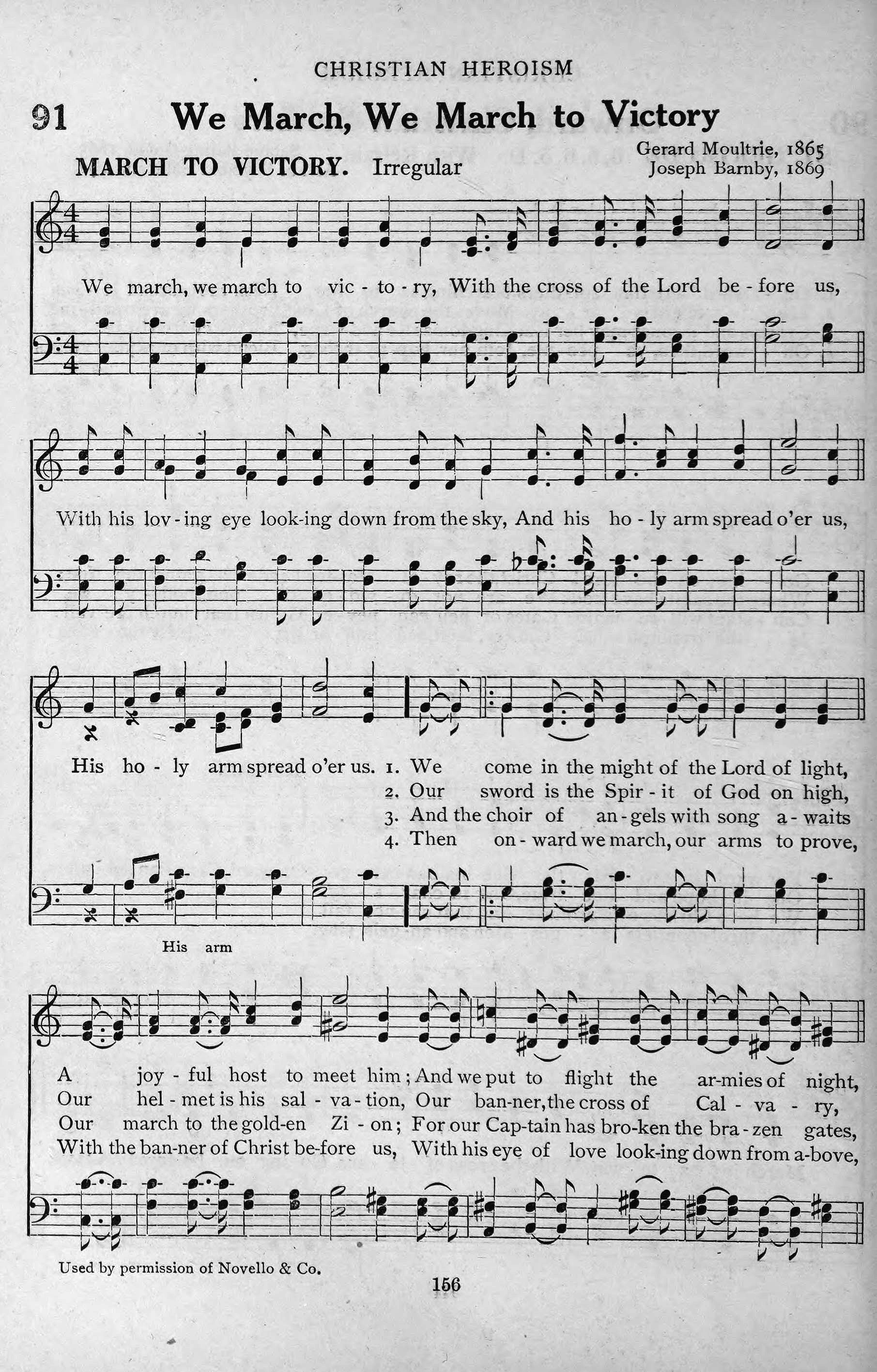
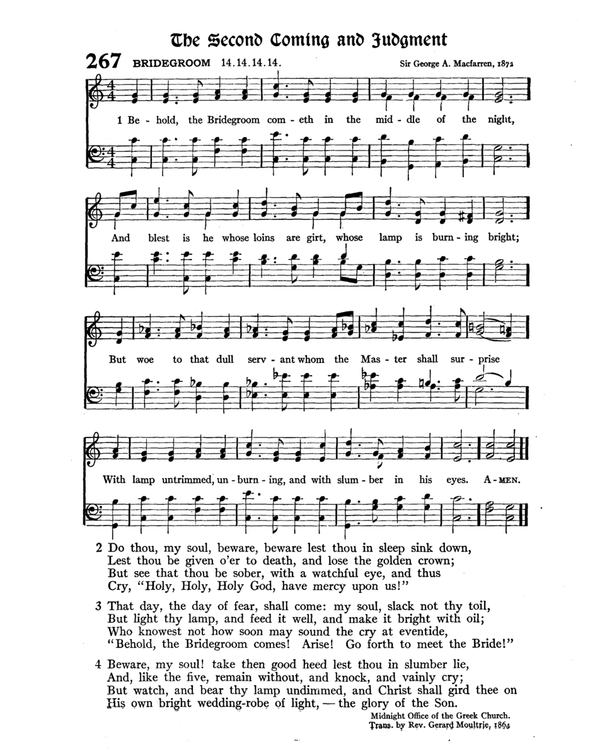
A metrical English translation, "O Lamb of God, that takest away," was written by Gerard Moultrie and published in the Church Times (July 23, 1864) and his Hymns and Lyrics (1867), later appearing in altered form in The Hymnary (1872).
The Agnus Dei also entered English hymnals through two primary German adaptations:
-
"O Lamm Gottes unschuldig" by Nicolaus Decius: First published in Low German in Geystlyke leder (Rostock, 1531) and High German in Schumann's Gesangbuch (Leipzig, 1539), this three-stanza hymn became central to Lutheran Eucharistic and Good Friday liturgies. Notable English translations include Arthur Tozer Russell's "O Lamb of God most holy" (1848), Catherine Winkworth's "O Lamb of God, most stainless" (Chorale Book for England, 1863), Jane Borthwick's "O Lamb of God, most Holy. Once for us sinners dying" (1864), and the Ohio Lutheran Hymnal version, "Lamb of God, without blemish!" (1880).
-
"Christe du Lamm Gottes": A three-line prose liturgical antiphon dating to the early Reformation, featured in Church Orders such as Brunswick (1528) and Saxony (1540). It was translated into English by A. T. Russell as "Lamb of God, our Saviour" (1848) and included in the Ohio Lutheran Hymnal (1880) as "Lamb of God, O Jesus! Thou who."
Related Hymns
Hymns in the library connected to this dictionary topic.
Related Hymn Sheets
3 shown at a time — use the arrows to browse all 5 sheets.
Related Authors
Writers connected to this dictionary topic.
Keywords
Related terms for this dictionary entry.
Recent Dictionary Entries
Newly added terms from the Dictionary of Hymnology.
If you notice any mistake or have suggestions, please contact us on our contact page.