

10 Doctrinally Accurate Christmas Carols and…
14 minutes ago
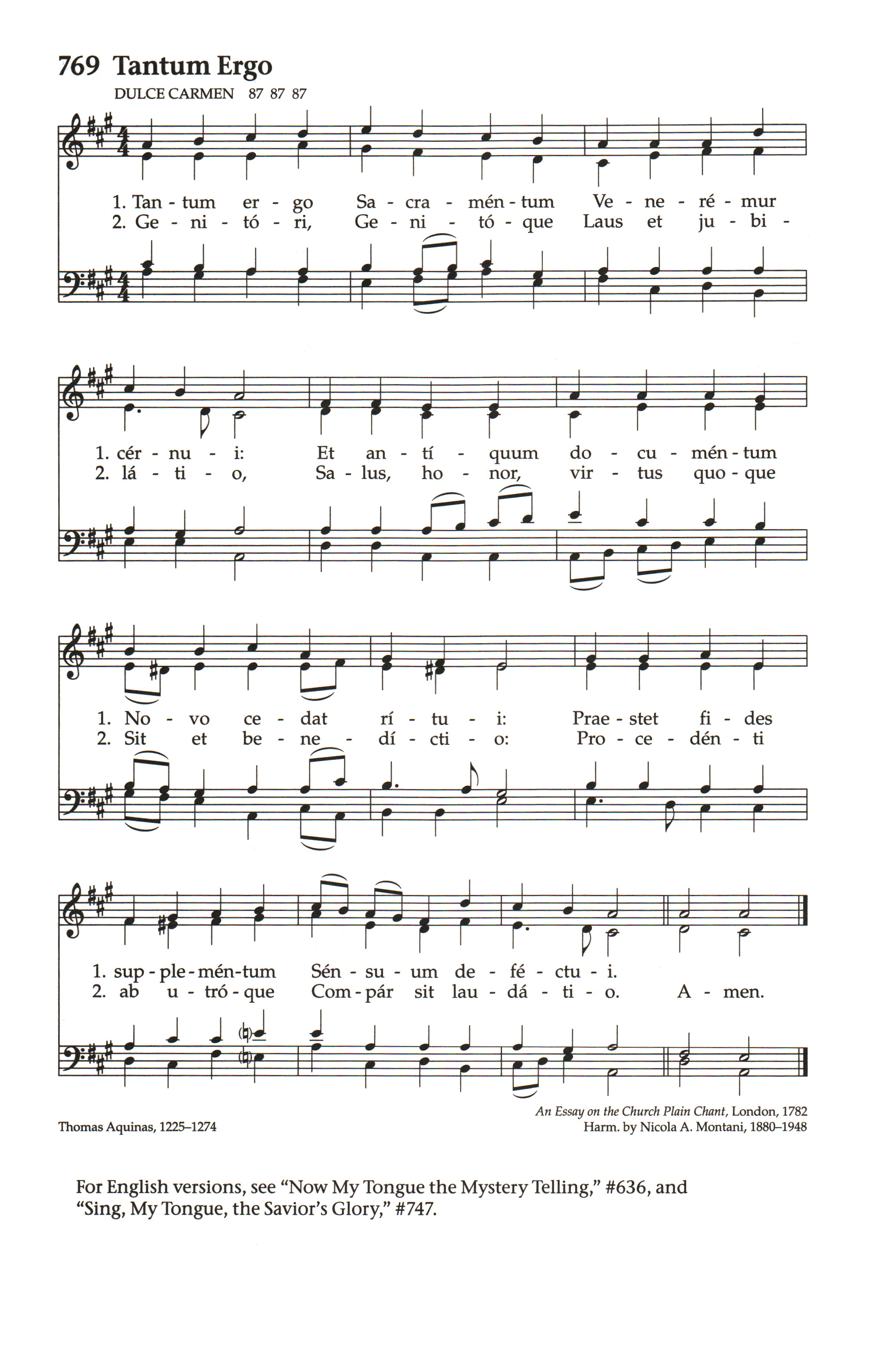
Tantum Ergo Sacramentum
Lyrics
1. Tantum ergo Sacramentum
Veneremur cernui
Et antiquum documentum,
Novo cedat ritui,
Praestet fides supplementum
Sensuum defectui.
Veneremur cernui
Et antiquum documentum,
Novo cedat ritui,
Praestet fides supplementum
Sensuum defectui.
2. Genitori, genitoque,
Laus et jubilatio;
Salus, honor, virtus quoque
Sit et benedictio.
Procedenti ab utroque
Compar sit laudatio. Amen
Laus et jubilatio;
Salus, honor, virtus quoque
Sit et benedictio.
Procedenti ab utroque
Compar sit laudatio. Amen
Bible Reference
Matthew 26:26-28; Luke 22:19-20; John 6:51-58; 1 Corinthians 10:16-17; 1 Corinthians 11:23-29
Lectionary & readings
Open today’s (or any date’s) assigned scriptures and find related hymns across church calendars. Useful when planning worship around this song’s themes or its Bible reference.
Hymn scripture: Matthew 26:26-28; Luke 22:19-20; John 6:51-58; 1 Corinthians 10:16-17; 1 Corinthians 11:23-29
About This Hymn
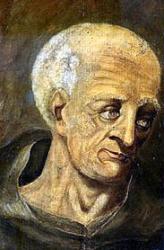
“Tantum Ergo Sacramentum” is a Latin Eucharistic hymn traditionally attributed to Thomas Aquinas, the medieval theologian and Dominican priest who lived from 1225 to 1274. The hymn forms the concluding two stanzas of Aquinas's longer Latin hymn, Pange Lingua Gloriosi, which celebrates the mystery of Christ's body and blood in the Eucharist. Its opening words may be translated as “Therefore so great a Sacrament.” The text calls worshippers to bow in reverence before the sacred mystery and to offer praise to God for the gift of Christ.
The hymn reflects on the relationship between the Old Covenant and the New Covenant. Its opening stanza declares that the former observance gives way to the new rite established by Christ. It also emphasizes the role of faith, which enables believers to receive spiritual truth beyond what the senses alone can perceive. This theme echoes Christ's teaching in John 6:51, where He declares, “I am the living bread which came down from heaven” (KJV). The hymn expresses a historic Christian understanding of the Eucharist as a sacred act of worship and remembrance centered on Jesus Christ.
The second stanza turns to praise of the Father, the Son, and the Holy Spirit. It asks that honour, power, blessing, and equal praise be given to the One who proceeds from the Father and the Son, expressing the Western Christian understanding of the Holy Trinity. The hymn therefore moves from reverence before the Sacrament to the worship of the Triune God. Its final word, “Amen,” serves as a solemn affirmation of the praise offered throughout the text.
“Tantum Ergo Sacramentum” has long been used in Roman Catholic worship, particularly during Eucharistic adoration, Benediction, and celebrations associated with Corpus Christi and Holy Thursday. It is commonly sung in Latin, though numerous English translations and paraphrases also exist. The text is associated with several tunes, including ST. THOMAS, linked to John Francis Wade, as well as plainsong and other traditional settings. Because the hymn has been paired with different melodies over the centuries, the composer depends on the particular tune selected.
The hymn endures as a significant work of medieval Latin hymnody because it combines reverence, doctrinal reflection, and Trinitarian praise in a brief liturgical text. Its central themes are the mystery of Christ's gift, the response of faith, and the worship due to God.
From the Dictionary of Hymnology
Related terms and concepts automatically matched to this hymn.
Adoro Te devote, latens Deitas History
Detailed history of St. Thomas Aquinas's famous Eucharistic hymn "Adoro Te devote," tracing its origins, liturgical use, manuscript traditions, and numerous English translations.
Read moreScottish Hymnody History
An historical account of congregational song in Scotland from the Reformation to the mid-nineteenth century, outlining the transition from strict metrical psalmody to the adoption of human-composed h…
Read moreA Patre Unigenitus History
An anonymous Latin Epiphany hymn originating between the tenth and thirteenth centuries, notable for its unique alphabetical acrostic structure and presence across ancient Anglo-Saxon and European ma…
Read moreStaff Visualizer
Open in MIDI StudioPowered by HTML MIDI PLAYER, MIDI FILE Made by Hymnal Library. · Study chords & lyrics in MIDI Studio
Want weekly hymns and devotionals?
⭐ Recommend This Hymn
Share this beautiful hymn with others
Hymns with the same subject
More hymns about Adoration, Blood of Christ, Church, Closing of Worship, Commitment, Prayer
- O Dearest Lord by All Adored - Maurice F. Bell
- O Salutaris Hostia - Thomas Aquinas
- When the Church of Jesus - Fred Pratt Green
- Praise God for This Holy Ground - John L. Bell
- O Sanctissima - Traditional Latin Carol
- Round the Lord in Glory Seated - Richard Mant
- Praise we our God with joy - Frederick Oakeley
- How Deep the Father's Love for Us - Stuart Townend
More hymn subjects
Explore other themes across the library.
Hymns about Trust
Hymns about Cross
Hymns about Glory of God
Hymns about Gratitude
Hymns about Joy
Hymns about Sovereignty of God
Hymns about Pentecost
Hymns about Christmas
Browse all subjects →
Latest Updated Hymnals
-
Open
 The People's HymnalUpdated 20 hours ago · 1961
 -
Open
 Book of Common Praise (BoCP1915)Updated 3 months ago · 1915
 -
Open
 Our Great Redeemer's PraiseUpdated 5 months ago · 2022
 -
Open
 The Parish Hymnal (1873)Updated 5 months ago · 1873
 -
Open
 Book of Common Praise (BCP1998)Updated 5 months, 2 weeks ago · 1998
Hymn Information

To view the author's biography, click their name above.
MIDI File
More Hymns by Thomas Aquinas
Popular Hymns
Recent Blog Posts


Popular Blog Posts
-
 Lessons from the Book of Haggai: Putting God…4 months, 2 weeks ago
 -
 Easter vs Passover: How a Biblical Feast Bec…6 months, 2 weeks ago
 -
 The Full Story of the Birth of Jesus Christ:…10 months, 1 week ago
 -
 The 30 Most Famous Christmas Hymns and Carols1 year, 1 month ago
 -
 The Story Behind the Hymn “Amazing Grace”10 months ago
Visit Us on Social Media
Latest from X (Twitter)
Tweets by HymnalLibraryLatest from Facebook
Latest on YouTube
Loading latest video...
Daily Bible Verse
Disclaimer
The hymns, sheet music, MIDI files, and related content on this website are provided for educational and research purposes only.
- Public Domain: Many of the hymns featured here are in the public domain and may be freely used.
- Copyrighted Works: Some hymns may still be under copyright protection. Where applicable, permission has either been requested from the copyright owner, or the content is shared under the principles of fair use for educational purposes.
⚠️ Important Notice: If you wish to reproduce, distribute, or use any copyrighted hymn beyond personal study or educational use, you must obtain permission directly from the copyright holder. This website does not grant any rights for commercial use yet.
If there is any other question please address it to us in our Contact Page, for further assistance. Thank you for using the site. May God Bless You.
Recently Added · Dictionary of Hymnology
Browse dictionary →
Can’t find a hymn or lyric?
Leave your question in the forum for others to answer — requests, missing lines, writers, and worship ideas welcome.