



12 Ways to Deepen Your Relationship with God
1 week, 1 day ago
Stabat Mater
By Jacopone da Todi (1300)
Mark it for others looking for a hymn like this.
New
Lyrics
1. Stabat Mater doloroso,
Juxta crucem lacrymosa,
Dum pendebat Filius.
Cujus animam gementem,
Contristatam, et dolentem,
Pertransivit gladius.
2. O quam tristis et afflicta
Fuit illa benedicta
Mater Unigeniti!
Que moerebat, et dolebat,
Pia Mater dum videbat
Nati poenas inclyti.
3. Quis est homo, qui non fleret,
Matrem Christi si videret
In tanto supplicio?
Quis non posset contristari,
Christi Matrem contemplari
Dolentem cum Filio?
4. Pro peccatis suae gentis,
Vidit Jesum in tormentis,
Et flagellis subditum,
Vidit suum dulcem Natum
Moriendo, desolatum,
Dum emisit spiritum.
5. Pia Mater, fons amoris,
Me sentire vim doloris,
Fac ut tecum lugeam.
Fac ut ardeat cor meum
In amando Christum Deum,
Ut sibi complaceam.
6. Sancta Mater, istud agas,
Curcifixi fige plagas
Cordi meo valide.
Tui Nati vulnerati,
Tam dignati pro me pati,
Poenas mecum divide.
7. Fac me tecum pie flere,
Crucifixo condolere,
Donec ego vixero.
Justa crucem tecum stare,
Et me tibi sociare,
In plauctu desidero.
Bible Reference
Luke 2:34-35; John 19:25-27; Isaiah 53:3-5; John 19:28-30
Lectionary & readings
Open today’s (or any date’s) assigned scriptures and find related hymns across church calendars. Useful when planning worship around this song’s themes or its Bible reference.
Hymn scripture: Luke 2:34-35; John 19:25-27; Isaiah 53:3-5; John 19:28-30
About This Hymn
“Stabat Mater,” commonly known by its opening Latin words, “Stabat Mater dolorosa,” is a medieval hymn traditionally attributed to Jacopone da Todi, an Italian Franciscan poet and religious writer who lived during the thirteenth century. The title means “The sorrowful Mother stood,” referring to Mary standing near the cross of Jesus as He suffered and died. The hymn meditates on the suffering of Christ through the sorrow of His mother, inviting worshippers to contemplate the pain associated with the crucifixion and the sacrifice made for the redemption of sinners.
The opening stanzas describe Mary standing beside the cross, grieving as she witnesses the suffering of her Son. This scene is rooted in John 19:25-27, where the Gospel records Mary standing near the cross with other women and the disciple whom Jesus loved. The hymn also recalls Simeon's prophecy to Mary in Luke 2:35, that a sword would pierce through her own soul. These biblical passages provide the foundation for the hymn's reflection on maternal sorrow and the suffering of Christ.
As the hymn progresses, it moves from describing Mary's grief to inviting the worshipper to reflect personally on Christ's passion. The speaker asks for a deeper understanding of the Saviour's suffering and a heart moved by love for Him. The text considers the wounds, pain, and death of Jesus in connection with human sin and the need for redemption. Its devotional purpose is to lead the worshipper toward repentance, compassion, and renewed gratitude for Christ's sacrifice. For Christians, the central focus remains the crucified Saviour, whose suffering is understood in the light of God's saving purpose.
The tune known as STABAT MATER (Mainz) is associated with the Mainz Gesangbuch of 1661. Hymnary identifies its meter as 8.8.7.8.8.7 and records it as a melody used with several texts, including English translations of the Latin hymn. The tune's composer is not securely identified in the cited record, so it is best described as traditional or anonymous rather than attributed to Jacopone da Todi, who is the author of the text.
“Stabat Mater” has endured in Christian worship, especially during Lent and Holy Week, because it directs attention to the sorrow surrounding Christ's crucifixion. Through its solemn language and prayerful appeal, it calls believers to contemplate the cross, recognize the seriousness of sin, and respond with faith and gratitude to the Saviour who gave Himself for humanity.
From the Dictionary of Hymnology
Related terms and concepts automatically matched to this hymn.
Stabat mater dolorosa Latin Hymn
Pathetic medieval Sequence/hymn on Mary at the Cross; authorship debated (Innocent III vs Jacopone); Flagellants; Roman office of Seven Dolours from 1727; vast translation and musical history.
Read moreBreviaries (Hymn List, P–Th) History
Mid-alphabet continuation of the Breviary hymn table from Pange openings through Rector, Rex, Salve and Te lucis titles, noting the 1775 Mozarabic change of “Pange linguam Zachariae” to “Clange lyram Zacharias.”
Read moreArchibald Alexander, D Biography
An American Presbyterian minister and professor at Princeton (b. 1804, d. 1859) whose translations, collected in 1861, include “O Sacred Head, now wounded,” “Near the cross was Mary weeping” and “Jesus, how sweet Thy memory is.”
Read moreStaff Visualizer
Open in MIDI StudioPowered by HTML MIDI PLAYER, MIDI FILE Made by Hymnal Library. · Study chords & lyrics in MIDI Studio

Want weekly hymns and devotionals?
This hymn also appears in these hymnals
Click a spine to pull out the hymnal, then open it.
Hymns with the same subject
More hymns about Atonement, Comfort, Praise, Repentance
- I Just Want to Thank You Lord - Robert Deel
- Creator of the World, to Thee - Charles Coffin
- Because He Lives - Bill & Gloria Gaither
- O God Beyond All Praising - Michael A. Perry
- All My Hope on God Is Founded - Joachim Neander
- Come Praise and Glorify - Bob Kauflin
- O for a Heart to Praise My God! - Charles Wesley
- God of Our Fathers, Known of Old - Rudyard Kipling
More hymn subjects
Recently Added Hymns
-
 Holy Father, We Adore TheeE. F. Stewart circa. 1870s
-
 Holy Father, Great CreatorAlexander Viets Griswold 1837
-
Holy Father, cheer our way (Light at Evening Time)Richard H. Robinson 1869
-
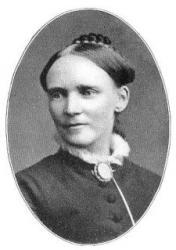 I Could Not Do Without Thee, O Savior of the LostFrances R. Havergal 1873
-
I Bow My Forehead to the DustJohn Greenleaf Whittier 1865
Latest Updated Hymnals
-
Open
 Book of Common Praise (BoCP1915)Updated 1 week, 2 days ago · 1915
-
Open
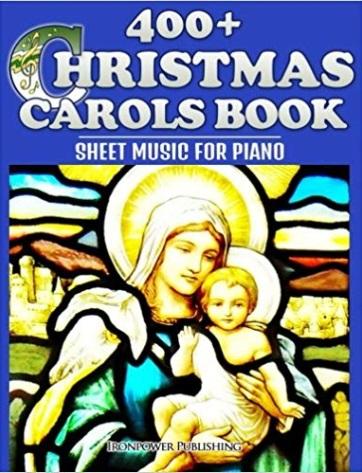 400+ Christmas Carols Book: Sheet Music for PianoUpdated 2 weeks, 1 day ago · 2014
-
Open
 Psalms of GraceUpdated 2 weeks, 3 days ago · 2022
-
Open
 Spurgeon's Own Hymn BookUpdated 2 weeks, 3 days ago · 1866
-
Open
 The New Apostolic Church HymnalUpdated 1 month, 1 week ago · 2008
Hymn Information
Click a linked name to open their biography.
MIDI File
Hymns from 1300
Popular Hymns
Recent Blog Posts



Popular Blog Posts
-
 Lessons from the Book of Haggai: Putting God…6 months ago
-
 Easter vs Passover: How a Biblical Feast Bec…8 months ago
-
 The Full Story of the Birth of Jesus Christ:…11 months, 3 weeks ago
-
 The 30 Most Famous Christmas Hymns and Carols1 year, 3 months ago
-
 The Story Behind the Hymn “Amazing Grace”11 months, 2 weeks ago
Visit Us on Social Media
Latest from X (Twitter)
Tweets by HymnalLibraryLatest from Facebook
Latest on YouTube
Loading latest video...
Daily Bible Verse
Disclaimer
The hymns, sheet music, MIDI files, and related content on this website are provided for educational and research purposes only.
- Public Domain: Many of the hymns featured here are in the public domain and may be freely used.
- Copyrighted Works: Some hymns may still be under copyright protection. Where applicable, permission has either been requested from the copyright owner, or the content is shared under the principles of fair use for educational purposes.
⚠️ Important Notice: If you wish to reproduce, distribute, or use any copyrighted hymn beyond personal study or educational use, you must obtain permission directly from the copyright holder. This website does not grant any rights for commercial use yet.
If there is any other question please address it to us in our Contact Page, for further assistance. Thank you for using the site. May God Bless You.
Recently Added · Dictionary of Hymnology
Browse dictionary →- Index of Authors and Translators (H–Z) 6 days, 2 hours ago · History 1
- Index of First Lines (We–Z) / Index of Authors (A–Hincks) 6 days, 2 hours ago · History 2
- Work while it is to-day / Yet there is room / Yonge, Charlotte M. / Zyma vetus 6 days, 2 hours ago · Hymn 1
- Wordsworth, Elizabeth 6 days, 2 hours ago · Biography 0
- Wilton, Richard / Winks, William Edward / Wiseman, Card. Nicholas / Woodward, G. R. / Wordsworth, Bp. C. 6 days, 2 hours ago · Biography 1
Can’t find a hymn or lyric?
Leave your question in the forum for others to answer — requests, missing lines, writers, and worship ideas welcome.