



10 Doctrinally Accurate Christmas Carols and…
21 hours ago
God Is Born, Great Powers Tremble
Lyrics
1. God is born, great powers tremble,
Lord of Heaven lies forsaken.
Fire is frozen, splendor darkens,
feeble nature God has taken.
Lowly born, yet Lord to Praises,
Mortal yet the King of Ages.
Now indeed the Word made Flesh has
come on earth to dwell among us.
Lord of Heaven lies forsaken.
Fire is frozen, splendor darkens,
feeble nature God has taken.
Lowly born, yet Lord to Praises,
Mortal yet the King of Ages.
Now indeed the Word made Flesh has
come on earth to dwell among us.
2. Where, oh heaven, is thy splendor,
dimmed is now your starry azure.
Earth now holds in lowly manger,
the divine unfathomed Treasure!
God e'en now in pain does glory
as unfolds Redemption's story.
Now indeed the Word made Flesh has
come on earth to dwell among us.
dimmed is now your starry azure.
Earth now holds in lowly manger,
the divine unfathomed Treasure!
God e'en now in pain does glory
as unfolds Redemption's story.
Now indeed the Word made Flesh has
come on earth to dwell among us.
Bible Reference
Isaiah 9:6; Micah 5:2; Luke 2:1-20; John 1:1-14; Philippians 2:5-11
Lectionary & readings
Open today’s (or any date’s) assigned scriptures and find related hymns across church calendars. Useful when planning worship around this song’s themes or its Bible reference.
Hymn scripture: Isaiah 9:6; Micah 5:2; Luke 2:1-20; John 1:1-14; Philippians 2:5-11
About This Hymn
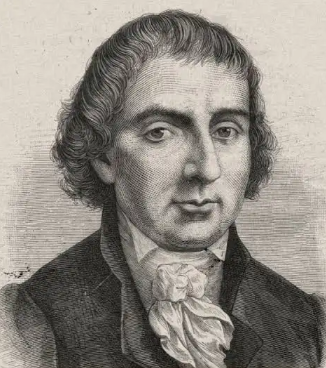
“Bóg się Rodzi,” commonly translated as “God Is Born, Great Powers Tremble,” is a celebrated Polish Christmas carol written by Franciszek Karpiński, a Polish poet of the Enlightenment. The text, originally titled Pieśń o Narodzeniu Pańskim (“Song of the Lord's Birth”), was published in his collection Pieśni nabożne (“Songs of Piety”) in 1792. The carol reflects on the mystery of the incarnation, proclaiming that the eternal God entered human history through the birth of Jesus Christ. Its opening lines use striking contrasts to express the wonder of the event: fire freezes, brightness grows dark, the Infinite accepts limits, and the immortal King becomes mortal.
The central biblical theme is expressed in the recurring words, “And the Word was made flesh, and dwelt among us” (John 1:14, KJV). This declaration connects the humble birth of Christ with His eternal divine identity. The hymn celebrates the Saviour who, though Lord of heaven, entered the world in lowly circumstances. Its language emphasizes the paradox of the incarnation: the One who possesses divine glory willingly takes upon Himself human nature and shares the conditions of human life. The carol thus invites worshippers to contemplate both the majesty of Christ and the humility displayed in His coming.
The later stanzas reflect on Christ's suffering and the redemptive purpose of His birth. The manger points beyond itself to the salvation accomplished through Jesus Christ. The hymn also includes a prayer for the homeland, asking the Christ Child to bless the nation, its people, homes, towns, and villages. This patriotic stanza has contributed to the carol's significance in Polish religious and cultural life, joining devotion to Christ with prayer for the welfare of the community.
The tune BÓG SIĘ RODZI is a traditional Polish melody, generally associated with a stately polonaise rhythm. Its original composer has not been securely established. An early musical record appears in Michał Marcin Mioduszewski's Śpiewnik kościelny in 1838. The carol's melody and text together have made it one of Poland's best-known Christmas hymns. Its enduring message is the wonder of the incarnation: the eternal Son of God enters human history in humility, bringing the promise of redemption and calling believers to praise Him.
From the Dictionary of Hymnology
Related terms and concepts automatically matched to this hymn.
All yesterday is gone History
Overview of the anonymous invitation hymn "All yesterday is gone," widely used in nineteenth-century American collections.
Read moreAnd did the Holy and the Just Hymnology
An entry on Anne Steele's redemption hymn based on 1 Peter 3:18.
Read moreArise, my soul, my joyful powers Hymnology
An entry on Isaac Watts's hymn on redemption and spiritual protection.
Read moreStaff Visualizer
Open in MIDI StudioPowered by HTML MIDI PLAYER, MIDI FILE Made by Hymnal Library. · Study chords & lyrics in MIDI Studio

Want weekly hymns and devotionals?
⭐ Recommend This Hymn
Share this beautiful hymn with others
Hymns with the same subject
More hymns about Blood of Christ, Christmas, Humility, Jesus Christ, Nation, Salvation
- Go, Tell It on the Mountain - John W. Work
- Sing of Mary, Pure and Lowly - Roland F. Palmer
- The Old Rugged Cross - George Bennard
- In Christ alone (my hope is found) - Stuart Townend
- 'Tis So Sweet to Trust in Jesus - Louisa M. R. Stead
- Alas! and Did My Savior Bleed - Isaac Watts
- My Faith Has Found a Resting Place - E. E. Hewitt
- See, amid the Winter's Snow - Edward Caswall
More hymn subjects
Latest Updated Hymnals
-
Open
 The People's HymnalUpdated 1 day, 17 hours ago · 1961
 -
Open
 Book of Common Praise (BoCP1915)Updated 3 months ago · 1915
 -
Open
 Our Great Redeemer's PraiseUpdated 5 months ago · 2022
 -
Open
 The Parish Hymnal (1873)Updated 5 months ago · 1873
 -
Open
 Book of Common Praise (BCP1998)Updated 5 months, 2 weeks ago · 1998
Hymn Information
To view the author's biography, click their name above.
MIDI File
Hymns from 1792
Popular Hymns
Recent Blog Posts


Popular Blog Posts
-
 Lessons from the Book of Haggai: Putting God…4 months, 2 weeks ago
 -
 Easter vs Passover: How a Biblical Feast Bec…6 months, 2 weeks ago
 -
 The Full Story of the Birth of Jesus Christ:…10 months, 1 week ago
 -
 The 30 Most Famous Christmas Hymns and Carols1 year, 1 month ago
 -
 The Story Behind the Hymn “Amazing Grace”10 months ago
Visit Us on Social Media
Latest from X (Twitter)
Tweets by HymnalLibraryLatest from Facebook
Latest on YouTube
Loading latest video...
Daily Bible Verse
Disclaimer
The hymns, sheet music, MIDI files, and related content on this website are provided for educational and research purposes only.
- Public Domain: Many of the hymns featured here are in the public domain and may be freely used.
- Copyrighted Works: Some hymns may still be under copyright protection. Where applicable, permission has either been requested from the copyright owner, or the content is shared under the principles of fair use for educational purposes.
⚠️ Important Notice: If you wish to reproduce, distribute, or use any copyrighted hymn beyond personal study or educational use, you must obtain permission directly from the copyright holder. This website does not grant any rights for commercial use yet.
If there is any other question please address it to us in our Contact Page, for further assistance. Thank you for using the site. May God Bless You.
Recently Added · Dictionary of Hymnology
Browse dictionary →
Can’t find a hymn or lyric?
Leave your question in the forum for others to answer — requests, missing lines, writers, and worship ideas welcome.