10 Famous Hymns That Were Published Posthumo…
5 days, 21 hours ago
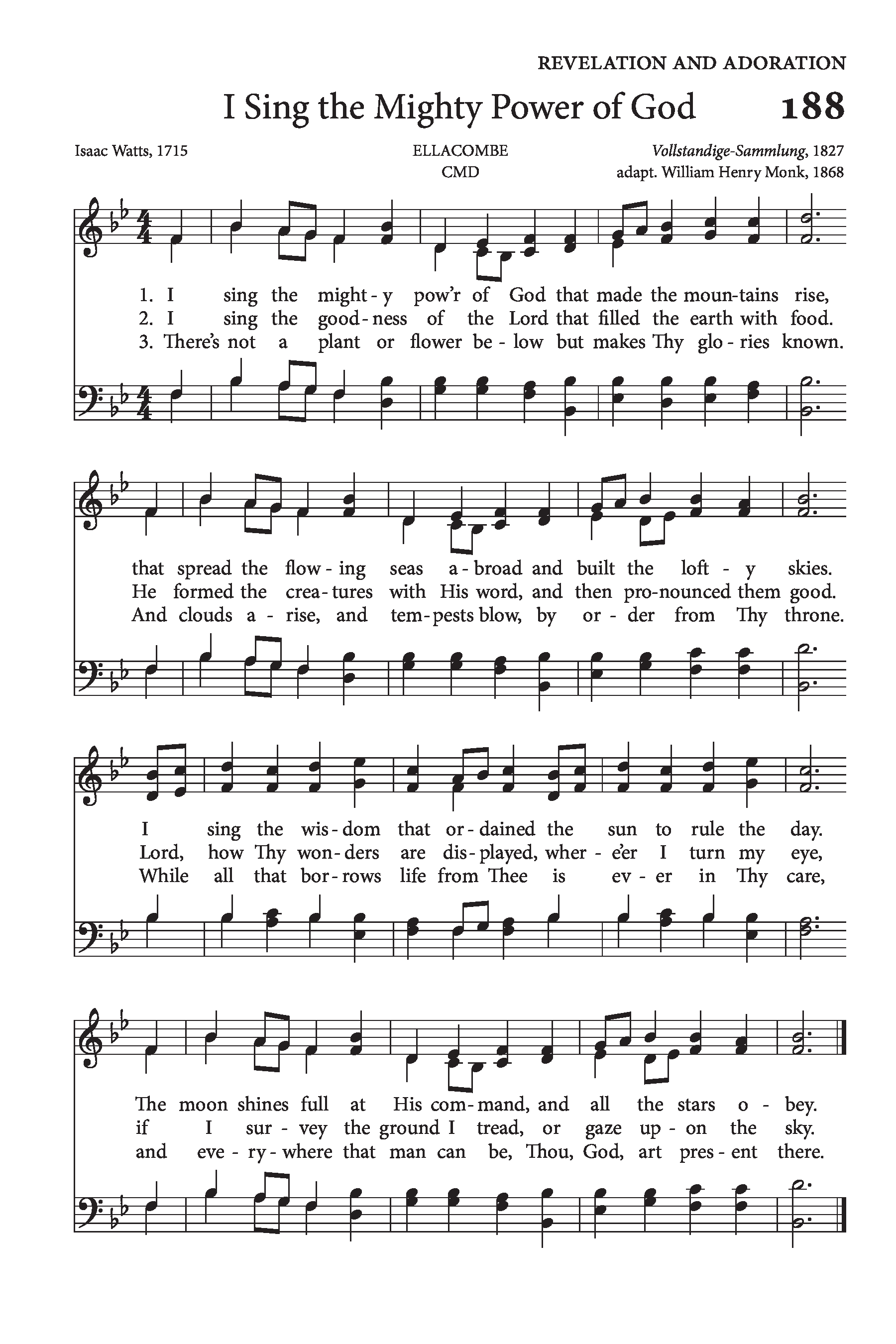
I Sing the Mighty Power of God
By Isaac Watts (1715)
Lyrics
1. I sing the mighty power of God
that made the mountains rise,
that spread the flowing seas abroad
and built the lofty skies.
I sing the wisdom that ordained
the sun to rule the day;
the moon shines full at his command,
and all the stars obey.
that made the mountains rise,
that spread the flowing seas abroad
and built the lofty skies.
I sing the wisdom that ordained
the sun to rule the day;
the moon shines full at his command,
and all the stars obey.
2. I sing the goodness of the Lord
that filled the earth with food;
he formed the creatures with his word
and then pronounced them good.
Lord, how your wonders are displayed,
where'er I turn Mine eyes,
if we survey the ground we tread
or gaze upon the skies.
that filled the earth with food;
he formed the creatures with his word
and then pronounced them good.
Lord, how your wonders are displayed,
where'er I turn Mine eyes,
if we survey the ground we tread
or gaze upon the skies.
3. There's not a plant or flower below
but makes your glories known,
and clouds arise and tempests blow
by order from your throne;
while all that borrows life from you
is ever in your care,
and everywhere that men can be,
Thou, God, art present there.
but makes your glories known,
and clouds arise and tempests blow
by order from your throne;
while all that borrows life from you
is ever in your care,
and everywhere that men can be,
Thou, God, art present there.
Bible Reference
Psalm 72:8
Lectionary & readings
Open today’s (or any date’s) assigned scriptures and find related hymns across church calendars. Useful when planning worship around this song’s themes or its Bible reference.
Hymn scripture: Psalm 72:8
About This Hymn
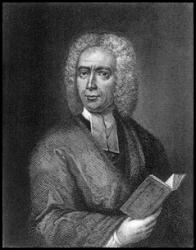
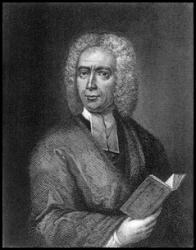
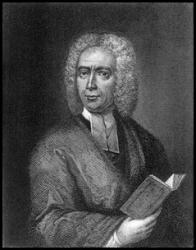
Isaac Watts (1674–1748), often hailed as the "Father of English Hymnody," left an enduring legacy on Christian worship through his prolific hymn writing. Frail in health for most of his life, Watts spent the last thirty years as something of an invalid, residing in the home of his dear friend, Sir Thomas Abney. Despite his physical limitations, these years became some of his most productive. In the comfort and care of the Abney household, Watts composed many of the beloved hymns that still resonate in churches today. His own words captured his humble ambition: “My design was not to exalt myself to the rank and glory of poets, but I was ambitious to be a servant to the churches, and a helper to the joy of the meanest Christian.” This statement exemplifies Watts’s commitment to spiritual edification over literary fame.
Though he faced physical frailty and was reportedly unusual in appearance—standing only five feet tall, with a disproportionately large head and a long, hooked nose—Watts’s intellect and genius were undisputed. He was a scholar of remarkable breadth, contributing significantly to theology, philosophy, logic, and literature. His published works include volumes of sermons, catechisms, and treatises on theology, as well as educational texts like textbooks on logic. Among his many contributions to Christian literature was his heartfelt concern for children. In 1715, he authored “Divine Songs for Children,” the first hymnal ever written specifically for young readers. This collection, still treasured today, was recently republished by Oxford University Press, a testament to its lasting influence.
One of the most tender examples of his writing for children appears in these lines:
“Hush, my dear, be still and slumber,
Holy angels guard thy bed;
Heavenly blessings without number
Gently falling on thy head.”
Such verses reflect Watts’s affectionate heart and sincere desire to make the truths of Scripture accessible and comforting, even to the youngest members of the church. In the preface to Divine Songs, he emphasized that “children of high and low degree, of the Church of England or dissenters, baptized in infancy or not, may all join together in these songs.” His aim was clear: to elevate young minds to spiritual truths using simple but dignified language.
The particular hymn in question, set in Common Meter Doubled (86.86.86.86), is based on a text from Watts’s 1715 collection. While the original verses came from his pen, later editors and compilers made minor alterations over the years. Among Watts's most famous hymns are timeless classics such as “Jesus Shall Reign,” inspired by Psalm 72:8 (“He shall have dominion also from sea to sea, and from the river unto the ends of the earth”), “O God, Our Help in Ages Past,” “When I Survey the Wondrous Cross,” “Am I a Soldier of the Cross?” and “Joy to the World!” These hymns have shaped Protestant worship globally and are frequently sung in both traditional and contemporary services.
The musical setting commonly used for this text is the jubilant and well-loved tune known as “Ellacombe.” The melody first appeared in 1784 in Gesangbuch der Herzogl. Württemberg, a hymnal compiled for use in the Roman Catholic Chapel of the Duke of Württemberg. Curiously, although published for a Catholic context, the hymnal featured texts and tunes by a majority of German Protestant hymn writers, reflecting the complex religious crosscurrents of the time.
“Ellacombe” made its way into English hymnody in 1868 when it appeared in the Appendix to Hymns Ancient and Modern, one of the most influential Anglican hymnals of the 19th century. The tune is characterized by its stately and joyful progression, making it suitable for celebratory texts that proclaim Christ’s reign and dominion. The tune was named after the village of Ellacombe in Devonshire, England, further reflecting the Anglican tradition of naming hymn tunes after places.
Together, Watts’s noble text and the regal tune of “Ellacombe” have produced one of the church’s most enduring combinations. Whether used to proclaim the universal kingship of Christ or to teach children the foundations of faith, this hymn endures because it unites poetic depth, theological richness, and musical joy. Like many of Watts’s hymns, it transcends its original era, continuing to stir hearts and inspire worship in countless congregations across the world.
From the Dictionary of Hymnology
Related terms and concepts automatically matched to this hymn.
All ye that [who] love the Lord, rejoice Hymn
Isaac Watts’s paraphrase of Psalm cxlix., from his Psalms of David, 1719, titled “Praise God, all His saints; or, The Saints judging the World.” Most collections omit its final stanzas.
Read moreCome, let us join our cheerful songs Hymn
One of Watts’s best-known hymns (1707/1709) on Revelation 5 usually appears in four stanzas omitting “Let all that dwell above the sky”; Bingham supplies a Latin version.
Read moreCome, we that love the Lord Hymn
Isaac Watts’s “Heavenly Joy on Earth” (1707/1709), ten stanzas. Wesley’s Charlestown form (1736–7) and Cotterill’s “Come ye who love the Lord” (1819) head the many altered texts in later books.
Read moreStaff Visualizer
Open in MIDI StudioPowered by HTML MIDI PLAYER, MIDI FILE Made by Hymnal Library. · Study chords & lyrics in MIDI Studio
Want weekly hymns and devotionals?
⭐ Recommend This Hymn
Share this beautiful hymn with others
This hymn also appears in these hymnals
Click a spine to pull out the hymnal, then open it.
Hymns with the same subject
More hymns about Adoration, Strength
- As the Deer Panteth for the Waters - Martin Nystrom
- God Is Our Refuge and Strength - Richard Bewes
- Arm These Thy Soldiers, Mighty Lord - Christopher Wordsworth
- O Salutaris Hostia - Thomas Aquinas
- How Great Thou Art - Carl Boberg
- His Eye Is on the Sparrow - Civilla D. Martin
- The Longer I Serve Him - William J. (Bill) Gaither
- How Deep the Father's Love for Us - Stuart Townend
More hymn subjects
Explore other themes across the library.
Hymns about Atonement
Hymns about Salvation
Hymns about Wedding
Hymns about Healing
Hymns about Conversion
Hymns about Consecration
Hymns about Guidance
Hymns about Resurrection
Browse all subjects →
Recently Added Hymns
-
 Joy Fills Our Inmost Hearts TodayW. Chatterton Dix 1865
 -
 Bright Angel Hosts Are Heard on HighRichard Robert Chope circa. 1870s
 -
 In the Early Morning, Early (Christmas Morning)Frederick George Lee circa. 1880s
 -
 A Boy Is Born In BethlehemAnonymous circa. 1400s
 -
 A Shepherd Band Their Flocks Are Keepingunknown circa. 1860s
Latest Updated Hymnals
-
Open
 The New Apostolic Church HymnalUpdated 4 days, 2 hours ago · 2008
 -
Open
 400+ Christmas Carols Book: Sheet Music for PianoUpdated 5 days, 4 hours ago · 2014
 -
Open
 The Temple HymnalUpdated 5 days, 12 hours ago · 1918
 -
Open
 The Popular HymnalUpdated 5 days, 12 hours ago · 1918
 -
Open
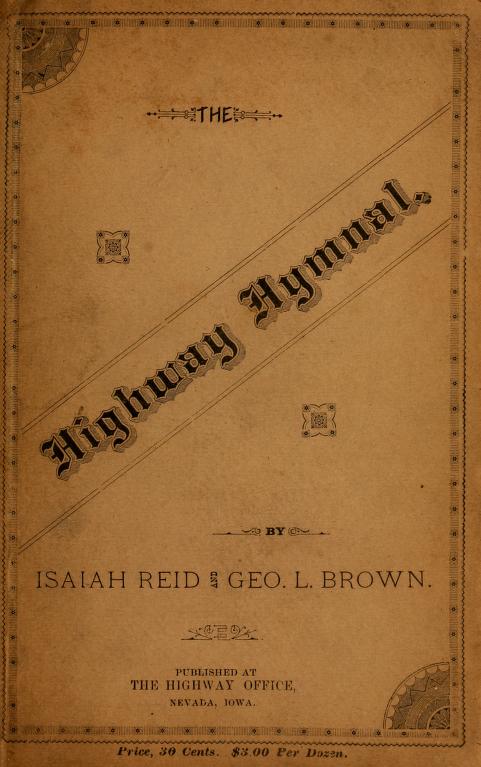 The Highway HymnalUpdated 5 days, 13 hours ago · 1886
Hymn Information
Click a linked name to open their biography.
MIDI File
Popular Hymns
Recent Blog Posts


Popular Blog Posts
-
 Lessons from the Book of Haggai: Putting God…4 months, 4 weeks ago
 -
 Easter vs Passover: How a Biblical Feast Bec…6 months, 3 weeks ago
 -
 The Full Story of the Birth of Jesus Christ:…10 months, 2 weeks ago
 -
 The 30 Most Famous Christmas Hymns and Carols1 year, 2 months ago
 -
 The Story Behind the Hymn “Amazing Grace”10 months, 2 weeks ago
Visit Us on Social Media
Latest from X (Twitter)
Tweets by HymnalLibraryLatest from Facebook
Latest on YouTube
Loading latest video...
Daily Bible Verse
Disclaimer
The hymns, sheet music, MIDI files, and related content on this website are provided for educational and research purposes only.
- Public Domain: Many of the hymns featured here are in the public domain and may be freely used.
- Copyrighted Works: Some hymns may still be under copyright protection. Where applicable, permission has either been requested from the copyright owner, or the content is shared under the principles of fair use for educational purposes.
⚠️ Important Notice: If you wish to reproduce, distribute, or use any copyrighted hymn beyond personal study or educational use, you must obtain permission directly from the copyright holder. This website does not grant any rights for commercial use yet.
If there is any other question please address it to us in our Contact Page, for further assistance. Thank you for using the site. May God Bless You.
Recently Added · Dictionary of Hymnology
Browse dictionary →
Can’t find a hymn or lyric?
Leave your question in the forum for others to answer — requests, missing lines, writers, and worship ideas welcome.