

10 Famous Hymns That Were Published Posthumo…
5 days, 3 hours ago
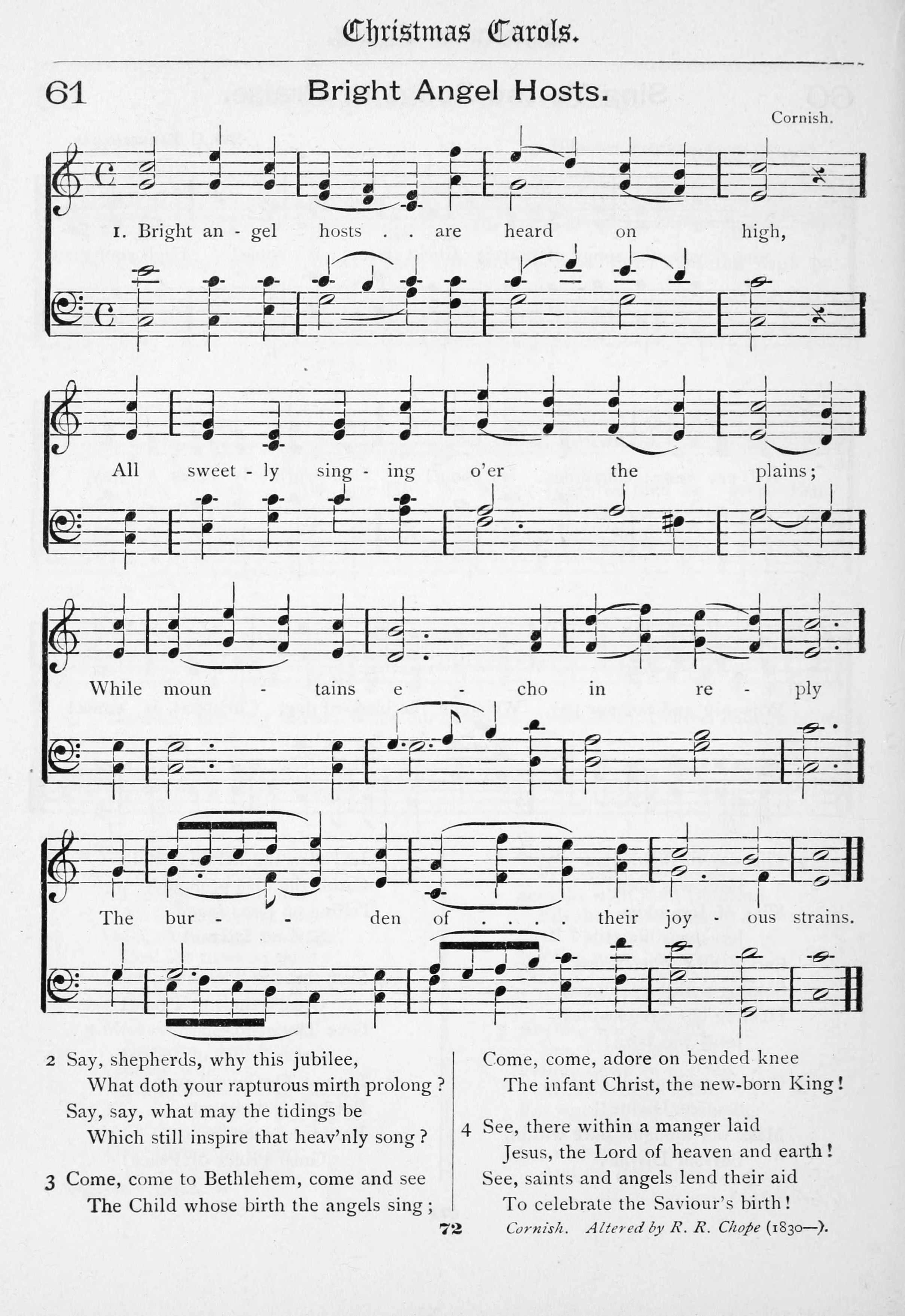
Bright Angel Hosts Are Heard on High
By Richard Robert Chope ; adapt. Richard Robert Chope (circa. 1870s)
Lyrics
1. Bright angel hosts are heard on high
All sweetly singing o’er the plains;
While mountains echo in reply
The burden of their joyous strains.
All sweetly singing o’er the plains;
While mountains echo in reply
The burden of their joyous strains.
2. Say, shepherds, why this jubilee,
What doth your rapturous mirth prolong?
Say, say what may the tidings be
Which still inspire that heav’nly song?
What doth your rapturous mirth prolong?
Say, say what may the tidings be
Which still inspire that heav’nly song?
3. Come, come to Bethlehem, come and see
The Child whose birth the angels sing;
Come, come, adore on bended knee
The Infant Christ, the newborn King!
The Child whose birth the angels sing;
Come, come, adore on bended knee
The Infant Christ, the newborn King!
4. See, there within a manger laid
Jesus, the Lord of Heav’n and earth!
See, saints and angels lend their aid
To celebrate the Savior’s birth!
Jesus, the Lord of Heav’n and earth!
See, saints and angels lend their aid
To celebrate the Savior’s birth!
Bible Reference
Luke 2:8-14; Luke 2:15-20; Matthew 2:1; Isaiah 9:6-7
Lectionary & readings
Open today’s (or any date’s) assigned scriptures and find related hymns across church calendars. Useful when planning worship around this song’s themes or its Bible reference.
Hymn scripture: Luke 2:8-14; Luke 2:15-20; Matthew 2:1; Isaiah 9:6-7
About This Hymn
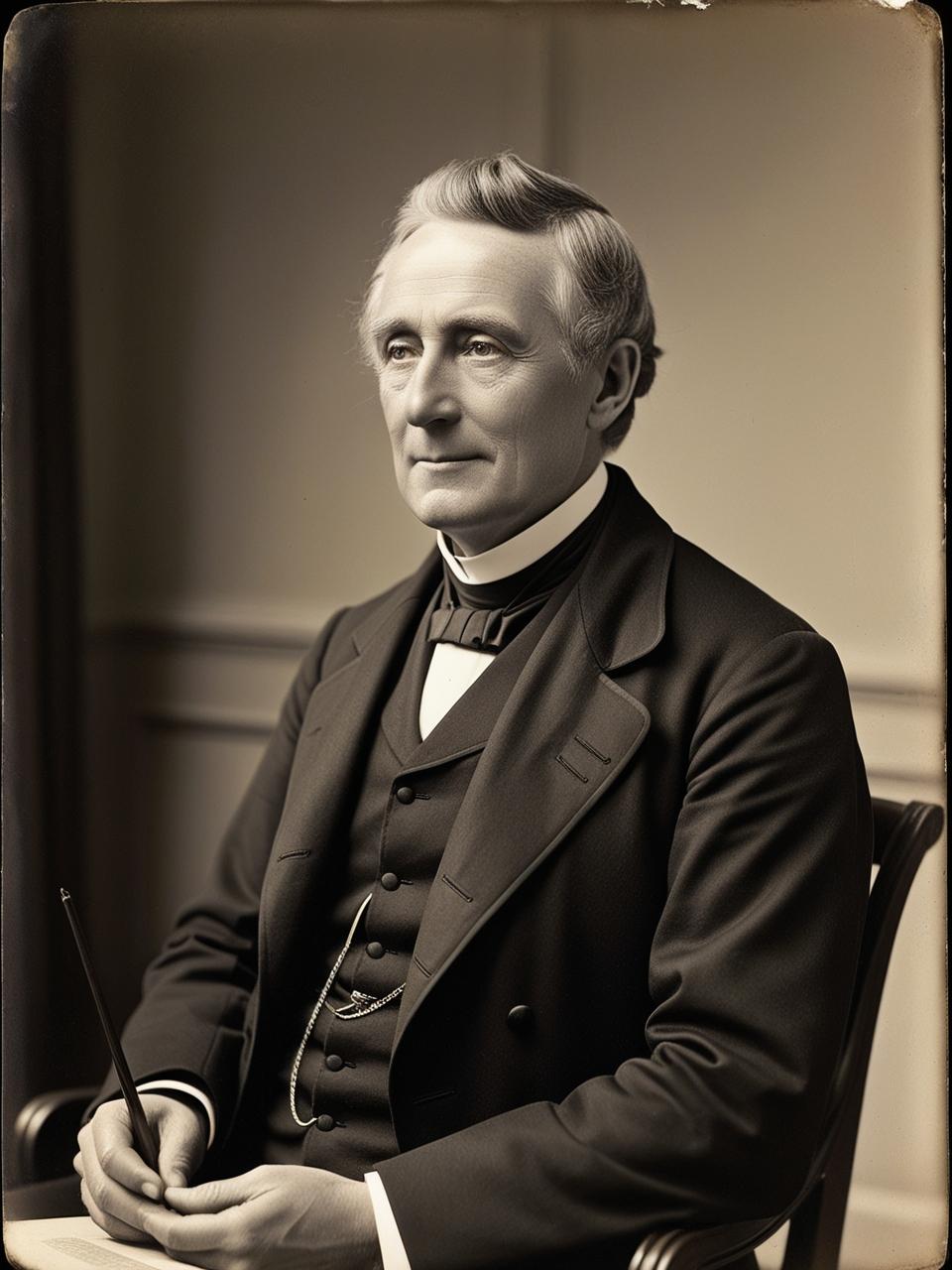
“Bright Angel Hosts Are Heard on High” is a traditional Christmas carol text adapted by Richard Robert Chope, an English clergyman, hymn editor, and writer who lived from 1830 to 1928. The carol celebrates the announcement of the birth of Jesus Christ to the shepherds near Bethlehem, drawing its central imagery from the second chapter of Luke's Gospel. Its opening stanza describes the angels singing in the heavens while the surrounding mountains echo their joyful proclamation. The remaining stanzas invite the shepherds to explain the heavenly celebration, direct worshippers toward Bethlehem to behold the newborn King, and conclude with an invitation to celebrate the birth of Jesus, the Lord of heaven and earth. The text appeared in Chope's Carols for Use in Church in 1875 and was subsequently included in Carols Old and Carols New, edited by Charles L. Hutchins and published in 1916.
The historical background of this carol connects it with the wider family of English versions of the French Christmas carol “Les Anges dans nos campagnes,” commonly known in English as “Angels We Have Heard on High.” The precise relationship between the various English forms is not entirely settled. Hymnological references identify Chope's version as a Cornish form that he adapted. This distinction is important because the traditional material predates Chope's printed version, and he should not necessarily be regarded as the originator of every element of the text. His contribution belongs to the nineteenth-century revival and publication of Christmas carols for church use.
The first stanza establishes the carol's central image: heavenly voices proclaiming the good news of Christ's birth. The angels' song is so joyful that the mountains appear to join in the praise. This poetic picture reflects Luke 2:13-14, where a multitude of the heavenly host praises God and announces peace on earth. The hymn presents the natural world as a setting for the celebration of God's saving work. The angels' song is not merely a beautiful sound accompanying the nativity story; it is a proclamation that the birth of Jesus has profound significance for humanity.
The second stanza turns the scene into a question addressed to the shepherds. Their extraordinary joy calls for an explanation, and the hymn invites worshippers to discover the reason for their celebration. This question-and-answer structure gives the carol a narrative quality. It encourages listeners to move beyond the outward beauty of the Christmas story and consider the identity of the child whose birth inspires the angels. The answer comes through the invitation to Bethlehem, where the shepherds are directed to see the child celebrated by the heavenly host.
The third stanza calls worshippers to approach Christ in reverence and adore the newborn King. Bethlehem becomes the destination of faith, and the manger becomes the place where the promised Saviour is revealed in humility. The contrast between the child's humble surroundings and His royal identity is central to the Christian understanding of the Incarnation. Jesus is not presented merely as an ordinary infant whose birth deserves sentimental remembrance. He is the promised Christ, whose coming fulfils God's redemptive purpose.
The final stanza emphasizes the identity and authority of Jesus as Lord of heaven and earth. The carol invites saints and angels alike to celebrate His birth, bringing the heavenly proclamation and the worship of the church together. This universal call to praise reflects the Christian conviction that Christ's coming is an event of enduring significance. Isaiah 9:6-7 points to the promised child whose kingdom is established with justice and peace, while Luke 2 presents His birth as good news of great joy.
The melody associated with this carol is listed by Hymnary under the tune name GRAND ISLAND. Historical sources also describe the carol's tune as Cornish, and the original composer has not been reliably identified. The Long Meter classification is recorded for the text in hymnological catalogues. Because historical collections sometimes print traditional carol texts with different musical settings, the tune name and composer should be checked against the particular edition used for a performance or publication.
“Bright Angel Hosts Are Heard on High” is appropriate for Christmas worship, carol services, lessons and carols, and programmes celebrating the birth of Christ. Its narrative movement from the angels' announcement to the shepherds' invitation and the adoration of the newborn King makes it accessible to congregations and choirs. By joining traditional carol imagery with the biblical account of the nativity, the hymn calls Christians to share the shepherds' wonder and give glory to God for the coming of Jesus Christ.
Staff Visualizer
Open in MIDI StudioPowered by HTML MIDI PLAYER, MIDI FILE Made by Hymnal Library. · Study chords & lyrics in MIDI Studio
Want weekly hymns and devotionals?
⭐ Recommend This Hymn
Share this beautiful hymn with others
This hymn also appears in these hymnals
Click a spine to pull out the hymnal, then open it.
Hymns with the same subject
More hymns about Christmas, Incarnation
- Calypso Carol (See him lying on a bed of straw) - Michael Perry
- O Come, O Come, Emmanuel - J. M. Neale
- Sweet Little Jesus Boy - Robert MacGimsey
- O Holy Night - Placide Cappeau
- Go, Tell It on the Mountain - John W. Work
- Away in a Manger - Martin Luther
- Hark! The Herald Angels Sing - Charles Wesley
- Angels We Have Heard on High - James Chadwick
More hymn subjects
Explore other themes across the library.
Hymns about Trinity
Hymns about Cross
Hymns about Marriage
Hymns about Resurrection
Hymns about Thanksgiving
Hymns about Baptism
Hymns about Ministry
Hymns about Lordship of Christ
Browse all subjects →
Recently Added Hymns
-
 Joy Fills Our Inmost Hearts TodayW. Chatterton Dix 1865
-
 In the Early Morning, Early (Christmas Morning)Frederick George Lee circa. 1880s
-
 A Boy Is Born In BethlehemAnonymous circa. 1400s
-
 A Shepherd Band Their Flocks Are Keepingunknown circa. 1860s
-
 Heart to Heart in Love UnitedNicolaus Ludwig circa. 1720s
Latest Updated Hymnals
-
Open
 The New Apostolic Church HymnalUpdated 3 days, 8 hours ago · 2008
-
Open
 400+ Christmas Carols Book: Sheet Music for PianoUpdated 4 days, 10 hours ago · 2014
-
Open
 The Temple HymnalUpdated 4 days, 19 hours ago · 1918
-
Open
 The Popular HymnalUpdated 4 days, 19 hours ago · 1918
-
Open
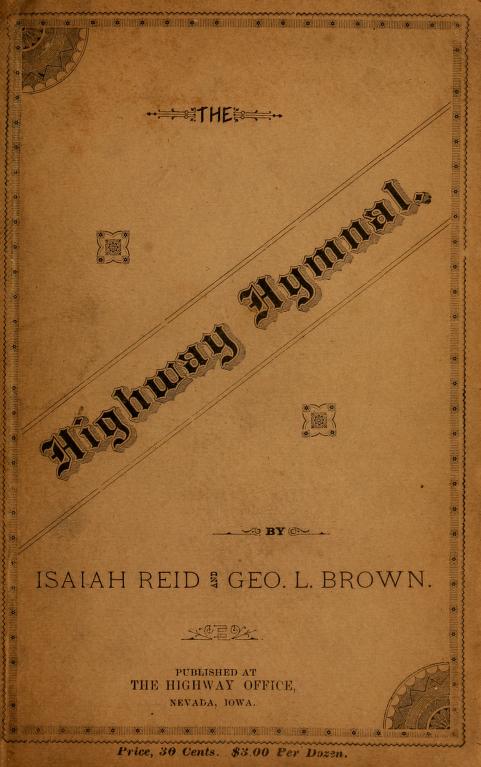 The Highway HymnalUpdated 4 days, 19 hours ago · 1886
Hymn Information

Click a linked name to open their biography.
MIDI File
Popular Hymns
Recent Blog Posts


Popular Blog Posts
-
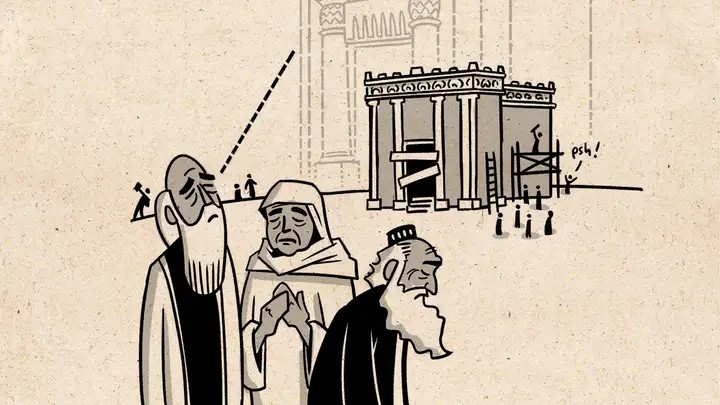 Lessons from the Book of Haggai: Putting God…4 months, 4 weeks ago
-
 Easter vs Passover: How a Biblical Feast Bec…6 months, 3 weeks ago
-
 The Full Story of the Birth of Jesus Christ:…10 months, 2 weeks ago
-
 The 30 Most Famous Christmas Hymns and Carols1 year, 1 month ago
-
 The Story Behind the Hymn “Amazing Grace”10 months, 2 weeks ago
Visit Us on Social Media
Latest from X (Twitter)
Tweets by HymnalLibraryLatest from Facebook
Latest on YouTube
Loading latest video...
Daily Bible Verse
Disclaimer
The hymns, sheet music, MIDI files, and related content on this website are provided for educational and research purposes only.
- Public Domain: Many of the hymns featured here are in the public domain and may be freely used.
- Copyrighted Works: Some hymns may still be under copyright protection. Where applicable, permission has either been requested from the copyright owner, or the content is shared under the principles of fair use for educational purposes.
⚠️ Important Notice: If you wish to reproduce, distribute, or use any copyrighted hymn beyond personal study or educational use, you must obtain permission directly from the copyright holder. This website does not grant any rights for commercial use yet.
If there is any other question please address it to us in our Contact Page, for further assistance. Thank you for using the site. May God Bless You.
Recently Added · Dictionary of Hymnology
Browse dictionary →
Can’t find a hymn or lyric?
Leave your question in the forum for others to answer — requests, missing lines, writers, and worship ideas welcome.