10 Famous Hymns That Were Published Posthumo…
4 days, 12 hours ago
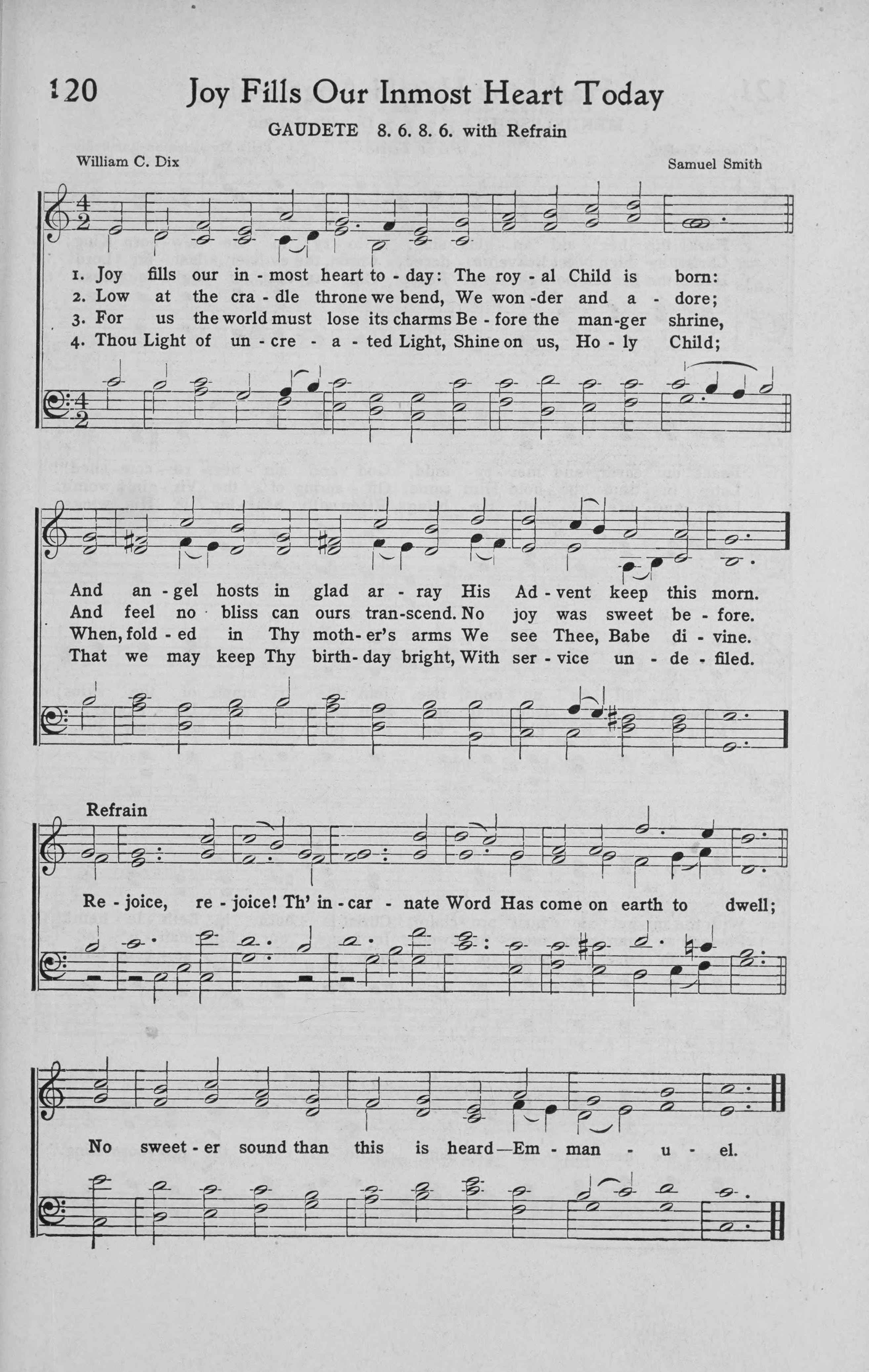
Joy Fills Our Inmost Hearts Today
By W. Chatterton Dix (1865)
Lyrics
1. Joy fills our inmost hearts to-day!
The royal Child is born;
And angel hosts in glad array
His Advent keep this morn.
Rejoice, rejoice! Th'incarnate Word
Has come on earth to dwell;
No sweeter sound than this is heard,
Emmanuel!
The royal Child is born;
And angel hosts in glad array
His Advent keep this morn.
Rejoice, rejoice! Th'incarnate Word
Has come on earth to dwell;
No sweeter sound than this is heard,
Emmanuel!
2. Low at the cradle throne we bend,
We wonder and adore;
And feel no bliss can ours transcend,
No joy was sweet before.
Rejoice, rejoice! Th'incarnate Word
Has come on earth to dwell;
No sweeter sound than this is heard,
Emmanuel!
We wonder and adore;
And feel no bliss can ours transcend,
No joy was sweet before.
Rejoice, rejoice! Th'incarnate Word
Has come on earth to dwell;
No sweeter sound than this is heard,
Emmanuel!
3. For us the world must lose its charms
Before the manger shrine,
When, folded in Thy mother's arms,
We see Thee, Babe divine.
Rejoice, rejoice! Th'incarnate Word
Has come on earth to dwell;
No sweeter sound than this is heard,
Emmanuel!
Before the manger shrine,
When, folded in Thy mother's arms,
We see Thee, Babe divine.
Rejoice, rejoice! Th'incarnate Word
Has come on earth to dwell;
No sweeter sound than this is heard,
Emmanuel!
4. Thou Light of uncreated Light,
Shine on us, Holy Child;
That we may keep Thy birthday bright,
With service undefiled.
Rejoice, rejoice! Th'incarnate Word
Has come on earth to dwell;
No sweeter sound than this is heard,
Emmanuel!
Shine on us, Holy Child;
That we may keep Thy birthday bright,
With service undefiled.
Rejoice, rejoice! Th'incarnate Word
Has come on earth to dwell;
No sweeter sound than this is heard,
Emmanuel!
Bible Reference
Isaiah 9:6-7; Luke 2:8-14; Matthew 2:1-11; John 1:14; Hebrews 1:3
Lectionary & readings
Open today’s (or any date’s) assigned scriptures and find related hymns across church calendars. Useful when planning worship around this song’s themes or its Bible reference.
Hymn scripture: Isaiah 9:6-7; Luke 2:8-14; Matthew 2:1-11; John 1:14; Hebrews 1:3
About This Hymn
“Joy Fills Our Inmost Hearts Today” is a Christmas hymn written by William Chatterton Dix, an English hymn writer whose works include several enduring hymns of Christian worship. Also known by the title “Rejoice! Rejoice!”, the hymn celebrates the birth of Jesus Christ and calls believers to respond to the Incarnation with wonder, adoration, and renewed devotion. Dix's text appeared in Four Joyful Hymns for Christmas Tide around 1865, published by George J. Palmer. The hymn combines the joy of the angels' announcement with a personal invitation to worship the newborn Saviour. Its recurring refrain proclaims that the incarnate Word has come to dwell on earth and identifies Emmanuel, meaning God with us, as the central message of Christmas.
The opening stanza announces the birth of the royal Child and depicts the angels rejoicing at His coming. This imagery draws directly from Luke 2:8-14, where an angel announces the birth of the Saviour to shepherds near Bethlehem, followed by a multitude of the heavenly host praising God. The hymn presents Christ's birth as an event worthy of universal celebration. Jesus is not merely another child born into the world, but the promised King whose coming fulfils God's redemptive purpose. The refrain emphasizes the mystery of the Incarnation: the eternal Word has come into the world and dwells among humanity. John 1:14 declares that the Word was made flesh and dwelt among us, revealing the glory of the only begotten Son of the Father.
The second stanza moves from the announcement of Christ's birth to the worshipper's response. At the cradle, believers bow in reverence, wonder, and adoration. The language expresses the profound joy of encountering the Saviour and recognizing the significance of His coming. The manger becomes a place of worship because the child lying there is the Lord who has come to redeem His people. This response echoes the example of the wise men in Matthew 2:1-11, who travelled to worship the child Jesus and presented Him with gifts. The hymn encourages Christians to approach the Christmas story not merely as a familiar tradition, but as a revelation that calls for sincere faith and devotion.
The third stanza considers the effect of Christ's presence upon the believer's affections. The world must lose its power to captivate the heart when compared with the surpassing worth of Jesus Christ. The image of the infant resting in His mother's arms combines the tenderness of the nativity with the confession that the child is divine. This theme challenges worshippers to examine their priorities. Christmas joy is not intended to be confined to seasonal celebrations or outward festivities. It should direct the heart toward Christ and encourage a deeper love for Him. The hymn thus connects the celebration of the Incarnation with the ongoing Christian life of devotion and sanctification.
The final stanza addresses Christ as the Light of uncreated Light and asks Him to shine upon His people. This language reflects the Christian confession that Jesus is not merely a human teacher who points toward truth, but the divine Son who reveals God's glory. Hebrews 1:3 describes Him as the brightness of God's glory and the express image of His person. The prayer that believers may keep Christ's birthday with undefiled service gives the hymn a practical conclusion. True celebration should lead to faithful living, sincere worship, and service that honours the Lord. The birth of Christ calls His followers not only to rejoice in what God has done, but also to live in a manner consistent with the grace they have received.
The hymn is associated with two tunes in hymnological collections. GAUDETE, composed by Samuel Smith, is a well-established setting for the text, while JOY, composed by Henry Gadsby, provides an alternative musical setting. These tunes should be credited separately because they are distinct compositions associated with the same words. The hymn's memorable refrain and joyful Christmas message make it suitable for carol services, Christmas worship, and congregational singing. Through its emphasis on the royal Child, the incarnate Word, and the believer's response of adoration and service, “Joy Fills Our Inmost Hearts Today” presents Christmas as both a celebration of Christ's coming and a call to renewed devotion to Him.
From the Dictionary of Hymnology
Related terms and concepts automatically matched to this hymn.
Alleluia, sing to Jesus Hymn
A Eucharistic hymn by W. Chatterton Dix, written about 1866 and first published in his Altar Songs, 1867, for Ascensiontide under the title “Redemption by the Precious Blood.”
Read moreStaff Visualizer
Open in MIDI StudioPowered by HTML MIDI PLAYER, MIDI FILE Made by Hymnal Library. · Study chords & lyrics in MIDI Studio
Want weekly hymns and devotionals?
⭐ Recommend This Hymn
Share this beautiful hymn with others
This hymn also appears in these hymnals
Click a spine to pull out the hymnal, then open it.
Hymns with the same subject
More hymns about Christmas, Closing of Worship, Glory of God, Joy, Praise
- Praise we our God with joy - Frederick Oakeley
- Joyful, Joyful, We Adore Thee - Henry Van Dyke
- O Holy Night - Placide Cappeau
- Glory to God on High - James Allen
- While Shepherds Watched Their Flocks - Nahum Tate
- Praise the Lord, Ye Heavens Adore Him - Richard Mant
- Never Cease to Praise - Jeff Bourque
- Glory Be to God on High - Charles Wesley
More hymn subjects
Recently Added Hymns
-
 Bright Angel Hosts Are Heard on HighRichard Robert Chope circa. 1870s
-
 In the Early Morning, Early (Christmas Morning)Frederick George Lee circa. 1880s
-
 A Boy Is Born In BethlehemAnonymous circa. 1400s
-
 A Shepherd Band Their Flocks Are Keepingunknown circa. 1860s
-
 Heart to Heart in Love UnitedNicolaus Ludwig circa. 1720s
Latest Updated Hymnals
-
Open
 The New Apostolic Church HymnalUpdated 2 days, 17 hours ago · 2008
-
Open
 400+ Christmas Carols Book: Sheet Music for PianoUpdated 3 days, 19 hours ago · 2014
-
Open
 The Temple HymnalUpdated 4 days, 4 hours ago · 1918
-
Open
 The Popular HymnalUpdated 4 days, 4 hours ago · 1918
-
Open
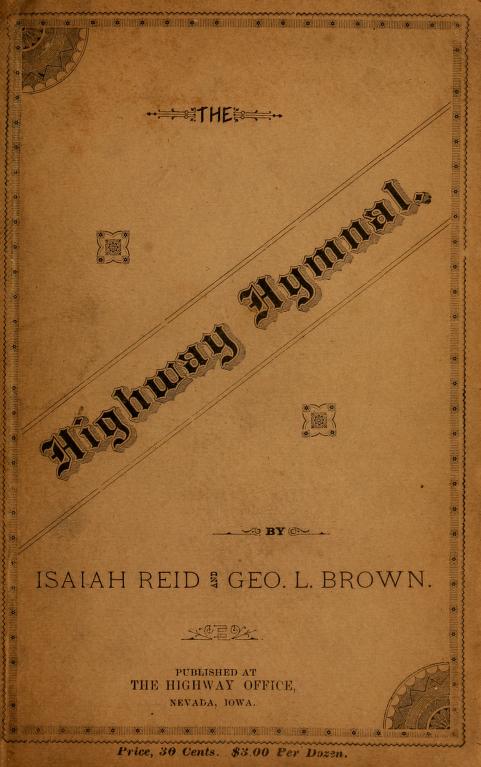 The Highway HymnalUpdated 4 days, 4 hours ago · 1886
Hymn Information

Click a linked name to open their biography.
MIDI File
More Hymns by W. Chatterton Dix
Popular Hymns
Recent Blog Posts


Popular Blog Posts
-
 Lessons from the Book of Haggai: Putting God…4 months, 4 weeks ago
-
 Easter vs Passover: How a Biblical Feast Bec…6 months, 3 weeks ago
-
 The Full Story of the Birth of Jesus Christ:…10 months, 2 weeks ago
-
 The 30 Most Famous Christmas Hymns and Carols1 year, 1 month ago
-
 The Story Behind the Hymn “Amazing Grace”10 months, 2 weeks ago
Visit Us on Social Media
Latest from X (Twitter)
Tweets by HymnalLibraryLatest from Facebook
Latest on YouTube
Loading latest video...
Daily Bible Verse
Disclaimer
The hymns, sheet music, MIDI files, and related content on this website are provided for educational and research purposes only.
- Public Domain: Many of the hymns featured here are in the public domain and may be freely used.
- Copyrighted Works: Some hymns may still be under copyright protection. Where applicable, permission has either been requested from the copyright owner, or the content is shared under the principles of fair use for educational purposes.
⚠️ Important Notice: If you wish to reproduce, distribute, or use any copyrighted hymn beyond personal study or educational use, you must obtain permission directly from the copyright holder. This website does not grant any rights for commercial use yet.
If there is any other question please address it to us in our Contact Page, for further assistance. Thank you for using the site. May God Bless You.
Can’t find a hymn or lyric?
Leave your question in the forum for others to answer — requests, missing lines, writers, and worship ideas welcome.