



Should Christians Celebrate Halloween?
1 day, 22 hours ago
The Holy Scriptures
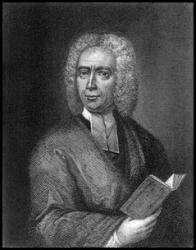
By Isaac Watts (1719)
Lyrics
1. God, who in various methods told
His mind and will to saints of old,
Sent down his Son, with truth and grace,
To teach us in these latter days.
His mind and will to saints of old,
Sent down his Son, with truth and grace,
To teach us in these latter days.
2. Our nation reads the written word,
That book of life, that sure record:
The bright inheritance of heav'n
Is by the sweet conveyance giv'n.
That book of life, that sure record:
The bright inheritance of heav'n
Is by the sweet conveyance giv'n.
3. God's kindest thoughts are here expressed,
Able to make us wise and bless'd;
The doctrines are divinely true,
Fit for reproof and comfort too.
Able to make us wise and bless'd;
The doctrines are divinely true,
Fit for reproof and comfort too.
4. Ye British isles, who read his love
In long epistles from above,
(He hath not sent his sacred word
To every land,) praise ye the Lord.
In long epistles from above,
(He hath not sent his sacred word
To every land,) praise ye the Lord.
Bible Reference
Psalm 19:7-11; Romans 15:4; 2 Timothy 3:15-17
Lectionary & readings
Open today’s (or any date’s) assigned scriptures and find related hymns across church calendars. Useful when planning worship around this song’s themes or its Bible reference.
Hymn scripture: Psalm 19:7-11; Romans 15:4; 2 Timothy 3:15-17
About This Hymn
“The Holy Scriptures” is Isaac Watts’s reverent hymn celebrating the divine authority, clarity, and transforming power of God’s written Word. Drawn chiefly from Psalm 19, this hymn reflects Watts’s lifelong desire to bring the truths of Scripture into clear, heartfelt language for congregational worship. Rather than treating the Bible as a mere religious text, Watts presents it as a living instrument through which God teaches, converts, comforts, and guides His people. The hymn emphasizes that Scripture is not only true, but sufficient for faith and life.
The opening thought centers on the Word of God as a source of wisdom and spiritual renewal. Echoing Psalm 19:7, the hymn highlights how Scripture converts the soul and makes the simple wise. This points to the gracious work of God through His Word, showing that spiritual understanding is not reserved for the learned alone, but is freely given to those who humbly receive divine instruction. Watts underscores that the authority of Scripture rests in God Himself, whose testimonies are sure and trustworthy.
As the hymn continues, it praises the purity and righteousness of God’s commands. Scripture enlightens the eyes and rejoices the heart, revealing both God’s holy standards and His gracious purposes. The Word is presented as a source of joy rather than burden, shaping the believer’s conscience and directing the path of obedience. Watts carefully balances reverence for God’s law with delight in its goodness, reflecting the biblical view that obedience flows from love and faith.
The hymn also echoes the Psalmist’s declaration that God’s Word is more valuable than gold and sweeter than honey. This imagery teaches believers to treasure Scripture above earthly riches, recognizing its eternal worth. Through Scripture, God warns, instructs, and promises great reward to those who keep His ways. In worship, “The Holy Scriptures” serves as a confession of trust in God’s Word and a prayer for hearts shaped by its truth. It reminds the church that Scripture remains God’s chosen means to reveal Christ, nurture faith, and lead His people in righteousness.
From the Dictionary of Hymnology
Related terms and concepts automatically matched to this hymn.
All ye that [who] love the Lord, rejoice Hymn
Isaac Watts’s paraphrase of Psalm cxlix., from his Psalms of David, 1719, titled “Praise God, all His saints; or, The Saints judging the World.” Most collections omit its final stanzas.
Read moreCome, let us join our cheerful songs Hymn
One of Watts’s best-known hymns (1707/1709) on Revelation 5 usually appears in four stanzas omitting “Let all that dwell above the sky”; Bingham supplies a Latin version.
Read moreCome, we that love the Lord Hymn
Isaac Watts’s “Heavenly Joy on Earth” (1707/1709), ten stanzas. Wesley’s Charlestown form (1736–7) and Cotterill’s “Come ye who love the Lord” (1819) head the many altered texts in later books.
Read moreStaff Visualizer
Open in MIDI StudioPowered by HTML MIDI PLAYER, MIDI FILE Made by Hymnal Library. · Study chords & lyrics in MIDI Studio

Want weekly hymns and devotionals?
⭐ Recommend This Hymn
Share this beautiful hymn with others
Hymns with the same subject
More hymns about Endtime, Praise, Scripture
- Salvation Has Been Brought Down - Albert E. Brumley
- Blessed Assurance - Fanny Crosby
- Revive Thy Work, O Lord! - Albert Midlane
- Don't you see my Jesus coming? - Caleb Jarvis Taylor
- Lord, With Glowing Heart I'd Praise Thee - Francis Scott Key
- Resurrection Hymn - Ella E. Miles
- What Rich Eternal Bursts Of Praise - G.W. Frazer
- Let All the People Praise Thee - Mrs. C. H. Morris
More hymn subjects
Explore other themes across the library.
Hymns about Easter
Hymns about Salvation
Hymns about Name of Jesus
Hymns about Ministry
Hymns about Incarnation
Hymns about Assurance
Hymns about Refuge
Hymns about Battle
Browse all subjects →
Latest Updated Hymnals
-
Open
 Book of Common Praise (BoCP1915)Updated 1 day, 12 hours ago · 1915
-
Open
 The New Apostolic Church HymnalUpdated 1 week ago · 2008
-
Open
 400+ Christmas Carols Book: Sheet Music for PianoUpdated 1 week, 1 day ago · 2014
-
Open
 The Temple HymnalUpdated 1 week, 1 day ago · 1918
-
Open
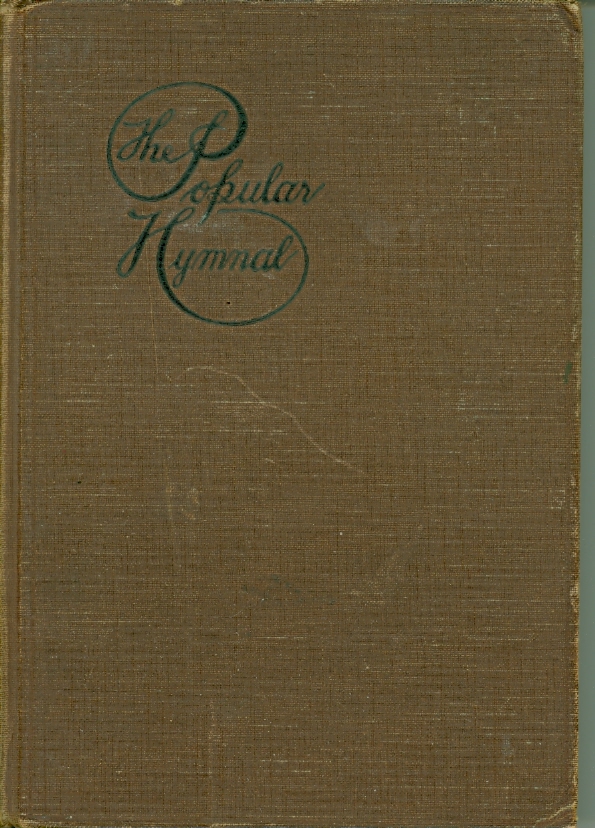 The Popular HymnalUpdated 1 week, 1 day ago · 1918
Hymn Information
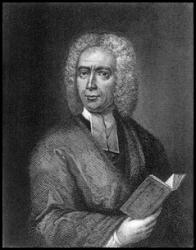
Click a linked name to open their biography.
MIDI File
Popular Hymns
Recent Blog Posts

Popular Blog Posts
-
 Lessons from the Book of Haggai: Putting God…5 months ago
-
 Easter vs Passover: How a Biblical Feast Bec…7 months ago
-
 The Full Story of the Birth of Jesus Christ:…10 months, 3 weeks ago
-
 The 30 Most Famous Christmas Hymns and Carols1 year, 2 months ago
-
 The Story Behind the Hymn “Amazing Grace”10 months, 2 weeks ago
Visit Us on Social Media
Latest from X (Twitter)
Tweets by HymnalLibraryLatest from Facebook
Latest on YouTube
Loading latest video...
Daily Bible Verse
Disclaimer
The hymns, sheet music, MIDI files, and related content on this website are provided for educational and research purposes only.
- Public Domain: Many of the hymns featured here are in the public domain and may be freely used.
- Copyrighted Works: Some hymns may still be under copyright protection. Where applicable, permission has either been requested from the copyright owner, or the content is shared under the principles of fair use for educational purposes.
⚠️ Important Notice: If you wish to reproduce, distribute, or use any copyrighted hymn beyond personal study or educational use, you must obtain permission directly from the copyright holder. This website does not grant any rights for commercial use yet.
If there is any other question please address it to us in our Contact Page, for further assistance. Thank you for using the site. May God Bless You.
Recently Added · Dictionary of Hymnology
Browse dictionary →
Can’t find a hymn or lyric?
Leave your question in the forum for others to answer — requests, missing lines, writers, and worship ideas welcome.