


Don’t Put Your Elderly in Homes: What Does t…
1 day, 3 hours ago
Jesus, the Very Thought of Thee
Lyrics
1. Jesus, the very thought of thee
with sweetness fills the breast;
but sweeter far thy face to see,
and in thy presence rest.
with sweetness fills the breast;
but sweeter far thy face to see,
and in thy presence rest.
2. O hope of every contrite heart,
O joy of all the meek,
to those who fall, how kind thou art!
How good to those who seek!
O joy of all the meek,
to those who fall, how kind thou art!
How good to those who seek!
3. But what to those who find? Ah, this
nor tongue nor pen can show;
the love of Jesus, what it is,
none but his loved ones know.
nor tongue nor pen can show;
the love of Jesus, what it is,
none but his loved ones know.
4. Jesus, our only joy be thou,
as thou our prize wilt be;
Jesus, be thou our glory now,
and through eternity.
as thou our prize wilt be;
Jesus, be thou our glory now,
and through eternity.
Bible Reference
Psalm 42: 1 ,2
About This Hymn
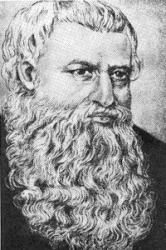
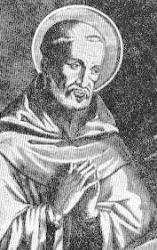
Author – Attributed to Bernard of Clairvaux (1091–1153)
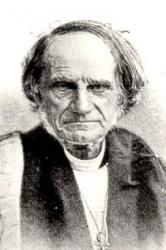
English Translator – Edward Caswall (1814–1878)
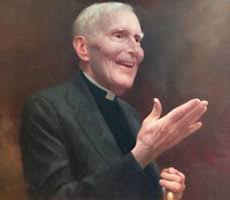
Composer – John B. Dykes (1823–1876)
Tune Name – “St. Agnes”
Meter – Common Meter (CM, 86.86)
Scripture Reference – Psalm 42:1–2: “As the hart panteth after the water brooks, so panteth my soul after thee, O God. My soul thirsteth for God, for the living God: when shall I come and appear before God?” (KJV)
This devotional hymn, rooted in the rich soil of medieval Christianity, reflects the deep longing of the human soul for union with Christ. Traditionally attributed to Bernard of Clairvaux, a towering spiritual figure of the 12th century, the hymn text originates from the Latin poem “Dulcis Jesu Memorial”—a lengthy meditation on the sweetness of Jesus’ name and presence. Though sometimes dismissed as part of the so-called “Dark Ages,” the medieval period saw remarkable contributions to Christian devotion, and Bernard’s legacy stands out for its depth and influence. Born into a noble family in Fontaine, Burgundy, Bernard was raised in a home that valued both honor and godliness. He chose a monastic life in his early twenties, entering the austere Cistercian monastery at Cîteaux. In a short time, his spiritual vigor and charismatic leadership led to the founding of numerous monasteries across Europe, with Bernard serving as abbot of Clairvaux—a position he held until his death in 1153.
Regarded as the greatest monastic leader of his age, Bernard wielded extraordinary influence across religious and political realms. His writings emphasized personal holiness, love for Christ, and obedience to God, often expressed in vivid, passionate language. He was commissioned by the Pope to preach the Second Crusade and, through his preaching, many lives were transformed—men once known for vice publicly committed themselves to Christ and bore the cross into battle. Martin Luther, centuries later, called Bernard “the best monk that ever lived.” Bernard’s literary contributions included numerous theological treatises, sermons, and devotional works. The hymn attributed to him, later rendered into English, comes from a 192-line poem devoted to meditating on the name of Jesus—a name that, to Bernard, evoked love, strength, comfort, and holiness. His deeply personal spirituality and poetic style helped shape much of Western devotional thought during the High Middle Ages.
The English translation of this hymn comes from Edward Caswall, a 19th-century Anglican priest who later converted to Roman Catholicism. Born in Yateley, Hampshire, England, in 1814, Caswall became deeply involved in the Oxford Movement—a revival within the Anglican Church that sought to recover Catholic traditions of worship and doctrine. After resigning his Anglican ministry in 1847, he was received into the Roman Catholic Church and, following the death of his wife, was ordained a Catholic priest. Caswall dedicated much of his life to translating ancient Latin hymns into English, his most notable collection being Lyra Catholica (1849), which included nearly 200 translations. His work preserved the theological richness and poetic elegance of the original texts, making them accessible to a new generation of English-speaking worshipers. Among his best-known translations are “May Jesus Christ Be Praised” and several hymns from the Roman Breviary.
The tune most often paired with this hymn, “St. Agnes,” was composed by the prolific English musician John Bacchus Dykes. A master of 19th-century Anglican hymnody, Dykes composed over 300 hymn tunes, many of which are still widely sung today. St. Agnes exemplifies his style—lyrical, reverent, and harmonically rich—providing a fitting musical setting for a hymn centered on adoration and longing. Named after Saint Agnes, the early Christian martyr, the tune carries a gentle, contemplative mood that enhances the devotional quality of Caswall’s translation. Dykes’s musical contributions also include such timeless favorites as “Holy, Holy, Holy,” “I Heard the Voice of Jesus Say,” “Eternal Father, Strong to Save,” and “Lead, Kindly Light.” His compositions continue to be cherished for their theological sensitivity and melodic accessibility.
The enduring appeal of this hymn lies in its intimate tone—a soul thirsting for the presence of Christ, echoing the cry of the psalmist in Psalm 42. Rather than focusing on doctrinal exposition or historical events, it captures the essence of Christian devotion: a heart drawn irresistibly toward its Savior. Through the combined efforts of Bernard, Caswall, and Dykes, worshipers are given words and melody to express that timeless desire—to see and be near Jesus. It is a hymn of deep inward reflection, making it a fitting choice for personal devotion, communion services, and seasons like Lent, when the Church pauses to contemplate the suffering, love, and beauty of Christ.
From the Dictionary of Hymnology
Related terms and concepts automatically matched to this hymn.
Aeterna coeli gloria History
Hymnological profile of the fifth-century Friday Lauds hymn "Aeterna coeli gloria," detailing its manuscript sources, acrostic structure, and English translations.
Read moreAdeste fideles laeti triumphantes History
Comprehensive entry for the celebrated Christmas hymn "Adeste fideles," tracing its origin, Latin textual traditions, French and English centos, and numerous English translations.
Read more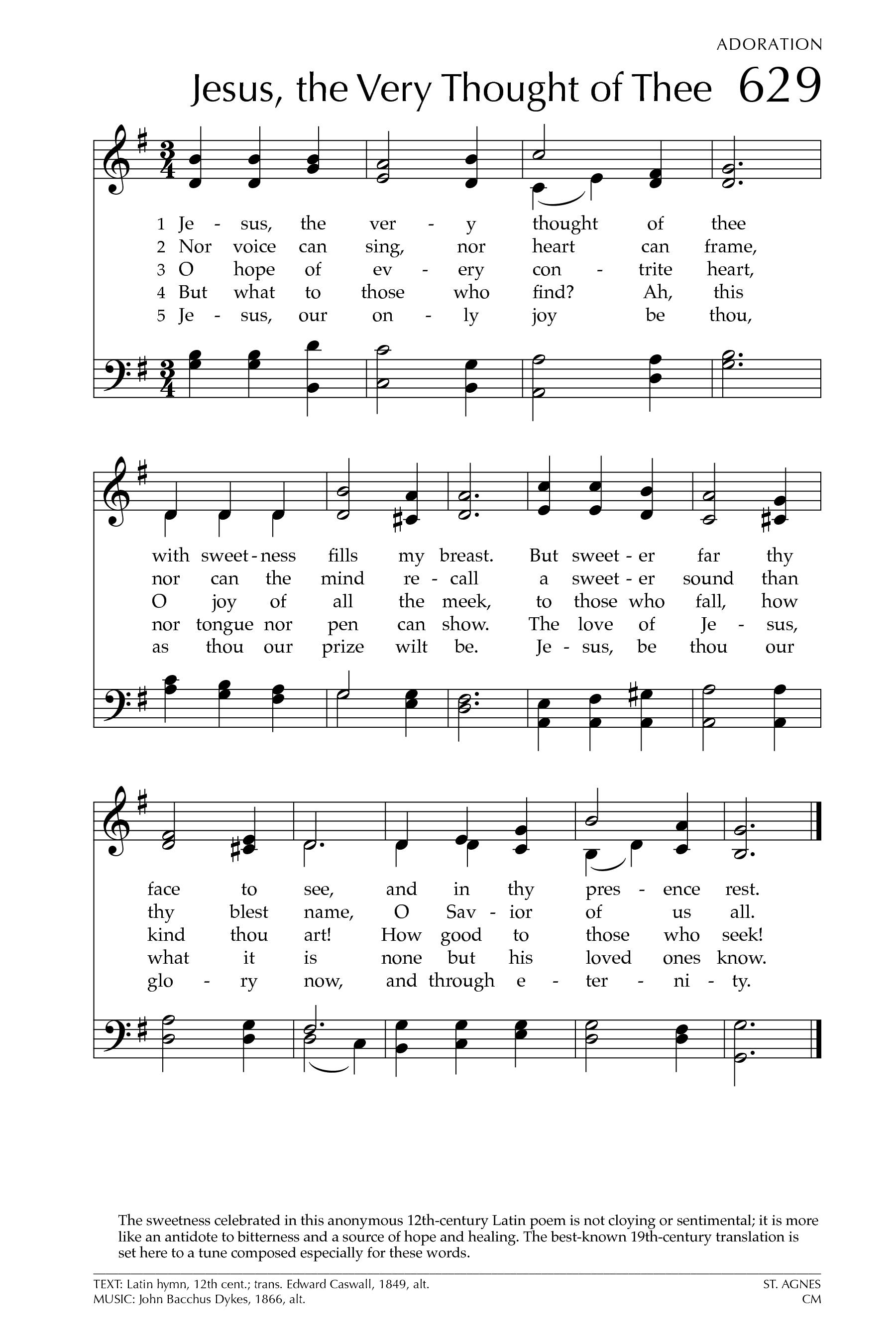

📬 Subscribe to Our Devotional Updates
Receive weekly hymns, devotionals, and website features directly in your inbox.
✅ Thank you! You'll start receiving our updates soon.
⭐ Recommend This Hymn
Share this beautiful hymn with others
This hymn is found in these hymnals
Open the hymnal that contains this hymn:
Hymns with the same subject
More hymns about Repentance
- Look and Live — William A. Ogden
- Pass Me Not, O Gentle Savior — Fanny Crosby
- Lord, I'm Coming Home — William J. Kirkpatrick
- Nearer, Still Nearer — Mrs. C. H. Morris
- Come, Ye Sinners, Poor and Needy — Joseph Hart
- Create In Me A Clean Heart, O God — Gilberto Barreto
- The Old Account Settled Long Ago — Frank M. Graham
- Depth of Mercy! Can There Be? — Charles Wesley
More hymn subjects
Explore other themes across the library.
Hymns about Altar Call
Hymns about Gratitude
Hymns about Cross
Hymns about Confession
Hymns about Redeemer
Hymns about Atonement
Hymns about Mercy of God
Hymns about Hope
Browse all subjects →
Recently Added Hymns
Latest Updated Hymnals
-
Open
 The People's HymnalUpdated 2 weeks, 4 days ago · 1961
 -
Open
 Book of Common Praise (BoCP1915)Updated 2 months, 3 weeks ago · 1915
 -
Open
 Our Great Redeemer's PraiseUpdated 4 months, 2 weeks ago · 2022
 -
Open
 The Parish Hymnal (1873)Updated 4 months, 3 weeks ago · 1873
 -
Open
 Book of Common Praise (BCP1998)Updated 5 months ago · 1998
Hymn Information
To view the author's biography, click their name above.
MIDI File
Ready to load
Download MIDI
More Hymns by Bernard of Clairvaux
Popular Hymns
Recent Blog Posts



Popular Blog Posts
-
 Lessons from the Book of Haggai: Putting God…4 months ago
 -
 Easter vs Passover: How a Biblical Feast Bec…6 months ago
 -
 The Full Story of the Birth of Jesus Christ:…9 months, 3 weeks ago
 -
 The 30 Most Famous Christmas Hymns and Carols1 year, 1 month ago
 -
 The Story Behind the Hymn “Amazing Grace”9 months, 3 weeks ago
Visit Us on Social Media
Latest from X (Twitter)
Tweets by HymnalLibraryLatest from Facebook
Latest on YouTube
Loading latest video...
Daily Bible Verse
Disclaimer
The hymns, sheet music, MIDI files, and related content on this website are provided for educational and research purposes only.
- Public Domain: Many of the hymns featured here are in the public domain and may be freely used.
- Copyrighted Works: Some hymns may still be under copyright protection. Where applicable, permission has either been requested from the copyright owner, or the content is shared under the principles of fair use for educational purposes.
⚠️ Important Notice: If you wish to reproduce, distribute, or use any copyrighted hymn beyond personal study or educational use, you must obtain permission directly from the copyright holder. This website does not grant any rights for commercial use yet.
If there is any other question please address it to us in our Contact Page, for further assistance. Thank you for using the site. May God Bless You.
Recently Added · Dictionary of Hymnology
Browse dictionary →- Jonathan Bush Atchinson 2 weeks, 1 day ago · Biography 112
- At Thy transfiguration, Lord 2 weeks, 1 day ago · Hymnology 113
- At Thy Feet, our God and Father 2 weeks, 1 day ago · Hymnology 106
- At Thy feet, O Christ, we lay 2 weeks, 1 day ago · Hymnology 97
- At Thy command, our dearest Lord 2 weeks, 1 day ago · Hymnology 114