


What Does Hebrews 6:4-6 Mean? Can a Christia…
1 day, 10 hours ago
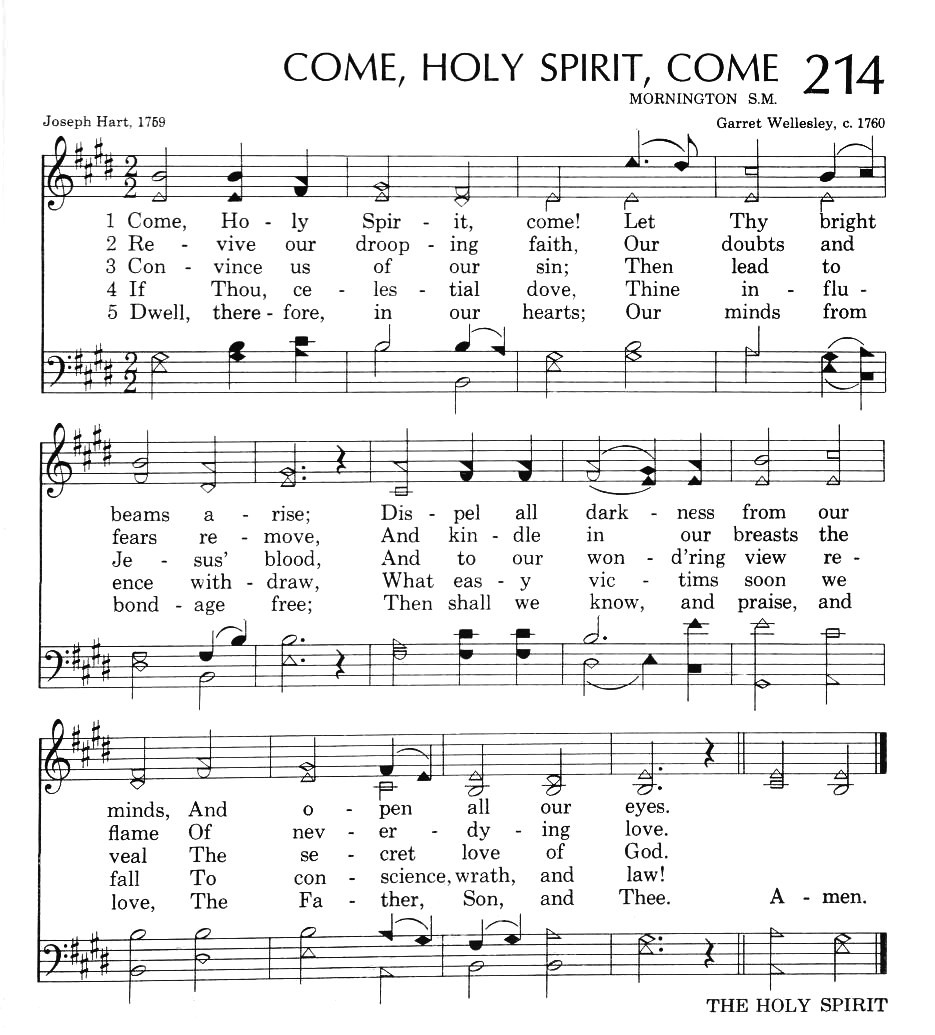
Invoking the Spirit (Come, Holy Spirit, Come; Let Thy Bright Beams Arise)
By Joseph Hart (1759)
Lyrics
1. Come, Holy Spirit, come;
Let thy bright beams arise;
Dispel the darkness from our minds,
And open all our eyes.
Let thy bright beams arise;
Dispel the darkness from our minds,
And open all our eyes.
2. Cheer our desponding hearts,
Thou heav'nly Paraclete;
Give us to lie with humble hope
At our Redeemer's feet.
Thou heav'nly Paraclete;
Give us to lie with humble hope
At our Redeemer's feet.
3. Revive our drooping faith;
Our doubts and fears remove;
And kindle in our breasts the flames
Of never-dying love.
Our doubts and fears remove;
And kindle in our breasts the flames
Of never-dying love.
4. Convince us of our sin;
Then lead to Jesus' blood,
And to our wond'ring view, reveal
The secret love of God.
Then lead to Jesus' blood,
And to our wond'ring view, reveal
The secret love of God.
5. 'Tis thine to cleanse the heart,
To sanctify the soul,
To pour fresh life in ev'ry part,
And new create the whole.
To sanctify the soul,
To pour fresh life in ev'ry part,
And new create the whole.
6. Dwell, therefore, in our hearts;
Our minds from bondage free;
Then we shall know and praise and love
The Father, Son, and Thee.
Our minds from bondage free;
Then we shall know and praise and love
The Father, Son, and Thee.
Bible Reference
Psalm 51:10-12; Psalm 85:6; Ezekiel 11:19; John 14:16-17; John 14:26; John 16:8-13; Romans 8:26; 1 Corinthians 2:11-14
Lectionary & readings
Open today’s (or any date’s) assigned scriptures and find related hymns across church calendars. Useful when planning worship around this song’s themes or its Bible reference.
Hymn scripture: Psalm 51:10-12; Psalm 85:6; Ezekiel 11:19; John 14:16-17; John 14:26; John 16:8-13; Romans 8:26; 1 Corinthians 2:11-14
About This Hymn
“Invoking the Spirit,” beginning “Come, Holy Spirit, come; Let Thy bright beams arise,” is a hymn by Joseph Hart, first published in his 1759 collection Hymns Composed on Various Subjects, with the Author's Experience. The original hymn was headed “To the Holy Ghost” and was intended for Whitsuntide, the traditional Christian observance of Pentecost. Its central purpose is to pray for the Holy Spirit's illuminating, comforting, renewing, and sanctifying work in the hearts of believers.
The opening stanza asks the Holy Spirit to dispel spiritual darkness and open the understanding to divine truth. The following stanzas pray for comfort in discouragement, renewed faith, freedom from doubts and fears, and a deeper love for God. The hymn also asks the Spirit to convict the heart of sin and lead the sinner to Jesus Christ and the cleansing provided through His sacrifice. Its later themes include the cleansing of the heart, the sanctification of the soul, and the renewal of the whole person. The hymn therefore presents the Holy Spirit's ministry as more than inward consolation: He exposes sin, directs people to Christ, strengthens faith, and produces spiritual transformation.
The biblical foundation is especially evident in Psalm 51:10-12, where David prays for a clean heart and a right spirit, and John 16:8, which describes the Spirit's work of reproving the world of sin. John 14:26 identifies the Holy Ghost as the Comforter and Teacher promised by Christ. These passages illuminate the hymn's petitions for understanding, conviction, comfort, and renewal. The text also reflects the biblical truth that spiritual life cannot be produced by human effort alone, but depends upon God's gracious work within the heart.
The hymn was adapted by later hymn writers and editors, and some familiar versions differ from Hart's original wording. Augustus Montague Toplady included an altered version in his 1776 collection Psalms and Hymns, helping to establish a text that became common in later hymnals. The tune MORNINGTON, composed by Thomas Hastings, is one setting associated with the hymn. Other hymnals pair it with tunes such as HAYDN, CAMBRIDGE, and FRANCONIA. The meter is 6.6.8.6, also known as Short Meter. The hymn is suitable for Pentecost services, prayer meetings, worship focused on spiritual renewal, and congregational appeals for the Holy Spirit's guidance and sanctifying influence.
From the Dictionary of Hymnology
Related terms and concepts automatically matched to this hymn.
A form of words though e'er so sound Hymn
Joseph Hart's 1759 hymn on the spiritual power of the Kingdom of God, based on First Corinthians 4:20 and favored in ultra-Calvinistic hymnals.
Read moreJohn Quincy, Adam History
Biographical entry for John Quincy Adams (1767–1848), sixth President of the United States, diplomat, Unitarian, and writer of hymns and psalm versions.
Read moreAh, when shall I awake History
Hymnological entry for Charles Wesley's 1741 prayer hymn "Ah, when shall I awake," detailing its publication history and inclusion in the Wesleyan Hymn-Book.
Read moreStaff Visualizer
Open in MIDI StudioPowered by HTML MIDI PLAYER, MIDI FILE Made by Hymnal Library. · Study chords & lyrics in MIDI Studio
Want weekly hymns and devotionals?
⭐ Recommend This Hymn
Share this beautiful hymn with others
This hymn is found in these hymnals
Open the hymnal that contains this hymn:
Hymns with the same subject
More hymns about Comfort of the Spirit, Guidance of the Spirit, Holy Spirit, New Birth, Prayer
- Come, Holy Ghost, in Love - Robert II, King of France
- Precious Lord, Take My Hand - Thomas Andrew Dorsey
- 'Til the Storm Passes By - Mosie Lister
- The Comforter Has Come - Francis Bottome
- The Lord Is My Shepherd - James Montgomery
- Wonderful, Merciful Savior - Dawn Rodgers
- Blessed Quietness - M. P. Ferguson
- Did You Think to Pray? - M. A. Kidder
More hymn subjects
Explore other themes across the library.
Hymns about Rest
Hymns about Home
Hymns about Battle
Hymns about Funeral
Hymns about Gratitude
Hymns about Wedding
Hymns about Christmas
Hymns about Adoration
Browse all subjects →
Latest Updated Hymnals
-
Open
 Book of Common Praise (BoCP1915)Updated 4 hours ago · 1915
 -
Open
 The People's HymnalUpdated 3 days, 4 hours ago · 1961
 -
Open
 Our Great Redeemer's PraiseUpdated 5 months ago · 2022
 -
Open
 The Parish Hymnal (1873)Updated 5 months, 1 week ago · 1873
 -
Open
 Book of Common Praise (BCP1998)Updated 5 months, 3 weeks ago · 1998
Hymn Information
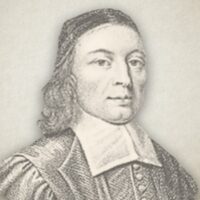
Click a linked name to open their biography.
MIDI File
More Hymns by Joseph Hart
Popular Hymns
Recent Blog Posts


Popular Blog Posts
-
 Lessons from the Book of Haggai: Putting God…4 months, 3 weeks ago
 -
 Easter vs Passover: How a Biblical Feast Bec…6 months, 2 weeks ago
 -
 The Full Story of the Birth of Jesus Christ:…10 months, 1 week ago
 -
 The 30 Most Famous Christmas Hymns and Carols1 year, 1 month ago
 -
 The Story Behind the Hymn “Amazing Grace”10 months, 1 week ago
Visit Us on Social Media
Latest from X (Twitter)
Tweets by HymnalLibraryLatest from Facebook
Latest on YouTube
Loading latest video...
Daily Bible Verse
Disclaimer
The hymns, sheet music, MIDI files, and related content on this website are provided for educational and research purposes only.
- Public Domain: Many of the hymns featured here are in the public domain and may be freely used.
- Copyrighted Works: Some hymns may still be under copyright protection. Where applicable, permission has either been requested from the copyright owner, or the content is shared under the principles of fair use for educational purposes.
⚠️ Important Notice: If you wish to reproduce, distribute, or use any copyrighted hymn beyond personal study or educational use, you must obtain permission directly from the copyright holder. This website does not grant any rights for commercial use yet.
If there is any other question please address it to us in our Contact Page, for further assistance. Thank you for using the site. May God Bless You.
Recently Added · Dictionary of Hymnology
Browse dictionary →- Behold the angel flies 5 days, 1 hour ago · History 4
- Behold the amazing sight 5 days, 1 hour ago · History 1
- Behold my Servant! see Him rise 5 days, 1 hour ago · History 0
- Behold, how good a thing it is, And how, &c. 5 days, 1 hour ago · History 0
- Behold! how glorious is yon sky 5 days, 1 hour ago · History 0
Can’t find a hymn or lyric?
Leave your question in the forum for others to answer — requests, missing lines, writers, and worship ideas welcome.