

What Does Hebrews 6:4-6 Mean? Can a Christia…
1 day, 8 hours ago
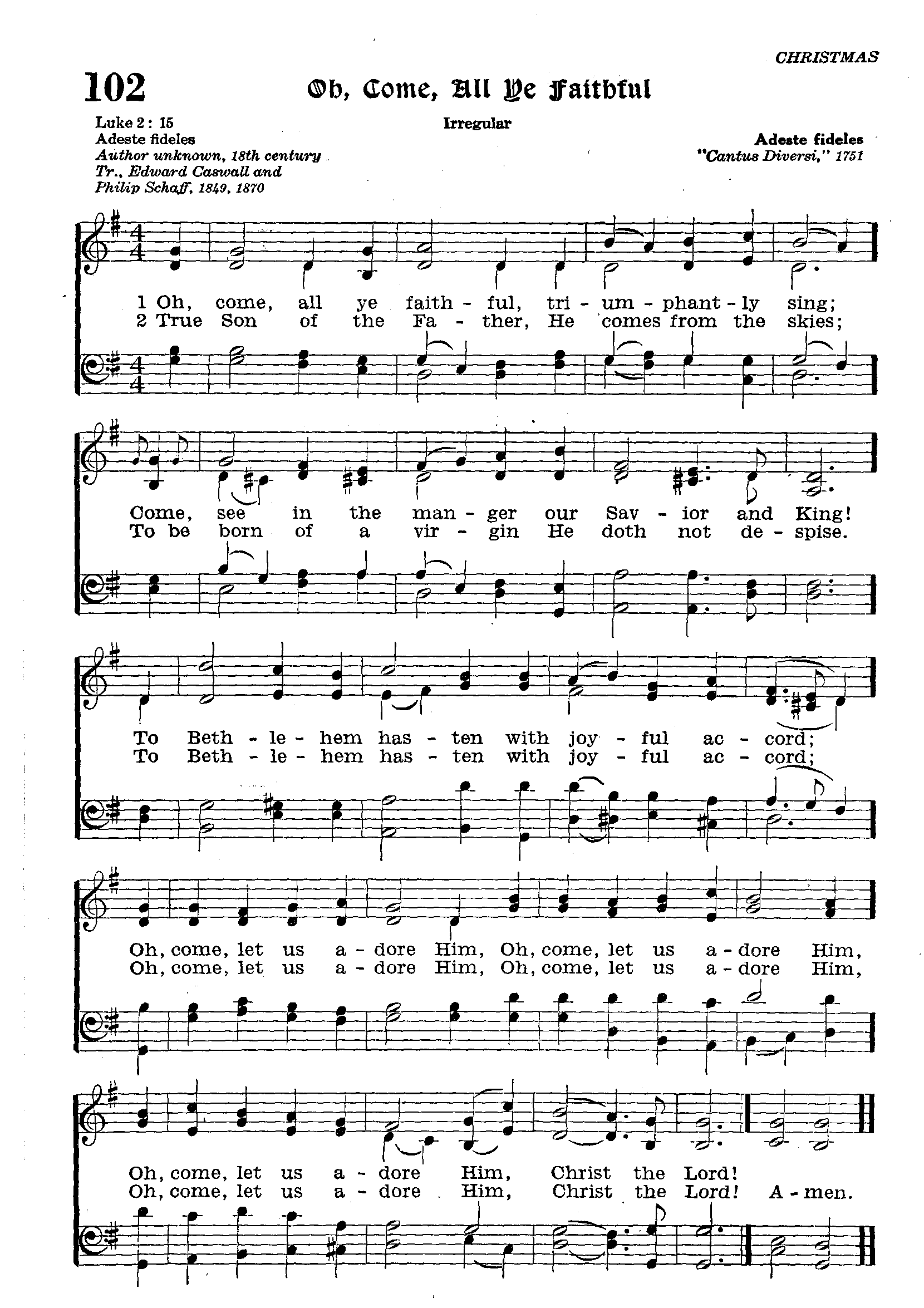
Come Hither, Ye Faithful
By John Francis Wade ; tr. Edward Caswall (1840)
Lyrics
1. Oh, come all ye faithful, triumphantly sing:
Come, see in the manger our Savior and King!
To Bethlehem hasten with joyful accord:
Oh, come, let us adore Him,
Oh, come, let us adore Him,
Oh, come, let us adore Him,
Christ the Lord!
Come, see in the manger our Savior and King!
To Bethlehem hasten with joyful accord:
Oh, come, let us adore Him,
Oh, come, let us adore Him,
Oh, come, let us adore Him,
Christ the Lord!
2. True Son of the Father, He comes from the skies;
To be born of a virgin He doth not despise;
To Bethlehem hasten, with joyful accord;
Oh, come, let us adore Him,
Oh, come, let us adore Him,
Oh, come, let us adore Him,
Christ the Lord!
To be born of a virgin He doth not despise;
To Bethlehem hasten, with joyful accord;
Oh, come, let us adore Him,
Oh, come, let us adore Him,
Oh, come, let us adore Him,
Christ the Lord!
3. Hark, hark to the angels all singing in heaven,
"To God in the Highest all glory be given!"
To Bethlehem hasten, with joyful accord;
Oh, come, let us adore Him,
Oh, come, let us adore Him,
Oh, come, let us adore Him,
Christ the Lord!
"To God in the Highest all glory be given!"
To Bethlehem hasten, with joyful accord;
Oh, come, let us adore Him,
Oh, come, let us adore Him,
Oh, come, let us adore Him,
Christ the Lord!
4. To Thee, then, O Jesus, this day of Thy birth,
Be glory and honor through heaven and earth.
True Godhead incarnate, omnipotent Word!
Oh, come, let us adore Him,
Oh, come, let us adore Him,
Oh, come, let us adore Him,
Christ the Lord!
Be glory and honor through heaven and earth.
True Godhead incarnate, omnipotent Word!
Oh, come, let us adore Him,
Oh, come, let us adore Him,
Oh, come, let us adore Him,
Christ the Lord!
Bible Reference
Luke 2:8-16; John 1:1-14; Philippians 2:6-11; Colossians 1:15-20
Lectionary & readings
Open today’s (or any date’s) assigned scriptures and find related hymns across church calendars. Useful when planning worship around this song’s themes or its Bible reference.
Hymn scripture: Luke 2:8-16; John 1:1-14; Philippians 2:6-11; Colossians 1:15-20
About This Hymn
“Come Hither, Ye Faithful” is an English translation of the traditional Latin Christmas hymn Adeste fideles, associated with John Francis Wade. The English translation was made by Edward Caswall in 1840. The hymn summons the faithful to gather with joy and hasten to Bethlehem, where the newborn Saviour and King is worthy of their worship. Its recurring invitation to adore Christ gives the hymn its central theme and makes it especially suitable for Christmas worship and celebrations of the incarnation.
The text presents the birth of Jesus as more than an ordinary event in human history. Christ is confessed as the Son of the Father, born of a virgin and worthy of glory throughout heaven and earth. The stanza referring to the angels recalls the heavenly proclamation of God's glory at the birth of Jesus, while the final stanza emphasizes the mystery of the Word made flesh. The hymn therefore brings together the humility of Christ's birth and the majesty of His divine identity. The manger is not merely a scene of tenderness, but the place where Christians behold and worship their incarnate Lord.
The biblical foundation is particularly clear in Luke 2:15-16, where the shepherds respond to the angelic announcement by going to Bethlehem to see the child. The hymn also reflects John 1:14, which declares, “And the Word was made flesh, and dwelt among us.” Its emphasis on Christ's divine identity connects with Philippians 2:6-11, which describes Christ's humiliation and subsequent exaltation. These passages help explain why the hymn calls worshippers not simply to remember the nativity, but to respond with faith, reverence, gratitude, and adoration.
The tune ADESTE FIDELES is closely associated with the hymn and is widely used for Christmas congregational singing. Historical sources associate Wade with both the Latin text and the musical tradition surrounding it, although the hymn's development includes variations and additions by later writers. Caswall's English translation is distinct from other well-known English versions of Adeste fideles, including Frederick Oakeley's translation that begins “O Come, All Ye Faithful, Joyful and Triumphant.” The wording and number of stanzas can vary between hymnals. This hymn is appropriate for Christmas Eve, Christmas Day, Nativity services, and any gathering centered on the worship of Jesus Christ as Lord.
From the Dictionary of Hymnology
Related terms and concepts automatically matched to this hymn.
Adeste fideles laeti triumphantes History
Comprehensive entry for the celebrated Christmas hymn "Adeste fideles," tracing its origin, Latin textual traditions, French and English centos, and numerous English translations.
Read moreAeterna coeli gloria History
Hymnological profile of the fifth-century Friday Lauds hymn "Aeterna coeli gloria," detailing its manuscript sources, acrostic structure, and English translations.
Read moreAdoro Te devote, latens Deitas History
Detailed history of St. Thomas Aquinas's famous Eucharistic hymn "Adoro Te devote," tracing its origins, liturgical use, manuscript traditions, and numerous English translations.
Read moreStaff Visualizer
Open in MIDI StudioPowered by HTML MIDI PLAYER, MIDI FILE Made by Hymnal Library. · Study chords & lyrics in MIDI Studio
Want weekly hymns and devotionals?
⭐ Recommend This Hymn
Share this beautiful hymn with others
This hymn is found in these hymnals
Open the hymnal that contains this hymn:
Hymns with the same subject
More hymns about Christmas, Incarnation, Jesus Christ
- O Come, O Come, Emmanuel - J. M. Neale
- O Holy Night - Placide Cappeau
- Go, Tell It on the Mountain - John W. Work
- Away in a Manger - Martin Luther
- While Shepherds Watched Their Flocks - Nahum Tate
- Good Christian Men, Rejoice - J. M. Neale
- Mary's Boy Child - Jester Hairston
- See, amid the Winter's Snow - Edward Caswall
More hymn subjects
Explore other themes across the library.
Hymns about Pentecost
Hymns about Name of Jesus
Hymns about Faith
Hymns about Funeral
Hymns about Service
Hymns about Church
Hymns about Faithfulness of God
Hymns about Altar Call
Browse all subjects →
Latest Updated Hymnals
-
Open
 Book of Common Praise (BoCP1915)Updated an hour ago · 1915
 -
Open
 The People's HymnalUpdated 3 days, 2 hours ago · 1961
 -
Open
 Our Great Redeemer's PraiseUpdated 5 months ago · 2022
 -
Open
 The Parish Hymnal (1873)Updated 5 months, 1 week ago · 1873
 -
Open
 Book of Common Praise (BCP1998)Updated 5 months, 3 weeks ago · 1998
Hymn Information
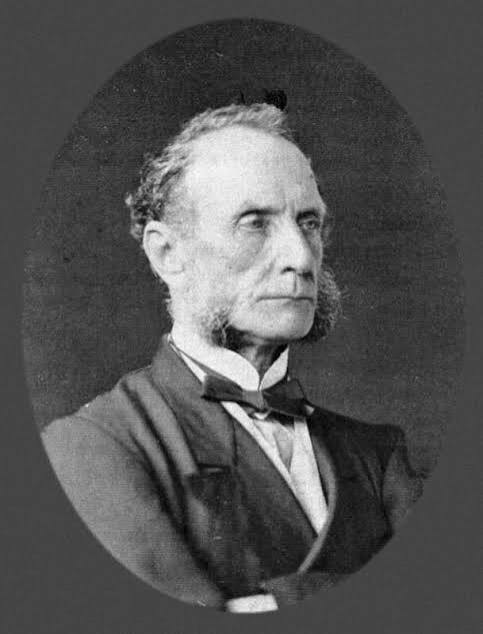
Click a linked name to open their biography.
MIDI File
More Hymns by John Francis Wade
Popular Hymns
Recent Blog Posts


Popular Blog Posts
-
 Lessons from the Book of Haggai: Putting God…4 months, 3 weeks ago
 -
 Easter vs Passover: How a Biblical Feast Bec…6 months, 2 weeks ago
 -
 The Full Story of the Birth of Jesus Christ:…10 months, 1 week ago
 -
 The 30 Most Famous Christmas Hymns and Carols1 year, 1 month ago
 -
 The Story Behind the Hymn “Amazing Grace”10 months, 1 week ago
Visit Us on Social Media
Latest from X (Twitter)
Tweets by HymnalLibraryLatest from Facebook
Latest on YouTube
Loading latest video...
Daily Bible Verse
Disclaimer
The hymns, sheet music, MIDI files, and related content on this website are provided for educational and research purposes only.
- Public Domain: Many of the hymns featured here are in the public domain and may be freely used.
- Copyrighted Works: Some hymns may still be under copyright protection. Where applicable, permission has either been requested from the copyright owner, or the content is shared under the principles of fair use for educational purposes.
⚠️ Important Notice: If you wish to reproduce, distribute, or use any copyrighted hymn beyond personal study or educational use, you must obtain permission directly from the copyright holder. This website does not grant any rights for commercial use yet.
If there is any other question please address it to us in our Contact Page, for further assistance. Thank you for using the site. May God Bless You.
Recently Added · Dictionary of Hymnology
Browse dictionary →- Behold the angel flies 4 days, 23 hours ago · History 4
- Behold the amazing sight 4 days, 23 hours ago · History 1
- Behold my Servant! see Him rise 4 days, 23 hours ago · History 0
- Behold, how good a thing it is, And how, &c. 4 days, 23 hours ago · History 0
- Behold! how glorious is yon sky 4 days, 23 hours ago · History 0
Can’t find a hymn or lyric?
Leave your question in the forum for others to answer — requests, missing lines, writers, and worship ideas welcome.