
What Is Godliness?
1 week, 4 days ago
Adeste Fideles
Lyrics
1. Adeste, fideles,
laeti, triumphantes,
venite, venite in Bethlehem;
natum videte
regem angelorum:
laeti, triumphantes,
venite, venite in Bethlehem;
natum videte
regem angelorum:
Refrain:
venite, adoremus,
venite, adoremus,
venite, adoremus Dominum.
venite, adoremus,
venite, adoremus,
venite, adoremus Dominum.
2. Deum de Deo,
Lumen de Lumine,
gestant puellae viscera,
Deum verum,
genitum, non factum:
Lumen de Lumine,
gestant puellae viscera,
Deum verum,
genitum, non factum:
3. . Cantet nunc hymnos
chorus angelorum;
cantet nunc aula caelestium:
Gloria
in excelsis Deo!
chorus angelorum;
cantet nunc aula caelestium:
Gloria
in excelsis Deo!
4. Ergo qui natus
die hodierna,
Jesu, tibi sit gloria:
Patris aeterni
verbum caro factum:
die hodierna,
Jesu, tibi sit gloria:
Patris aeterni
verbum caro factum:
Bible Reference
Luke 2:1-20; Matthew 1:18-25; Matthew 2:1-11; John 1:1-14; Philippians 2:5-11; Hebrews 1:1-6
About This Hymn
Adeste Fideles, commonly known in English as "O Come, All Ye Faithful," is one of the most celebrated Christmas hymns in Christian worship. The Latin text is attributed to John Francis Wade, an English Catholic musician, copyist, and teacher who lived from circa 1711 to 1786. The earliest surviving manuscript bearing Wade's name is dated around 1743, and modern hymn scholarship generally recognizes him as both the author of the Latin hymn and the composer or principal source of its famous melody.
The Latin opening, Adeste fideles, laeti triumphantes, calls the faithful to come joyfully to Bethlehem and behold the newborn King of angels. The hymn is therefore fundamentally a summons to worship. Rather than simply describing the events surrounding Christ's birth, it places the worshiper within the Christmas scene and calls upon Christians to approach Bethlehem with faith, joy, and adoration. The repeated refrain, Venite, adoremus, Dominum, meaning "Come, let us adore the Lord," gives the hymn its central message. Christ's birth is not merely an event to remember, but a divine revelation demanding worship.
The second stanza develops the mystery of the Incarnation with profound theological language. Christ is proclaimed as "God of God" and "Light of Light," language closely associated with the Nicene Creed. The child lying in Bethlehem is therefore not merely an extraordinary human being, but the eternal Son of God who has taken human flesh. This truth corresponds beautifully with John 1:14, "And the Word was made flesh, and dwelt among us." The hymn joins the Christmas narrative with the great confession of the Christian faith concerning the deity of Christ.
Another important feature of Adeste Fideles is its heavenly imagery. The angels are summoned to sing, and the worship of heaven is joined to the worship of believers on earth. The words "Gloria in excelsis Deo" echo the angelic proclamation in Luke 2:14. Bethlehem becomes the meeting place of heaven and earth, where angels announce the Savior's arrival and shepherds and believers respond with praise. The hymn therefore captures both the humility of Christ's birth and the majesty of the One who has come.
The original Latin hymn consisted of four stanzas in its earliest form. Additional stanzas appeared in later versions, and different traditions preserved different selections. The familiar English version, "O Come, All Ye Faithful, Joyful and Triumphant," is principally associated with the translation by Frederick Oakeley, while other English translations were produced by writers including John Mason Neale.
The melody ADESTE FIDELES is inseparable from the hymn's enduring popularity. It is also attributed to Wade, although the history of the tune has been debated. The melody appeared in Wade's manuscript tradition in the eighteenth century and became widely known under the alternative name "Portuguese Hymn", because of its association with the Portuguese Embassy Chapel in London.
At its heart, Adeste Fideles is a hymn of joyful Christ-centered worship. It begins with the journey to Bethlehem, moves into the mystery of the Incarnation, joins the angels in heavenly praise, and concludes by giving glory to Jesus Christ, the eternal Word made flesh. Its enduring appeal comes from the simplicity and strength of its invitation: believers are called to come, behold the Savior, and adore Him as Christ the Lord.
From the Dictionary of Hymnology
Related terms and concepts automatically matched to this hymn.
Adeste fideles laeti triumphantes History
Comprehensive entry for the celebrated Christmas hymn "Adeste fideles," tracing its origin, Latin textual traditions, French and English centos, and numerous English translations.
Read moreAeterna coeli gloria History
Hymnological profile of the fifth-century Friday Lauds hymn "Aeterna coeli gloria," detailing its manuscript sources, acrostic structure, and English translations.
Read moreA day, a day of glory Hymn
John Mason Neale's joyful 1860 Christmas carol, written expressly for Edmund Sedding's Antient Christmas Carols and later featured in the People's Hymnal.
Read more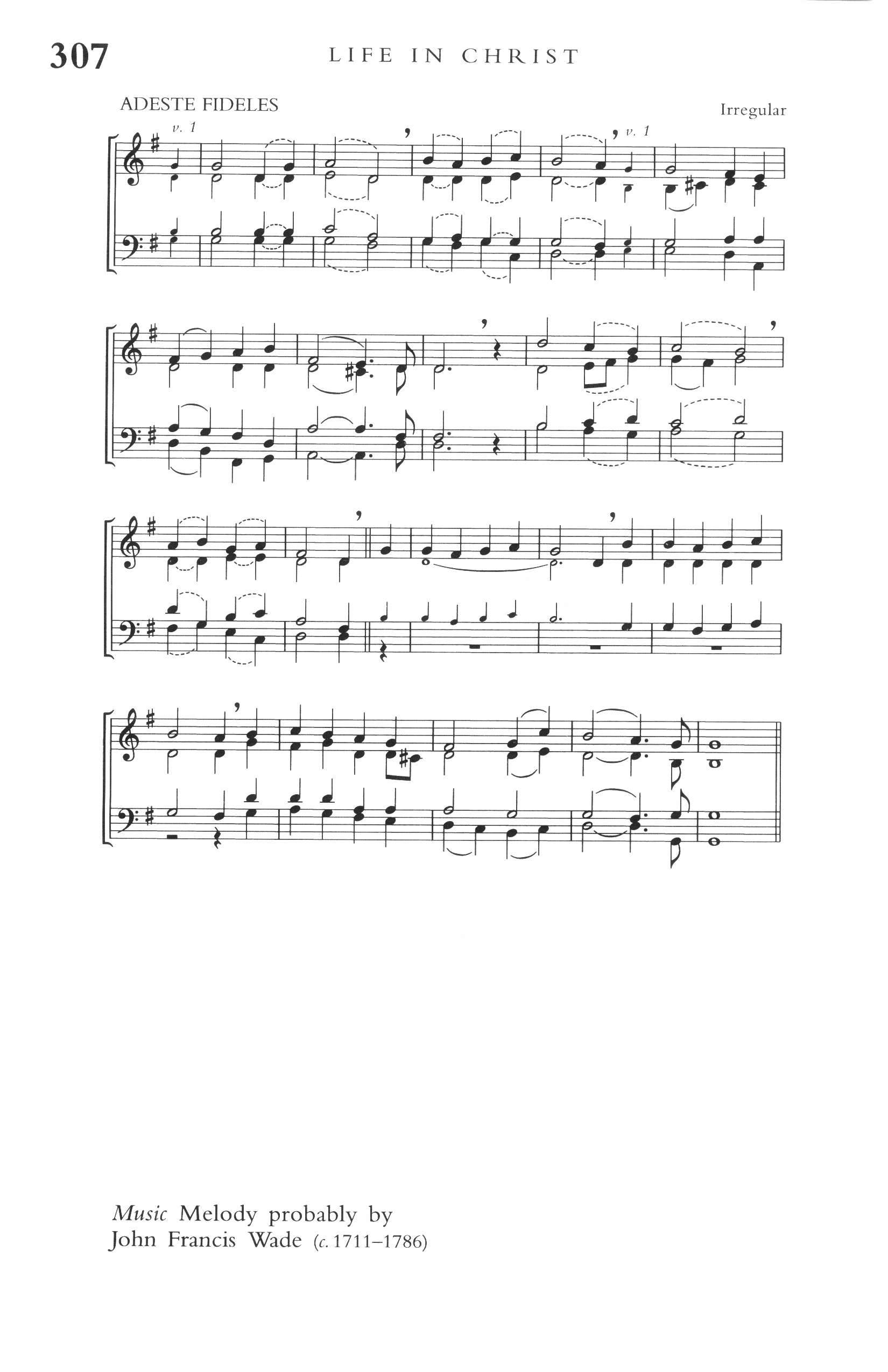

📬 Subscribe to Our Devotional Updates
Receive weekly hymns, devotionals, and website features directly in your inbox.
✅ Thank you! You'll start receiving our updates soon.
⭐ Recommend This Hymn
Share this beautiful hymn with others
This hymn is found in these hymnals
Open the hymnal that contains this hymn:
Hymns with the same subject
More hymns about Altar Call, Christmas, Worship
- O Come, All Ye Faithful — Frederick Oakeley
- Angels from the Realms of Glory — James Montgomery
- In the Bleak Midwinter — Christina Georgina Rossetti
- Love Came Down at Christmas — Christina Georgina Rossetti
- What is this perfume so appealing? — Traditional English Carol
- I Cannot Tell Why — W. Y. Fullerton
- Exult in the Savior's Birth — Matt Boswell
- Ye, Shepherds Arise — Traditional English Carol
More hymn subjects
Recently Added Hymns
-
 Let All Together Praise Our GodNikolaus Herman 1560
 -
 Holy, Holy, Holy, Lord, God of hosts, Eternal KingChristopher Wordsworth 1862
 -
 Hail, Redeemer, King DivinePatrick Brennan 1856
 -
 Father, We Thank Thee, Who Hast PlantedBland Tucker 1939
 -
 Father, See Thy Children Bending at Thy ThroneWilliam B. Trevelyan 1906
Latest Updated Hymnals
-
Open
 The People's HymnalUpdated 2 weeks, 2 days ago · 1961
 -
Open
 Book of Common Praise (BoCP1915)Updated 2 months, 3 weeks ago · 1915
 -
Open
 Our Great Redeemer's PraiseUpdated 4 months, 2 weeks ago · 2022
 -
Open
 The Parish Hymnal (1873)Updated 4 months, 3 weeks ago · 1873
 -
Open
 Book of Common Praise (BCP1998)Updated 5 months ago · 1998
Hymn Information
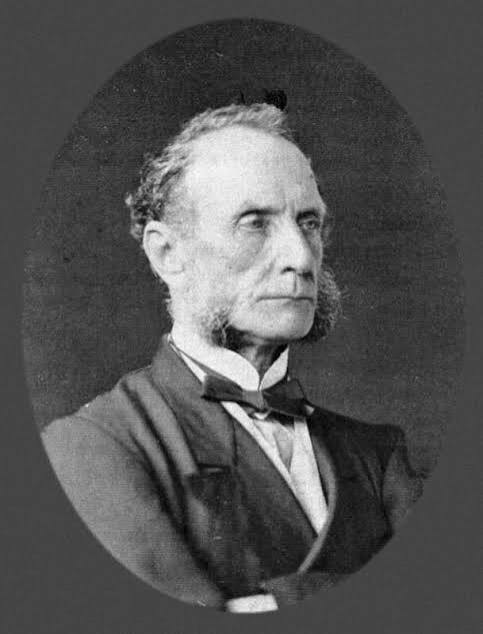
To view the author's biography, click their name above.
MIDI File
Ready to load
Download MIDI
Popular Hymns
Recent Blog Posts



Popular Blog Posts
-
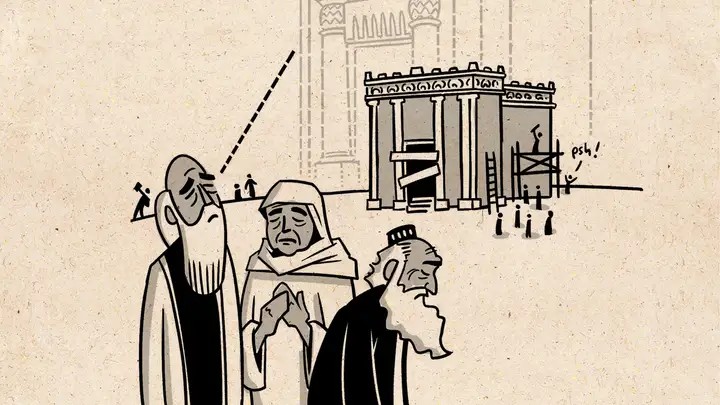 Lessons from the Book of Haggai: Putting God…4 months ago
 -
 Easter vs Passover: How a Biblical Feast Bec…6 months ago
 -
 The Full Story of the Birth of Jesus Christ:…9 months, 3 weeks ago
 -
 The 30 Most Famous Christmas Hymns and Carols1 year, 1 month ago
 -
 The Story Behind the Hymn “Amazing Grace”9 months, 2 weeks ago
Visit Us on Social Media
Latest from X (Twitter)
Tweets by HymnalLibraryLatest from Facebook
Latest on YouTube
Loading latest video...
Daily Bible Verse
Disclaimer
The hymns, sheet music, MIDI files, and related content on this website are provided for educational and research purposes only.
- Public Domain: Many of the hymns featured here are in the public domain and may be freely used.
- Copyrighted Works: Some hymns may still be under copyright protection. Where applicable, permission has either been requested from the copyright owner, or the content is shared under the principles of fair use for educational purposes.
⚠️ Important Notice: If you wish to reproduce, distribute, or use any copyrighted hymn beyond personal study or educational use, you must obtain permission directly from the copyright holder. This website does not grant any rights for commercial use yet.
If there is any other question please address it to us in our Contact Page, for further assistance. Thank you for using the site. May God Bless You.
Recently Added · Dictionary of Hymnology
Browse dictionary →- Jonathan Bush Atchinson 1 week, 6 days ago · Biography 108
- At Thy transfiguration, Lord 1 week, 6 days ago · Hymnology 107
- At Thy Feet, our God and Father 1 week, 6 days ago · Hymnology 100
- At Thy feet, O Christ, we lay 1 week, 6 days ago · Hymnology 92
- At Thy command, our dearest Lord 1 week, 6 days ago · Hymnology 109