Joseph Hart
Biography
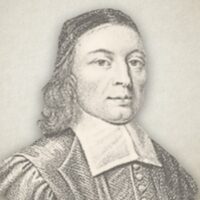
Joseph Hart was an influential English hymn writer and Independent minister whose work became a cornerstone of Calvinistic Nonconformist worship in the 18th and 19th centuries. Born in London in 1712, Hart’s early years were marked by a classical education and a career as a teacher of learned languages. However, he described his early spiritual life as a period of deep internal conflict, characterized by a mixture of loose conduct and intense, recurring convictions of sin. It was not until 1757, at the age of forty-five, that he experienced a definitive conversion after attending a service at a Moravian chapel in Fetter Lane. This transformation sparked a prolific period of creative output, during which he composed the vast majority of his most earnest and doctrinally focused hymns.
In 1759, Hart published his primary collection, Hymns Composed on Various Subjects, which included a detailed preface describing his spiritual journey and "experience." That same year, he was appointed minister of the Independent Chapel in Jewin Street, London, where he served until his death. He continued to expand his hymnological contributions with a Supplement in 1762 and an Appendix in 1765. These works were eventually consolidated into a single volume that remained popular for generations due to its passionate focus on the substitutionary atonement and the person of the Redeemer. His hymns were noted for their emotional intensity, often balancing the "terror of the law" with the "consolation of the Gospel."
Among his most enduring works is the classic invitation hymn "Come, Ye Sinners, Poor and Wretched," which remains a staple of evangelical liturgy today. Other widely recognized hymns include the doxological "This God is the God We Adore" and the evocative prayer "Come, Holy Spirit, Come." His compositions often tackled complex theological themes such as final perseverance, the high priesthood of Christ, and the internal struggle of the believer, as seen in hymns like "If Ever It Could Come to Pass" and "O For a Glance of Heavenly Day."
Hart’s hymns are characterized by a rugged, unvarnished honesty regarding human depravity and a subsequent "passionate love" for Christ as the "All in All." Even his more somber works, such as those written for public fasts or Gethsemane meditations like "Jesus, While He Dwelt Below," are permeated by a sense of urgent piety. When he died in 1768, he was buried in Bunhill Fields, and his funeral was attended by thousands, a testament to the profound impact his verses had on the spiritual life of London’s dissenting community. Today, his work continues to be valued for its doctrinal clarity and its raw, experiential power.
Dictionary of Hymnology
Hart, Joseph Biography
Independent hymn-writer (1712–1768), minister of Jewin Street Chapel; Hymns (1759) with Supplement (1762) and Appendix (1765). Column also covers medieval poet Hartmann von der Aue and his crusader hymn.
ReadCome, Holy Spirit, come, Let Thy bright beams, &c Hymn
Joseph Hart’s 1759 address “To the Holy Ghost” is widely known in Toplady’s altered Church of England text; Americans often follow Toplady, while some books keep Hart’s original lines.
ReadCome, ye sinners, poor and wretched Hymn
Joseph Hart invitation hymn (1759), headed “Come, and welcome, to Jesus Christ.” Conyers and Toplady reshaped it; altered first lines and more than twenty variant forms followed.
ReadHymns by Joseph Hart
Includes hymns they wrote and hymns where they are credited as co-author, translator, paraphraser, or adapter.
| # | Title | Year | Views | |
|---|---|---|---|---|
| 1 | Come, Ye Sinners, Poor and Needy | 1759 | 3471 | View |
| 2 | Invoking the Spirit (Come, Holy Spirit, Come; Let Thy Bright Beams Arise) | 1759 | 54 | View |
Recently added hymns
Suggestions or corrections: contact us.
Leave it in the forum for others to answer — hymn requests, lyrics help, writers, worship planning, and more.