




What Is the Difference Between Psalms, Hymns…
1 day, 21 hours ago
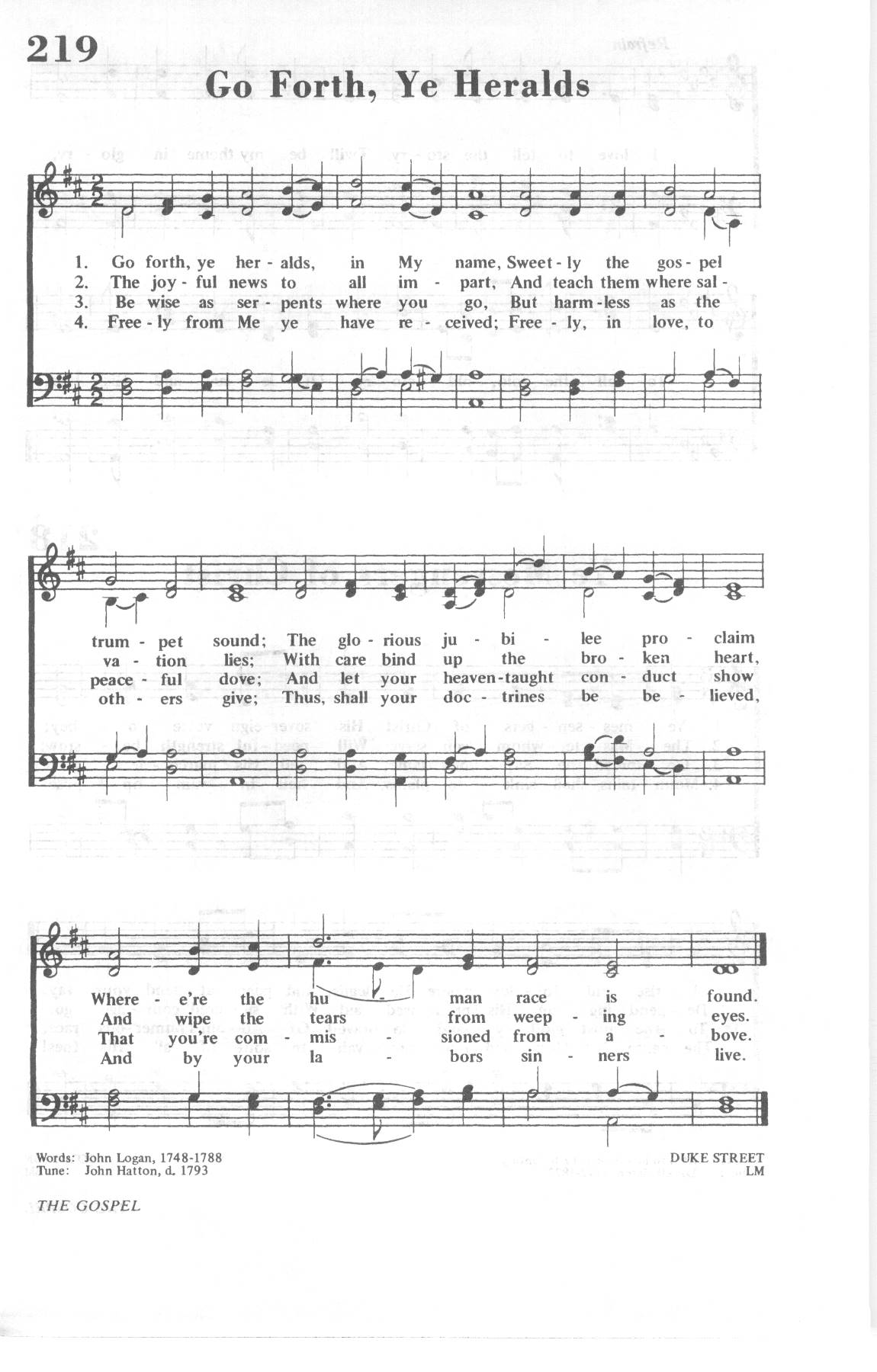
Go Forth, Ye Heralds
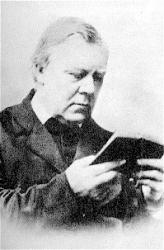
By John Logan (circa. 1780s)
Lyrics
1. Go forth, ye heralds, in My name,
Sweetly the gospel trumpet sound;
The glorious jubilee proclaim
Where'er the human race is found.
Sweetly the gospel trumpet sound;
The glorious jubilee proclaim
Where'er the human race is found.
2. The joyful news to all impart,
And teach them where salvation lies;
With care bind up the broken heart,
And wipe the tears from weeping eyes.
And teach them where salvation lies;
With care bind up the broken heart,
And wipe the tears from weeping eyes.
3. Be wise as serpents where you go,
But harmless as the peaceful dove;
And let your heaven-taught conduct show
That you're commissioned from above.
But harmless as the peaceful dove;
And let your heaven-taught conduct show
That you're commissioned from above.
4. Freely from Me ye have received;
Freely, in love, to others give;
Thus, shall your doctrines be believed,
And by your labors sinners live.
Freely, in love, to others give;
Thus, shall your doctrines be believed,
And by your labors sinners live.
Bible Reference
Matthew 10:7-16; Matthew 28:18-20; Mark 16:15; Luke 4:18; 2 Corinthians 5:18-20
Lectionary & readings
Open today’s (or any date’s) assigned scriptures and find related hymns across church calendars. Useful when planning worship around this song’s themes or its Bible reference.
Hymn scripture: Matthew 10:7-16; Matthew 28:18-20; Mark 16:15; Luke 4:18; 2 Corinthians 5:18-20
About This Hymn
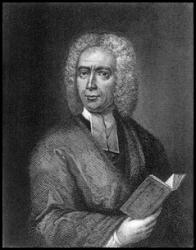
“Go Forth, Ye Heralds” is a missionary hymn attributed to the Scottish minister and poet John Logan. It is also known by its opening line, “Go forth, ye heralds, in My name.” The hymn presents the commission of Christ's servants to proclaim the Gospel throughout the world, announcing the good news of salvation and bringing the message of divine mercy to people in every place. Its central concern is the responsibility of the Church to carry the Gospel faithfully, with both the words it proclaims and the conduct it displays reflecting the character of Christ.
The hymn draws heavily upon the instructions Jesus gave to His disciples. In Matthew 10, Christ sent His followers out to preach, minister to the suffering, and demonstrate the kingdom of God through their work. The hymn recalls His instruction that they should be wise as serpents and harmless as doves. This combination of wisdom and gentleness is essential to Christian witness. Those who serve the Lord must exercise discernment in difficult circumstances while maintaining humility, kindness, and integrity. Their conduct should support the truth they proclaim.
The hymn also emphasizes the compassionate responsibilities of Gospel ministry. Its heralds are instructed to share the joyful news of salvation, bind up broken hearts, and wipe away the tears of those who grieve. Evangelism is therefore presented as more than public preaching or the announcement of religious doctrines. It includes a loving concern for people who are wounded, troubled, and burdened. The ministry of Christ's servants should reflect the compassion of the Saviour, who came to seek and save the lost and to bring comfort to those in need.
Another important theme is the principle of freely receiving and freely giving. The servants of Christ have received grace and salvation as gifts, not as rewards earned through personal merit. They are therefore called to share the Gospel generously with others. The hymn reminds ministers and missionaries that their calling is a stewardship of divine grace. Their work should not be motivated by personal glory, but by love for Christ and concern for the souls of others.
The hymn is particularly suitable for missionary services, evangelistic meetings, ordination services, commissioning of church workers, and gatherings focused on Christian service. It encourages every believer to recognize the responsibility of bearing witness to Christ, while reminding those in ministry that faithful Gospel proclamation must be accompanied by compassion, wisdom, and holy conduct.
From the Dictionary of Hymnology
Related terms and concepts automatically matched to this hymn.
Behold my Servant! see Him rise Hymn
Scottish paraphrase of Isaiah xlii. 1–13 (1745), rewritten in Logan’s Poems (1781) and patched again for the 1781 Translations and Paraphrases; Julian ascribes the rewrite largely to M. Bruce.
Read moreFew are thy days and full of woe Hymn
Michael Bruce paraphrase of Job xiv., about 1764; published by John Logan as his own in Poems (1781); Scottish Translations and Paraphrases (1781) use a mixed Bruce–Logan text. Also notes Newton’s “Fierce passions discompose the mind.”
Read moreAlmighty Father of mankind Hymn
A hymn on providence attributed to Michael Bruce, written probably about 1764 and first published in John Logan’s Poems, 1781, in 3 stanzas of 4 lines.
Read moreStaff Visualizer
Open in MIDI StudioPowered by HTML MIDI PLAYER, MIDI FILE Made by Hymnal Library. · Study chords & lyrics in MIDI Studio
Want weekly hymns and devotionals?
⭐ Recommend This Hymn
Share this beautiful hymn with others
This hymn also appears in these hymnals
Click a spine to pull out the hymnal, then open it.
You might also like
Hymns with the same subject
More hymns about Christian Love, Church, Commitment, Discipleship, Encouragement, Ministry, Mission, Salvation, Service, Witnessing
- Will You Come and Follow Me (The Summons) - John L. Bell
- The Longer I Serve Him - William J. (Bill) Gaither
- So Little Time - John R. Rice
- A Prayer for Ministers (Father of Mercies, Bow Thine Ear) - Benjamin Beddome
- This Little Light of Mine - Harry Dixon Loes
- A Charge to Keep I Have - Charles Wesley
- "Whosoever" Meaneth Me - J. Edwin McConnell
- Forward! Be Our Watchword - Henry Alford
More hymn subjects
Explore other themes across the library.
Hymns about Refuge
Hymns about Comfort
Hymns about Prayer
Hymns about Joy
Hymns about Altar Call
Hymns about Eternal Life
Hymns about Christian Unity
Hymns about Growth
Browse all subjects →
Latest Updated Hymnals
-
Open
 Book of Common Praise (BoCP1915)Updated 3 hours ago · 1915
-
Open
 The New Apostolic Church HymnalUpdated 1 week, 6 days ago · 2008
-
Open
 400+ Christmas Carols Book: Sheet Music for PianoUpdated 2 weeks, 1 day ago · 2014
-
Open
 The Temple HymnalUpdated 2 weeks, 1 day ago · 1918
-
Open
 The Popular HymnalUpdated 2 weeks, 1 day ago · 1918
Hymn Information

Click a linked name to open their biography.
MIDI File
Hymns from circa. 1780s
Popular Hymns
Recent Blog Posts



Popular Blog Posts
-
 Lessons from the Book of Haggai: Putting God…5 months, 1 week ago
-
 Easter vs Passover: How a Biblical Feast Bec…7 months, 1 week ago
-
 The Full Story of the Birth of Jesus Christ:…10 months, 4 weeks ago
-
 The 30 Most Famous Christmas Hymns and Carols1 year, 2 months ago
-
 The Story Behind the Hymn “Amazing Grace”10 months, 3 weeks ago
Visit Us on Social Media
Latest from X (Twitter)
Tweets by HymnalLibraryLatest from Facebook
Latest on YouTube
Loading latest video...
Daily Bible Verse
Disclaimer
The hymns, sheet music, MIDI files, and related content on this website are provided for educational and research purposes only.
- Public Domain: Many of the hymns featured here are in the public domain and may be freely used.
- Copyrighted Works: Some hymns may still be under copyright protection. Where applicable, permission has either been requested from the copyright owner, or the content is shared under the principles of fair use for educational purposes.
⚠️ Important Notice: If you wish to reproduce, distribute, or use any copyrighted hymn beyond personal study or educational use, you must obtain permission directly from the copyright holder. This website does not grant any rights for commercial use yet.
If there is any other question please address it to us in our Contact Page, for further assistance. Thank you for using the site. May God Bless You.
Recently Added · Dictionary of Hymnology
Browse dictionary →
Can’t find a hymn or lyric?
Leave your question in the forum for others to answer — requests, missing lines, writers, and worship ideas welcome.