

What Is Godliness?
1 day, 7 hours ago
For the Beauty of the Earth
By Folliott Sandford Pierpoint
Lyrics
1. For the beauty of the earth,
for the glory of the skies,
for the love which from our birth
over and around us lies.
for the glory of the skies,
for the love which from our birth
over and around us lies.
Refrain:
Lord of all, to thee we raise
this our hymn of grateful praise.
Lord of all, to thee we raise
this our hymn of grateful praise.
2. For the wonder of each hour
of the day and of the night,
hill and vale and tree and flower,
sun and moon and stars of light,
of the day and of the night,
hill and vale and tree and flower,
sun and moon and stars of light,
3. For the joy of human love,
brother, sister, parent, child,
friends on earth, and friends above,
for all gentle thoughts and mild,
brother, sister, parent, child,
friends on earth, and friends above,
for all gentle thoughts and mild,
4. For yourself, best gift divine,
to the world so freely given,
agent of God's grand design:
peace on earth and joy in heaven.
to the world so freely given,
agent of God's grand design:
peace on earth and joy in heaven.
Bible Reference
Psalm 19:1-6
About This Hymn
“Whatsoever things are true, whatsoever things are honest, ... just, ... pure, ... lovely, ... of good report, ... think on these things.” — Philippians 4:8 (KJV)
The beloved hymn “For the Beauty of the Earth” eloquently expresses gratitude for many of life’s blessings—gifts that are often taken for granted. With literary grace and spiritual depth, the hymn leads the worshiper to reflect on the splendor of creation, the joys of human fellowship, and the rich spiritual heritage of the Church. Each stanza draws attention to a different category of blessings, ultimately directing “grateful praise” to God, the source of every good and perfect gift (James 1:17).
The hymn opens with a poetic appreciation for the natural world—the sun, the flowers, the stars—all pointing to the Creator’s handiwork. It then shifts to recognize the value of relationships: the joy of family, the comfort of friends, and the love shared within the home. These lines celebrate the emotional and social richness that fills our lives with meaning. Most significantly, the text offers thanks for the Church and its divine mission in the world, acknowledging it as God’s appointed means for sharing His grace and truth among humanity.
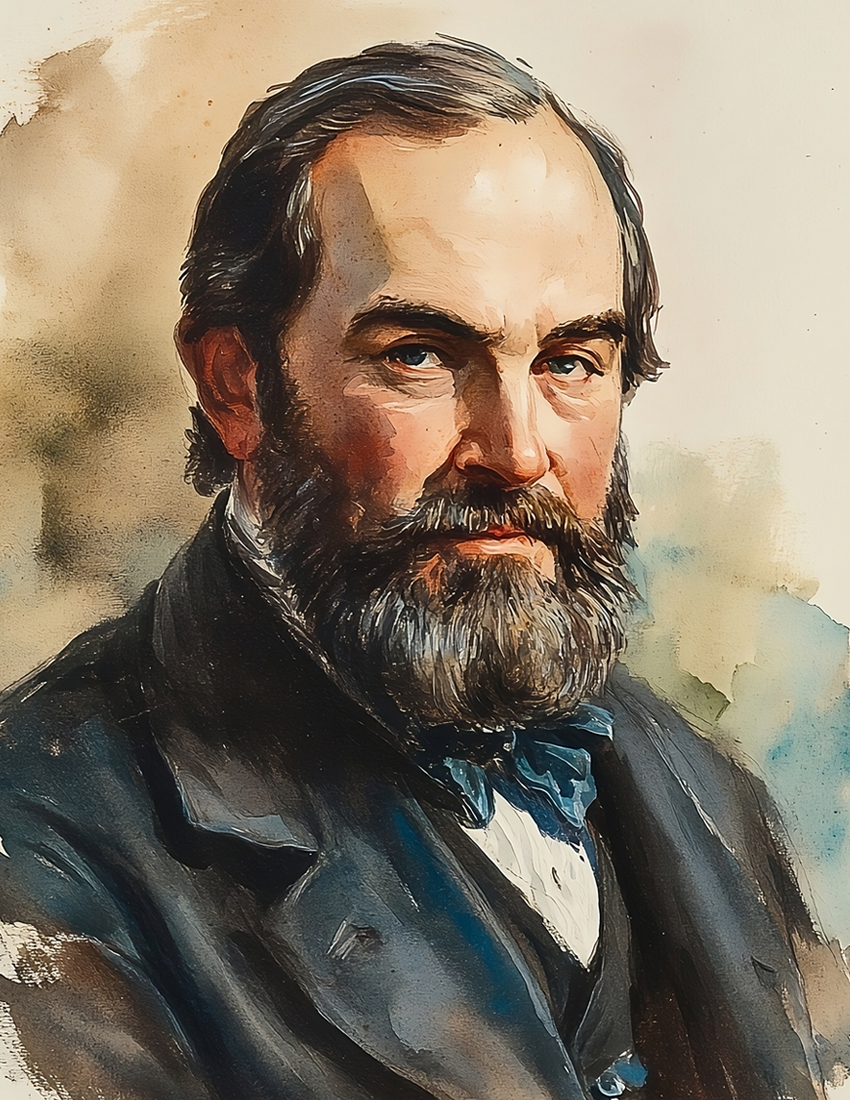
The hymn was written in the late spring of 1864 by Folliott Sandford Pierpoint, then a 29-year-old schoolteacher and poet, while he was enjoying the serene beauty of his hometown of Bath, England. Surrounded by the picturesque countryside and gazing out at the winding River Avon, Pierpoint was overcome with a sense of wonder and gratitude. From this moment of inspiration flowed a heartfelt expression of praise, which he originally titled “The Sacrifice of Praise.” The poem was first published that same year in a collection bearing the same name. It contained eight six-line stanzas, though most modern hymnals include only four or five. One often-omitted stanza beautifully acknowledges the supreme blessing of God Himself:
For Thyself, best Gift Divine! To our race so freely given;
For that great, great love of Thine, peace on earth and joy in heaven:
Lord of all, to Thee we raise this our hymn of grateful praise.
Pierpoint, a lay member of the Anglican Church, received his education at Queen’s College, Cambridge, and taught classics at Somerset College. Although he went on to publish seven volumes of poetry and hymn texts—many of which reveal his love of nature and his deep Christian faith—he is remembered primarily for this single, radiant hymn.
The tune most commonly associated with “For the Beauty of the Earth” is known as “Dix,” named after its use in William C. Dix’s hymn “As With Gladness Men of Old.” The melody was composed by Conrad Kocher, a prominent 19th-century German church musician and reformer born in Württemberg in 1786. Kocher’s music brings a rich harmonic balance to Pierpoint’s text, employing antiphonal, or call-and-response, phrasing. This structure allows congregations to experience the hymn as a shared celebration—one group singing the first couplet and another responding with the second—culminating in a united chorus of praise in the refrain.
Although originally written for use during the Holy Communion service, “For the Beauty of the Earth” has become especially popular during the Thanksgiving season, where its themes of gratitude and celebration of God’s bountiful gifts resonate deeply. It has also become a favorite hymn among children, thanks to its vivid imagery and accessible language.
The spiritual and emotional effect of hymns like this one was once beautifully described by Joseph Addison, who wrote:
“Music religious heat inspires,
It wakes the soul, and lifts it high,
And wings it with sublime desires,
And fits it to bespeak the Deity.”
Indeed, “For the Beauty of the Earth” continues to fulfill that role—lifting the soul toward God in joyful thanks, and reminding believers of the wonder of His creation, the warmth of human connection, and the glory of His eternal presence.
From the Dictionary of Hymnology
Related terms and concepts automatically matched to this hymn.
Adoro Te devote, latens Deitas History
Detailed history of St. Thomas Aquinas's famous Eucharistic hymn "Adoro Te devote," tracing its origins, liturgical use, manuscript traditions, and numerous English translations.
Read moreAddison, Joseph History
Biographical and historical entry for Joseph Addison (1672–1719), English essayist, statesman, and author of celebrated hymns published in The Spectator.
Read moreAnd dost Thou fast, and may I feast? Hymnology
An entry on John Samuel Bewley Monsell's Lenten and Communion hymn.
Read more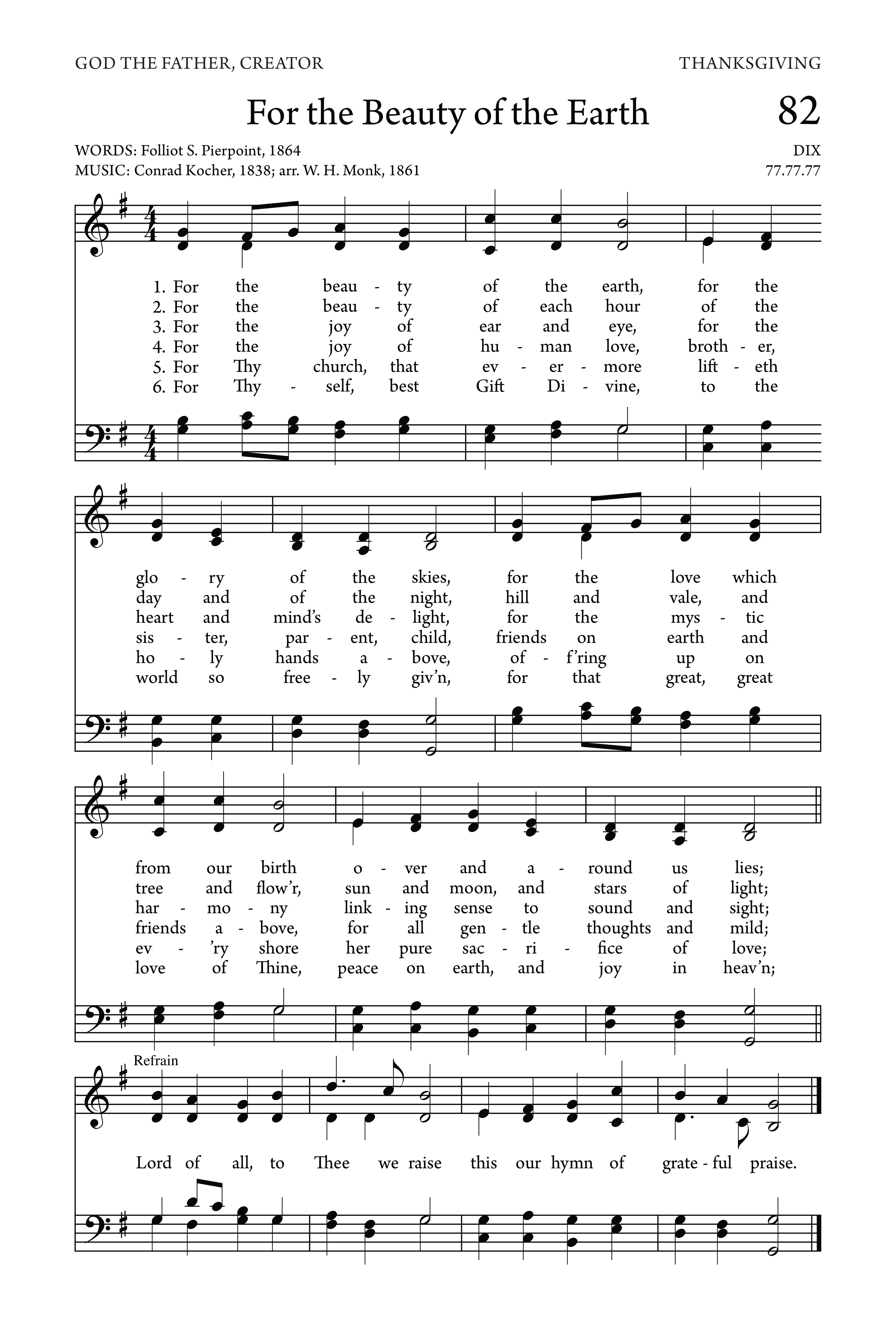

📬 Subscribe to Our Devotional Updates
Receive weekly hymns, devotionals, and website features directly in your inbox.
✅ Thank you! You'll start receiving our updates soon.
⭐ Recommend This Hymn
Share this beautiful hymn with others
This hymn is found in these hymnals
Open the hymnal that contains this hymn:
Hymns with the same subject
More hymns about Anniversary, Lordship of Christ, Thanksgiving
- In the Garden — C. Austin Miles
- Wake the Song — William F. Sherwin
- Happy the home that welcomes you — Karl Johann Philipp Spitta
- Christ Returneth (It May Be at Morn) — H. L. Turner
- Will You Come and Follow Me (The Summons) — John L. Bell
- The Longer I Serve Him — William J. (Bill) Gaither
- Battle Hymn of the Republic — Julia Ward Howe
- Mary, Did You Know? — Mark Lowry
More hymn subjects
Recently Added Hymns
-
 Let All Together Praise Our GodNikolaus Herman 1560
 -
 Holy, Holy, Holy, Lord, God of hosts, Eternal KingChristopher Wordsworth 1862
 -
 Hail, Redeemer, King DivinePatrick Brennan 1856
 -
 Father, We Thank Thee, Who Hast PlantedBland Tucker 1939
 -
 Father, See Thy Children Bending at Thy ThroneWilliam B. Trevelyan 1906
Latest Updated Hymnals
-
Open
 The People's HymnalUpdated 6 days, 1 hour ago · 1961
 -
Open
 Book of Common Praise (BoCP1915)Updated 2 months, 1 week ago · 1915
 -
Open
 Our Great Redeemer's PraiseUpdated 4 months ago · 2022
 -
Open
 The Parish Hymnal (1873)Updated 4 months, 1 week ago · 1873
 -
Open
 Book of Common Praise (BCP1998)Updated 4 months, 3 weeks ago · 1998
Hymn Information
To view the author's biography, click their name above.
MIDI File
Ready to load
Download MIDI
Popular Hymns
Recent Blog Posts



Popular Blog Posts
-
 Lessons from the Book of Haggai: Putting God…3 months, 3 weeks ago
 -
 Easter vs Passover: How a Biblical Feast Bec…5 months, 3 weeks ago
 -
 The Full Story of the Birth of Jesus Christ:…9 months, 1 week ago
 -
 The 30 Most Famous Christmas Hymns and Carols1 year ago
 -
 The Story Behind the Hymn “Amazing Grace”9 months, 1 week ago
Visit Us on Social Media
Latest from X (Twitter)
Tweets by HymnalLibraryLatest from Facebook
Latest on YouTube
Loading latest video...
Daily Bible Verse
Disclaimer
The hymns, sheet music, MIDI files, and related content on this website are provided for educational and research purposes only.
- Public Domain: Many of the hymns featured here are in the public domain and may be freely used.
- Copyrighted Works: Some hymns may still be under copyright protection. Where applicable, permission has either been requested from the copyright owner, or the content is shared under the principles of fair use for educational purposes.
⚠️ Important Notice: If you wish to reproduce, distribute, or use any copyrighted hymn beyond personal study or educational use, you must obtain permission directly from the copyright holder. This website does not grant any rights for commercial use yet.
If there is any other question please address it to us in our Contact Page, for further assistance. Thank you for using the site. May God Bless You.
Recently Added · Dictionary of Hymnology
Browse dictionary →- Jonathan Bush Atchinson 3 days, 5 hours ago · Biography 38
- At Thy transfiguration, Lord 3 days, 5 hours ago · Hymnology 37
- At Thy Feet, our God and Father 3 days, 5 hours ago · Hymnology 43
- At Thy feet, O Christ, we lay 3 days, 5 hours ago · Hymnology 37
- At Thy command, our dearest Lord 3 days, 5 hours ago · Hymnology 35