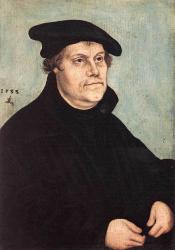
Erasmus Alber, born in Sprendlingen around 1500, stood as one of the most steadfast controversialists and creative educators of the German Reformation. The son of a Lutheran minister, Alber pursued his studies at the University of Wittenberg under the personal guidance of Martin Luther and Philip Melanchthon. His early career balanced academic instruction with pastoral care, working as a schoolmaster in St. Ursel and Heldenbergen before accepting a pastorate at Sprendlingen and Gotzenhain in 1528, where he placed special emphasis on teaching young children.
Alber's unyielding principles frequently brought him into conflict with political authorities. Named court preacher at Berlin in 1539, his uncompromising preaching led to his rapid removal in 1541. Over the following decade, he ministered in Neu Brandenburg, Stade, and Babenhausen, receiving his Doctor of Theology degree from Wittenberg in 1543. While serving in Magdeburg, he became a vocal opponent of the Augsburg Interim, enduring a grueling fourteen-month siege before seeking refuge in Hamburg and Lübeck. Named General Superintendent of Mecklenburg in 1552, he spent his remaining months in severe poverty caused by war confiscations. When the town council of Neu Brandenburg refused his desperate plea for a small stipend advance on May 4, 1553, the rejection broke his health, and he died the following morning.
Despite a life filled with exile and persecution, Alber composed twenty original hymns that earned him praise as one of the most vital voices of early Lutheran worship. His sacred songs, collected by Dr. Stromberger in 1857, reflect a rugged faith and deep scriptural conviction. His major Ascension hymn, "Nun freut euch Gottes Kinder all," was first circulated as a twenty-nine stanza broadsheet around 1549. Abbreviated selections were later translated into English by Arthur Tozer Russell in 1851 under the title "O Children of your God rejoice." Alber is also remembered for his classic German rendering of the ancient Latin hymn "Christe qui lux es et dies" ("Christe, du bist der helle Tag").
Related Hymns
Hymns in the library connected to this dictionary topic.
Related Hymn Sheets
3 shown at a time — use the arrows to browse all 7 sheets.
Related Authors
Writers connected to this dictionary topic.
Keywords
Related terms for this dictionary entry.
Recent Dictionary Entries
Newly added terms from the Dictionary of Hymnology.
If you notice any mistake or have suggestions, please contact us on our contact page.