
"Alma Redemptoris Mater quae pervia coeli" is one of four traditional Marian antiphons used at the conclusion of the Divine Office, alongside "Ave Regina," "Regina Caeli," and "Salve Regina." The text is traditionally attributed to Hermannus Contractus (died 1054). H. A. Daniel printed the text (Thesaurus Hymnologicus, vol. ii, p. 318) from a thirteenth-century Munich manuscript. The antiphon is also preserved in an eleventh-century Sarum Breviary in the British Museum (MS. Reg. 2 A. xiv, f. 235 b), the Roman Breviary (Modena, 1480, f. 512), and the York Breviary (1493).
Liturgical Use
In the Roman, Paris, and Lyons Breviaries, the antiphon is appointed at the conclusion of Compline and Lauds from the first Vespers of the First Sunday in Advent through the Feast of the Purification (February 2). In the older Franciscan Breviary of 1497, its use extended to Quinquagesima Sunday. Decrees of the Roman Congregation of Rites (1681, 1693, 1705) confirmed that even if the Feast of the Purification is transferred, the antiphon's use does not extend beyond February 2.
Literary and Cultural Significance
The widespread popularity of the antiphon in medieval England is reflected in Geoffrey Chaucer's The Prioress's Tale, where the plot turns upon a young schoolboy learning and singing the antiphon:
"This litel childe his litel book leming,
As he sate in the scole at his primere,
He Alma Redemptoris herde sing,
As children lered hir antiphonere..."
English Translations
-
In Common Use: "Mother of Christ, hear thou thy people's cry" by Edward Caswall, published in Lyra Catholica (1849, p. 38) and Hymns & Poems (1873, p. 22). Its usage is primarily confined to Roman Catholic collections.
-
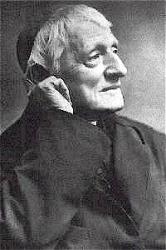
Not in Common Use: "Kindly Mother of the Redeemer" by John Henry Newman (Tracts for the Times, No. 75, 1836) and "Sweet Mother of our Saviour blest" by J. Wallace (1874).
Related Hymns
Hymns in the library connected to this dictionary topic.
Related Hymn Sheets
3 shown at a time — use the arrows to browse all 4 sheets.
Related Authors
Writers connected to this dictionary topic.
Keywords
Related terms for this dictionary entry.
Recent Dictionary Entries
Newly added terms from the Dictionary of Hymnology.
If you notice any mistake or have suggestions, please contact us on our contact page.