



Should Christians Celebrate Halloween?
1 day, 22 hours ago
Come, let us sing the song of songs
By James Montgomery (1853)
Lyrics
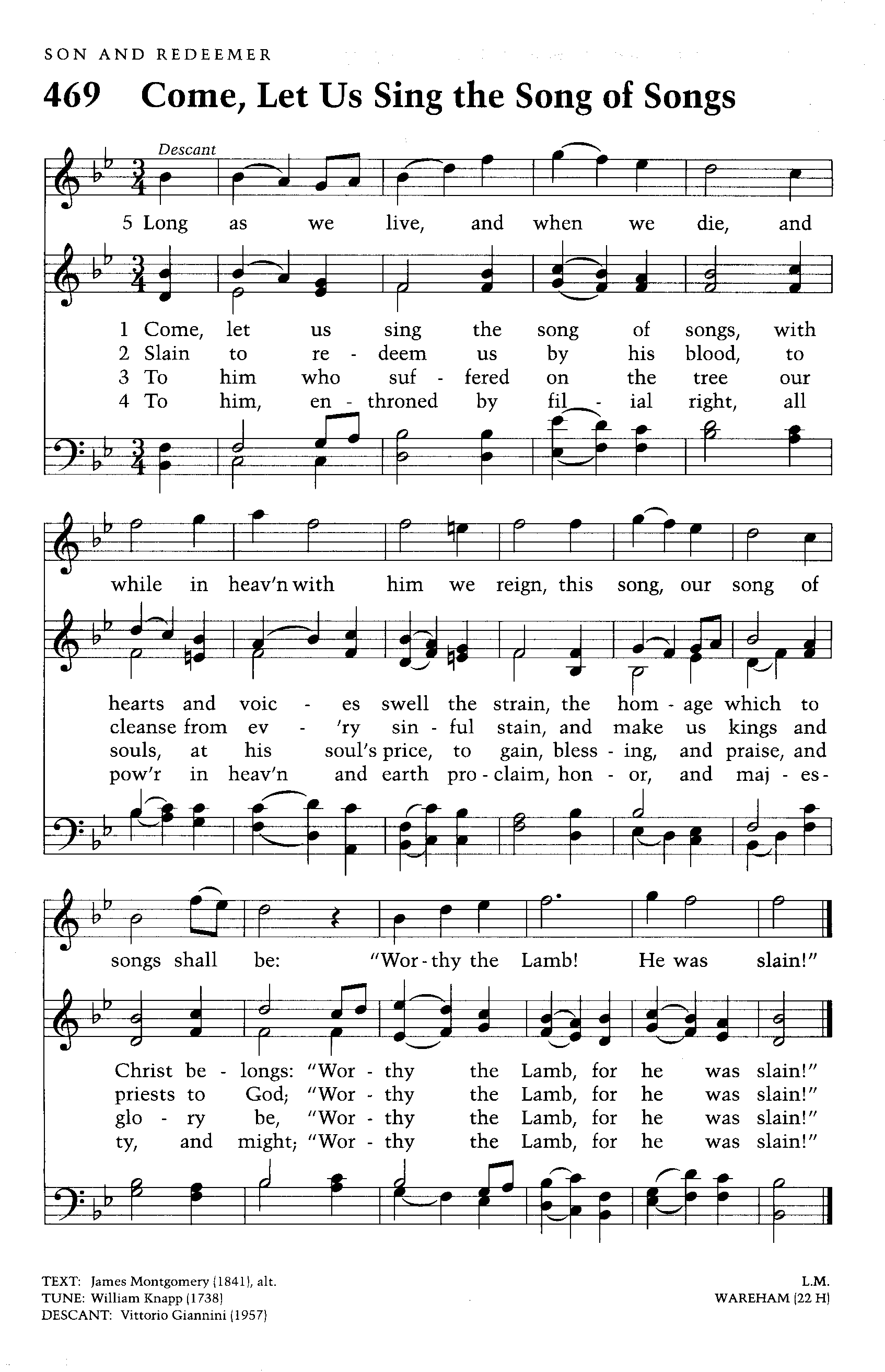
1. Come let us sing the song of songs,
The song which saints in glory sing;
The homage which to Christ belongs,
To-day let babes and sucklings bring.
The song which saints in glory sing;
The homage which to Christ belongs,
To-day let babes and sucklings bring.
2. Youth in its prime, and failing Age,
With hearts and voices swell the strain,
To cheer their steps on pilgrimage,
"Worthy the Lamb, for He was slain!"
With hearts and voices swell the strain,
To cheer their steps on pilgrimage,
"Worthy the Lamb, for He was slain!"
3. Slain to redeem us by His blood,
To cleanse from every sinful stain,
And make us kings and priests to God,
"Worthy the Lamb, for He was slain!"
To cleanse from every sinful stain,
And make us kings and priests to God,
"Worthy the Lamb, for He was slain!"
4. To Him who suffer'd on the tree,
Our souls at His soul's price to gain,
Blessing, and praise, and glory be:
"Worthy the Lamb, for He was slain!"
Our souls at His soul's price to gain,
Blessing, and praise, and glory be:
"Worthy the Lamb, for He was slain!"
5. To Him, enthroned by filial right,
All power in heaven and earth pertain,
Honour, and majesty, and might:
"Worthy the Lamb, for He was slain!"
All power in heaven and earth pertain,
Honour, and majesty, and might:
"Worthy the Lamb, for He was slain!"
6. Come, Holy Spirit, from on high,
Our faith, our hope, our love sustain,
Living to sing, and dying cry,
"Worthy the Lamb, for He was slain!"
Our faith, our hope, our love sustain,
Living to sing, and dying cry,
"Worthy the Lamb, for He was slain!"
7. Yea, in eternity of bliss,
If call'd through grace with Him to reign,
Our song--our song of songs, be this,
"Worthy the Lamb, for He was slain!"
If call'd through grace with Him to reign,
Our song--our song of songs, be this,
"Worthy the Lamb, for He was slain!"
Bible Reference
Revelation 5:9
Lectionary & readings
Open today’s (or any date’s) assigned scriptures and find related hymns across church calendars. Useful when planning worship around this song’s themes or its Bible reference.
Hymn scripture: Revelation 5:9
About This Hymn
-
“Come, Let Us Sing the Song of Songs” is a powerful hymn written by James Montgomery in 1819. It draws its inspiration from Revelation 5:9, which declares, “And they sung a new song, saying, Thou art worthy to take the book, and to open the seals thereof: for thou wast slain, and hast redeemed us to God by thy blood out of every kindred, and tongue, and people, and nation.” This verse sets the heavenly context for the hymn, which calls believers to join in the triumphant song of redemption.
James Montgomery was known for blending poetic skill with deep biblical insight, and this hymn reflects both qualities. It begins by inviting believers to sing “the song of songs,” a phrase that highlights the supreme subject of praise: the redeeming work of Christ. The hymn lifts the congregation’s focus to the worship of the Lamb, portraying a scene of united praise that mirrors the worship of heaven.
The text unfolds with a progression that moves from invitation to adoration. It celebrates the Savior’s love, His sacrificial death, and the joy of the redeemed gathered in worship. Montgomery’s language is both elevated and heartfelt, encouraging believers to anticipate the eternal worship that awaits in glory.
This hymn is particularly suited for worship settings that focus on Christ’s atonement, heavenly praise, or missionary themes, since it emphasizes the global reach of redemption and the unity of believers in song. Its biblical imagery connects earthly worship with the eternal chorus described in Revelation, reminding singers that their praise on earth joins the worship of heaven.
James Montgomery’s contribution to English hymnody is significant, and “Come, Let Us Sing the Song of Songs” stands as a clear example of his ability to direct hearts toward Christ with both theological depth and poetic beauty. It continues to inspire congregations to lift their voices in praise to the Lamb who is worthy of all honor and glory.
From the Dictionary of Hymnology
Related terms and concepts automatically matched to this hymn.
Come, let us sing the song of songs Hymn
James Montgomery’s praise hymn, written in 1841 and published in Original Hymns (1853), is little known in Britain but widely used in America; the People’s Hymnal alteration also entered later manuals.
Read moreAll ye Gentiles, praise the Lord Hymn
James Montgomery’s paraphrase of Psalm cxvii., first published in Songs of Zion, 1822, and reprinted in his Original Hymns, 1853, as an exhortation to universal praise.
Read moreCommand Thy blessing from above Hymn
Montgomery Whitsuntide hymn for Sheffield Sunday School Union (1816). Cotterill (1819) and Montgomery’s own 1825–53 text both circulate. Julian also notes metrical Communio antiphons in Sarum.
Read moreStaff Visualizer
Open in MIDI StudioPowered by HTML MIDI PLAYER, MIDI FILE Made by Hymnal Library. · Study chords & lyrics in MIDI Studio
Want weekly hymns and devotionals?
⭐ Recommend This Hymn
Share this beautiful hymn with others
This hymn also appears in these hymnals
Click a spine to pull out the hymnal, then open it.
Hymns with the same subject
More hymns about Adoration, Children, Holy Spirit, Majesty of God
- Come, Thou Almighty King - Anonymous
- Prayer Is the Soul’s Sincere Desire - James Montgomery
- As Pants the Hart - Traditional English Hymns
- Eternal Light! Eternal Light! - Thomas Binney
- All Hail, Adored Trinity - John David Chambers
- How Great Thou Art - Carl Boberg
- Doxology (Praise God From Whom All Blessings Flow) - Thomas Ken
- O Come, O Come, Emmanuel - J. M. Neale
More hymn subjects
Explore other themes across the library.
Hymns about Healing
Hymns about Guidance
Hymns about Benediction
Hymns about Judgment
Hymns about Marriage
Hymns about Christian Unity
Hymns about Redemption
Hymns about Refuge
Browse all subjects →
Latest Updated Hymnals
-
Open
 Book of Common Praise (BoCP1915)Updated 1 day, 11 hours ago · 1915
-
Open
 The New Apostolic Church HymnalUpdated 1 week ago · 2008
-
Open
 400+ Christmas Carols Book: Sheet Music for PianoUpdated 1 week, 1 day ago · 2014
-
Open
 The Temple HymnalUpdated 1 week, 1 day ago · 1918
-
Open
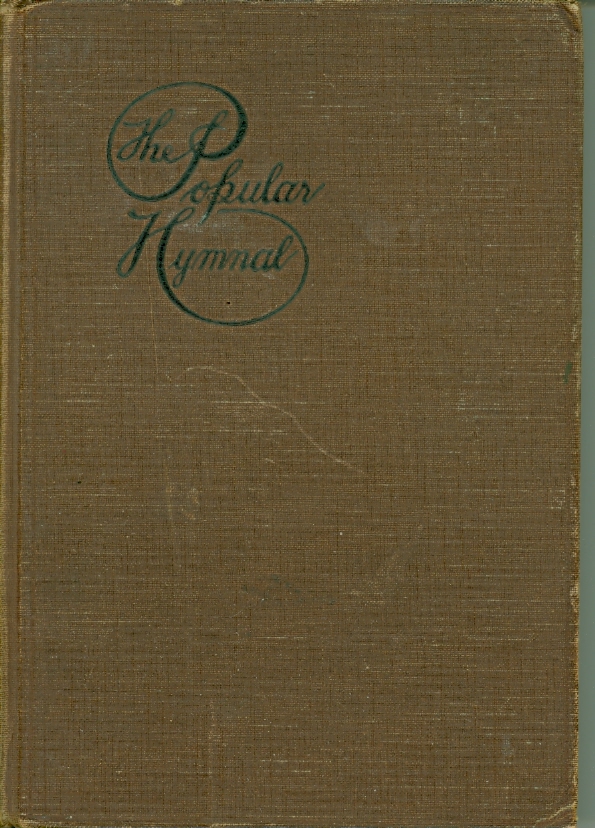 The Popular HymnalUpdated 1 week, 1 day ago · 1918
Hymn Information
Click a linked name to open their biography.
MIDI File
Popular Hymns
Recent Blog Posts

Popular Blog Posts
-
 Lessons from the Book of Haggai: Putting God…5 months ago
-
 Easter vs Passover: How a Biblical Feast Bec…7 months ago
-
 The Full Story of the Birth of Jesus Christ:…10 months, 3 weeks ago
-
 The 30 Most Famous Christmas Hymns and Carols1 year, 2 months ago
-
 The Story Behind the Hymn “Amazing Grace”10 months, 2 weeks ago
Visit Us on Social Media
Latest from X (Twitter)
Tweets by HymnalLibraryLatest from Facebook
Latest on YouTube
Loading latest video...
Daily Bible Verse
Disclaimer
The hymns, sheet music, MIDI files, and related content on this website are provided for educational and research purposes only.
- Public Domain: Many of the hymns featured here are in the public domain and may be freely used.
- Copyrighted Works: Some hymns may still be under copyright protection. Where applicable, permission has either been requested from the copyright owner, or the content is shared under the principles of fair use for educational purposes.
⚠️ Important Notice: If you wish to reproduce, distribute, or use any copyrighted hymn beyond personal study or educational use, you must obtain permission directly from the copyright holder. This website does not grant any rights for commercial use yet.
If there is any other question please address it to us in our Contact Page, for further assistance. Thank you for using the site. May God Bless You.
Recently Added · Dictionary of Hymnology
Browse dictionary →
Can’t find a hymn or lyric?
Leave your question in the forum for others to answer — requests, missing lines, writers, and worship ideas welcome.