



How Many of the Psalms Did David Write? And …
5 hours ago
The End of Things Created
By William Bengo Collyer ; Anonymous (co-author) (1802) ; Thomas Cotterill (co-author) (1820) (1812)
Lyrics
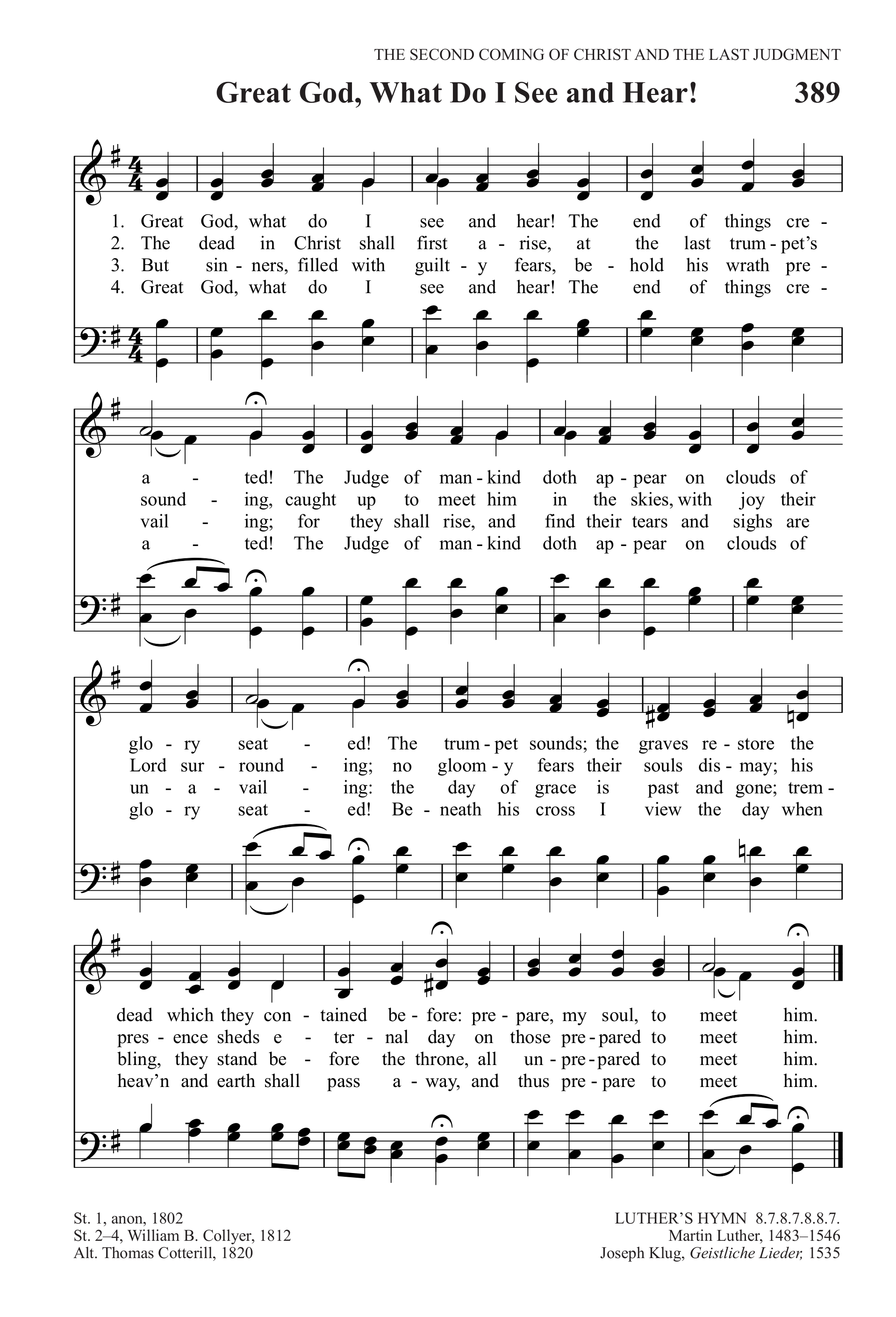
1. Great God, what do I see and hear!
The end of things created!
The Judge of mankind doth appear
on clouds of glory seated!
The trumpet sounds; the graves restore
the dead which they contained before:
prepare, my soul, to meet him.
The end of things created!
The Judge of mankind doth appear
on clouds of glory seated!
The trumpet sounds; the graves restore
the dead which they contained before:
prepare, my soul, to meet him.
2. The dead in Christ shall first arise,
at the last trumpet's sounding,
caught up to meet him in the skies,
with joy their Lord surrounding;
no gloomy fears their souls dismay;
his presence sheds eternal day
on those prepared to meet him.
at the last trumpet's sounding,
caught up to meet him in the skies,
with joy their Lord surrounding;
no gloomy fears their souls dismay;
his presence sheds eternal day
on those prepared to meet him.
3. But sinners, filled with guilty fears,
behold his wrath prevailing;
for they shall rise, and find their tears
and sighs are unavailing:
the day of grace is past and gone;
trembling, they stand before the throne,
all unprepared to meet him.
behold his wrath prevailing;
for they shall rise, and find their tears
and sighs are unavailing:
the day of grace is past and gone;
trembling, they stand before the throne,
all unprepared to meet him.
4. Great God, what do I see and hear!
The end of things created!
The Judge of mankind doth appear
on clouds of glory seated!
Beneath his cross I view the day
when heav'n and earth shall pass away,
and thus prepare to meet him.
The end of things created!
The Judge of mankind doth appear
on clouds of glory seated!
Beneath his cross I view the day
when heav'n and earth shall pass away,
and thus prepare to meet him.
Bible Reference
Matthew 24:30-31; Matthew 25:31-32; Acts 1:11; 1 Corinthians 15:51-52; 1 Thessalonians 4:13-18; Revelation 20:11-13
Lectionary & readings
Open today’s (or any date’s) assigned scriptures and find related hymns across church calendars. Useful when planning worship around this song’s themes or its Bible reference.
Hymn scripture: Matthew 24:30-31; Matthew 25:31-32; Acts 1:11; 1 Corinthians 15:51-52; 1 Thessalonians 4:13-18; Revelation 20:11-13
About This Hymn
The End of Things Created, beginning with the words "Great God, what do I see and hear!", is a solemn hymn about the second coming of Jesus Christ, the resurrection of the dead, and the final judgment. Its four stanzas present the great events associated with the end of the present world and call every person to prepare to meet the Lord. The hymn is a composite work rather than the writing of a single author. The first stanza is anonymous and was published in 1802. William Bengo Collyer contributed the additional stanzas in 1812, and Thomas Cotterill revised the text in 1820. Its history illustrates how hymns were sometimes developed through the contributions and editorial work of several people.
The opening stanza portrays Christ appearing as Judge upon the clouds of glory. The trumpet sounds, the graves give up their dead, and humanity is summoned to stand before its Maker. The repeated call to prepare the soul to meet the Lord gives the hymn its searching character. It directs attention away from the temporary concerns of earthly life toward the certainty of Christ's return. The biblical teaching of Matthew 25 and Revelation 20 provides the foundation for this picture of the final judgment, when all people will stand before God.
The second stanza turns to the resurrection of believers. Drawing particularly upon 1 Thessalonians 4:13-18, it describes the dead in Christ rising at the sound of the last trumpet and being gathered to meet the Lord. Unlike the fearful prospect facing those who remain unprepared, the coming of Christ brings joy and eternal comfort to His people. His presence removes the gloom of death and introduces the everlasting day of His kingdom. The hymn therefore holds together both the solemnity of judgment and the Christian hope of resurrection.
The third stanza offers a warning to those who have neglected God's call to repentance. It describes the terror of facing divine judgment without having made peace with God. The day of grace is portrayed as having passed, leaving the unprepared to stand before the throne. This is a serious reminder that the opportunity to respond to God's mercy should not be treated carelessly. The final stanza returns to the opening vision but adds a reference to the cross of Christ. In this way, the hymn directs the worshipper to the Saviour as the only hope when the heavens and earth pass away. Its closing appeal is not merely to fear the end of the world, but to be ready through faith in Jesus Christ.
The hymn is commonly associated with LUTHER'S HYMN, a German chorale melody connected with the Reformation-era hymn tradition and published in Joseph Klug's Geistliche Lieder in 1535. The tune's strong and dignified character suits the solemn subject of the text. The hymn remains appropriate for services concerning Christ's second coming, the resurrection, the last judgment, and Christian watchfulness.
From the Dictionary of Hymnology
Related terms and concepts automatically matched to this hymn.
Ein' feste Burg ist unser Gott Hymn
Luther’s Psalm 46 battle-hymn, first published in Klug’s Gesangbuch (Wittenberg, 1529), not in 1521 or 1530 as popular stories claim. Carlyle’s and Thring’s English versions lead common use.
Read moreEin neues Lied wir heben an Hymn
Luther’s first hymn-like piece (1523), a narrative ballad on the Brussels martyrdom of Voes and Esch. Messenger’s paraphrase “Flung to the heedless winds” is the main English congregational form.
Read moreErhalt uns, Herr, bei deinem Wort / Erskine, Ralph / Es giengen trew frewlach Hymn
Luther’s 1541 children’s hymn against Pope and Turk; Ralph Erskine (1685–1752), Associate Church minister and Gospel Sonnets author; and a thirteenth-century Easter carol on the holy women at the sepulchre.
Read moreStaff Visualizer
Open in MIDI StudioPowered by HTML MIDI PLAYER, MIDI FILE Made by Hymnal Library. · Study chords & lyrics in MIDI Studio
Want weekly hymns and devotionals?
⭐ Recommend This Hymn
Share this beautiful hymn with others
This hymn also appears in these hymnals
Click a spine to pull out the hymnal, then open it.
You might also like
Hymns with the same subject
More hymns about Eternal Life, Hope, Judgment, Resurrection, Second Coming
- Day of Wrath! O Day of Mourning! - Thomas of Celano
- My Hope is in the Lord - Norman J. Clayton
- The Lord Is Coming - E. A. Hoffman
- We'll Soon Be Done With Troubles and Trials - Cleavant Derricks
- I'll Fly Away - Albert E. Brumley
- How Deep the Father's Love for Us - Stuart Townend
- Look and Live - William A. Ogden
- Crown Him with Many Crowns - Matthew Bridges
More hymn subjects
Recently Added Hymns
Latest Updated Hymnals
-
Open
 Book of Common Praise (BoCP1915)Updated 22 hours ago · 1915
-
Open
 The New Apostolic Church HymnalUpdated 2 weeks ago · 2008
-
Open
 400+ Christmas Carols Book: Sheet Music for PianoUpdated 2 weeks, 1 day ago · 2014
-
Open
 The Temple HymnalUpdated 2 weeks, 2 days ago · 1918
-
Open
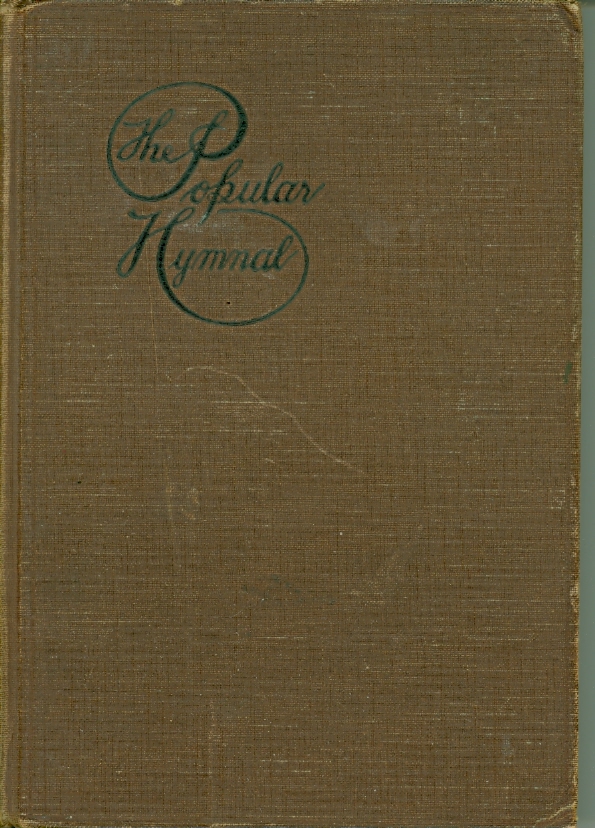 The Popular HymnalUpdated 2 weeks, 2 days ago · 1918
Hymn Information
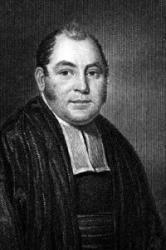
Click a linked name to open their biography.
MIDI File
Popular Hymns
Recent Blog Posts


Popular Blog Posts
-
 Lessons from the Book of Haggai: Putting God…5 months, 1 week ago
-
 Easter vs Passover: How a Biblical Feast Bec…7 months, 1 week ago
-
 The Full Story of the Birth of Jesus Christ:…11 months ago
-
 The 30 Most Famous Christmas Hymns and Carols1 year, 2 months ago
-
 The Story Behind the Hymn “Amazing Grace”10 months, 3 weeks ago
Visit Us on Social Media
Latest from X (Twitter)
Tweets by HymnalLibraryLatest from Facebook
Latest on YouTube
Loading latest video...
Daily Bible Verse
Disclaimer
The hymns, sheet music, MIDI files, and related content on this website are provided for educational and research purposes only.
- Public Domain: Many of the hymns featured here are in the public domain and may be freely used.
- Copyrighted Works: Some hymns may still be under copyright protection. Where applicable, permission has either been requested from the copyright owner, or the content is shared under the principles of fair use for educational purposes.
⚠️ Important Notice: If you wish to reproduce, distribute, or use any copyrighted hymn beyond personal study or educational use, you must obtain permission directly from the copyright holder. This website does not grant any rights for commercial use yet.
If there is any other question please address it to us in our Contact Page, for further assistance. Thank you for using the site. May God Bless You.
Recently Added · Dictionary of Hymnology
Browse dictionary →
Can’t find a hymn or lyric?
Leave your question in the forum for others to answer — requests, missing lines, writers, and worship ideas welcome.