





What Is the Difference Between Psalms, Hymns…
1 day, 23 hours ago
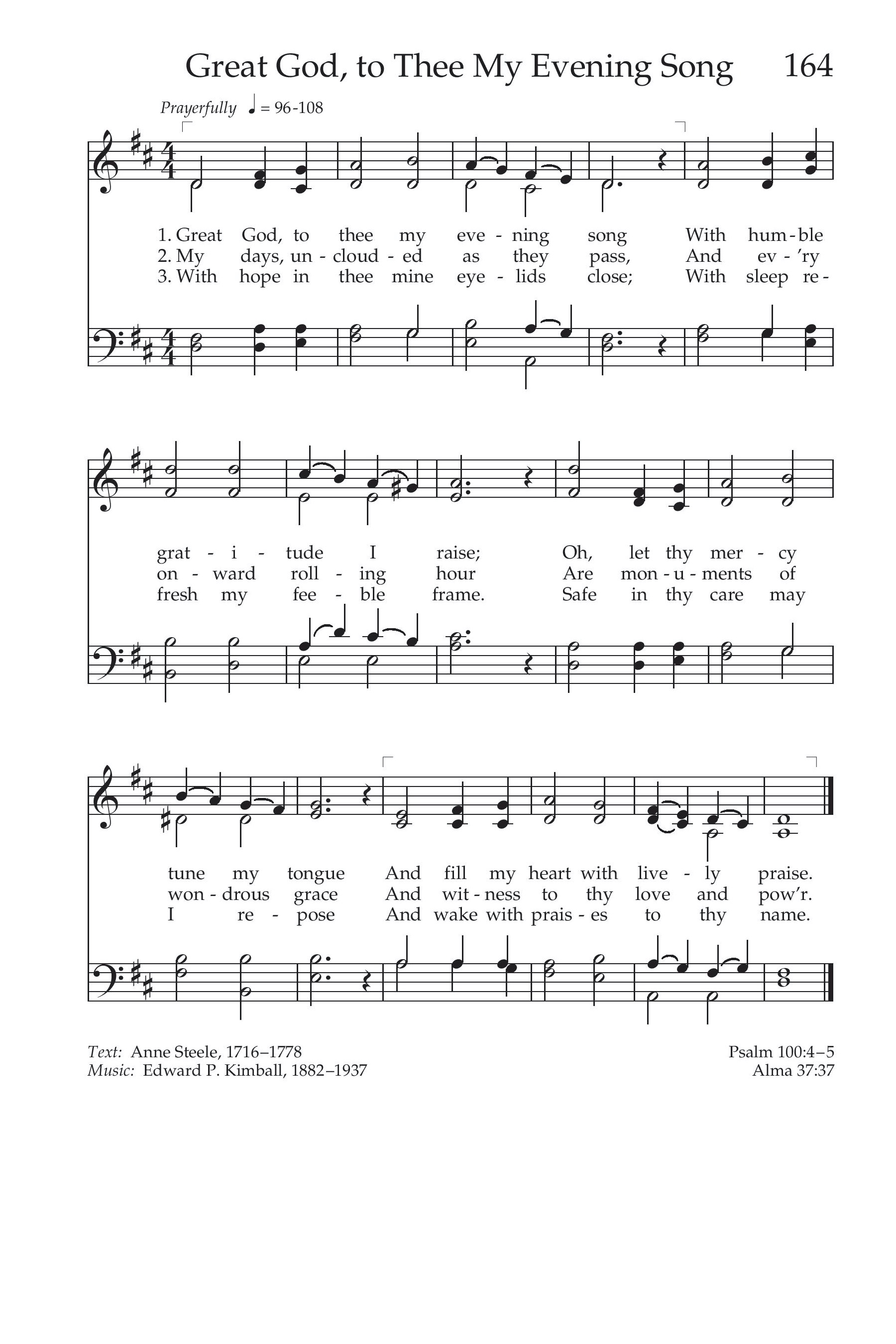
Great God, to Thee My Evening Song (An Evening Hymn)
By Anne Steele (1751)
Lyrics
1. Great God, to thee my evening song
With humble gratitude I raise;
Oh, let thy mercy tune my tongue
And fill my heart with lively praise.
With humble gratitude I raise;
Oh, let thy mercy tune my tongue
And fill my heart with lively praise.
2. My days, unclouded as they pass,
And ev’ry onward rolling hour
Are monuments of wondrous grace
And witness to thy love and pow’r.
And ev’ry onward rolling hour
Are monuments of wondrous grace
And witness to thy love and pow’r.
3. With hope in thee mine eyelids close;
With sleep refresh my feeble frame.
Safe in thy care may I repose
And wake with praises to thy name.
With sleep refresh my feeble frame.
Safe in thy care may I repose
And wake with praises to thy name.
Bible Reference
Psalm 4:8; Psalm 35:28; Psalm 71:23-24; Psalm 100:4-5; Psalm 127:2
Lectionary & readings
Open today’s (or any date’s) assigned scriptures and find related hymns across church calendars. Useful when planning worship around this song’s themes or its Bible reference.
Hymn scripture: Psalm 4:8; Psalm 35:28; Psalm 71:23-24; Psalm 100:4-5; Psalm 127:2
About This Hymn
Great God, to Thee My Evening Song, also known as An Evening Hymn, is a devotional hymn by Anne Steele, published in her collection Poems on Subjects Chiefly Devotional in 1760. It is a prayer of thanksgiving and dependence upon God, intended especially for the close of the day. Steele considers the passing hours as evidence of divine goodness and invites the worshipper to end the day with gratitude rather than take God's mercies for granted. The hymn reflects the practice of evening devotion, when Christians look back upon the day, acknowledge the Lord's provision, confess their failures, and entrust themselves to His care through the night.
The hymn begins with a personal expression of gratitude. The writer asks God to tune her tongue with His mercy and fill her heart with praise. The passing days and hours are described as witnesses to God's love and power. This perspective encourages believers to recognize ordinary daily experiences as occasions for thanksgiving. The hymn does not treat God's goodness as something confined to extraordinary events. His sustaining care, provision, and protection are present throughout the ordinary course of life.
Steele also gives the hymn a penitential character. Gratitude leads her to examine the condition of her own heart. Although surrounded by evidence of divine love, the human heart can become ungrateful, wander from the path of duty, and neglect the Lord. The prayer therefore turns toward forgiveness through the blood of Jesus Christ. This movement from thanksgiving to confession and pardon makes the hymn more than a simple bedtime prayer. It expresses the Christian's need for grace at the end of every day.
The closing thought is one of peaceful trust. The worshipper asks God to refresh the body with sleep and preserve life through the night, with the hope of awakening to offer praise again. Psalm 4:8 provides a particularly fitting biblical connection, expressing confidence in lying down and sleeping safely because the Lord alone gives security. The hymn remains suitable for evening worship, family devotions, private prayer, and services emphasizing thanksgiving, confession, and God's protection. Its enduring message is that each day should close with gratitude for God's mercy, confidence in Christ's forgiveness, and trust in the Lord's continuing care.
The hymn has been paired with several tunes. ST. VINCENT is associated with Sigismund Neukomm, with James Uglow credited as arranger in certain hymnals. ZEPHYR is by William B. Bradbury, while HURSLEY is identified as a traditional French Huguenot melody of anonymous authorship. All three settings use Long Meter, allowing the text to be sung to each tune.
From the Dictionary of Hymnology
Related terms and concepts automatically matched to this hymn.
Come, Thou desire of all Thy saints Hymn
Anne Steele’s public-worship hymn “Intreating the Presence of Christ in His Churches” (1760). Brought into common use via Ash & Evans (1769); more used in America than in Britain.
Read moreBaptist Hymnody, English History
A survey of English Baptist psalmody and hymn-writing over about 250 years: early objections to congregational singing, the rise of Baptist hymn writers, and the main hymn-books in use to the 1880s.
Read moreCome, heavenly love, inspire my song Hymn
Anne Steele’s long poem on Redeeming Love (1760) yielded several centos in common use, including openings addressed to heavenly love, the Holy Ghost, and the Saviour’s charms.
Read moreStaff Visualizer
Open in MIDI StudioPowered by HTML MIDI PLAYER, MIDI FILE Made by Hymnal Library. · Study chords & lyrics in MIDI Studio
Want weekly hymns and devotionals?
⭐ Recommend This Hymn
Share this beautiful hymn with others
This hymn also appears in these hymnals
Click a spine to pull out the hymnal, then open it.
Hymns with the same subject
More hymns about Evening, Forgiveness, Gratitude, Prayer, Protection, Providence, Trust, Worship
- For a New-Year's Day - Philip Doddridge
- His Eye Is on the Sparrow - Civilla D. Martin
- Lord Jesus, Think on Me - Synesius of Cyrene
- ’Tis the Blessed Hour of Prayer - Fanny Crosby
- Hear Our Prayer, O Heavenly Father - Harriet Parr
- Star upon the Ocean - Michael Gannon
- Befiehl du deine Wege - Paul Gerhardt
- Day by Day the Manna Fell (Daily Bread) - Josiah Conder
More hymn subjects
Explore other themes across the library.
Hymns about Cross
Hymns about Ministry
Hymns about Funeral
Hymns about Holiness of God
Hymns about Joy
Hymns about Endtime
Hymns about Altar Call
Hymns about Faith
Browse all subjects →
Latest Updated Hymnals
-
Open
 Book of Common Praise (BoCP1915)Updated 5 hours ago · 1915
-
Open
 The New Apostolic Church HymnalUpdated 2 weeks ago · 2008
-
Open
 400+ Christmas Carols Book: Sheet Music for PianoUpdated 2 weeks, 1 day ago · 2014
-
Open
 The Temple HymnalUpdated 2 weeks, 1 day ago · 1918
-
Open
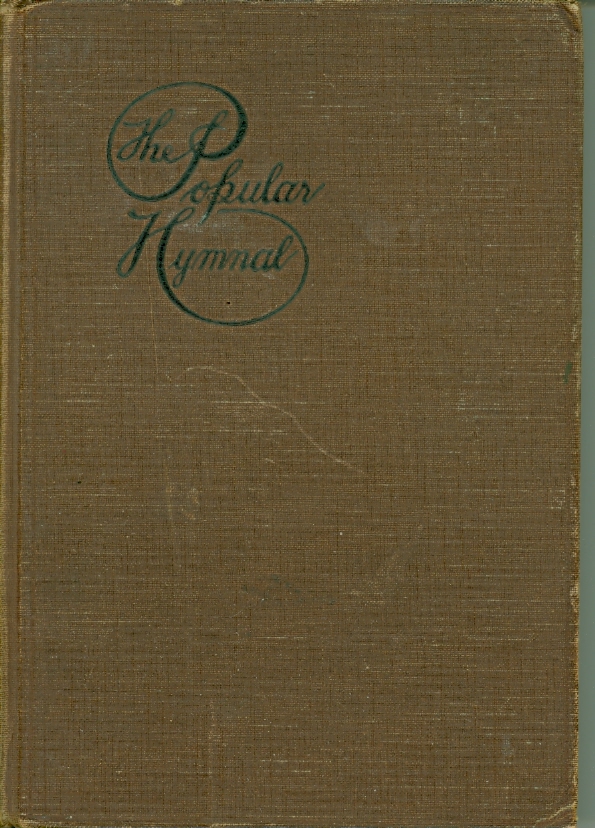 The Popular HymnalUpdated 2 weeks, 1 day ago · 1918
Hymn Information

Click a linked name to open their biography.
MIDI File
Popular Hymns
Recent Blog Posts



Popular Blog Posts
-
 Lessons from the Book of Haggai: Putting God…5 months, 1 week ago
-
 Easter vs Passover: How a Biblical Feast Bec…7 months, 1 week ago
-
 The Full Story of the Birth of Jesus Christ:…10 months, 4 weeks ago
-
 The 30 Most Famous Christmas Hymns and Carols1 year, 2 months ago
-
 The Story Behind the Hymn “Amazing Grace”10 months, 3 weeks ago
Visit Us on Social Media
Latest from X (Twitter)
Tweets by HymnalLibraryLatest from Facebook
Latest on YouTube
Loading latest video...
Daily Bible Verse
 Anne Steele
Disclaimer
The hymns, sheet music, MIDI files, and related content on this website are provided for educational and research purposes only.
- Public Domain: Many of the hymns featured here are in the public domain and may be freely used.
- Copyrighted Works: Some hymns may still be under copyright protection. Where applicable, permission has either been requested from the copyright owner, or the content is shared under the principles of fair use for educational purposes.
⚠️ Important Notice: If you wish to reproduce, distribute, or use any copyrighted hymn beyond personal study or educational use, you must obtain permission directly from the copyright holder. This website does not grant any rights for commercial use yet.
If there is any other question please address it to us in our Contact Page, for further assistance. Thank you for using the site. May God Bless You.
Recently Added · Dictionary of Hymnology
Browse dictionary →
Can’t find a hymn or lyric?
Leave your question in the forum for others to answer — requests, missing lines, writers, and worship ideas welcome.