

The history of psalmody and hymnody among English Baptists spans over two hundred and fifty years, charting a complex evolution from a deep-seated suspicion of congregational singing to its universal adoption. Historically, the denomination was split into two primary branches: the Arminian General Baptists, who held to general redemption, and the Calvinistic Particular Baptists, who maintained particular redemption. While these theological distinctions faded significantly by the late nineteenth century as both bodies converged within the Baptist Union, their historical traditions in public worship remained distinct for generations.
The Seventeenth Century: Controversy and Beginnings
Throughout the seventeenth century, the General Baptists almost universally rejected the practice of congregational singing in mixed assemblies. This opposition was rooted in a desire to maintain a strict separation between the church and the unregenerate world, as well as an intense dread of formalism. In 1678, Thomas Grantham published his influential Christianismus Primitivus, arguing that musical singing in rhyme and meter violated the nature of spiritual worship. He contended that only individuals specially moved by the Spirit should sing, that simultaneous congregational singing prevented mutual instruction since "when all speak, none can hear," and that adopting artistic tunes would inevitably invite instrumental music back into the church, destroying all solemnity.
This view was formally endorsed by the General Baptist Assembly of 1689. When advocates of singing presented a book of meters by William Barton along with musical rules according to the standard gamut (sol, fa, la, mi, re), the Assembly rejected it as an introduction of "carnal formalities" unsafe for the churches.
In contrast, the Particular Baptists looked upon congregational singing with greater favor. The historical records of the Broadmead Church in Bristol reveal that by 1671 the congregation regularly sang Psalms loudly enough to draw complaints from neighbors. While some communities, such as "Mr. Gifford's people" in Bristol, scrupulously refused to sing in artificial meters or demanded to keep their hats on during the singing, key figures championed the practice. John Bunyan, in his Solomon's Temple Spiritualised (1688), explicitly defended singing as a high ordinance of the New Covenant, though he restricted it to "Sion's sons", true believers singing with spirit and understanding.
In 1690, a sharp controversy erupted among London's Particular Baptists when Isaac Marlow published his Discourse concerning Singing, attacking the lawfulness of the practice. Marlow was answered by Benjamin Keach, pastor at Horsley Down, in his treatise The Breach Repaired in God's Worship (1691). Keach had pioneered the introduction of singing within his own congregation, starting in 1673 by adding a hymn at the conclusion of the Lord's Supper, and later introducing hymns on Thanksgiving Days and at baptisms. The General Assembly of Particular Baptists eventually intervened to establish peace, and the practice of singing gradually prevailed over Marlow's objections. Early supplemental texts from this era included Keach's own verses and the Sacramental Hymns (1697) of Joseph Stennett the elder.
The Eighteenth Century: Acceptance and the Golden Age
During the first half of the eighteenth century, older General Baptist churches maintained their traditional stance. In 1733, the General Assembly received a complaint from Northamptonshire that certain churches were singing the Psalms of David and "other men's composures" with tunable notes before a mixed multitude. The Assembly left the matter an open question, signaling a shift in sentiment. By the mid-eighteenth century, the Methodist revival swept through the midland counties and Yorkshire, leading to the formation of the New Connexion of General Baptists in 1770. These new congregations fully embraced Christian song.
Samuel Deacon published his homely but fervent Barton Hymns in 1785, which gained immense local popularity. In 1793, John Deacon issued an official Selection, followed shortly by a collection compiled by Dan Taylor, known popularly as Dan Taylor's Hymns. Although a brief pamphlet war occurred between Taylor and Gilbert Boyce of Lincolnshire in the late 1780s, singing had become entirely universal among General Baptists by the close of the century.
Among Particular Baptists, the golden age of hymnody opened in the latter half of the century. Joseph Stennett the elder served as the historical bridge between the eras, publishing his hymns on Believers' Baptism in 1712, including the enduring Sunday-morning piece "Another six days' work is done." Following a mid-century lull, occupied only by forgotten figures like Anne Dutton, a wave of brilliant hymn-writers emerged. Daniel Turner of Abingdon issued his Divine Songs in 1747, and Benjamin Wallin published Evangelical Hymns and Songs in 1750. John Needham contributed his well-known harvest hymn, "To praise the ever-bounteous Lord," in 1768, while Edmund Jones of Exeter penned the popular appeal "Come, humble sinner, in whose breast."
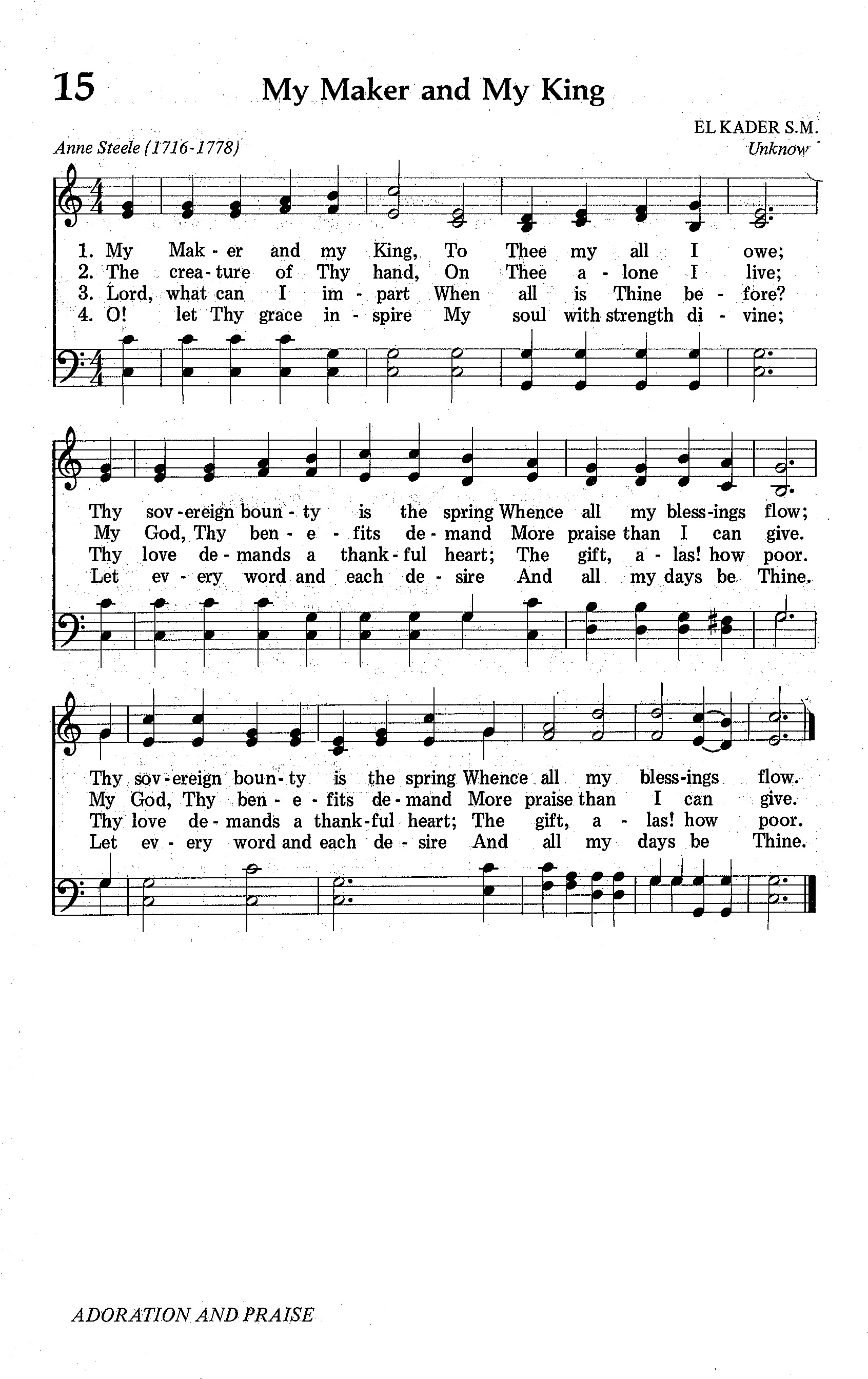
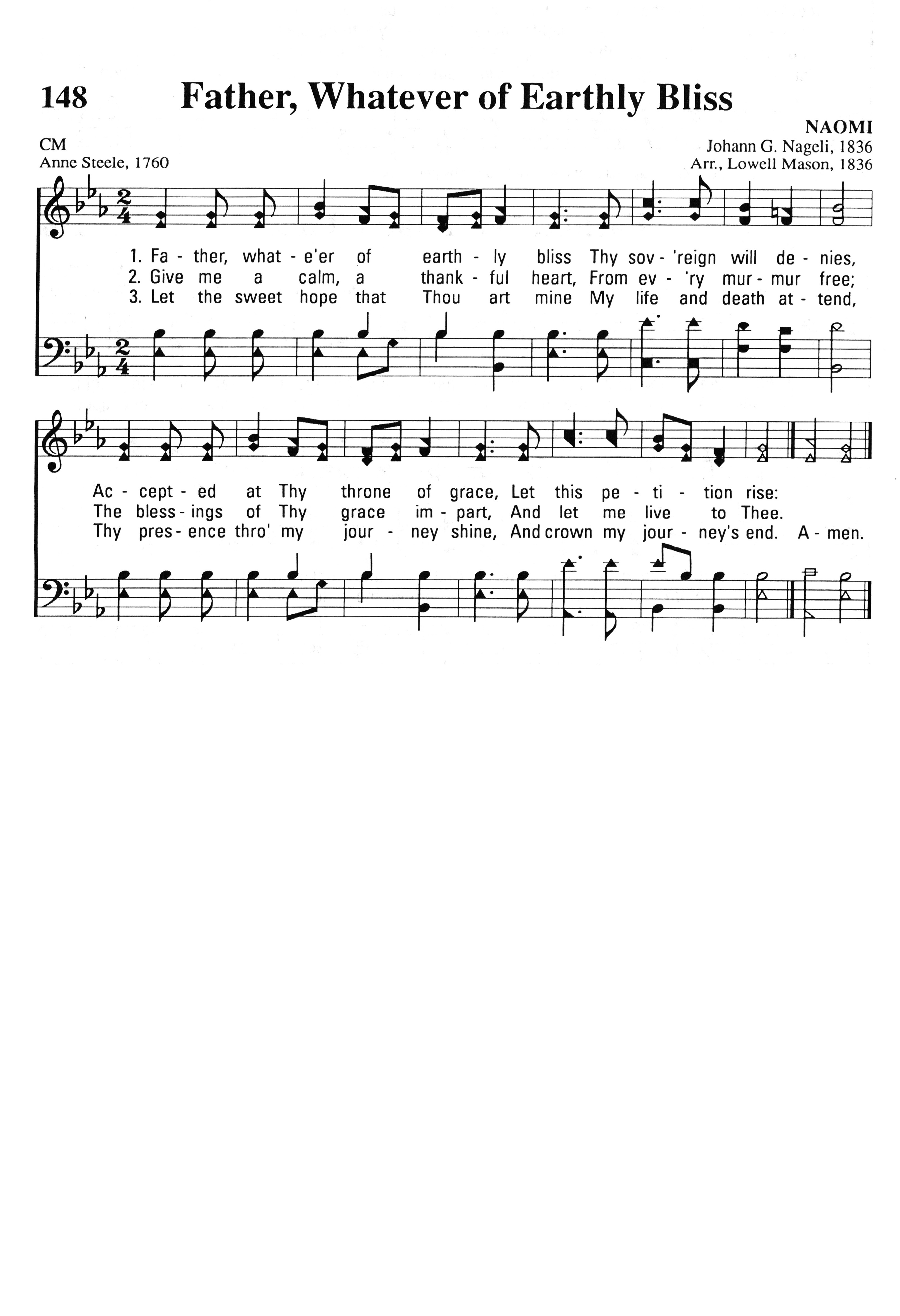
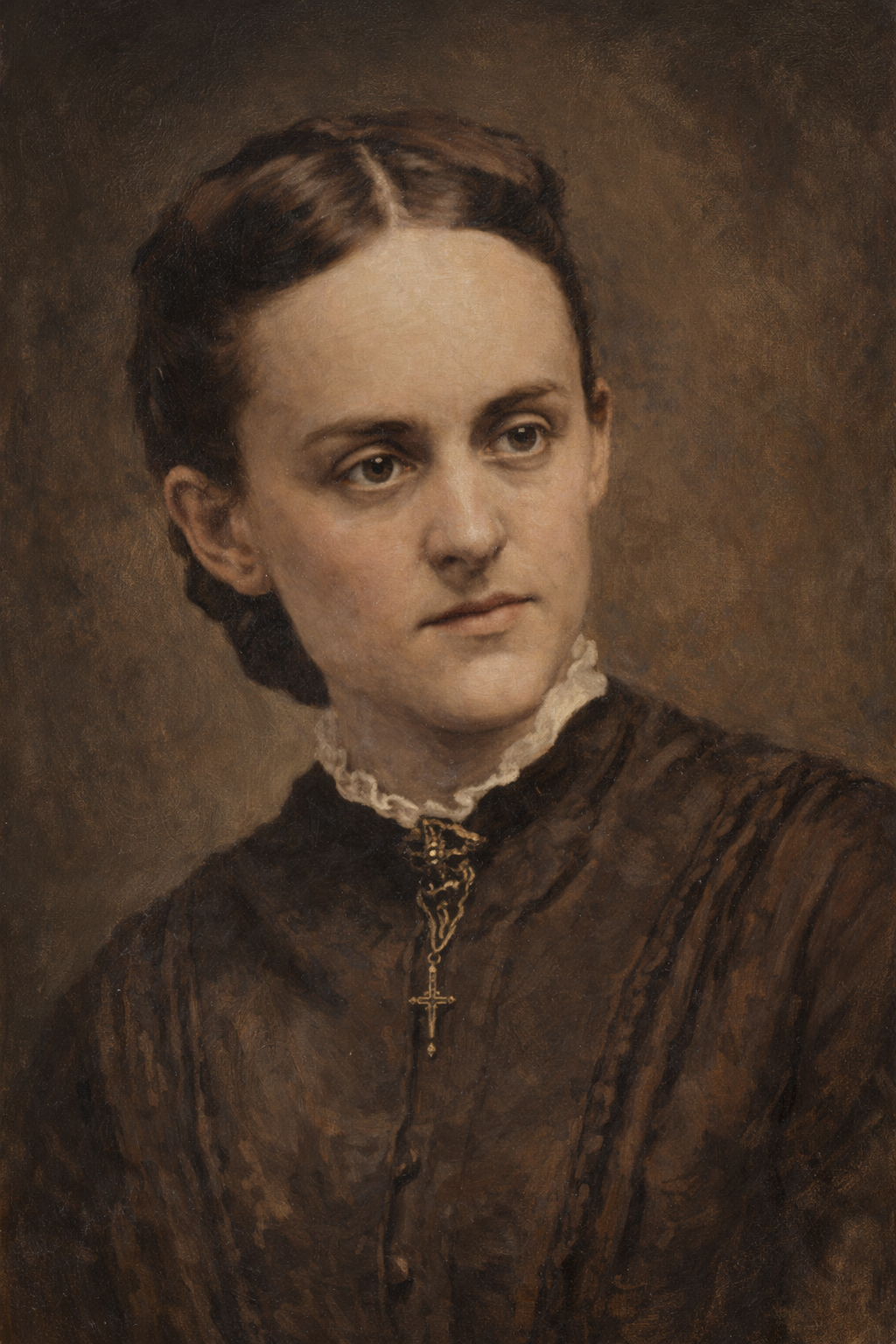
The most gifted writer of this era was Anne Steele, writing under the pseudonym "Theodosia." Her extensive poetic output entered widespread church use through early hymnals. She was followed by a remarkable circle of prolific Baptist writers:
-
Benjamin Beddome: A highly productive writer of concise, structured hymns suited to conclude specific sermons.
-
Dr. Samuel Stennett: Grandson of Joseph Stennett, who contributed numerous standard pieces to early collections.
-
Benjamin Francis: A Welsh-born pastor in Gloucestershire who wrote highly popular, enthusiastic verses.
-
Robert Robinson: Pastor at Cambridge and author of celebrated devotional hymns.
-
John Fawcett, D.D.: Author of "Blest be the tie that binds" (1772), composed upon his decision to decline a London pastorate and remain with his poor Yorkshire flock.
-
Dr. John Ryland: Pastor at Northampton who composed over one hundred hymns closely tied to his theological discourses.
-
Samuel Medley: The popular minister of Byrom Street, Liverpool, who initially printed his hymns on broadsides for his congregation.
-
Joseph Swain: A young minister at Walworth whose brief, bright career produced a collection of original hymns in 1792 that remained staples for decades.
-
Job Hupton: A minister in Norfolk whose original text, "Come ye saints and raise an anthem," was later recast by Dr. John Mason Neale into "Come ye faithful, raise the anthem."
The earliest common hymnal used by Particular Baptists to supplement metrical psalms was the Bristol Hymn Book (1769), compiled by John Ash, LL.D., and Caleb Evans, D.D., eventually expanding to 412 hymns. This was entirely eclipsed in 1787 by Dr. John Rippon’s Selection of Hymns from the best authors, intended to be an Appendix to Dr. Watts's Psalms & Hymns. Rippon’s book became the definitive Baptist collection, passing through more than thirty editions and heavily featuring the texts of Steele, Beddome, Stennett, Doddridge, and Fawcett.
The Nineteenth Century: Modern Hymnals and Consolidation
The nineteenth century produced fewer Baptist hymn-writers of lasting international eminence, though many individuals contributed separate works of high merit. John Burton wrote extensively for Sunday schools; Mrs. Alice Flowerdew published her popular hymn on the seasons in 1811; and John Howard Hinton compiled a collection in 1833 based on his sermons. John Eustace Giles authored several highly regarded missionary and baptismal hymns, while Amos Sutton composed the celebrated farewell hymn, "Hail, sweetest, dearest tie that binds" (1834), during a return from the Indian mission field. Edward Mote, a strict Calvinistic layman, published his Hymns of Praise in 1836, containing the widely popular "My hope is built on nothing less." Later in the century, contributions were made by prominent figures like Charles Haddon Spurgeon, W. P. Balfern, and Walter J. Mathams.
Denominational hymnbooks underwent comprehensive consolidation during this period, moving toward unified collections:
| Hymn Book | Publication Date | Core Editors / Compilers | Total Hymns | Targeted Tradition / Notes |
| The General Baptist Hymn Book | 1830 (Revised 1851, 1877) | J. B. Pike, J. Carey Pike, W. R. Stevenson | 920 (1879 edition) | Originally General Baptist; dropped "General" in 1879 to become the Baptist Hymnal, achieving cross-denominational adoption. |
| The New Selection | 1828 (Enlarged 1838) | John Haddon, Dr. Murch, Dr. Price, Dr. Steane | Varies (Expanded with Praise Waiteth) | Particular Baptist collection; enjoyed widespread institutional backing for decades. |
| Psalms and Hymns | 1858 (Supplemented 1880) | John Haddon Jr., Dr. S. G. Green, Dr. N. Haycroft, J. T. Wigner | 1,271 | Widely adopted by the main body of Particular Baptist churches across Great Britain. |
| Our Own Hymn Book | 1866 | Charles Haddon Spurgeon | 1,129 | Compiled for the Metropolitan Tabernacle and extensively used by its daughter churches. |
| Gadsby’s Selection of Hymns | 1814 (Supplemented 1838) | William Gadsby | 1,130 | Strongly Calvinistic Strict Baptist churches; incorporated the complete hymns of Joseph Hart. |
| Denham’s Selection | 1837 | David Denham | ~1,200 | Used by upwards of one hundred highly Calvinistic Baptist churches. |
| Stevens’s Selection | 1837 | John Stevens (Enlarged by J. S. Anderson) | 970 | Highly Calvinistic; localized predominantly among strict Independent Baptist chapels. |
By the close of the nineteenth century, the introduction of unified volumes like the Baptist Hymnal reflected the practical and theological unification of the denomination, effectively bringing an end to the centuries-old isolation of the songless worship tradition.
Related Hymns
Hymns in the library connected to this dictionary topic.


Related Hymn Sheets
3 shown at a time — use the arrows to browse all 6 sheets.
Related Authors
Writers connected to this dictionary topic.
Keywords
Related terms for this dictionary entry.
Recent Dictionary Entries
Newly added terms from the Dictionary of Hymnology.
If you notice any mistake or have suggestions, please contact us on our contact page.