



Should Christians Celebrate Halloween?
2 days, 3 hours ago
How Sweet and Aweful Is the Place
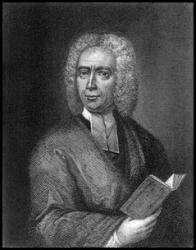
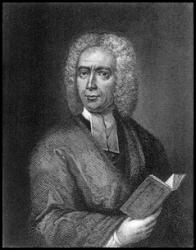
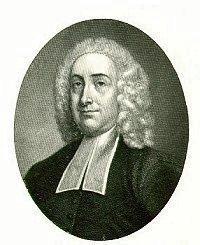
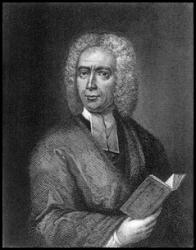
By Isaac Watts (1707)
Lyrics
1. How sweet and awful is the place
with Christ within the doors,
while everlasting love displays
the choicest of her stores.
with Christ within the doors,
while everlasting love displays
the choicest of her stores.
2. While all our hearts and all our songs
join to admire the feast,
each of us cries, with thankful tongue,
"Lord, why was I a guest?
join to admire the feast,
each of us cries, with thankful tongue,
"Lord, why was I a guest?
3. "Why was I made to hear Thy voice,
and enter while there's room,
when thousands make a wretched choice
and rather starve than come?"
and enter while there's room,
when thousands make a wretched choice
and rather starve than come?"
4. 'Twas the same love that spread the feast
that sweetly drew us in;
else we had still refused to taste,
and perished in our sin.
that sweetly drew us in;
else we had still refused to taste,
and perished in our sin.
5. Pity the nations, O our God,
constrain the earth to come;
send Thy victorious Word abroad,
and bring the strangers home.
constrain the earth to come;
send Thy victorious Word abroad,
and bring the strangers home.
6. We long to see Thy churches full,
that all the chosen race
may, with one voice and heart and soul,
sing Thy redeeming grace.
that all the chosen race
may, with one voice and heart and soul,
sing Thy redeeming grace.
Bible Reference
Genesis 28:16-17; Psalm 84:1-4; Matthew 18:20; Hebrews 10:24-25
Lectionary & readings
Open today’s (or any date’s) assigned scriptures and find related hymns across church calendars. Useful when planning worship around this song’s themes or its Bible reference.
Hymn scripture: Genesis 28:16-17; Psalm 84:1-4; Matthew 18:20; Hebrews 10:24-25
About This Hymn
How Sweet and Awful Is the Place is a congregational hymn written by Isaac Watts and first published in 1707 in Hymns and Spiritual Songs, Book II. The word “awful” in the hymn reflects its older meaning of awe-filled or reverent, rather than fear in a modern sense. Watts uses this language to express the deep reverence and wonder that accompany the gathered worship of God’s people.
The hymn is rooted in the biblical theme of God’s special presence among His gathered saints. Genesis 28:16-17 provides an important background, where Jacob awakens from his dream and declares, “Surely the Lord is in this place,” calling it the house of God and the gate of heaven. Watts applies this idea to Christian worship, emphasizing that when believers assemble in Christ’s name, they experience a unique awareness of God’s nearness.
Psalm 84 strongly influences the hymn’s tone and theology. Watts reflects the psalmist’s longing for the courts of the Lord and the blessedness of those who dwell in God’s house. The sweetness of the place comes not from architecture or ceremony but from the presence of God Himself and the fellowship of redeemed people worshiping together in unity and faith.
A central theological theme of the hymn is Christ’s mediating presence. Watts alludes to Matthew 18:20, affirming that where believers gather in Christ’s name, He is truly present among them. This presence brings both comfort and holy reverence. Worship is therefore portrayed as both joyful and solemn, combining gladness with humility before a holy God.
The hymn also underscores the importance of corporate worship and mutual edification. Hebrews 10:24-25 is reflected in Watts’s emphasis on believers meeting together to encourage one another in faith and love. The gathering of the church becomes a foretaste of heaven, where redeemed sinners join in unified praise before God’s throne.
How Sweet and Awful Is the Place remains a powerful hymn on the theology of worship and the gathered church. It teaches believers to treasure public worship, to approach God with reverent joy, and to recognize the gracious privilege of meeting with Him among His people.
From the Dictionary of Hymnology
Related terms and concepts automatically matched to this hymn.
All ye that [who] love the Lord, rejoice Hymn
Isaac Watts’s paraphrase of Psalm cxlix., from his Psalms of David, 1719, titled “Praise God, all His saints; or, The Saints judging the World.” Most collections omit its final stanzas.
Read moreCome, let us join our cheerful songs Hymn
One of Watts’s best-known hymns (1707/1709) on Revelation 5 usually appears in four stanzas omitting “Let all that dwell above the sky”; Bingham supplies a Latin version.
Read moreCome, we that love the Lord Hymn
Isaac Watts’s “Heavenly Joy on Earth” (1707/1709), ten stanzas. Wesley’s Charlestown form (1736–7) and Cotterill’s “Come ye who love the Lord” (1819) head the many altered texts in later books.
Read moreStaff Visualizer
Open in MIDI StudioPowered by HTML MIDI PLAYER, MIDI FILE Made by Hymnal Library. · Study chords & lyrics in MIDI Studio

Want weekly hymns and devotionals?
⭐ Recommend This Hymn
Share this beautiful hymn with others
This hymn also appears in these hymnals
Click a spine to pull out the hymnal, then open it.
Hymns with the same subject
More hymns about Love of God
- Salvation Has Been Brought Down - Albert E. Brumley
- How Deep the Father's Love for Us - Stuart Townend
- Look and Live - William A. Ogden
- The Love of God - Frederick M. Lehman
- When I Survey the Wondrous Cross - Isaac Watts
- The Comforter Has Come - Francis Bottome
- When I See the Blood - E. A. Hoffman
- There's A Wideness In God's Mercy - Frederick William Faber
More hymn subjects
Explore other themes across the library.
Hymns about Steadfastness
Hymns about Comfort
Hymns about Holy Spirit
Hymns about Grace
Hymns about Invitation
Hymns about Harvest
Hymns about Worship
Hymns about Christian Unity
Browse all subjects →
Latest Updated Hymnals
-
Open
 Book of Common Praise (BoCP1915)Updated 1 day, 16 hours ago · 1915
-
Open
 The New Apostolic Church HymnalUpdated 1 week ago · 2008
-
Open
 400+ Christmas Carols Book: Sheet Music for PianoUpdated 1 week, 1 day ago · 2014
-
Open
 The Temple HymnalUpdated 1 week, 1 day ago · 1918
-
Open
 The Popular HymnalUpdated 1 week, 1 day ago · 1918
Hymn Information
Click a linked name to open their biography.
MIDI File
Popular Hymns
Recent Blog Posts


Popular Blog Posts
-
 Lessons from the Book of Haggai: Putting God…5 months ago
-
 Easter vs Passover: How a Biblical Feast Bec…7 months ago
-
 The Full Story of the Birth of Jesus Christ:…10 months, 3 weeks ago
-
 The 30 Most Famous Christmas Hymns and Carols1 year, 2 months ago
-
 The Story Behind the Hymn “Amazing Grace”10 months, 2 weeks ago
Visit Us on Social Media
Latest from X (Twitter)
Tweets by HymnalLibraryLatest from Facebook
Latest on YouTube
Loading latest video...
Daily Bible Verse
Disclaimer
The hymns, sheet music, MIDI files, and related content on this website are provided for educational and research purposes only.
- Public Domain: Many of the hymns featured here are in the public domain and may be freely used.
- Copyrighted Works: Some hymns may still be under copyright protection. Where applicable, permission has either been requested from the copyright owner, or the content is shared under the principles of fair use for educational purposes.
⚠️ Important Notice: If you wish to reproduce, distribute, or use any copyrighted hymn beyond personal study or educational use, you must obtain permission directly from the copyright holder. This website does not grant any rights for commercial use yet.
If there is any other question please address it to us in our Contact Page, for further assistance. Thank you for using the site. May God Bless You.
Recently Added · Dictionary of Hymnology
Browse dictionary →
Can’t find a hymn or lyric?
Leave your question in the forum for others to answer — requests, missing lines, writers, and worship ideas welcome.