


The seven greater Advent antiphons, historically sung at Vespers from December 17 onward, are double antiphons framing the Magnificat. Each addresses the Messiah under an Old Testament title: O Sapientia, O Adonay, O Radix Jesse, O Clavis David, O Oriens, O Rex gentium, and O Emanuel. Amalarius noted an eighth antiphon, O Virgo virginum, which was adopted in the Sarum, York, and Hereford Breviaries, while the Sarum Use added a ninth, O Thoma Didyme. The opening words O Sapientia are preserved against December 16 in the calendar of the Book of Common Prayer.
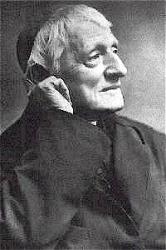
Prose translations of these antiphons entered Anglican usage during the nineteenth century, beginning with John Henry Newman's rendering in Tracts for the Times (1836). Other prose versions appeared in Sacred Hymns and Anthems (1846), Robert Campbell's St. Andrew's Hymnal (1850), Murray's Hymnal (1852), the Hymnal Noted (1854), and John David Chambers's Psalter (1852). Metrical renderings were crafted by Canon William Cooke in 1853, Earl Nelson in the 1868 Sarum Hymnal, and William John Blew in 1852.
Around the twelfth century, an unknown author wove five of the prose antiphons into the Latin metrical hymn Veni, veni, Emmanuel, adding a congregational refrain. John Mason Neale translated this composite text into English as "Draw nigh, draw nigh, Emmanuel" for his Mediaeval Hymns (1851), revising it for the Hymnal Noted in 1852. A revised version titled "O come, O come, Emmanuel" appeared in Hymns Ancient and Modern (1861) and rapidly became the standard Advent hymn throughout the English-speaking world. Additional individual translations were authored by Robert Corbet Singleton (1867) and James Macgill (1876).
Related Authors
Writers connected to this dictionary topic.
Keywords
Related terms for this dictionary entry.
Recent Dictionary Entries
Newly added terms from the Dictionary of Hymnology.
If you notice any mistake or have suggestions, please contact us on our contact page.