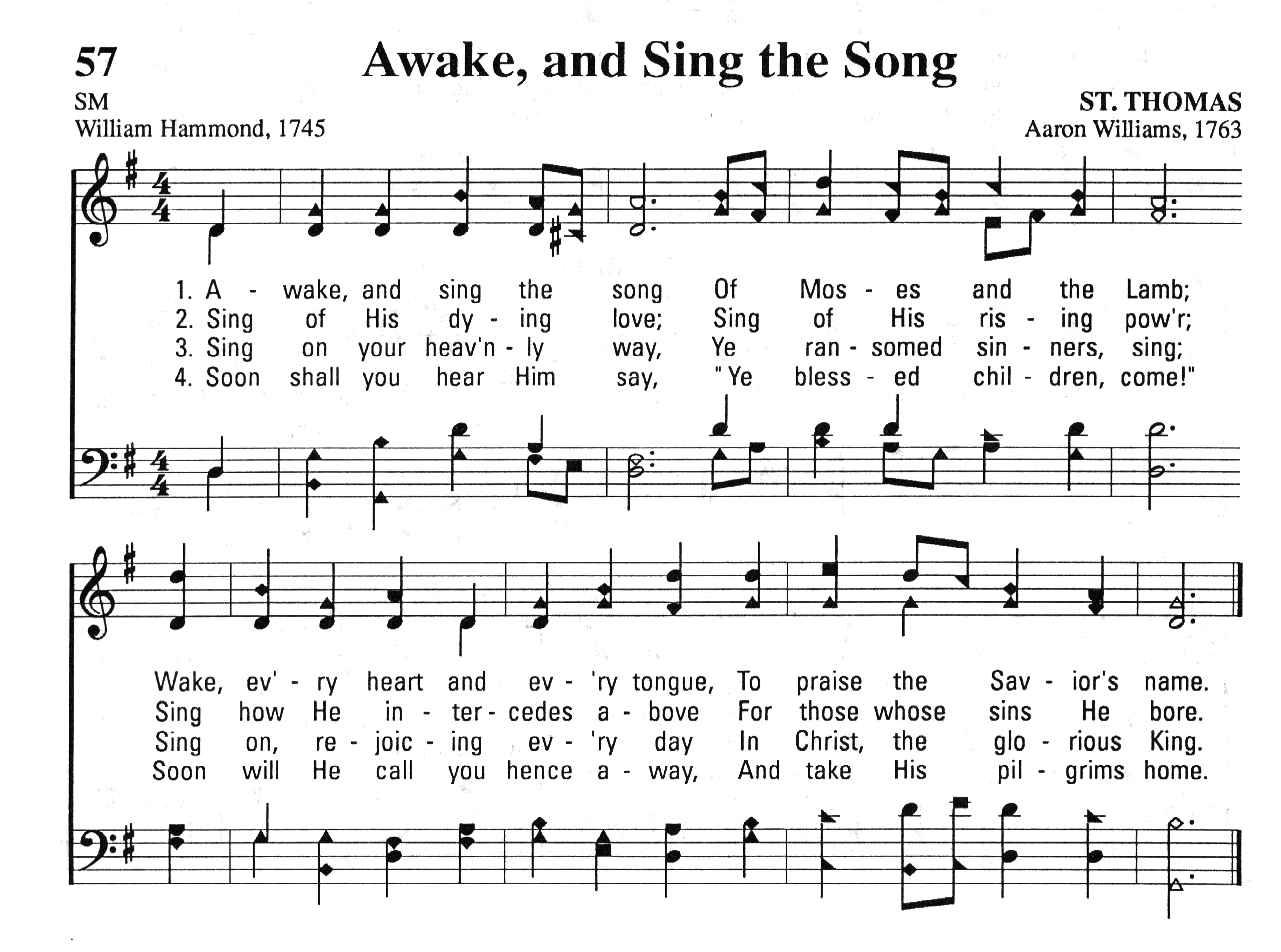




Awake, and sing the song. William Hammond. [Praise.] This widely sung hymn of praise first appeared under the introductory heading "Before Singing of Hymns, by Way of Introduction" in William Hammond's Psalms, Hymns, and Spiritual Songs, published in London by W. Strahan in 1745 (pages 84 to 86), consisting of 14 stanzas of 4 lines. While the complete 14-stanza text has never been adopted in hymnals for congregational use, various shortened selections and centos have achieved immense popularity across all English-speaking countries.
The historical development of these centos involves several distinct revisions by prominent hymnodists:
- George Whitefield (1753): In his Collection of Hymns for Social Worship (No. 47), Whitefield created a 4-stanza cento using stanzas i, ii, xiii, and xiv of Hammond's original, altering the opening line of stanza i from "Wake ev'ry heart and ev'ry tongue" to "Awake and sing the Song", changing "your" to "our" in stanzas iii and iv, and recasting the closing lines of stanza iv to "Till we all meet in heav'n."
- Martin Madan (1760): In his Collection of Psalms & Hymns (No. 35), Madan retained Whitefield's stanzas i and iii, but expanded stanza iv into two distinct stanzas beginning "Sing on your heav'nly way" and "Soon shall ye hear him say." This version was adopted by Dr. Conyers (1774), Richard De Courcy (1775), Lady Huntingdon (1764), and later entered major Church of England collections such as Mercer's, Thring's, and Lord Selborne's Book of Praise, as well as American hymnals including the Dutch Reformed Hymns of the Church (1869) and the Presbyterian Hymnal (1874).
- Augustus M. Toplady (1776): In his Psalms & Hymns (No. 118), Toplady took Madan's 5-stanza text (changing "ye" to "us") and appended a 6th stanza derived from Isaac Watts's Hymns and Spiritual Songs (1709, Book i, No. 49): "There shall our raptur'd tongue / His endless praise proclaim; / And sing, in sweetest notes, the song / Of Moses and the Lamb." This 6-stanza cento became the most widely adopted form in both Great Britain and America, appearing in Snepp's Songs of Grace and Glory, the Evangelical Hymnal, and the Canadian Presbyterian Hymn Book.
- Hall's Mitre Hymn Book (1836): Introduced a revised fourth stanza beginning "Ye pilgrims on the road", which was subsequently combined with Toplady's text in the American New School Presbyterian Church Psalmist (1843) and the Baptist Psalms & Hymns (1858).
- Later Modifications: The Parish Hymnal (1863) added a doxology to Toplady's text, while Church Hymns (1871) altered the opening line to "Awake and sing the song / Of glory to the Lamb." A Latin translation of the five-stanza cento was published by R. C. Bingham in Hymno. Christ. Lat. (1871), beginning "Jam cantilenam gratulantes tollite."
Related Hymns
Hymns in the library connected to this dictionary topic.
-
 Awake and Sing the Song
-
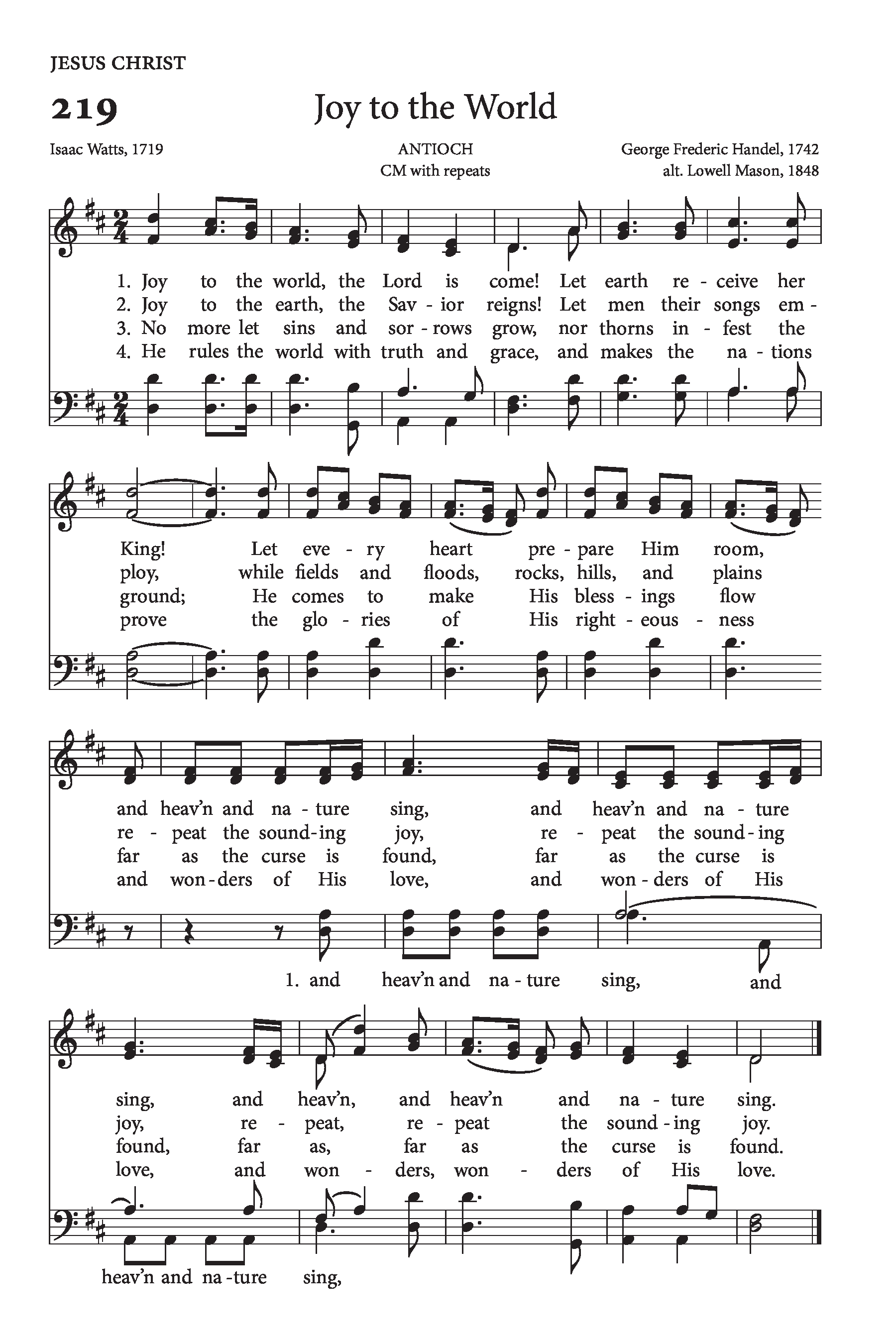
 Joy to the World
-
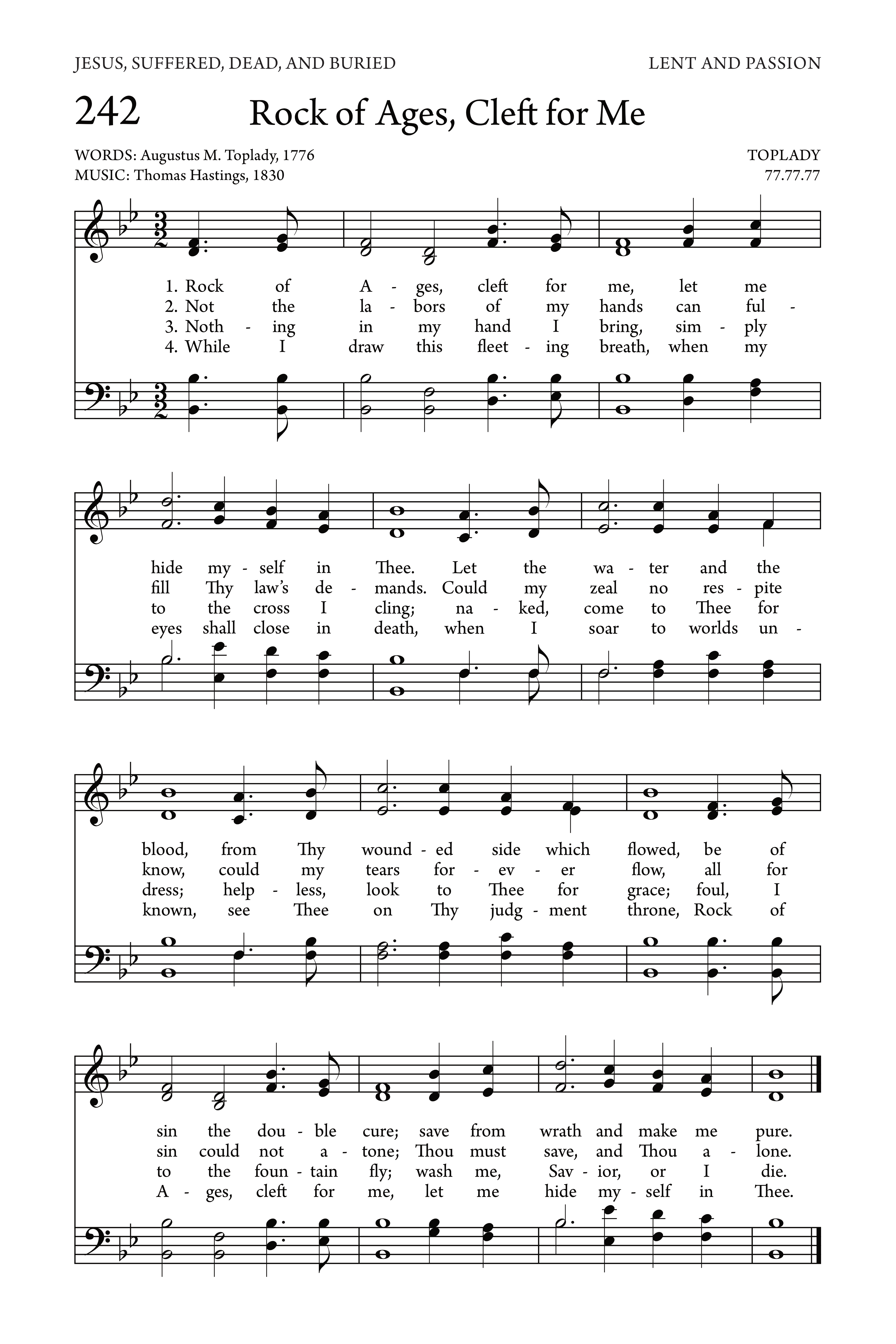
 Rock of Ages, cleft for me
-
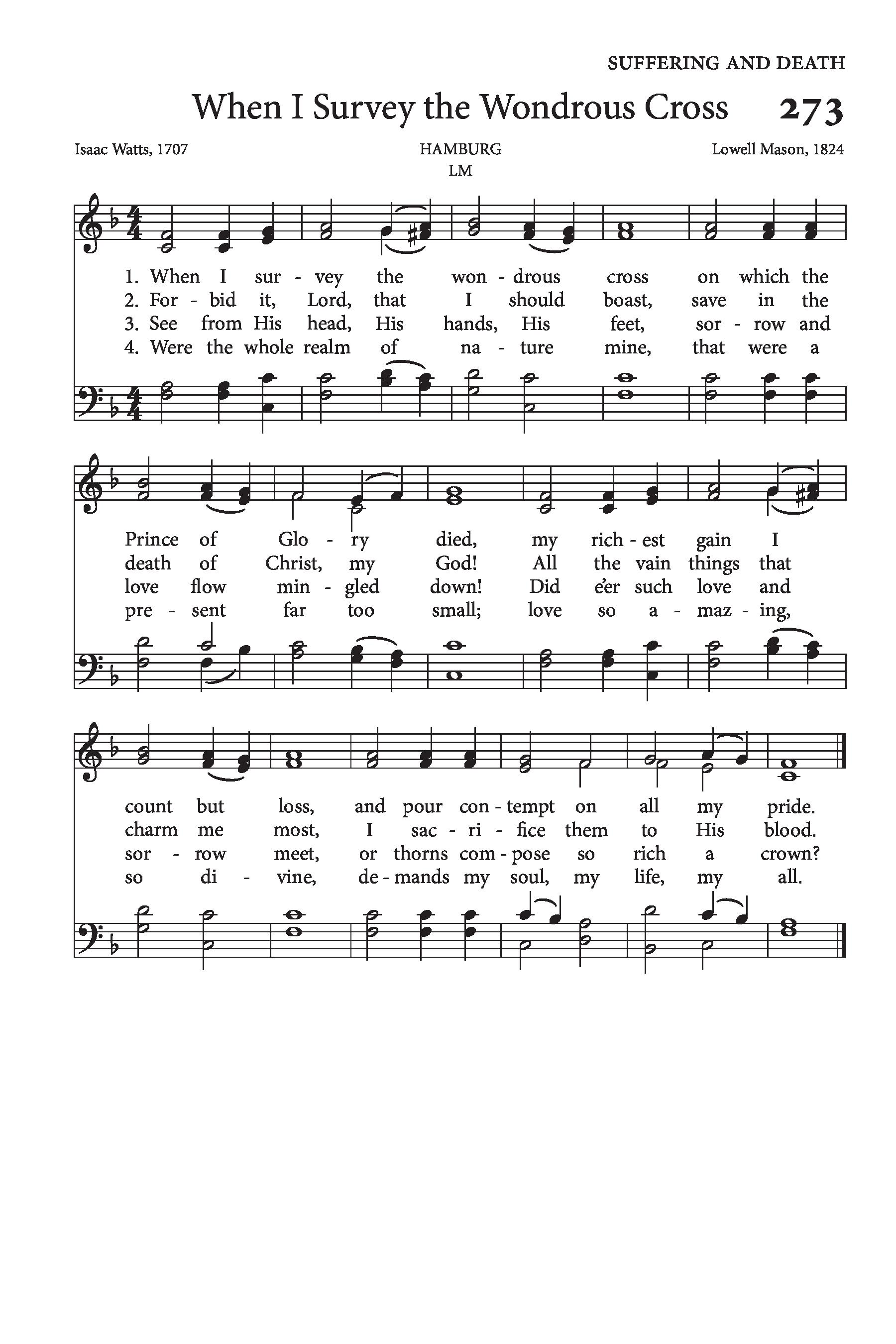
 When I Survey the Wondrous Cross
-
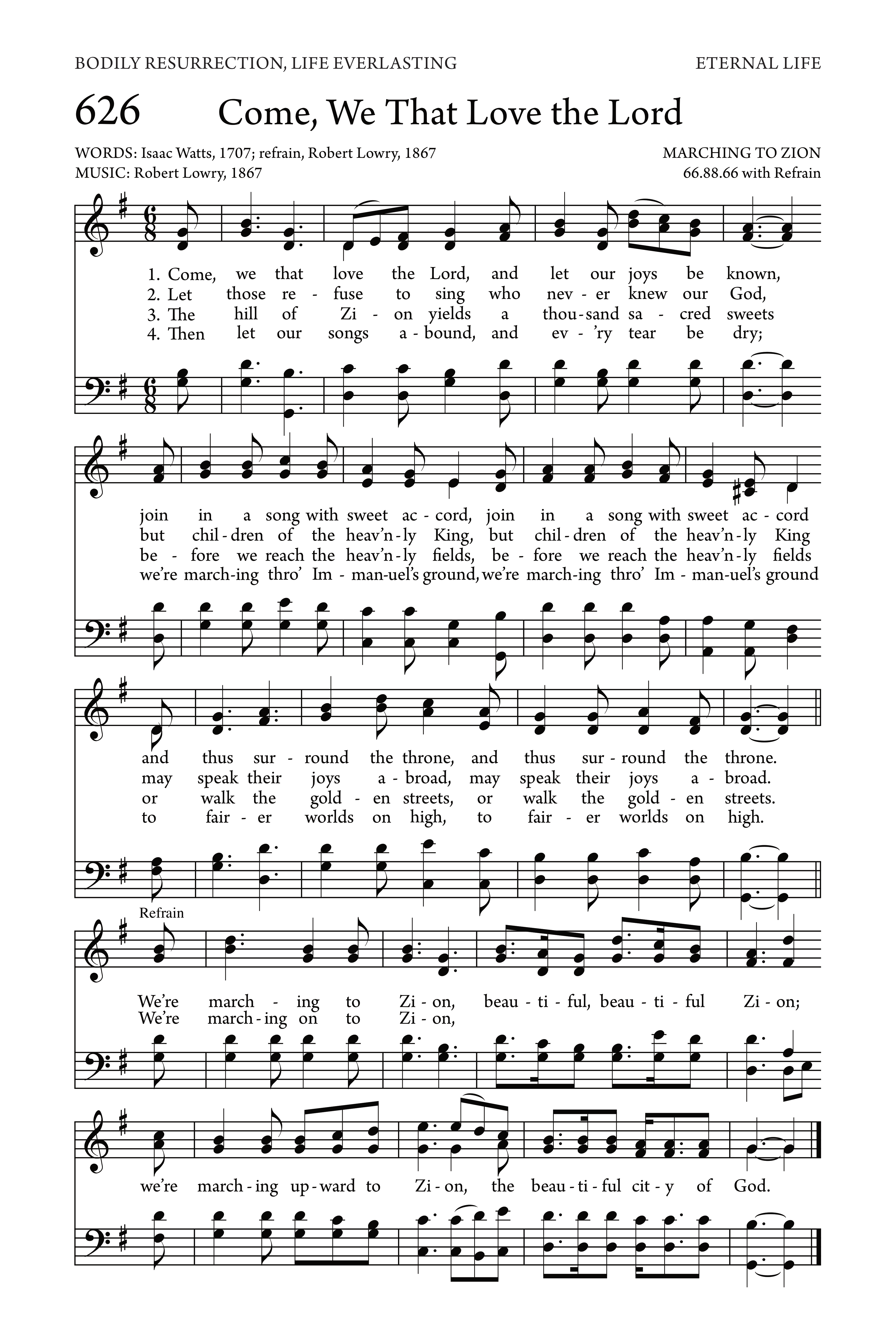
 We're Marching To Zion
-
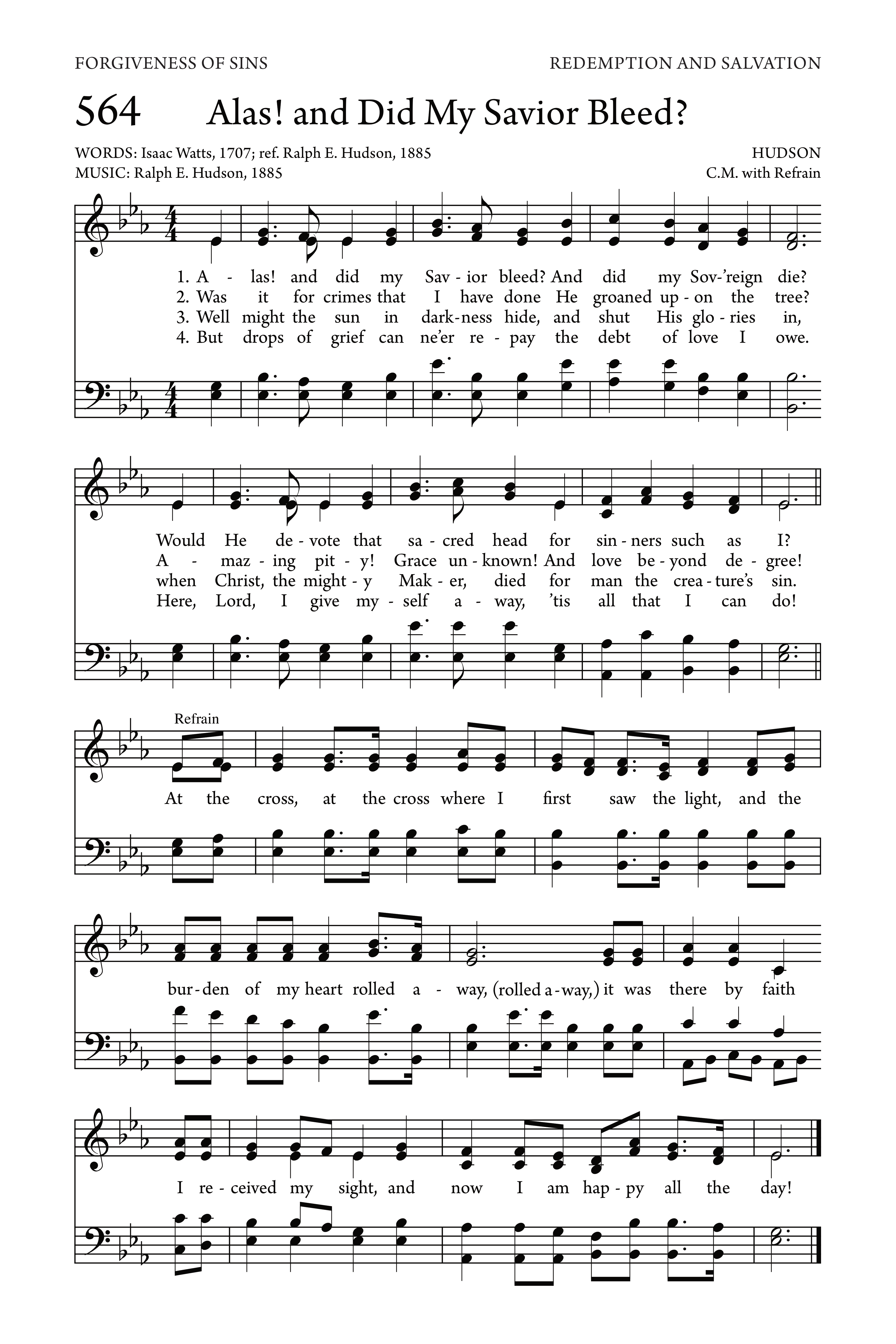
Alas! and Did My Savior Bleed
-
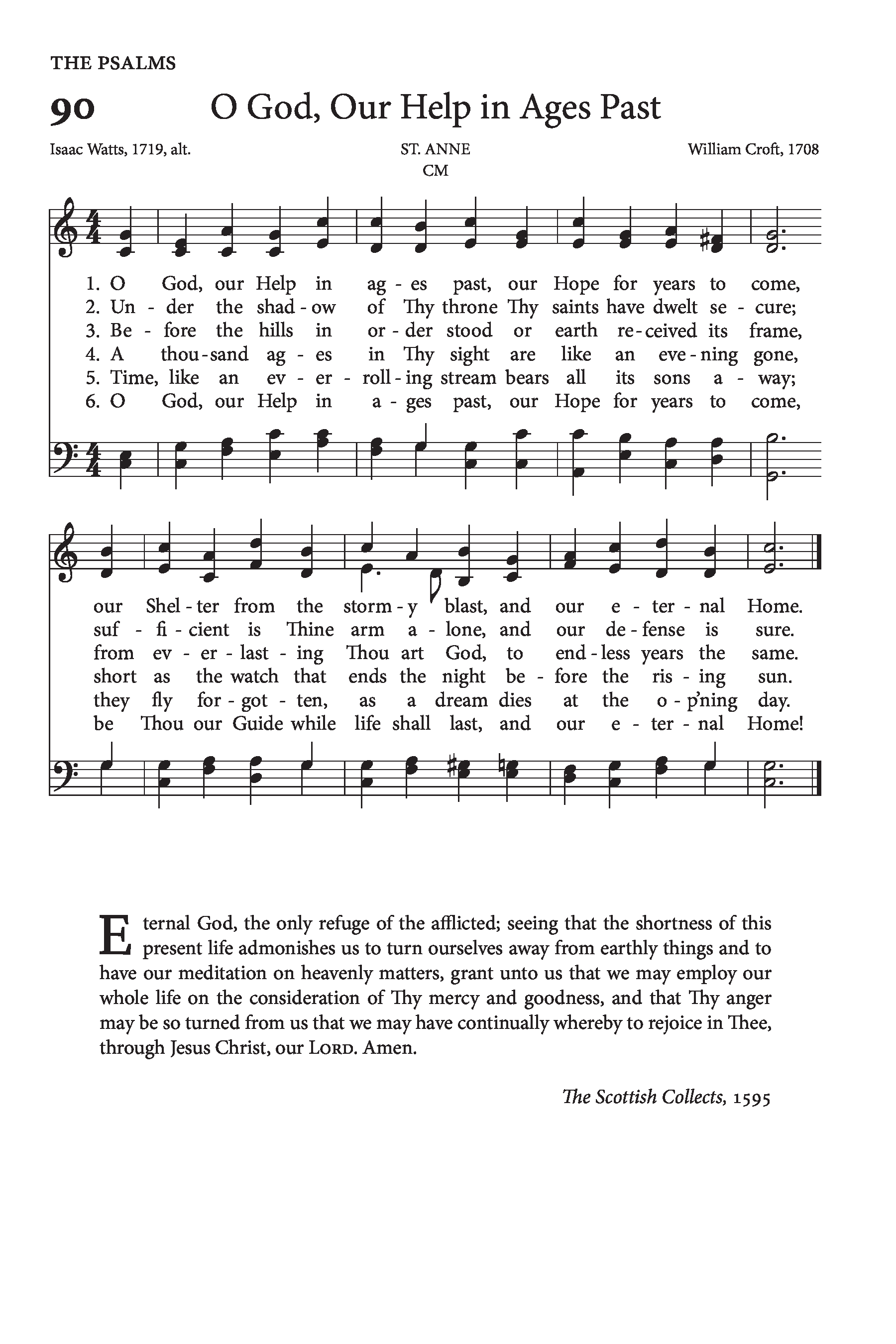
O God, Our Help in Ages Past
-
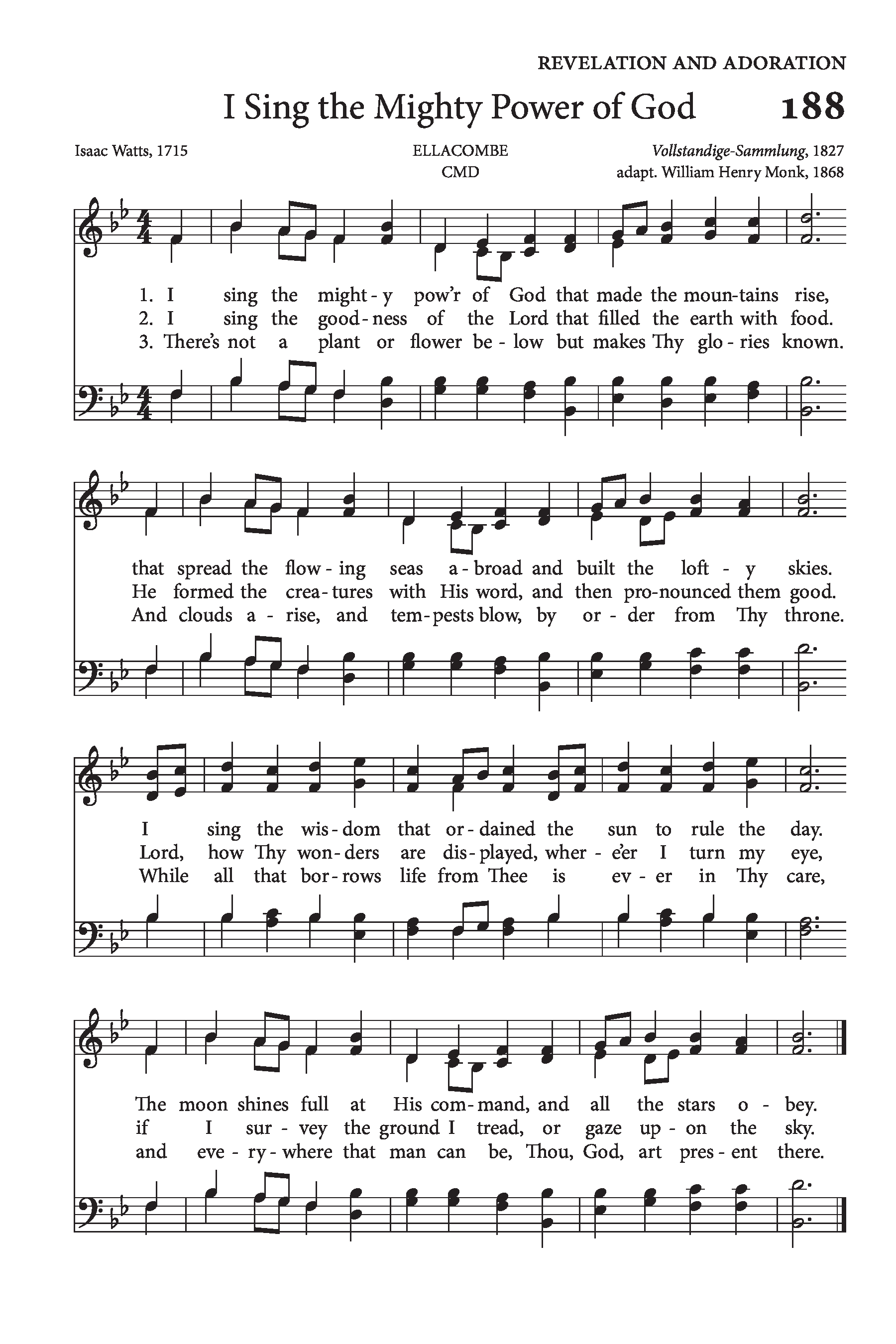
I Sing the Mighty Power of God
16 more related hymns below in the sheet gallery.
Related Hymn Sheets
3 shown at a time — use the arrows to browse all 24 sheets.
Related Authors
Writers connected to this dictionary topic.
Keywords
Related terms for this dictionary entry.
Recent Dictionary Entries
Newly added terms from the Dictionary of Hymnology.
If you notice any mistake or have suggestions, please contact us on our contact page.