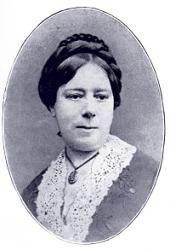
Duke Anton Ulrich of Brunswick was born on October 4, 1633, at Hitzacker on the Elbe. The younger son of Duke August, who succeeded to the Dukedom of Wolfenbüttel in 1636, Anton Ulrich was raised in Lutheran orthodoxy under the guidance of his father and stepmother, Sophie Elisabeth of Mecklenburg. Educated by J. G. Schottelius and Sigismund von Birken, he studied at the University of Helmstedt in 1650 and developed a lifelong devotion to poetry and literature. He presented his first handwritten collection of hymns to his father as a New Year's gift in 1655 and was admitted into the Fruitbearing Society in 1659.
Following his father's death in 1666, Anton Ulrich turned his attention to statecraft and political ambition. Appointed Governor at Wolfenbüttel in 1667 and Co-Regent of Brunswick in 1685, he governed with lavish grandeur, constructing a palace at Salzdahlum, an academy, a library, and an opera house. After entering an alliance with France in 1702, he was temporarily deposed from the Co-Regency, but assumed full rule over Brunswick in 1704 upon his brother's abdication. His conversion to Roman Catholicism in 1709 brought friction with his subjects and former allies. Falling gravely ill in 1714, he received counsel from an Evangelical minister before receiving the Roman Catholic Sacrament, dying at Salzdahlum on March 27, 1714.
Anton Ulrich composed forty-four hymns prior to 1655, published anonymously as Höcherleuchtete Geistliche Lieder in 1665. This work was expanded to sixty hymns with tunes likely provided by his stepmother under the title Christ-Fürstliches Davids-Harpfen-Spiel (Nürnberg, 1667). Closely associated with the literary style of the Pegnitz Order, his hymns feature varied meters and experimental poetic forms. His compositions reflect deep personal repentance, intense devotional fervor, and genuine love for the Savior. Four of his texts were translated into English by Catherine Winkworth, Frances Elizabeth Cox, and others, including "Lass dich Gott" ("Leave all to God") and "Nach dir, O Gott, verlanget mich" ("O God, I long Thy Light to see").
Related Hymns
Hymns in the library connected to this dictionary topic.
Related Hymn Sheets
3 shown at a time — use the arrows to browse all 4 sheets.
Related Authors
Writers connected to this dictionary topic.
Keywords
Related terms for this dictionary entry.
Recent Dictionary Entries
Newly added terms from the Dictionary of Hymnology.
If you notice any mistake or have suggestions, please contact us on our contact page.