
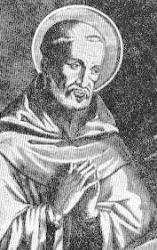
The German hymn "Ach Gott, wie manches Herzeleid" was written as a source of spiritual comfort during times of trial. It surfaced publicly in the second edition of Martin Moller’s Meditationes Sanctorum Patrum, published in Görlitz in 1587. The text was introduced as a consoling prayer designed to comfort a troubled soul amidst the tribulations of the era by focusing on the name of Jesus. Structurally, the work is a free German paraphrase of the famous Latin hymn Jesu dulcis memoria, traditionally ascribed to Saint Bernard of Clairvaux. It was arranged into 12 stanzas of 6 lines each.
The true authorship of the text remains a subject of historical debate among hymnologists. Hymn scholar Eduard Emil Koch noted that certain stanzas became immediate favorites across Germany and leaned toward Moller as the author. Philipp Wackernagel pointed out that Moller himself later placed the piece within a section for works composed by other spiritual persons in his 1596 volume Manuale de Praeparatione ad Mortem, possibly because of its heavy reliance on the Latin original.
Furthermore, Conrad Hojer, a sub-prior at Möllenbeck, explicitly claimed the text as his own in his 1614 volume Die funff Heupt Stücke Christlicher Lehre. Most historians conclude that Hojer likely revised Moller’s earlier version to give the verses a more regular metrical form.
Translations in Common Use
The text was widely adopted by English compilers through several distinct translation lineages:
The first major variant, "Jesus, my all, my highest good," is a free 7-stanza version based on a later 14-stanza German modification that began with the stanza "Jesu! du edler Brautgam werth." This rendering was published as entry Number 454 in the Moravian Hymn Book of 1789. Portions of this text were later selected by Edward Bickersteth for his Christian Psalmody (1832) and by Caroline Wilson for her General Psalmody (1842).
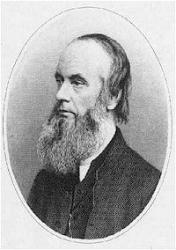
The second version, "O God, what manifold distress," was translated by Arthur Tozer Russell for his Psalms and Hymns in 1851. Russell translated the first, second, fourth, and eleventh stanzas, dividing the work into two parts, with the second section opening under the line "Jesu, my Lord and God, Thou art."
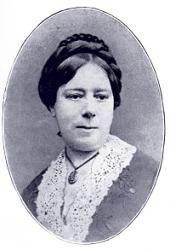
The third and most influential translation lineage was produced by Catherine Winkworth. She published "Ah God, my days are dark indeed" in the second series of her Lyra Germanica in 1858, omitting the third and fifth stanzas. This text was repeated in her 1863 Chorale Book for England.
Winkworth’s work was frequently divided into distinct centos by later editors. A selection focusing on Christ's lordship was included in the Methodist New Connexion Hymn Book (1863) under the opening phrase "Jesus, my only God and Lord," while a separate arrangement celebrating spiritual joy was integrated into Benjamin Hall Kennedy’s Hymnologia Christiana (1863) as "Jesu, my boast, my light, my joy."
Supplementary and Altered Forms
Several alternative versions circulated in historical collections without securing a permanent place in standard church worship. John Christian Jacobi published a literal translation beginning "O Lord! how many miseries" in 1720, and an anonymous translation appeared as "O God, how many an anxious hour" in the 1754 edition of the Moravian Hymn Book.
A significantly altered German text focusing on three specific stanzas was compiled by Christian Karl Josias von Bunsen for his 1833 Versuch, starting with the line "Mein Herzenstrost ist Jesus Christ." This shortened variant was translated into English by Frances Elizabeth Cox as "Christ to my heart true joy can give" in 1841, a version subsequently adopted by Henry Alford for his Psalms and Hymns in 1844. Another translation of Bunsen's text was published by Lady Eleanor Fortescue in 1843 under the title "Jesus! I place my trust in Thee."
Related Hymns
Hymns in the library connected to this dictionary topic.
Related Hymn Sheets
3 shown at a time — use the arrows to browse all 4 sheets.
Related Authors
Writers connected to this dictionary topic.
Keywords
Related terms for this dictionary entry.
Recent Dictionary Entries
Newly added terms from the Dictionary of Hymnology.
If you notice any mistake or have suggestions, please contact us on our contact page.