


"Alleluia, dulce carmen" is a Latin hymn historically appointed for the week before Septuagesima, marking the liturgical farewell to the Alleluia prior to Lent.
Manuscript Sources and Printed Editions
The earliest manuscript evidence for the hymn dates to the eleventh century, preserved in three British Museum manuscripts (Harl. 2961, f. 235; Vesp. D. xii, f. 46 b; Jul. A. vi, f. 42 b). An eleventh-century Durham manuscript was published in The Latin Hymns of the Anglo-Saxon Church (Surtees Society, 1851).
The Latin text appeared in H. A. Daniel's Thesaurus Hymnologicus (vol. i, No. 263; vol. iv, p. 152) and in Hymnarium Sarisburiense (1851), the latter incorporating readings from the Worcester Breviary. It was also annotated in Louis Biggs's Annotated Hymns Ancient and Modern (p. 82).
Translations in Common Use
Due to its popularity, the hymn was translated extensively throughout the nineteenth century:
-
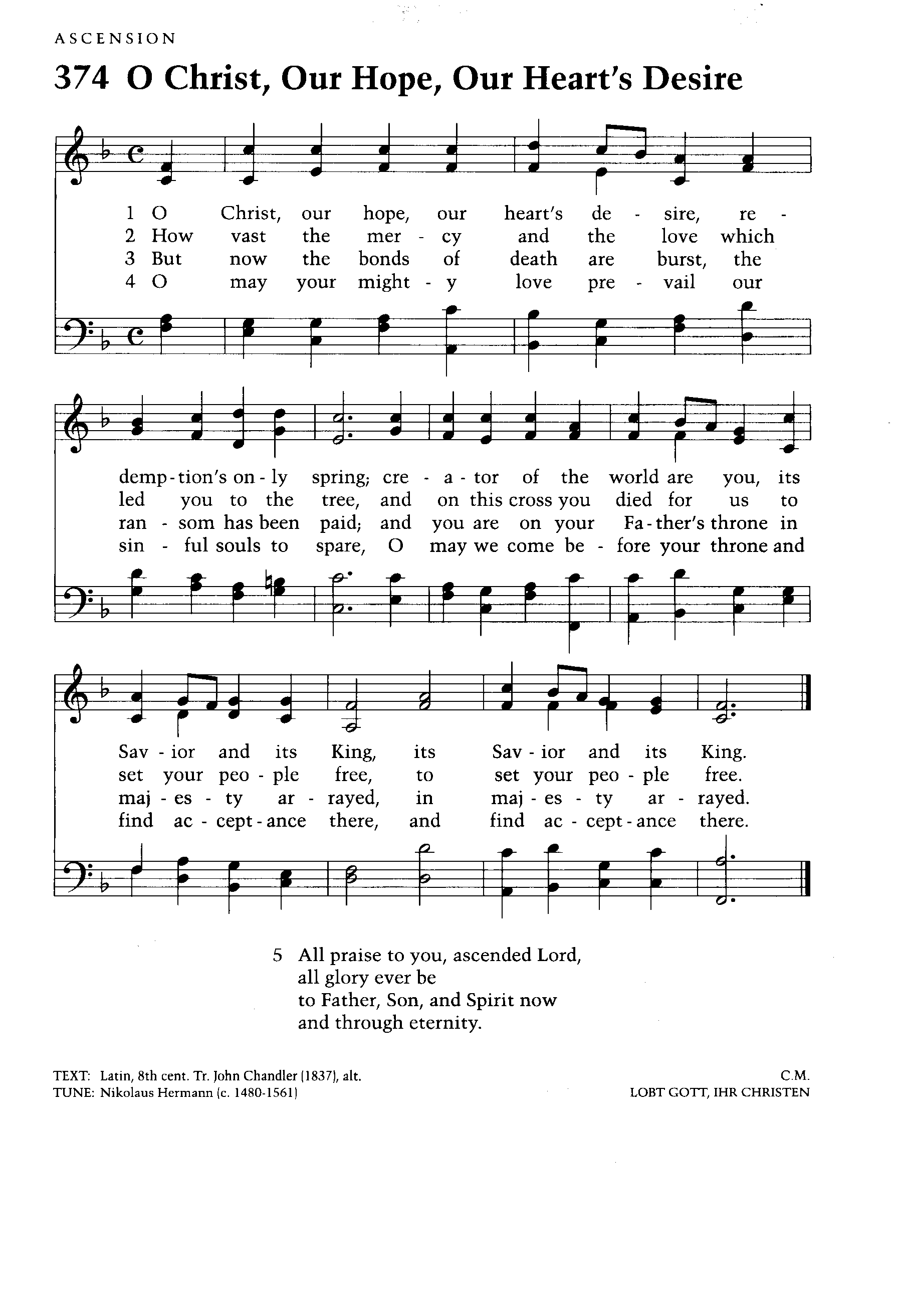
"Alleluia! best and sweetest" by John Chandler. First published in his Hymns of the Primitive Church (1837, No. 59) in four six-line stanzas. Widely adopted with slight variations, such as "Alleluia! peace instilling" in the S.P.C.K. Psalms and Hymns and "Hallelujah! high and glorious" in Baptist Psalms and Hymns (1858).
-
"Alleluia! song of sweetness, Voice of everlasting glee" by William John Blew. Printed on a broadsheet for church use circa 1850, then published in his Church Hymn and Tune Book (1852) and Rice's Selection (1870).
-
"Alleluia! song of sweetness, Voice of joy, eternal lay" by John Mason Neale. Published in Mediaeval Hymns (1851) and revised for The Hymnal Noted (1852) and the second edition of Mediaeval Hymns (1863). Equals Chandler's rendering in popularity, though frequently altered, most notably as "Alleluia, song of sweetness, Voice of joy that cannot die" in Hymns Ancient and Modern (1861, 1875) and "Hallelujah! song of gladness" in Godfrey Thring's Collection (1882).
-
"Alleluia! song of gladness, Utterance of perennial joy" by Francis A. Johnston. Published in his English Hymnal (1852, No. 75).
-
"Alleluia! song of gladness, Voice of everlasting joy" from Cooke and Denton's Hymnal (1853, No. 44). Based on Chandler but largely rewritten, it passed into the Winchester Church Hymn Book (1857), Hymnal Companion, Snepp's Songs of Grace and Glory, and others, where it was sometimes attributed to Dr. Neale in error.
-
"Alleluya! song of sweetness" by John David Chambers. Published in Lauda Syon (1857) and altered for the Wellington College Hymn Book (1860).
-
"Alleluia, sweetest anthem, Voice of joy that may not die" by John Keble. Based on Neale's translation, contributed to the Salisbury Hymn Book (1857), revised for the Sarum Hymnal (1868), and printed in Keble's Miscellaneous Poems (1869).
-
Composite Versions: Number 61 in Francis Pott's Hymns (1861) modified the H.A.&M. text, while Number 102 in Church Hymns (1871) combined stanzas from Pott's collection with Neale's original fourth stanza.
-
"Alleluia, song of sweetness, Strain of everliving joy" by Robert Corbet Singleton. Prepared for the Anglican Hymn Book (1868) and rewritten for its second edition (1871).
Additional Translations
Several additional nineteenth-century translations were published for private reading or minor collections:
-
"O, Glorious is the song" by John Chandler (second rendering, 1837)
-
"Hallelujah! note of gladness" by W. L. Alexander (1849)
-
"Alleluia, sweetest lay" by S. Campbell (1850)
-
"Alleluia, song of sweetness" by Horatius Bonar (1856)
-
"Alleluia, sweetest music" by Elizabeth Rundle Charles (1858)
-
"Alleluia, music sweetest" by Edward Kynaston (1862)
Related Hymns
Hymns in the library connected to this dictionary topic.
Related Hymn Sheets
3 shown at a time — use the arrows to browse all 1 sheet.
Related Authors
Writers connected to this dictionary topic.
Keywords
Related terms for this dictionary entry.
Recent Dictionary Entries
Newly added terms from the Dictionary of Hymnology.
If you notice any mistake or have suggestions, please contact us on our contact page.