
"Agnoscat omne saeculum" is a sixth-century Latin Christmas hymn attributed to the poet and bishop Venantius Fortunatus. Composed in eight stanzas, the hymn celebrates the Incarnation and the nativity of Christ.
Although absent from Vatican manuscripts and several other early copies of Fortunatus's works, the text was published in 1564 by Georg Fabricius from an ancient manuscript preserved at the Benedictine Monastery of Morbach. It was subsequently reprinted by Giuseppe Maria Tomasi and included in standard collected editions of the author's writings, such as Jacques-Paul Migne's Patrologia Latina (Vol. 88, col. 264). A complete eleventh-century text is also preserved in the British Library (Harl. MS 2961, f. 226b).
The original hymn saw limited inclusion across general breviary traditions. However, in the Constanz Breviary and the York Breviary, the eight stanzas were divided into four separate two-stanza hymns, each concluded with a doxology and assigned to specific canonical hours:
-
Prime: "Agnoscat omne saeculum" (Stanzas I–II)
-
Terce: "Maria ventre concipit" (Stanzas III–IV)
-
Sext: "Praesepe poni pertulit" (Stanzas V–VI)
-
None: "Adam vetus quod polluit" (Stanzas VII–VIII)
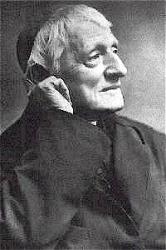
The text of the York Breviary was reprinted in John Henry Newman's Hymni Ecclesiae (1838, 1865), with standard Latin authorities established by Herman Adalbert Daniel (Thesaurus Hymnologicus, I, No. 138; IV, 176) and Hymnarium Sarisburiense (1851, pp. 13–14).
The hymn entered English congregational hymnody primarily through John Mason Neale, who translated all four liturgical divisions in the enlarged edition of The Hymnal Noted (1854):
-
Prime: "Let every age and nation own"
-
Terce: "The Virgin Mary hath conceived"
-
Sext: "He, by Whose hand the light was made"
-
None: "Now the old Adam's sinful stain"
These translations were retained in subsequent editions of The Hymnal Noted. In 1872, the editors of The Hymnary compiled No. 144, "Come, ye nations, thankful own," adapting Neale's translations and altering the original Long Meter (L.M.) measure to 7s meter.
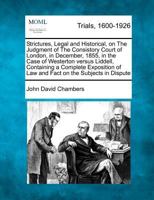
Several non-congregational translations were also produced during the nineteenth century, including William John Blew's "Let all the world confess from heaven" and "What the old Adam stained and soiled" in The Church Hymn and Tune Book (1852), alongside John David Chambers's full rendering, "Let thankful worlds confess from heaven," in Lauda Syon (1857, Vol. I, p. 77).
Related Authors
Writers connected to this dictionary topic.
Keywords
Related terms for this dictionary entry.
Recent Dictionary Entries
Newly added terms from the Dictionary of Hymnology.
If you notice any mistake or have suggestions, please contact us on our contact page.