
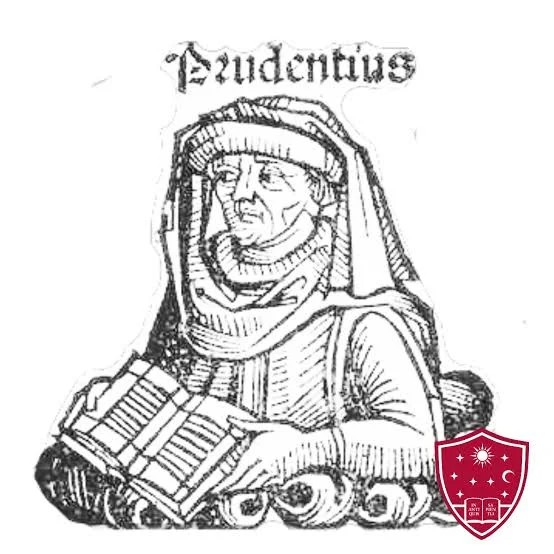
"Ales diei nuntius" is a celebrated early Christian Latin hymn composed by Aurelius Clemens Prudentius. Originally forming the opening poem of twenty-five stanzas in his fourth-century work Cathemerinon, a condensed four-stanza selection consisting of stanzas one, two, twenty-one, and twenty-five was traditionally appointed for Tuesday Lauds in the Roman Breviary.
The text enjoyed widespread use throughout medieval Western Christendom, appearing in the Sarum, York, Aberdeen, and various monastic breviaries, as well as multiple eleventh-century Anglo-Saxon manuscripts preserved at Durham and the British Museum. The hymn draws on the rooster's dawn call as a spiritual symbol of Christ awakening the soul from darkness and sin to heavenly light.
The Latin text entered nineteenth-century Anglican hymnals through several prominent English translations. William John Blew published a six-line stanza version titled "Hark! the bird of day sings clear" around 1850, while John Mason Neale rendered the Sarum text as "The winged herald of the day" for the 1854 Hymnal Noted. John David Chambers offered "Day's herald bird, with descant clear" in his 1857 collection Lauda Syon (later revised as "The herald bird of day proclaims"), and a combined cento beginning "The bird, the harbinger of light" appeared in The Hymnary in 1872.
Related Hymns
Hymns in the library connected to this dictionary topic.
Related Hymn Sheets
3 shown at a time — use the arrows to browse all 1 sheet.
Related Authors
Writers connected to this dictionary topic.
Keywords
Related terms for this dictionary entry.
Recent Dictionary Entries
Newly added terms from the Dictionary of Hymnology.
If you notice any mistake or have suggestions, please contact us on our contact page.