

10 Famous Hymns That Were Published Posthumo…
4 days, 16 hours ago
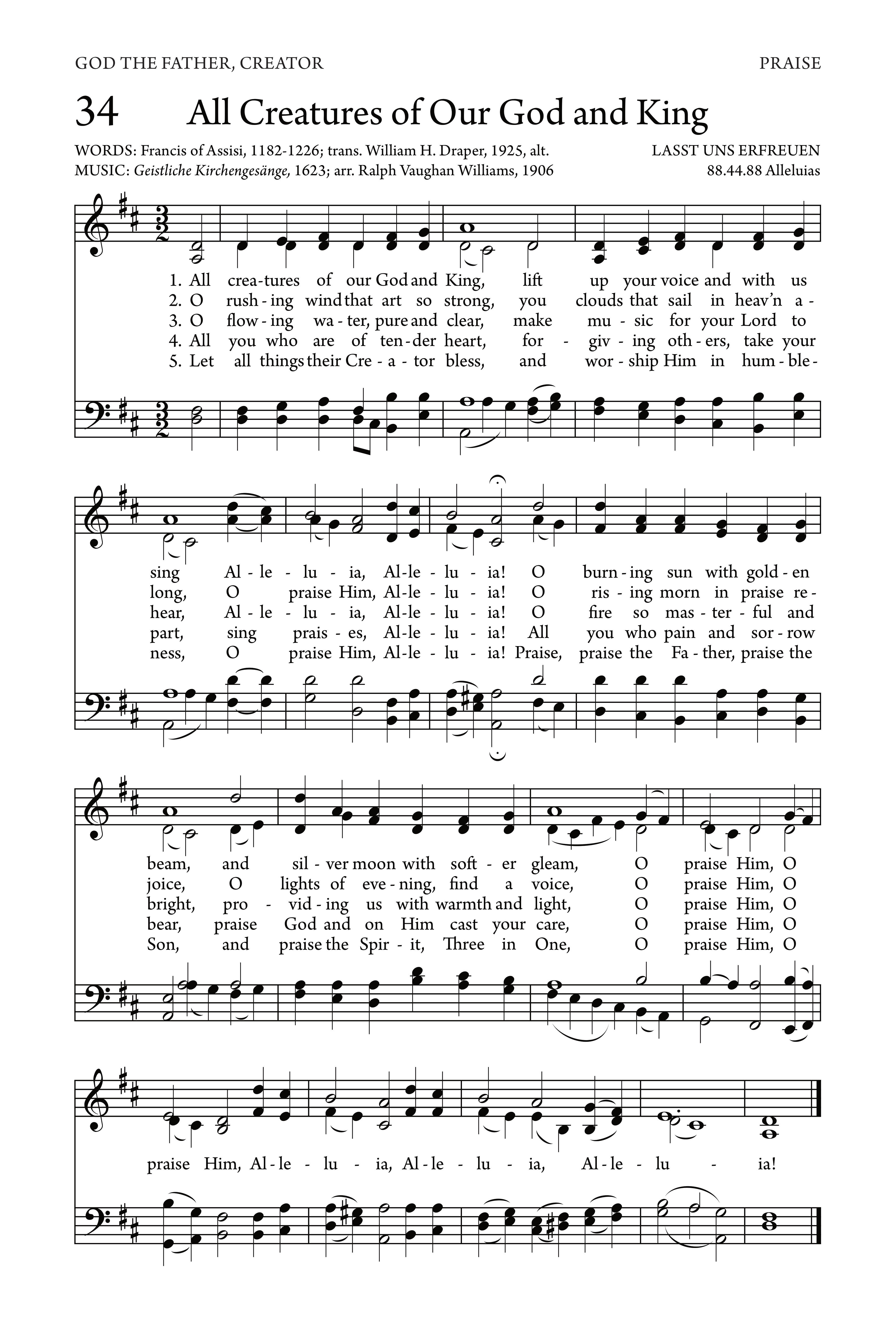
All Creatures of Our God and King
By Francis of Assisi (1225)
Lyrics
1. All creatures of our God and King,
Lift up your voice and with us sing
Alleluia, alleluia!
Thou burning sun with golden beam,
Thou silver moon with softer gleam,
O praise him, O praise him,
Alleluia, alleluia, alleluia.
Lift up your voice and with us sing
Alleluia, alleluia!
Thou burning sun with golden beam,
Thou silver moon with softer gleam,
O praise him, O praise him,
Alleluia, alleluia, alleluia.
2. Thou rushing winds that art so strong,
Ye clouds that sail in Heav'n along,
O praise him, alleluia!
Thou rising morn, in praise rejoice,
Ye lights of evening, find a voice.
O praise him, O praise him,
Alleluia, alleluia, alleluia.
Ye clouds that sail in Heav'n along,
O praise him, alleluia!
Thou rising morn, in praise rejoice,
Ye lights of evening, find a voice.
O praise him, O praise him,
Alleluia, alleluia, alleluia.
3. And all ye saints of tender heart,
Forgiving others, take your part,
O sing ye, alleluia!
Ye who long pain and sorrow bear,
Praise God and on him cast your care:
O praise him, O praise him,
Alleluia, alleluia, alleluia.
Forgiving others, take your part,
O sing ye, alleluia!
Ye who long pain and sorrow bear,
Praise God and on him cast your care:
O praise him, O praise him,
Alleluia, alleluia, alleluia.
4. Let all things their creator bless,
And worship him in humbleness,
O praise him, alleluia!
Praise, praise the Father, praise the Son,
And praise the Spirit, Three in One:
O praise him, O praise him,
Alleluia, alleluia, alleluia.
And worship him in humbleness,
O praise him, alleluia!
Praise, praise the Father, praise the Son,
And praise the Spirit, Three in One:
O praise him, O praise him,
Alleluia, alleluia, alleluia.
Bible Reference
Psalm 145
Lectionary & readings
Open today’s (or any date’s) assigned scriptures and find related hymns across church calendars. Useful when planning worship around this song’s themes or its Bible reference.
Hymn scripture: Psalm 145
About This Hymn
Author: Francis of Assisi (1182–1226)
English Translation: William H. Draper (1855–1933)
Music: From the Geistliche Kirchengesang (1623)
Tune Name: "Lasst uns erfreuen"
Meter: LMA (8.8.8.8 with Alleluias)
Scripture Reference: Psalm 145:10–11
"All thy works shall praise thee, O Lord; and thy saints shall bless thee. They shall speak of the glory of thy kingdom, and talk of thy power."
This well-loved hymn of praise, found in virtually every modern hymnal, traces its origins to 1225, when it was written by one of the most remarkable figures in church history Saint Francis of Assisi. Born Giovanni Bernardone in Assisi, Italy, in 1182, Francis spent his youth in comfort and privilege. Following a season as a soldier, he experienced a dramatic spiritual transformation at the age of twenty-five. From then on, he devoted himself entirely to living as Christ did: selflessly, humbly, and in service to others. Rejecting his family’s wealth, Francis embraced a life of poverty and simplicity, dedicating himself to preaching and aiding the poor throughout Italy. In 1210, he founded the Franciscan Order, a movement characterized by devotion, humility, and love for all of God’s creation.
Saint Francis is remembered not only for his preaching but also for his deep love of nature and reverence for all living things, which he viewed as reflections of God's handiwork. This perspective is famously captured in artwork such as Giotto's painting of Francis feeding the birds. Numerous stories and legends have grown around his life—some wondrous, others mysterious. One such tale tells of how, as he lay dying, a flock of larks gathered and sang outside his humble hut. Another account describes a mystical encounter during a forty-day fast on Mount La Verna, after which Francis bore the stigmata, the wounds of Christ, on his body for the rest of his life. Whether historical or legendary, these stories have served to magnify the saint’s reputation for holiness and intimacy with God.
“All Creatures of Our God and King” is adapted from a longer poem known as the "Canticle of the Sun" or "Song of Brother Sun," written by Francis during the final year of his life, as he suffered from illness and blindness. His poetic praise, filled with references to nature, reflects a soul attuned to God’s glory through creation. Francis is believed to have composed over sixty hymns, affirming his strong belief in the power and importance of sacred music. The English version of this particular hymn was created centuries later by William Henry Draper, an English clergyman, for a children’s choir festival sometime between 1899 and 1919. Draper’s paraphrased translation preserves the joyful spirit of Francis’s original text while adapting it for congregational singing.
The hymn’s tune, “Lasst uns erfreuen,” first appeared in a German Roman Catholic hymnal published in Cologne in 1623. After fading from common use, the melody was rediscovered and reintroduced in the 1906 edition of the English Hymnal in London. Its bright and majestic character made it a fitting match for Francis’s jubilant praise of God through all elements of creation. The hymn is especially well-suited for communal singing, and some congregations enjoy performing it in a canon or round, by simply omitting the fermata at the end of the second line. Another musical technique involves antiphonal singing, with alternating groups singing different lines to emphasize the hymn’s dynamic call and response between creation and Creator.
Though Saint Francis remains a somewhat enigmatic figure, surrounded by awe-inspiring stories and spiritual mysteries, there is no question of the lasting impact of his writings. “All Creatures of Our God and King” continues to be a treasured hymn that transcends centuries, languages, and cultures—a testament to the enduring beauty of worship through nature and song. Today, it serves as a powerful reminder of Psalm 145, which exalts the Lord as the source of all power and calls upon all creation to praise Him. This hymn stands not only as an enduring act of praise but also as a bridge between medieval Christian devotion and modern worship.
A notable musical observation is that the Keswick Doxology, “Praise God from Whom All Blessings Flow,” with its concluding "Alleluias," can be effectively sung to the same tune, “Lasst uns erfreuen.” Such versatility speaks to the strength and adaptability of both the melody and the spiritual depth of the lyrics. In the words of poet Philip James Bailey, “Art is man’s nature: nature is God’s art.” And through Saint Francis, we are reminded that to walk closely with God is to find His fingerprints in the beauty and rhythm of all creation.
Staff Visualizer
Open in MIDI StudioPowered by HTML MIDI PLAYER, MIDI FILE Made by Hymnal Library. · Study chords & lyrics in MIDI Studio
Want weekly hymns and devotionals?
⭐ Recommend This Hymn
Share this beautiful hymn with others
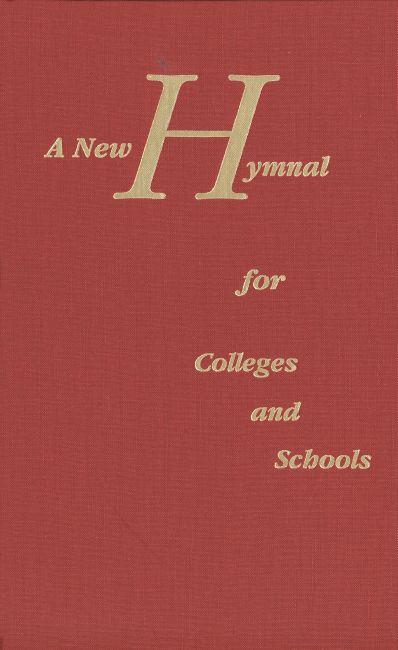
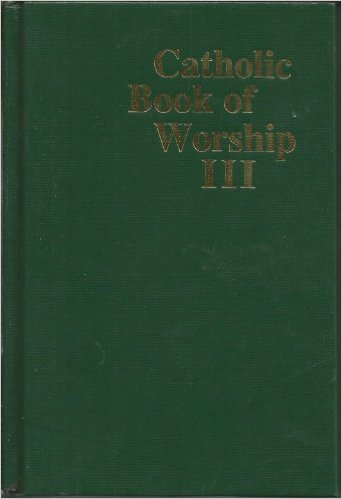
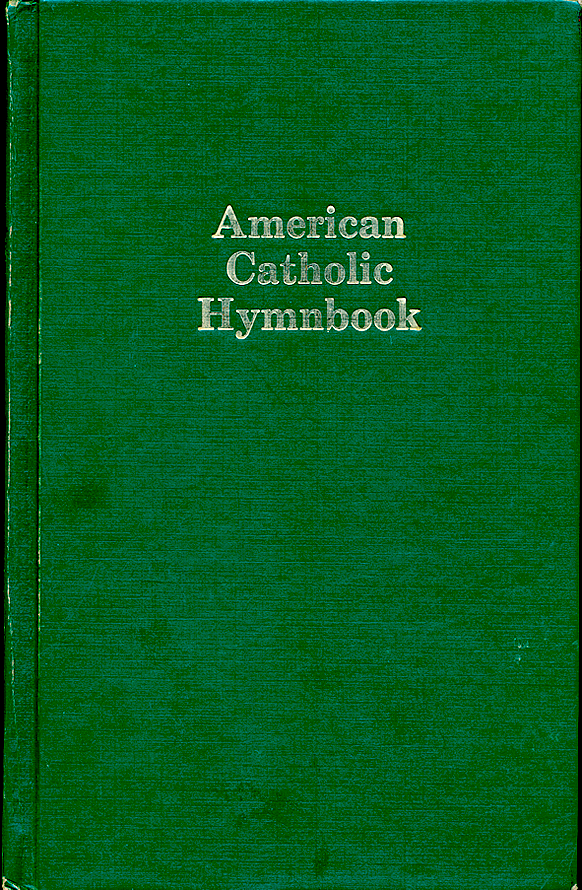
This hymn also appears in these hymnals
Click a spine to pull out the hymnal, then open it.
Hymns with the same subject
More hymns about Adoration, Anniversary, Creation, Joy, Trinity, Worship
- Praise the Lord, Ye Heavens Adore Him - Richard Mant
- When in Our Music God Is Glorified - Fred Pratt Green
- O Praise Ye the Lord - H. W. Baker
- Sing Praise to the Lord - H. W. Baker
- Let the Whole Creation Cry - Stopford A. Brooke
- Sing Praise to the Lord! Praise Him in the Heights - H. W. Baker
- Here I Am to Worship - Tim Hughes
- How Great Is Our God - Chris Tomlin
More hymn subjects
Recently Added Hymns
-
 Joy Fills Our Inmost Hearts TodayW. Chatterton Dix 1865
 -
 Bright Angel Hosts Are Heard on HighRichard Robert Chope circa. 1870s
 -
 In the Early Morning, Early (Christmas Morning)Frederick George Lee circa. 1880s
 -
 A Boy Is Born In BethlehemAnonymous circa. 1400s
 -
 A Shepherd Band Their Flocks Are Keepingunknown circa. 1860s
Latest Updated Hymnals
-
Open
 The New Apostolic Church HymnalUpdated 2 days, 21 hours ago · 2008
 -
Open
 400+ Christmas Carols Book: Sheet Music for PianoUpdated 3 days, 22 hours ago · 2014
 -
Open
 The Temple HymnalUpdated 4 days, 7 hours ago · 1918
 -
Open
 The Popular HymnalUpdated 4 days, 7 hours ago · 1918
 -
Open
 The Highway HymnalUpdated 4 days, 7 hours ago · 1886
Hymn Information
Click a linked name to open their biography.
MIDI File
Popular Hymns
Recent Blog Posts


Popular Blog Posts
-
 Lessons from the Book of Haggai: Putting God…4 months, 4 weeks ago
 -
 Easter vs Passover: How a Biblical Feast Bec…6 months, 3 weeks ago
 -
 The Full Story of the Birth of Jesus Christ:…10 months, 2 weeks ago
 -
 The 30 Most Famous Christmas Hymns and Carols1 year, 1 month ago
 -
 The Story Behind the Hymn “Amazing Grace”10 months, 2 weeks ago
Visit Us on Social Media
Latest from X (Twitter)
Tweets by HymnalLibraryLatest from Facebook
Latest on YouTube
Loading latest video...
Daily Bible Verse
Disclaimer
The hymns, sheet music, MIDI files, and related content on this website are provided for educational and research purposes only.
- Public Domain: Many of the hymns featured here are in the public domain and may be freely used.
- Copyrighted Works: Some hymns may still be under copyright protection. Where applicable, permission has either been requested from the copyright owner, or the content is shared under the principles of fair use for educational purposes.
⚠️ Important Notice: If you wish to reproduce, distribute, or use any copyrighted hymn beyond personal study or educational use, you must obtain permission directly from the copyright holder. This website does not grant any rights for commercial use yet.
If there is any other question please address it to us in our Contact Page, for further assistance. Thank you for using the site. May God Bless You.
Recently Added · Dictionary of Hymnology
Browse dictionary →
Can’t find a hymn or lyric?
Leave your question in the forum for others to answer — requests, missing lines, writers, and worship ideas welcome.