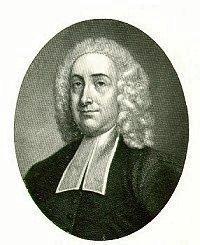
Philip Doddridge
Biography
Full Name: Doddridge, Philip
Birth Year: 1702
Death Year: 1751
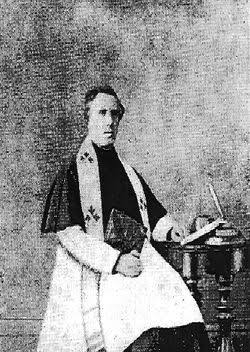
Philip Doddridge was an English Nonconformist minister, educator, and hymn writer of the eighteenth century. He was born on June 26, 1702, in London, England. He was the only son of Philip Doddridge Sr., a merchant, and Mary Moore Doddridge. After his father’s early death, he was raised by his mother and maternal relatives, who encouraged his education.
Doddridge entered Northampton Grammar School at an early age and later studied theology under Benjamin Grosvenor in London. In 1729, he became minister of an Independent congregation in Northampton, where he served until his death. He also founded and operated a dissenting academy for ministerial training, which became widely known for its high standard of theological education and produced many leaders in dissenting churches.
As a hymn writer, Doddridge is noted for his contributions to English sacred song. Several of his texts appeared in collections such as Psalms and Hymns (1755), published posthumously. His work reflects evangelical themes of trust in God, devotion to Christ, and assurance of salvation, and has been included in many hymnals across Anglican, Presbyterian, Baptist, and other Protestant traditions.
Doddridge also published theological works and devotional literature, including The Rise and Progress of Religion in the Soul (1745), which was widely read in both Britain and America.
Philip Doddridge died on October 26, 1751, at Bradford, Yorkshire, England, where he had traveled for rest and recuperation. His hymns have continued to be sung in Christian worship and have been translated into multiple languages.
Dictionary of Hymnology
Behold with pleasing ecstasy Hymn
P. Doddridge’s mission hymn dated 30 Oct. 1737 (“A Nation born in a day,” Is. lxvi. 8); original rare in use, but stanzas iv.–v. as “Awake, all conquering arm, awake” are sung.
ReadAll glorious God, what hymns of praise Hymn
A hymn of praise by P. Doddridge on Colossians i. 12, dated December 13, 1736, in 5 stanzas of 4 lines. Though of more than usual merit, it is rarely found in English collections.
ReadAnd are we now brought near to God Hymn
A five-stanza hymn by Philip Doddridge on nearness to God through Christ, first printed in Orton's 1755 edition. A cento from it is widely used in America.
ReadHymns by Philip Doddridge
Includes hymns they wrote and hymns where they are credited as co-author, translator, paraphraser, or adapter.
| # | Title | Year | Views | |
|---|---|---|---|---|
| 1 | And will the Judge descend? | 1735 | 918 | View |
| 2 | Awake my Soul, Stretch Ev'ry nerve | 1755 | 1091 | View |
| 3 | Awake, My Soul, Stretch Every Nerve | 1755 | 599 | View |
| 4 | Christ, Precious to them that Believe | 1717 | 1005 | View |
| 5 | Grace! 'tis a Charming Sound | 1740 | 1596 | View |
| 6 | Great God, We Sing That Mighty Hand | 1755 | 1388 | View |
| 7 | Hark, the Glad Sound | 1735 | 860 | View |
| 8 | How Gentle God's Commands | 1755 | 1348 | View |
| 9 | O Happy Day - (that fixed my choice) | 1755 | 2350 | View |
| 10 | Triumphant Zion, lift Thy head | 1755 | 993 | View |
| 11 | Ye Servants of the Lord | 1755 | 993 | View |
Recently added hymns
Suggestions or corrections: contact us.
Leave it in the forum for others to answer — hymn requests, lyrics help, writers, worship planning, and more.