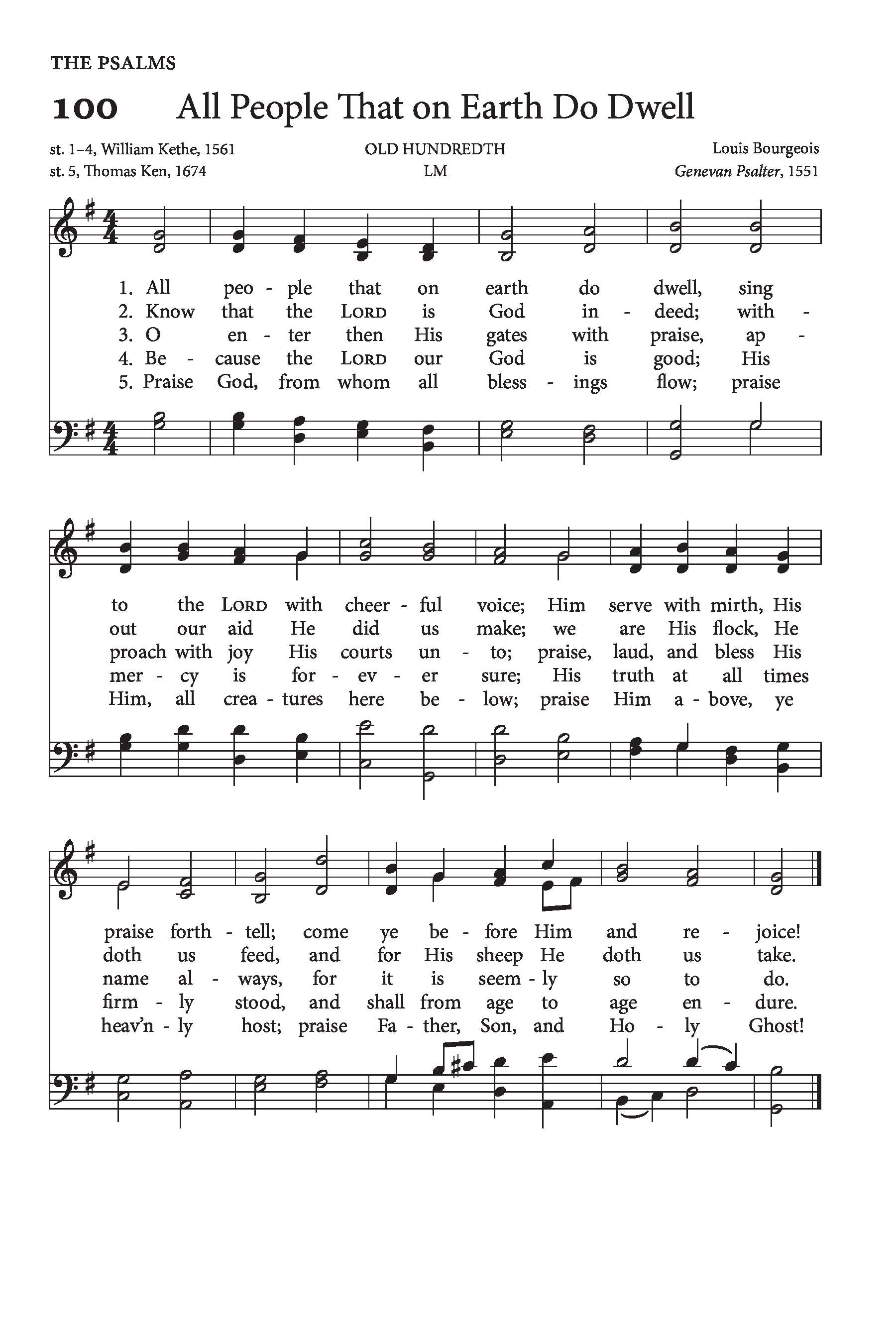
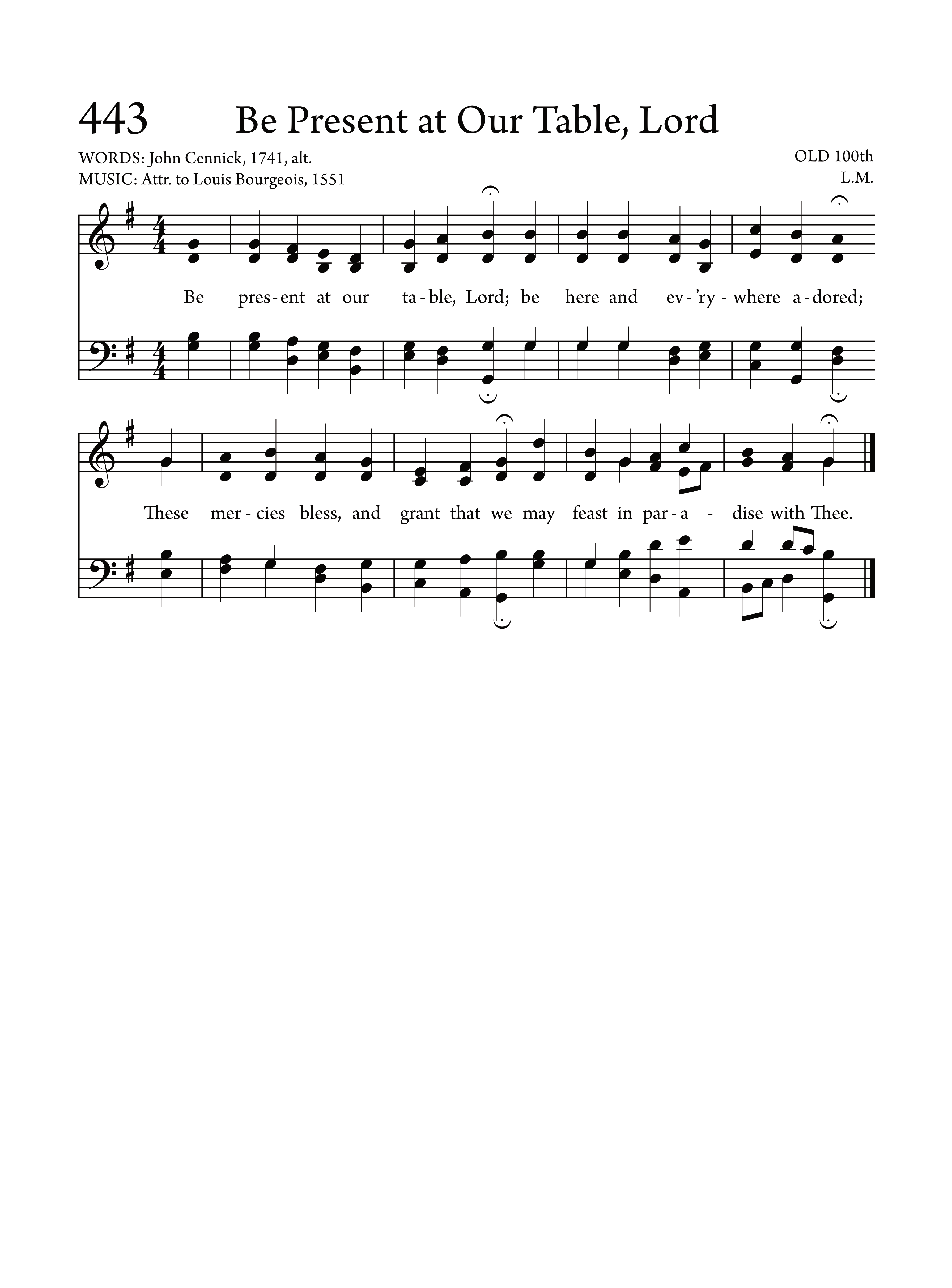
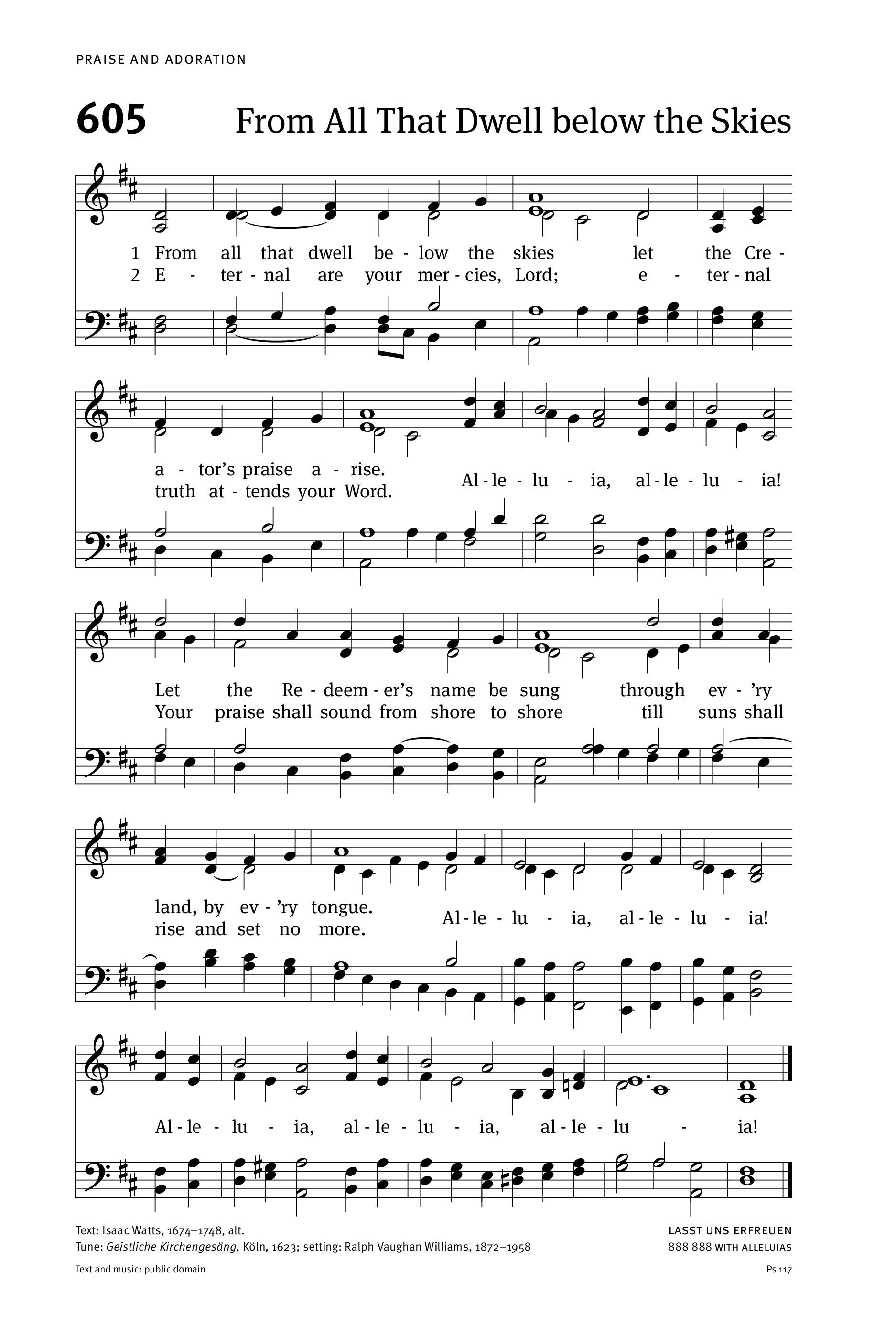
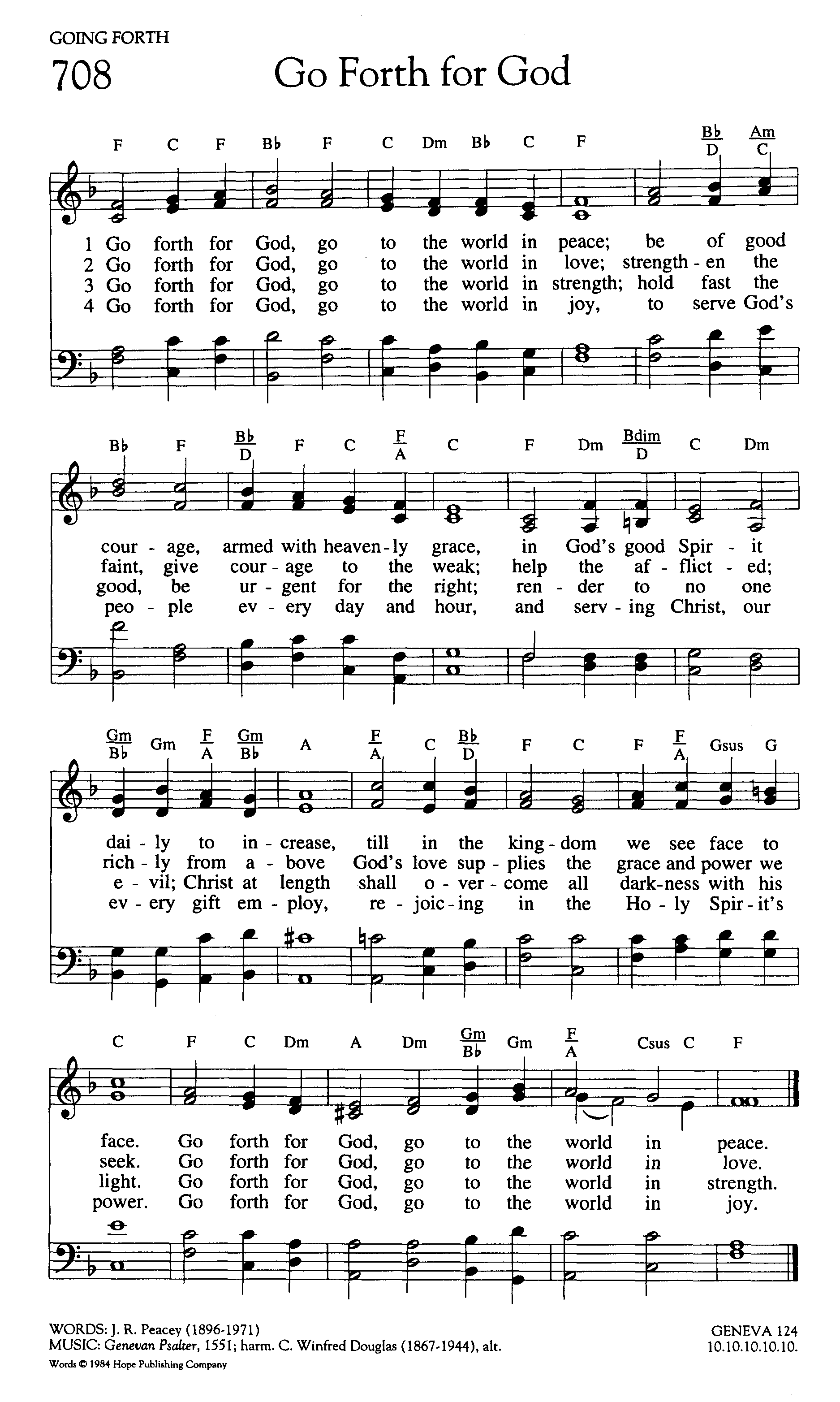

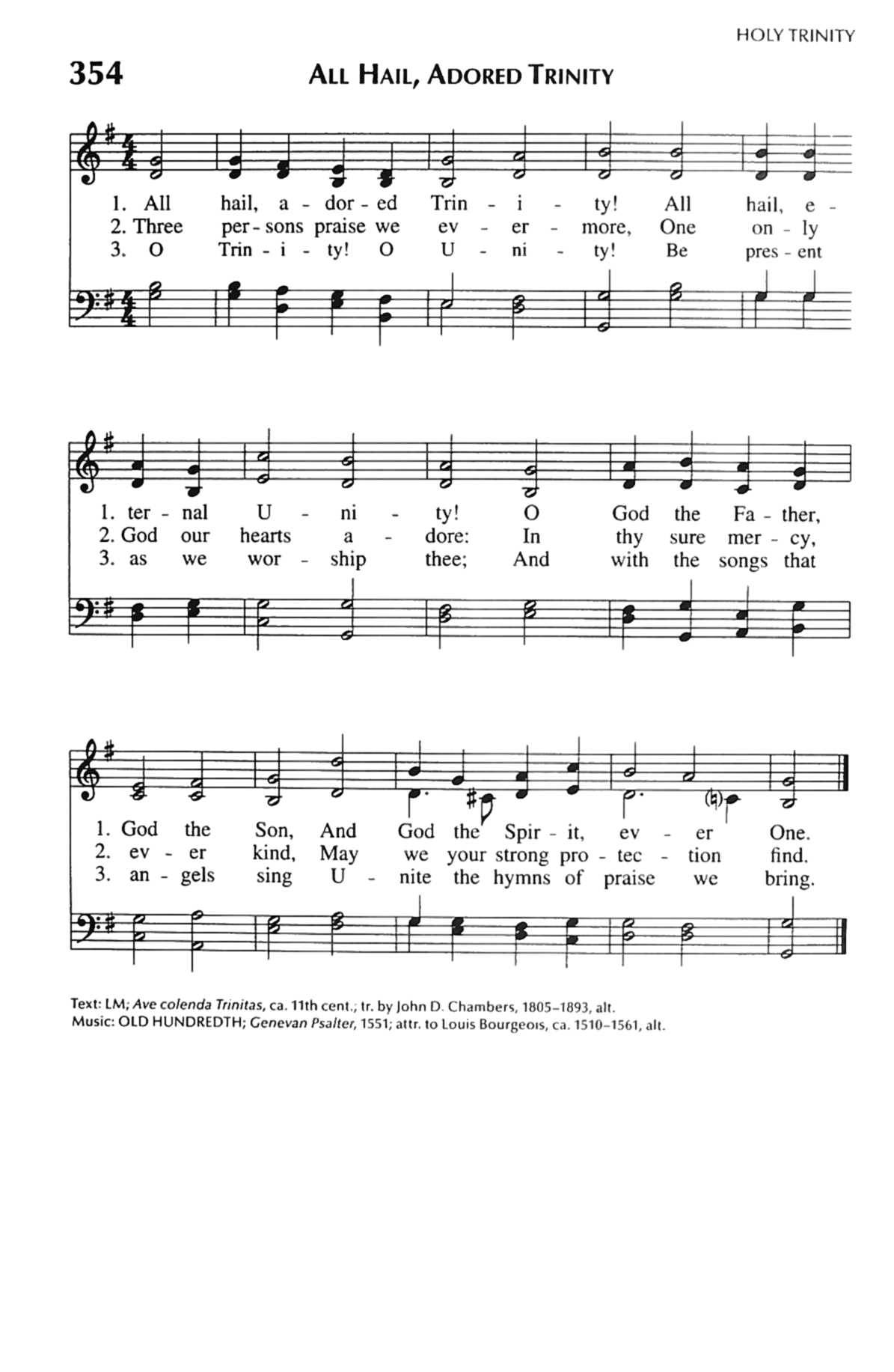


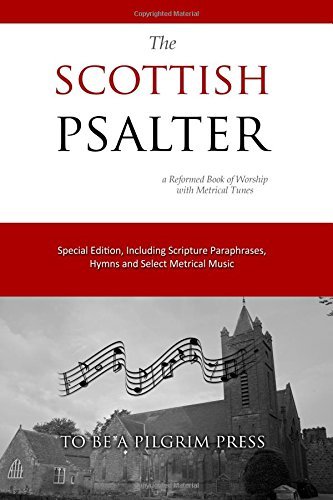
"All people that on earth do dwell" is a sixteenth-century metrical paraphrase of Psalm 100 written by William Kethe. First published in John Daye's London Psalter (1560-1561) and the Anglo-Genevan Psalter (1561), it was included in the Scottish Psalter of 1564 and the full English Psalter of 1565. Since the mid-sixteenth century, it has remained a central work of English and Scottish psalmody and has been continuously reprinted in Protestant hymnals worldwide.
The original black-letter text from Daye's 1560-1561 edition reads:
"Al people yt on earth do dwel, sing to ye lord, with chereful voice Him serve wt fear, his praise forth tel, come ye before him and reioyce.
The Lord ye know is God in dede, with out our aide, he did us make: We are his folck, he doth us fede, and for his Shepe, he doth us take.
Oh enter then his gates with prayse approche with ioye, his courtes unto: Praise, laude, and blesse his name alwayes, for it is semely so to doe.
For why? the Lord our God is good, his mercy is for euer sure: His trueth at all tymes firmely stood and shall from age to age indure."
Textual variations arose over centuries of usage. In the Scottish Psalter of 1650, "Him serve with fear" was altered to "mirth," and "The Lord ye know is" became "Know that the Lord is," both adaptations drawn from Common Meter versions of Psalm 100. Additionally, Daye's original word "folck" was frequently misprinted as "flock" due to a transposition error, appearing as early as 1585 in Richard Day's edition. Godfrey Thring restored the original "folck" spelling in his 1882 collection, appending a doxology based on Brady and Tate.
Attribution of the paraphrase was historically debated due to differing initials in early Psalters, including "Tho. Ster." in the 1561 Anglo-Genevan edition and "J. H." in Daye's 1587 print. However, the Britwell Psalter (1561) and Scottish Psalter (1564) both attribute the work to "W. Re." (William Kethe), an attribution supported by the metric structure, which aligns with Kethe's known works rather than Thomas Sternhold or John Hopkins. The correct attribution is thus established as William Kethe, 1560-1561.
The accompanying tune, widely known as "The Old Hundredth," first appeared in the 1551 edition of the French Genevan Psalter as a setting for Psalm 134. Edited and composed in its final structural form by Louis Bourgeois, the melody was specifically chosen by Kethe for his metrical rendering.
Related Hymns
Hymns in the library connected to this dictionary topic.

Related Hymn Sheets
3 shown at a time — use the arrows to browse all 7 sheets.
Related Authors
Writers connected to this dictionary topic.
Keywords
Related terms for this dictionary entry.
Recent Dictionary Entries
Newly added terms from the Dictionary of Hymnology.
If you notice any mistake or have suggestions, please contact us on our contact page.