

What Does Hebrews 6:4-6 Mean? Can a Christia…
2 days, 3 hours ago
Calm Soul of All Things
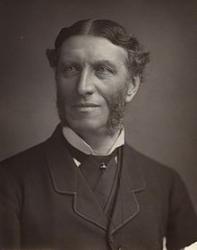
By Matthew Arnold (1850)
Lyrics
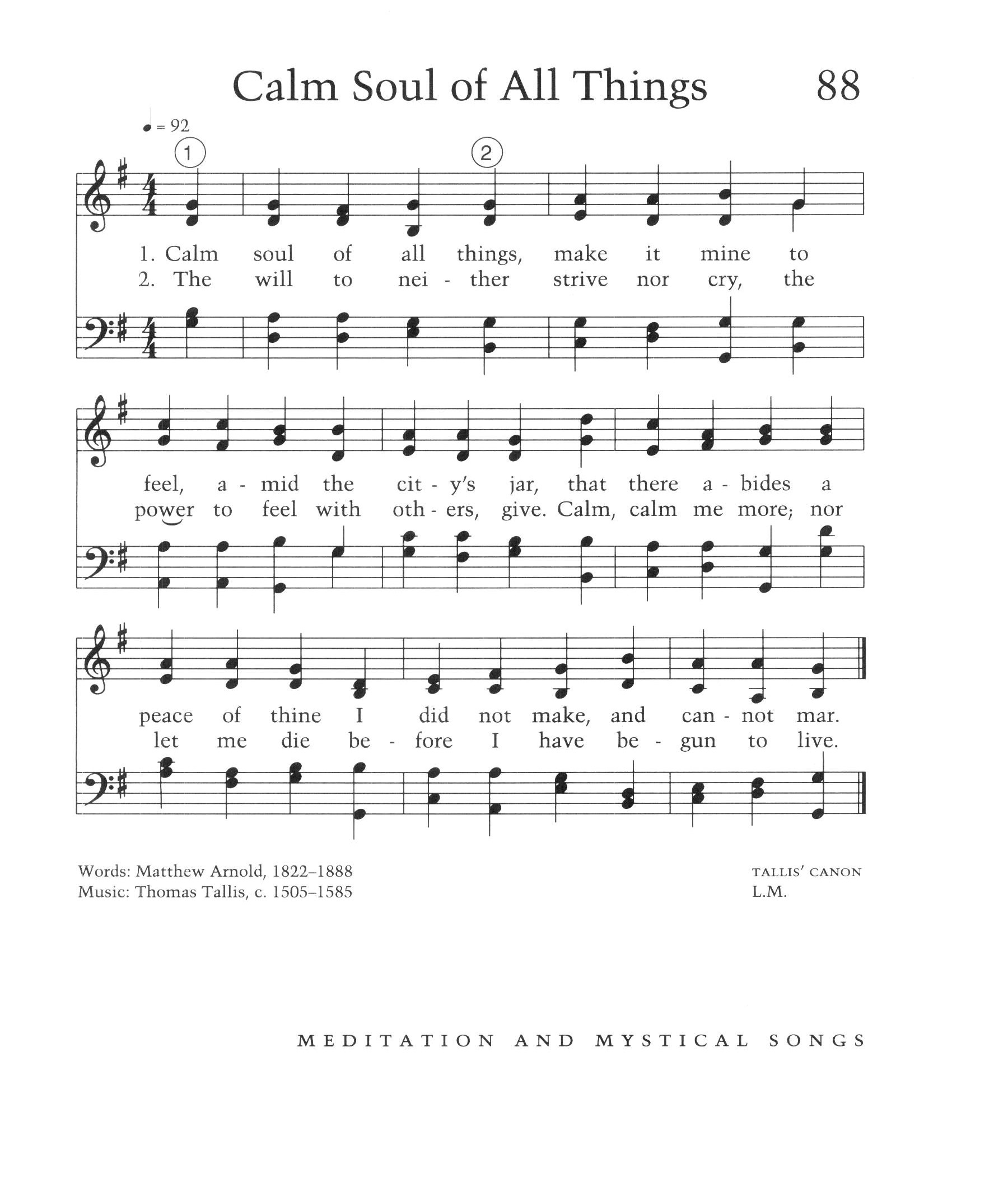
1. Calm soul of all things, make it mine
to feel, amid the city’s jar,
that there abides a peace of thine
I did not make, and cannot mar.
to feel, amid the city’s jar,
that there abides a peace of thine
I did not make, and cannot mar.
2. The will to neither strive nor cry,
the power to feel with others, give.
Calm, calm me more; nor let me die
before I have begun to live.
the power to feel with others, give.
Calm, calm me more; nor let me die
before I have begun to live.
Bible Reference
Isaiah 26:3
Lectionary & readings
Open today’s (or any date’s) assigned scriptures and find related hymns across church calendars. Useful when planning worship around this song’s themes or its Bible reference.
Hymn scripture: Isaiah 26:3
About This Hymn
“Calm Soul of All Things” is a reflective and meditative poem by the esteemed English poet and essayist Matthew Arnold, later adapted into hymn form. Originally part of a larger work titled Lines Written in Kensington Gardens, this poem is a quiet plea for inner peace amidst the turbulence of modern life. Arnold was known for his spiritual questioning and poetic depth, often expressing a longing for stability, meaning, and divine peace in a rapidly changing world.
The first stanza opens with a prayerful invocation to the “calm soul of all things”—a reference that readers have interpreted as the presence of God or divine tranquility. It expresses the yearning of a soul surrounded by the noise and chaos of the city, yet seeking a peace that is not man-made and cannot be disturbed by earthly unrest. This echoes Isaiah 26:3, which promises perfect peace to those whose minds are stayed on God.
The second stanza deepens the petition, asking not only for calmness but for the ability to empathize with others and to live meaningfully. Arnold’s lines—“the will to neither strive nor cry, the power to feel with others, give”—reflect a Christ-like humility and spiritual maturity. The closing plea, “nor let me die before I have begun to live,” resonates with biblical themes of abundant life through spiritual renewal (John 10:10).
Though not written as a hymn initially, the poem has found a place in various modern hymnals and is often sung to the revered Tallis' Canon, a tune composed by Thomas Tallis in the 16th century. This pairing enhances the quiet, introspective nature of the text with a melody that is both solemn and enduring.
“Calm Soul of All Things” speaks to the Christian who longs for peace not merely as a feeling, but as a divine gift—one rooted in communion with God. It is a prayer for stillness, compassion, and purpose, capturing the universal need for God’s presence amid life’s pressures. The hymn remains a poignant devotional piece for quiet services, personal meditation, or seasons of spiritual retreat.
Staff Visualizer
Open in MIDI StudioPowered by HTML MIDI PLAYER, MIDI FILE Made by Hymnal Library. · Study chords & lyrics in MIDI Studio
Want weekly hymns and devotionals?
⭐ Recommend This Hymn
Share this beautiful hymn with others
More hymn subjects
Latest Updated Hymnals
-
Open
 Book of Common Praise (BoCP1915)Updated 15 minutes ago · 1915
-
Open
 The People's HymnalUpdated 3 days, 22 hours ago · 1961
-
Open
 Our Great Redeemer's PraiseUpdated 5 months ago · 2022
-
Open
 The Parish Hymnal (1873)Updated 5 months, 1 week ago · 1873
-
Open
 Book of Common Praise (BCP1998)Updated 5 months, 3 weeks ago · 1998
Hymn Information
Click a linked name to open their biography.
MIDI File
Popular Hymns
Recent Blog Posts


Popular Blog Posts
-
 Lessons from the Book of Haggai: Putting God…4 months, 3 weeks ago
-
 Easter vs Passover: How a Biblical Feast Bec…6 months, 3 weeks ago
-
 The Full Story of the Birth of Jesus Christ:…10 months, 2 weeks ago
-
 The 30 Most Famous Christmas Hymns and Carols1 year, 1 month ago
-
 The Story Behind the Hymn “Amazing Grace”10 months, 1 week ago
Visit Us on Social Media
Latest from X (Twitter)
Tweets by HymnalLibraryLatest from Facebook
Latest on YouTube
Loading latest video...
Daily Bible Verse
Disclaimer
The hymns, sheet music, MIDI files, and related content on this website are provided for educational and research purposes only.
- Public Domain: Many of the hymns featured here are in the public domain and may be freely used.
- Copyrighted Works: Some hymns may still be under copyright protection. Where applicable, permission has either been requested from the copyright owner, or the content is shared under the principles of fair use for educational purposes.
⚠️ Important Notice: If you wish to reproduce, distribute, or use any copyrighted hymn beyond personal study or educational use, you must obtain permission directly from the copyright holder. This website does not grant any rights for commercial use yet.
If there is any other question please address it to us in our Contact Page, for further assistance. Thank you for using the site. May God Bless You.
Recently Added · Dictionary of Hymnology
Browse dictionary →
Can’t find a hymn or lyric?
Leave your question in the forum for others to answer — requests, missing lines, writers, and worship ideas welcome.