
How Do I Know If Someone Is God's Will for M…
2 days, 6 hours ago
What sinners value, I resign
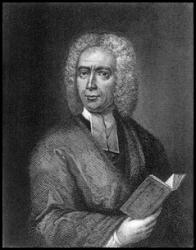
By Isaac Watts (1719)
Mark it for others looking for a hymn like this.
New
Lyrics
1. What sinners value, I resign:
Lord! 'tis enough that thou art mine!
I shall behold thy blissful face,
And stand complete in righteousness.
Lord! 'tis enough that thou art mine!
I shall behold thy blissful face,
And stand complete in righteousness.
2. This life's a dream, an empty show;
But the bright world to which I go
Hath joys substantial and sincere:
When shall I wake and find me there!
But the bright world to which I go
Hath joys substantial and sincere:
When shall I wake and find me there!
3. O glorious hour! O blest abode!
I shall be near and like my God;
And flesh and sin no more control
The sacred pleasures of the soul.
I shall be near and like my God;
And flesh and sin no more control
The sacred pleasures of the soul.
4. My flesh shall slumber in the ground
Till the last trumpet's joyful sound;
Then burst the chains with sweet surprize,
And in my Saviour's image rise.
Till the last trumpet's joyful sound;
Then burst the chains with sweet surprize,
And in my Saviour's image rise.
Bible Reference
Psalm 17:13-15; Psalm 16:5-11; Psalm 49:16-20; Psalm 73:23-26; Matthew 6:19-21; Philippians 3:7-11; 2 Corinthians 4:16-18; 1 Corinthians 15:51-57; 1 John 3:2-3
Lectionary & readings
Open today’s (or any date’s) assigned scriptures and find related hymns across church calendars. Useful when planning worship around this song’s themes or its Bible reference.
Hymn scripture: Psalm 17:13-15; Psalm 16:5-11; Psalm 49:16-20; Psalm 73:23-26; Matthew 6:19-21; Philippians 3:7-11; 2 Corinthians 4:16-18; 1 Corinthians 15:51-57; 1 John 3:2-3
About This Hymn
What Sinners Value, I Resign is a hymn by Isaac Watts concerning the believer's heavenly hope and the surpassing value of belonging to God. First published in 1719 as part of Watts's treatment of Psalm 17, the hymn contrasts the temporary possessions and pleasures valued by the world with the eternal inheritance promised to God's people. Its opening declaration expresses the believer's willingness to surrender earthly advantages because having the Lord is a greater treasure than anything this present life can offer.
The hymn develops this contrast by describing earthly life as temporary and insubstantial when compared with the everlasting joys of heaven. The believer looks beyond the visible world toward a future existence characterized by fellowship with God. This hope is not founded upon earthly prosperity or human achievement, but upon the assurance of belonging to the Lord and being made complete in righteousness. The hymn therefore encourages Christians to measure the value of life by eternal realities rather than temporary possessions.
One of its central themes is the hope of seeing God. Watts describes the glorious prospect of being near to God and becoming like Him. This expectation reflects the biblical promise that believers shall see Christ and be transformed into His likeness. The hymn also looks forward to the final resurrection, when the body will be raised at the sound of the last trumpet and believers will bear the image of their Saviour.
The final emphasis is on freedom from sin and the limitations of earthly life. The believer anticipates a state in which sin no longer controls the soul and fellowship with God is enjoyed without interruption. This is not merely a hope of escaping present difficulties, but the expectation of complete redemption through Christ.
The hymn encourages Christians to hold earthly possessions loosely, remain steadfast in faith, and treasure the inheritance that God has promised. Its message is particularly suitable for worship services concerning heaven, resurrection, Christian hope, and the eternal value of belonging to Jesus Christ.
From the Dictionary of Hymnology
Related terms and concepts automatically matched to this hymn.
Come, we that love the Lord Hymn
Isaac Watts’s “Heavenly Joy on Earth” (1707/1709), ten stanzas. Wesley’s Charlestown form (1736–7) and Cotterill’s “Come ye who love the Lord” (1819) head the many altered texts in later books.
Read moreCome, let us join our cheerful songs Hymn
One of Watts’s best-known hymns (1707/1709) on Revelation 5 usually appears in four stanzas omitting “Let all that dwell above the sky”; Bingham supplies a Latin version.
Read moreAll ye that [who] love the Lord, rejoice Hymn
Isaac Watts’s paraphrase of Psalm cxlix., from his Psalms of David, 1719, titled “Praise God, all His saints; or, The Saints judging the World.” Most collections omit its final stanzas.
Read moreStaff Visualizer
Open in MIDI StudioPowered by HTML MIDI PLAYER, MIDI FILE Made by Hymnal Library. · Study chords & lyrics in MIDI Studio

Want weekly hymns and devotionals?
This hymn also appears in these hymnals
Click a spine to pull out the hymnal, then open it.
Hymns with the same subject
More hymns about Discipleship, Eternal Life, Faith, Heaven, Hope, Jesus Christ, Resurrection, Salvation, Sanctification, Trust
- We'll Soon Be Done With Troubles and Trials - Cleavant Derricks
- Look and Live - William A. Ogden
- Salvation Has Been Brought Down - Albert E. Brumley
- Forward! Be Our Watchword - Henry Alford
- Let us Plead for Faith Alone - Charles Wesley
- The Joys of Heaven - Anne Steele
- Far from My Heavenly Home - Henry Francis Lyte
- Day of Wrath! O Day of Mourning! - Thomas of Celano
More hymn subjects
Latest Updated Hymnals
-
Open
 Psalms of GraceUpdated 6 hours ago · 2022
-
Open
 Spurgeon's Own Hymn BookUpdated 8 hours ago · 1866
-
Open
 Book of Common Praise (BoCP1915)Updated 4 days, 8 hours ago · 1915
-
Open
 The New Apostolic Church HymnalUpdated 3 weeks ago · 2008
-
Open
 400+ Christmas Carols Book: Sheet Music for PianoUpdated 3 weeks, 1 day ago · 2014
Hymn Information
Click a linked name to open their biography.
MIDI File
Popular Hymns
Recent Blog Posts



Popular Blog Posts
-
 Lessons from the Book of Haggai: Putting God…5 months, 2 weeks ago
-
 Easter vs Passover: How a Biblical Feast Bec…7 months, 2 weeks ago
-
 The Full Story of the Birth of Jesus Christ:…11 months, 1 week ago
-
 The 30 Most Famous Christmas Hymns and Carols1 year, 2 months ago
-
 The Story Behind the Hymn “Amazing Grace”11 months ago
Visit Us on Social Media
Latest from X (Twitter)
Tweets by HymnalLibraryLatest from Facebook
Latest on YouTube
Loading latest video...
Daily Bible Verse
Disclaimer
The hymns, sheet music, MIDI files, and related content on this website are provided for educational and research purposes only.
- Public Domain: Many of the hymns featured here are in the public domain and may be freely used.
- Copyrighted Works: Some hymns may still be under copyright protection. Where applicable, permission has either been requested from the copyright owner, or the content is shared under the principles of fair use for educational purposes.
⚠️ Important Notice: If you wish to reproduce, distribute, or use any copyrighted hymn beyond personal study or educational use, you must obtain permission directly from the copyright holder. This website does not grant any rights for commercial use yet.
If there is any other question please address it to us in our Contact Page, for further assistance. Thank you for using the site. May God Bless You.
Recently Added · Dictionary of Hymnology
Browse dictionary →
Can’t find a hymn or lyric?
Leave your question in the forum for others to answer — requests, missing lines, writers, and worship ideas welcome.