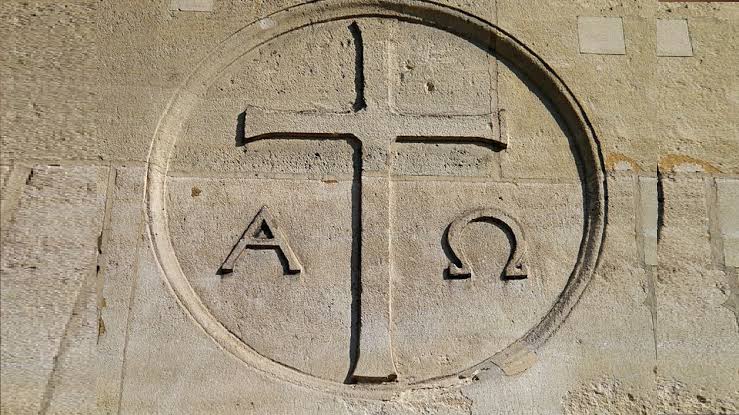
How Isaiah Proves the Deity of Christ: The Beginning and the End, the Alpha and Omega
One of the strongest biblical proofs of the deity of Jesus Christ is found in a title that God uses to describe Himself in the Old Testament: the First and the Last. Centuries later, Jesus Christ applies this very same title to Himself in the book of Revelation. This is not merely a similarity in language. It is a declaration of divine identity that connects the Old Testament revelation of Jehovah with the New Testament revelation of Jesus Christ.
In Isaiah 44:6, the LORD declares, "Thus saith the LORD the King of Israel, and his redeemer the LORD of hosts; I am the first, and I am the last; and beside me there is no God." The statement is unmistakable. God identifies Himself as the First and the Last, and immediately establishes that there is no other God besides Him. This title speaks of His eternal existence, sovereignty, and uniqueness. He was before all things, remains above all things, and will exist when everything else has passed away.
The same declaration appears in Isaiah 48:12: "Hearken unto me, O Jacob and Israel, my called; I am he; I am the first, I also am the last." Once again, the speaker identifies Himself as the eternal God. He does not merely claim to have existed at the beginning of creation or to remain until its conclusion. He is the One who stands outside the limits of time, possessing eternal existence and absolute authority over all creation.
What makes these passages particularly significant is how Jesus Christ uses the same title in the New Testament. In Revelation 1:17-18, John writes that when he saw Christ, he fell at His feet as dead. Jesus then said, "Fear not; I am the first and the last: I am he that liveth, and was dead; and, behold, I am alive for evermore, Amen; and have the keys of hell and of death."
Notice the identity of the speaker. Jesus Christ, the One who died and rose again, declares Himself to be the First and the Last. This is the very title Jehovah used in Isaiah 44:6 and 48:12 to distinguish Himself from every false god. Jesus does not present Himself as another god alongside the God of Israel. He claims the very divine identity that Isaiah attributes to the LORD.
The connection becomes even clearer in Revelation 22:12-13, where Jesus declares, "And, behold, I come quickly; and my reward is with me, to give every man according as his work shall be. I am Alpha and Omega, the beginning and the end, the first and the last." The expression Alpha and Omega represents the first and last letters of the Greek alphabet. It communicates the same truth as the title First and Last. Christ is eternal, sovereign, and supreme over all things.
In Revelation 22:16, the speaker explicitly identifies Himself: "I Jesus have sent mine angel to testify unto you these things in the churches." The declaration of the Alpha and Omega therefore belongs to Jesus Christ. The One who identifies Himself as the beginning and the end is none other than Jesus.
There is another important connection in Isaiah 44:6. The LORD calls Himself both "the King of Israel" and "his redeemer." The New Testament reveals Jesus Christ as the promised King and Redeemer of Israel. He is the Messiah who came to save His people from their sins (Matthew 1:21), and He is the Redeemer who gave Himself for us (Titus 2:13-14). The divine identity revealed in Isaiah finds its fullest revelation in the person of Jesus Christ.
This does not mean that Jesus is the Father. The Bible distinguishes the Father, the Son, and the Holy Spirit, while affirming that there is one God. Jesus is not a lesser deity, a created being, or merely a representative of God. He is God the Son, sharing the divine nature with the Father and the Holy Spirit. John 1:1 declares that the Word was with God and that the Word was God. John 1:14 then reveals that this Word became flesh and dwelt among us.
The significance of Isaiah's prophecy cannot be overlooked. The God who declared Himself to be the First and the Last is the same divine Lord whom Jesus identifies Himself to be in Revelation. If there is no God beside the LORD, as Isaiah 44:6 declares, and Jesus rightfully bears the very title by which the LORD identifies Himself, then the deity of Christ cannot be dismissed.
Jesus Christ is not merely the beginning of the Christian faith or the end of human history. He is the eternal God, the Creator, the Redeemer, and the sovereign Lord over all creation. He was before the beginning, He entered human history through the incarnation, He conquered death through His resurrection, and He will reign forever.
The Alpha and Omega is not simply a title of greatness. It is a declaration of deity. And the One who bears that title is Jesus Christ.
Isaiah declares that the LORD alone is the First and the Last (Isaiah 44:6; 48:12). Revelation reveals that Jesus Christ bears that same divine title (Revelation 1:17-18; 22:12-13). Jesus is not a created being or a lesser god. He is the eternal God manifested in the flesh, the Alpha and Omega, the Beginning and the End.













No comments yet. Be the first to share your thoughts!