
Knowledge of Abyssinian hymnody remained entirely absent in England until roughly 1864, when the Reverend John Meadows Rodwell published two groundbreaking articles in the Journal of Sacred Literature. These contributions offered Western scholars their very first glimpse into the ancient poetic traditions of the Ethiopian Church.
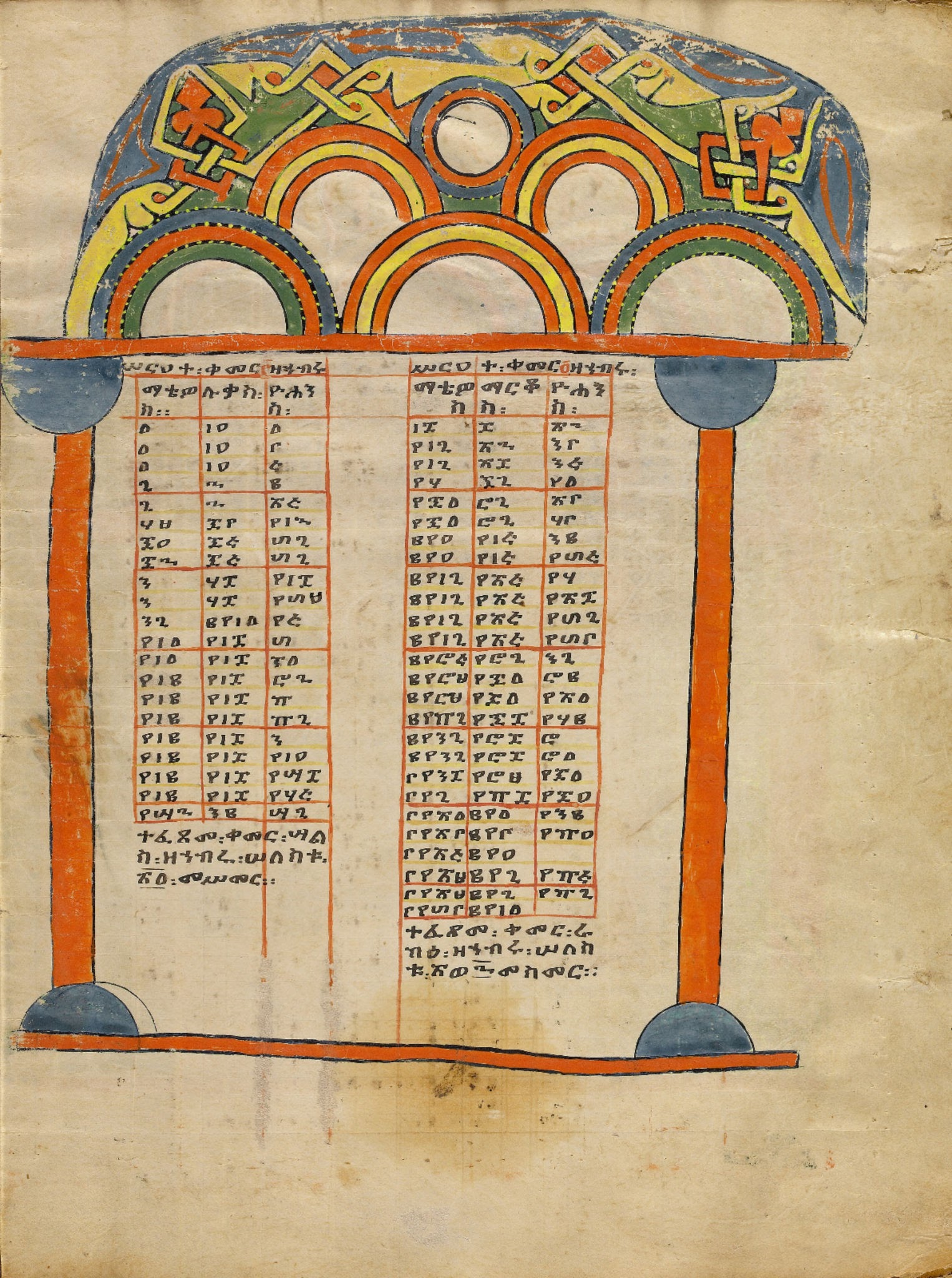
The core of this tradition rests upon the Degua, the national hymnal credited to Saint Jared, an Abyssinian saint who flourished during the fifth century. Local tradition maintains that Jared was supernaturally caught up into heaven to receive these sacred melodies. Rodwell translated selections from a fourteenth-century Ge'ez manuscript preserved in the library of the British and Foreign Bible Society, rendering the original verse into a fluid, metrical prose.
The structural and thematic elements of these hymns, especially the frequent invocation of saints in the festival liturgies, suggest a very early origin in the fifth or sixth century. This antiquity gives them a notable stylistic resemblance to the classic Eastern hymns of Saint Ephrem Syrus. A prominent example of this early style is the "Hymn of the Light," which celebrates Christ as the true light announced by Moses and the historic pilot of just souls.
Following Rodwell's prose discovery, William Chatterton Dix produced the first published metrical translations for English readers. Dix's initial version, "The Vigil of the Four Beasts," appeared in the Churchman's Shilling Magazine in May 1867. He followed this in October of the same year with a dedicated article containing three additional metrical versions.
Other early fragments and translations emerged in periodicals like the Monthly Packet, which featured an article titled "Devotions of the Abyssinian Church" in July 1868, and a version of "The Song of the Saints" published by the Reverend Louis Coutier Biggs in November 1871.
While these pieces saw limited adoption in standard congregational hymnals, single selections found their way into specific volumes such as Edwin R. Jellicoe’s Songs of the Church (1867) and the Churchman's Manual of Public and Private Devotion (1882).
Contemporary hymnologists have frequently lamented the general obscurity surrounding Eastern Christian verse, pointing out that the vast fields of Ethiopian and Abyssinian hymnody have lain largely unworked since the early death of John Mason Neale. Neale successfully demonstrated the immense liturgical value of Eastern texts through his celebrated translations of Greek hymnody.
Though scholars recognize that these Ethiopic treasuries may not match the sheer volume or richness of the Greek and Latin traditions, they remain highly original fields that offer valuable material for future English liturgical compilers.
Related Authors
Writers connected to this dictionary topic.
Keywords
Related terms for this dictionary entry.
Recent Dictionary Entries
Newly added terms from the Dictionary of Hymnology.
If you notice any mistake or have suggestions, please contact us on our contact page.