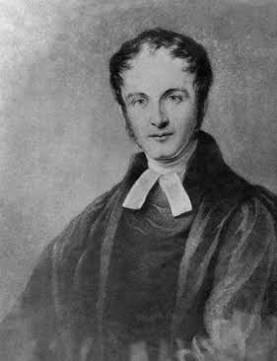
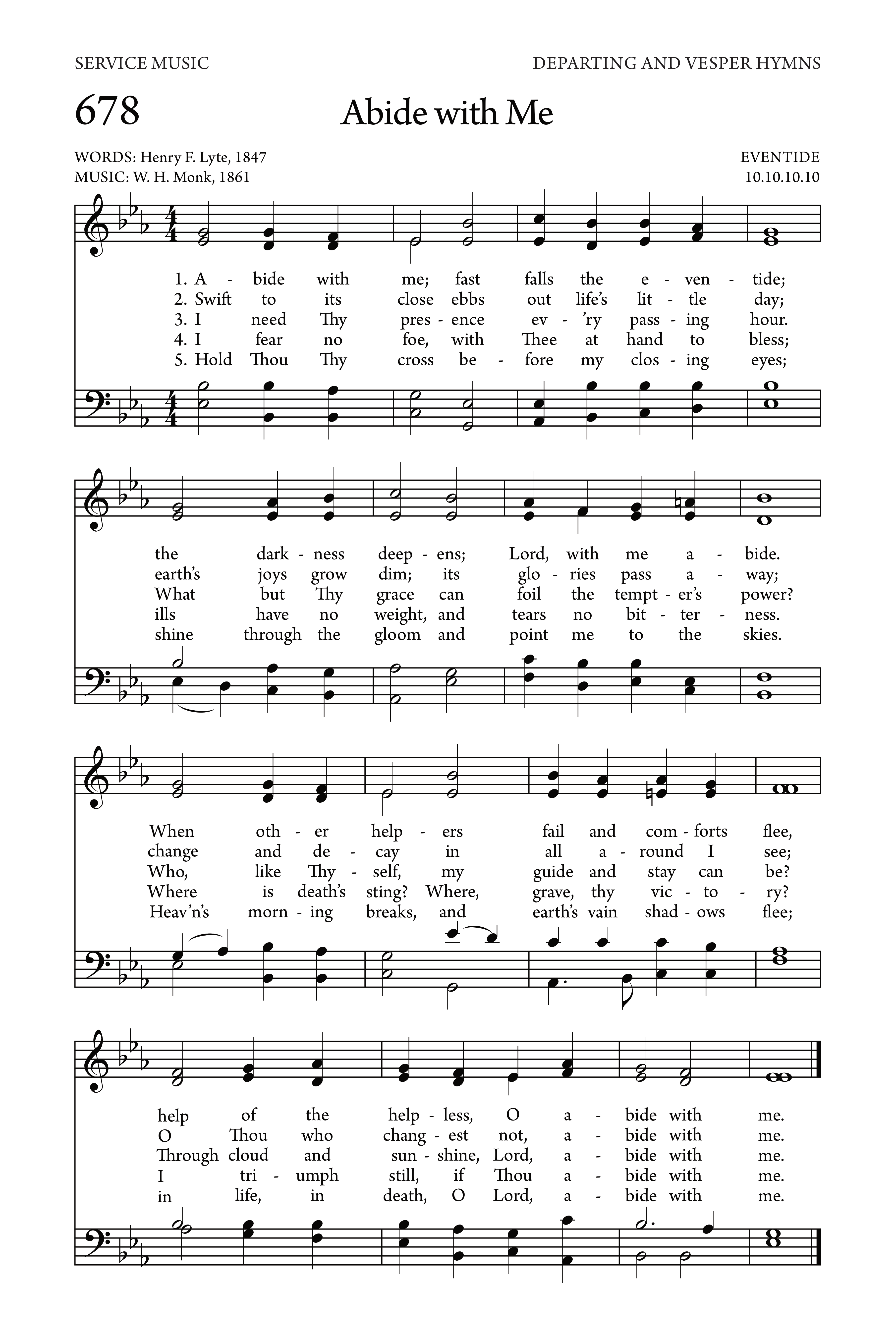
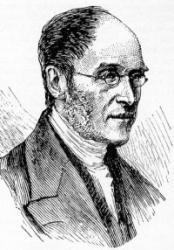
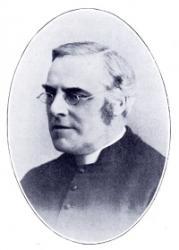
Henry Francis Lyte wrote the universally recognized hymn "Abide with me, fast falls the eventide" during a period of intense physical decline, creating a text that would become a cornerstone of English hymnody. The poignant narrative surrounding its inception was preserved by his daughter, Anna Maria Maxwell Hogg, in the prefatory memoir to his posthumous Remains (1850).
In September 1847, as Lyte prepared to leave England for a warmer climate to soothe his failing health, he determined to preach one final sermon to his congregation at Lower Brixham, Devon. Despite deep weakness, he delivered a message on the Holy Communion on September 4, 1847, and assisted in administering the Eucharist.
That very evening, before departing for Nice, France, where he would die on November 20 of the same year, he presented the manuscript of "Abide with me" along with an original musical arrangement to a close relative.
While the version published in Remains is widely accepted as standard, a comparison of early sources reveals several key textual variations across four primary mid-nineteenth-century records: the author's autograph manuscript (Source 1), the initial Berryhead promotional leaflet from September 1847 (Source 2), the 1850 Remains text (Source 3), and the Miscellaneous Poems anthology of 1868 (Source 4).
In the opening stanza, line two shifts from "The darkness thickens, Lord" in the autograph manuscript to "The darkness deepens, Lord" in both the leaflet and Remains. The fourth stanza shows an evolving cadence in its final line, reading "Come, Friend of sinners, and then abide" in the manuscript, changing to "and thus abide" in the leaflet, and appearing as the clipped "and thus 'bide" in Remains.
The most varied line occurs at the opening of the eighth stanza, where the initial manuscript and leaflet read "Hold then thy cross," the Remains edition prints "Hold there thy cross," and the 1868 Miscellaneous Poems introduces the now-familiar uppercase address, "Hold Thou thy cross."
The hymn's historical reception is marked by a notable divergence between its popular usage and its intended meaning. Liturgical scholar John Ellerton noted in the 1881 folio edition of Church Hymns that the piece is almost universally misapprehended as a simple evening song due to its opening imagery.
In reality, the text makes no literal allusion to the close of a natural day; rather, it uses the language of Luke 24:29 in an entirely metaphorical sense to describe the twilight of human life and the approach of death. Because of this deeply intense, personal focus on mortality, early hymnologists considered it far better suited for solemn occasions such as funerals, notably being sung at the graveside of Professor Frederick Denison Maurice, rather than for standard congregational worship.
Despite these debates on classification, the hymn achieved massive global adoption across all major denominations, appearing in nearly every British and American worship collection published in the latter half of the nineteenth century.
Related Hymns
Hymns in the library connected to this dictionary topic.
-
 Abide with Me
-
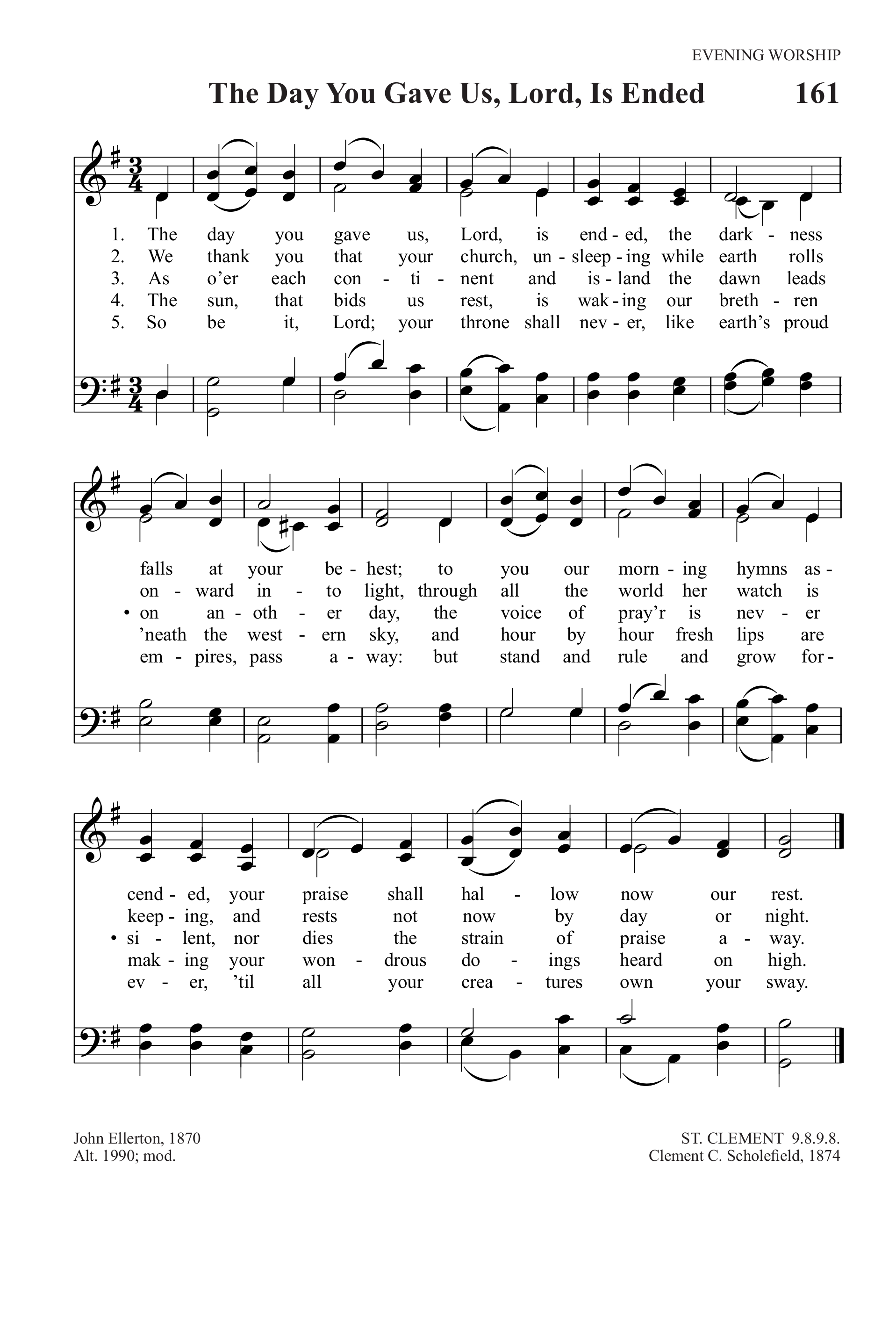
 The Day Thou Gavest, Lord, Is Ended
-
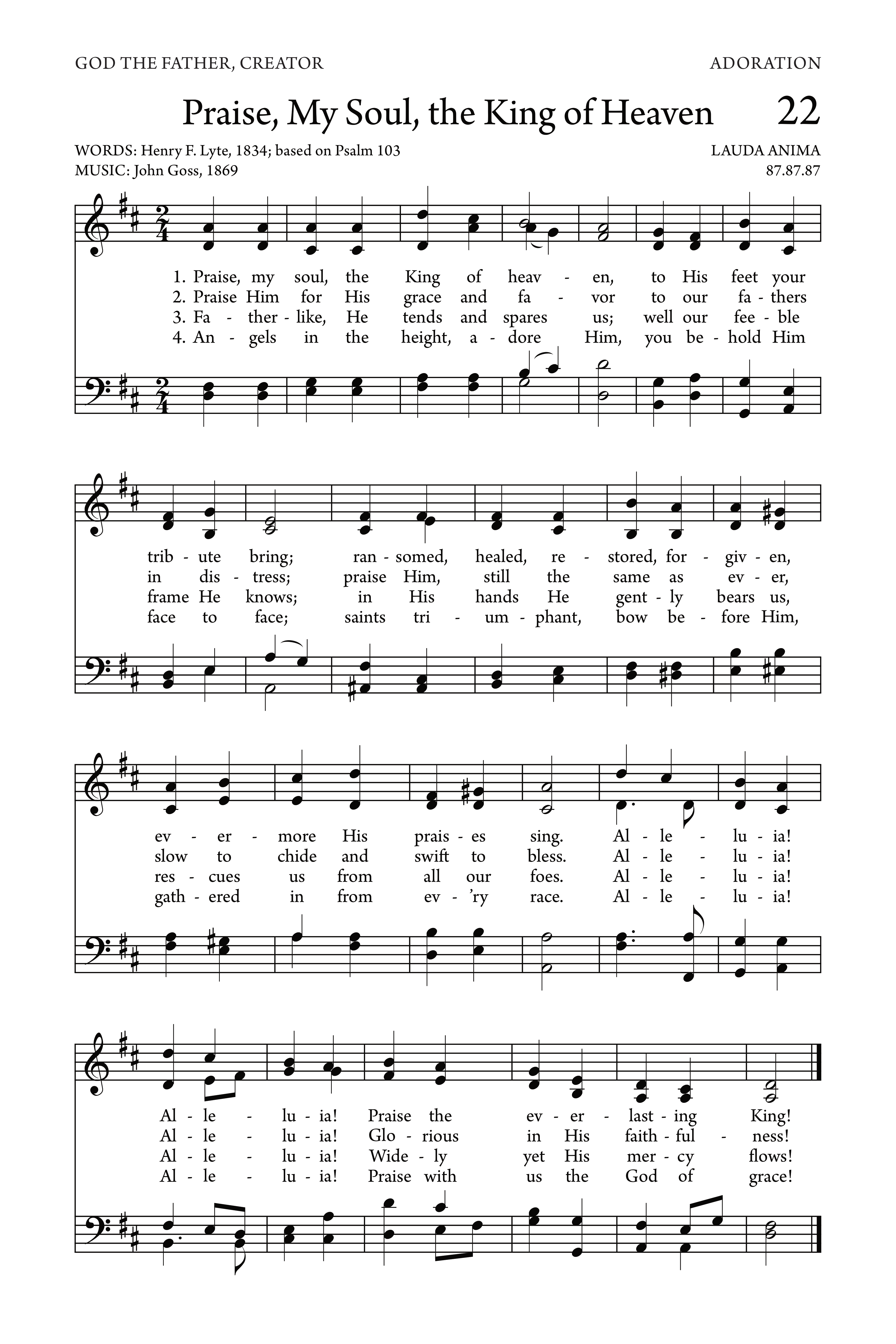
Praise, My Soul, the King of Heaven
-
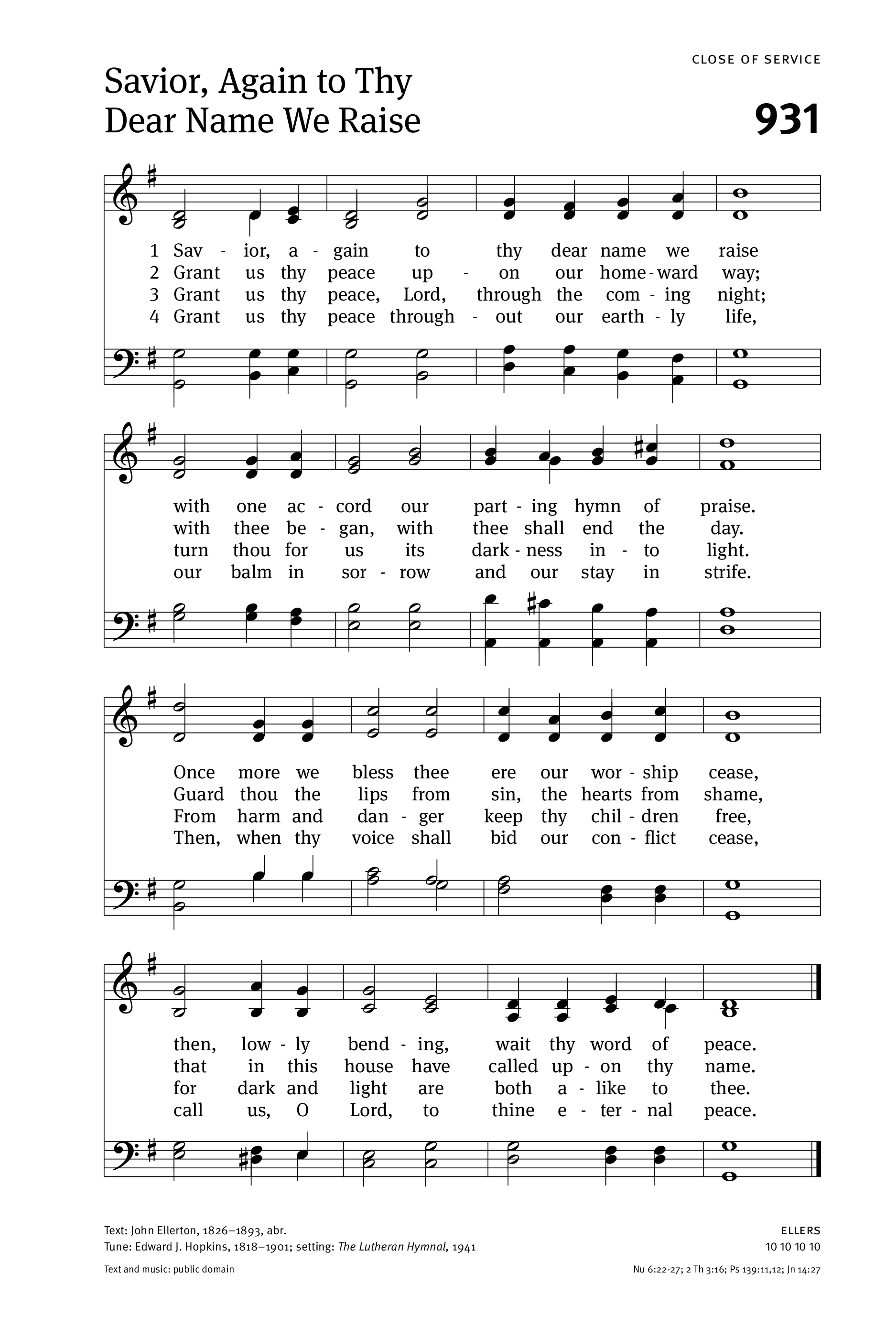
Savior, Again to Thy Dear Name (Parting Hymn)
-
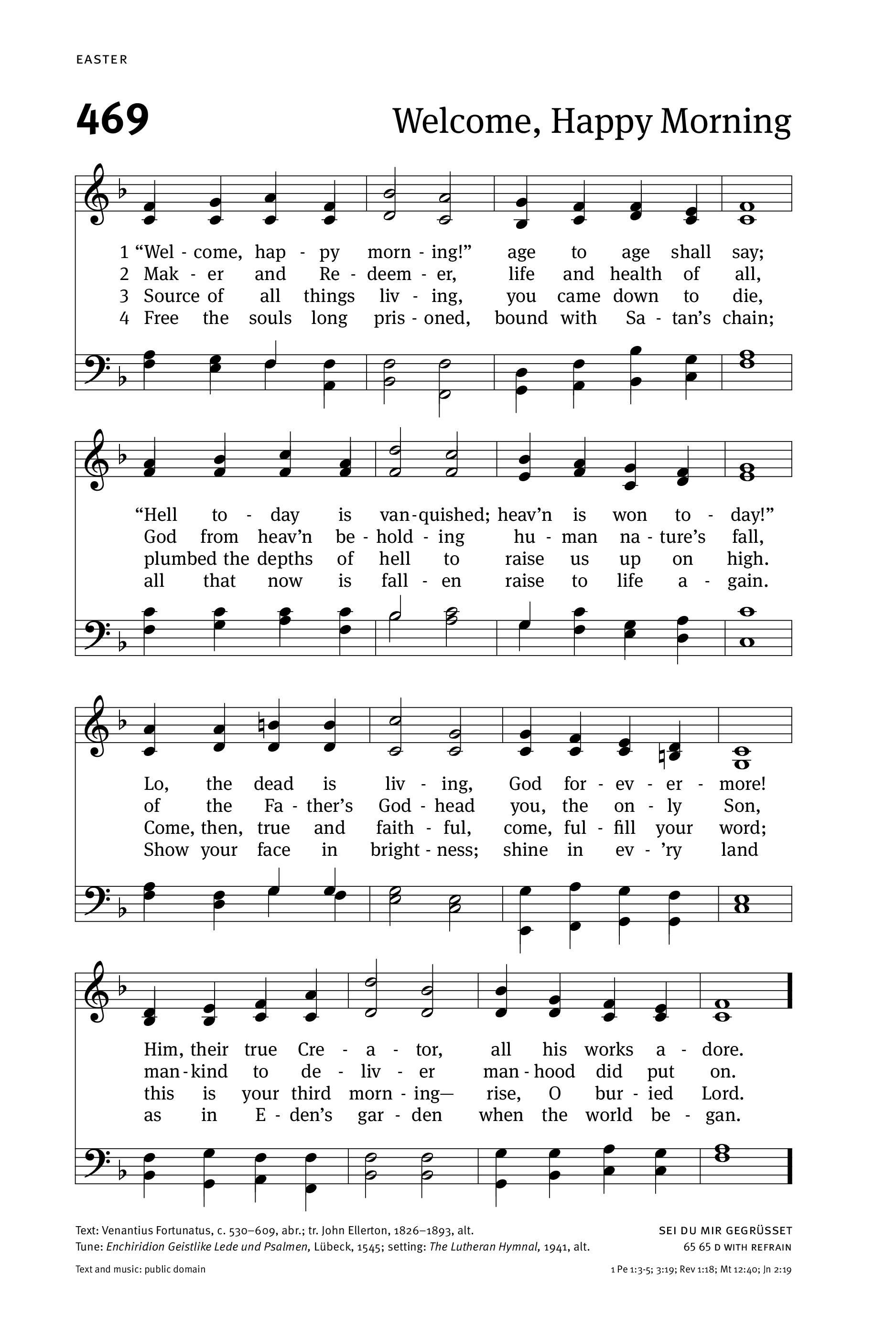
Welcome, Happy Morning!
-
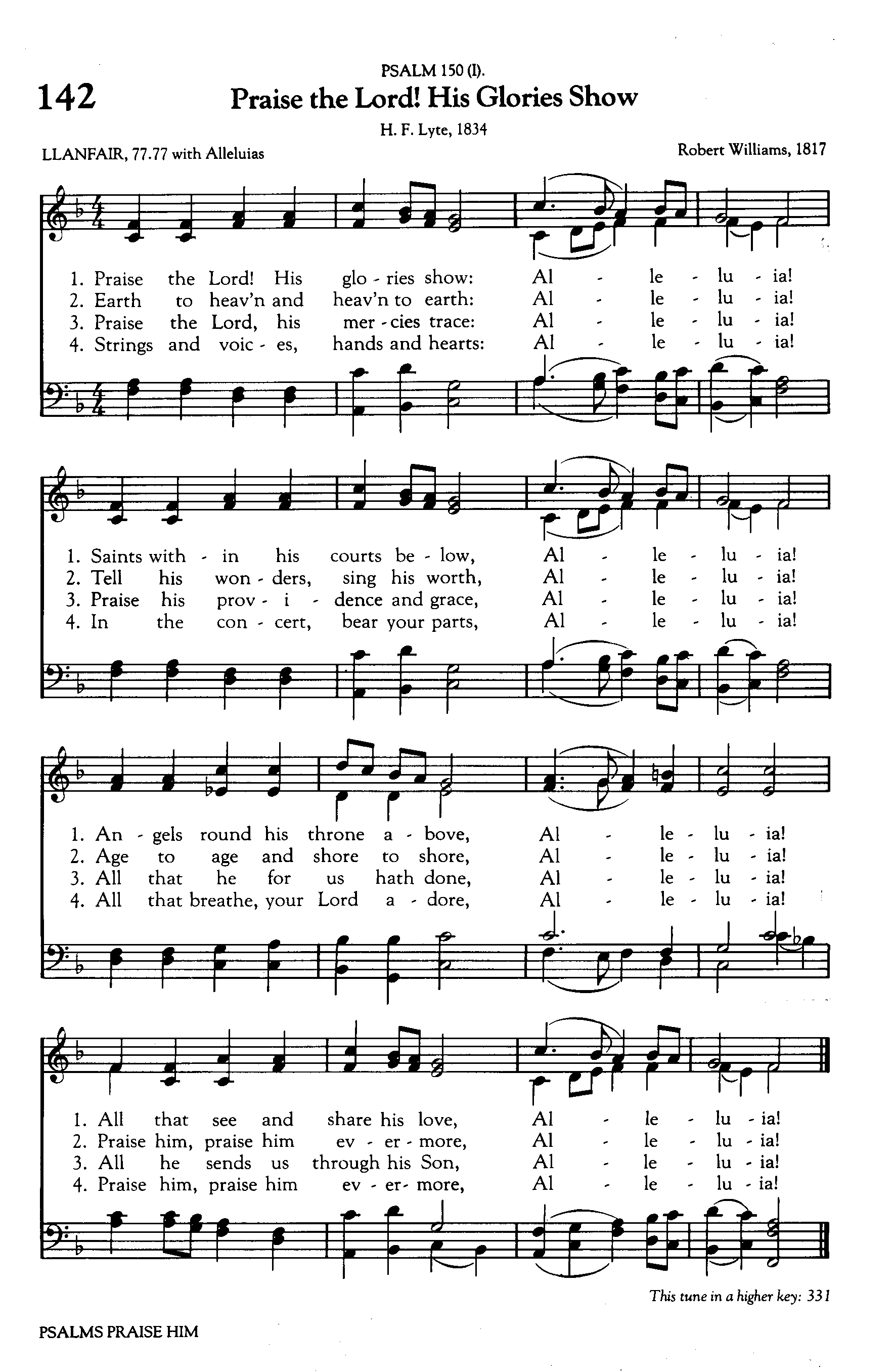
Praise the Lord! His Glories Show
-
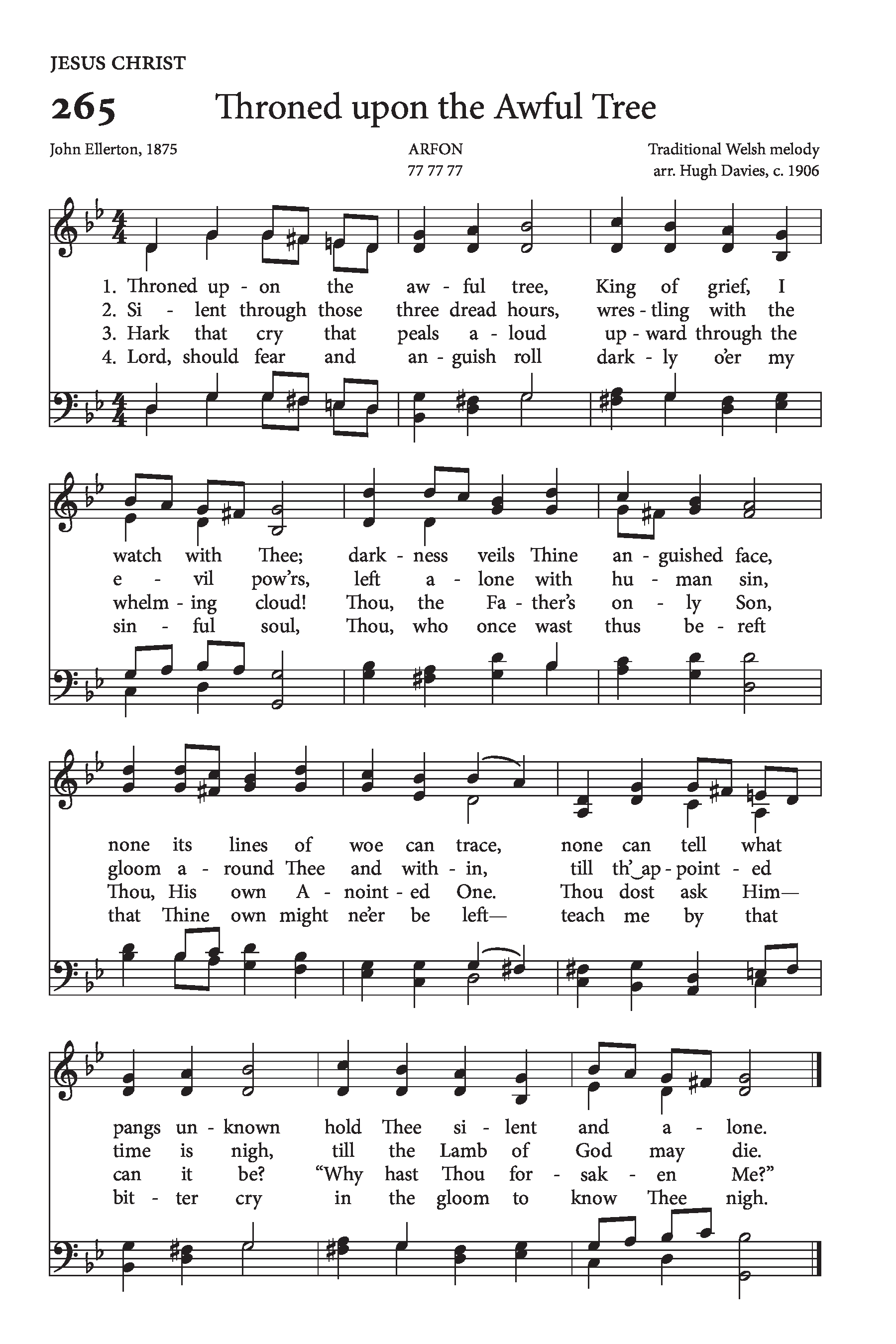
 Throned Upon the Awful Tree
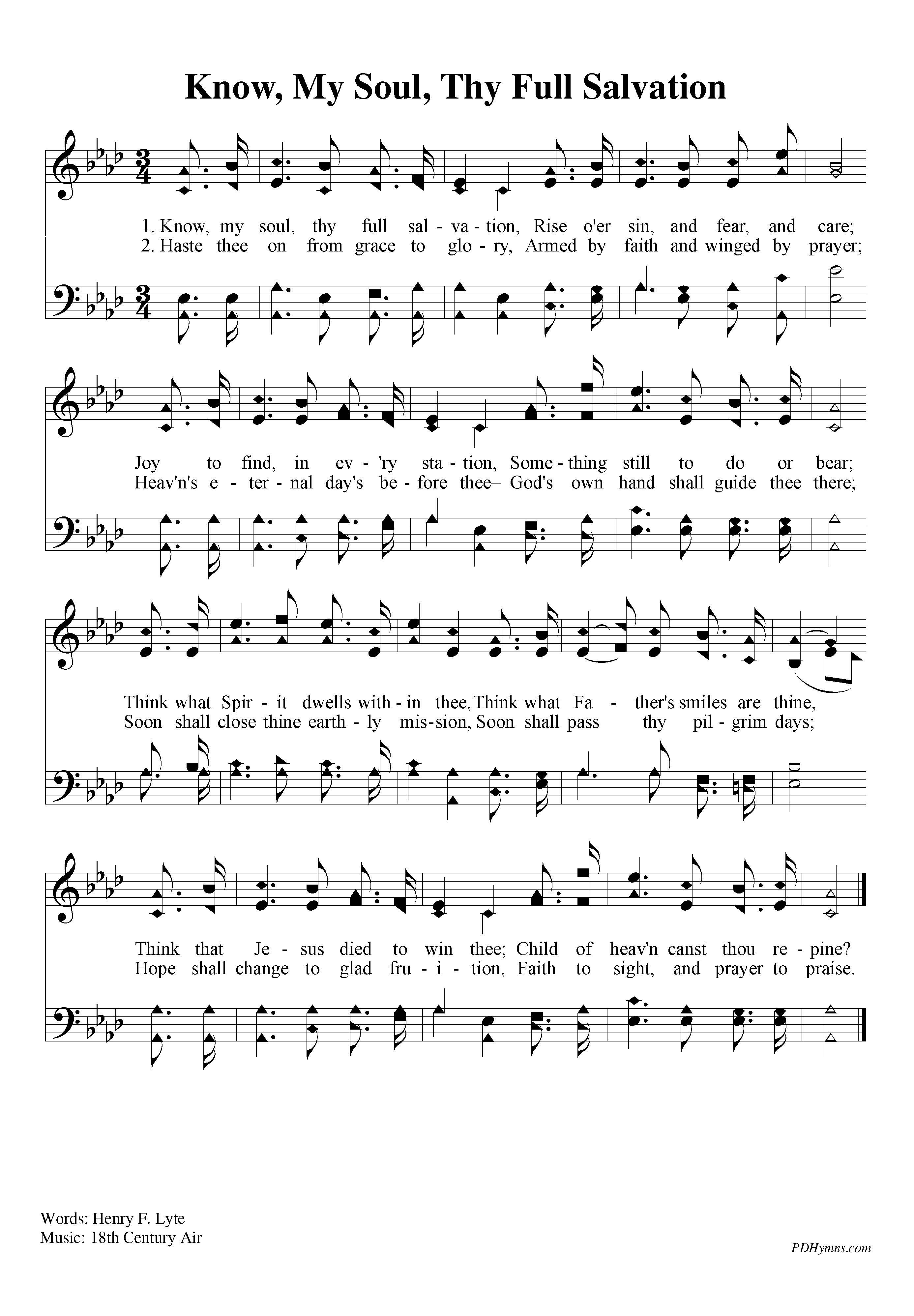
- Know, My Soul, thy Full Salvation
3 more related hymns below in the sheet gallery.
Related Hymn Sheets
3 shown at a time — use the arrows to browse all 11 sheets.
Related Authors
Writers connected to this dictionary topic.
Keywords
Related terms for this dictionary entry.
Recent Dictionary Entries
Newly added terms from the Dictionary of Hymnology.
If you notice any mistake or have suggestions, please contact us on our contact page.