


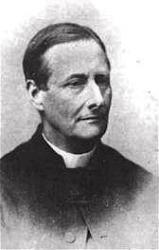

Should Christians Celebrate Halloween?
23 hours ago
Silent Night! Holy Night!
By Joseph Mohr (1818)
Lyrics
1. Silent night, holy night,
All is calm, all is bright
Round yon virgin mother and child!
Holy Infant so tender and mild,
Sleep in heavenly peace,
Sleep in heavenly peace.
All is calm, all is bright
Round yon virgin mother and child!
Holy Infant so tender and mild,
Sleep in heavenly peace,
Sleep in heavenly peace.
2. Silent night, holy night,
Darkness flies, all is light;
Shepherds hear the angels sing,
"Alleluia! hail the King!
Christ the Savior is born,
Christ the Savior is born."
Darkness flies, all is light;
Shepherds hear the angels sing,
"Alleluia! hail the King!
Christ the Savior is born,
Christ the Savior is born."
3. Silent night, holy night,
Son of God, love's pure light
Radiant beams from Thy holy face,
With the dawn of redeeming grace,
Jesus, Lord, at Thy birth,
Jesus, Lord, at Thy birth.
Son of God, love's pure light
Radiant beams from Thy holy face,
With the dawn of redeeming grace,
Jesus, Lord, at Thy birth,
Jesus, Lord, at Thy birth.
4. Silent night, holy night,
Wondrous star, lend the light;
With the angels let us sing
Alleluia to our King;
Christ the Savior is born,
Christ the Savior is born.
Wondrous star, lend the light;
With the angels let us sing
Alleluia to our King;
Christ the Savior is born,
Christ the Savior is born.
#Christmas Carols
Bible Reference
Luke 2:11
Lectionary & readings
Open today’s (or any date’s) assigned scriptures and find related hymns across church calendars. Useful when planning worship around this song’s themes or its Bible reference.
Hymn scripture: Luke 2:11
About This Hymn
Author – Joseph Mohr, 1792–1848
English Translation – John F. Young, 1820–1885
Composer – Franz Gruber, 1787–1863
Tune Name – Stille Nacht
Meter – Irregular
Scripture Reference – Luke 2:11
“For unto you is born this day in the city of David a Saviour, which is Christ the Lord.”
The beloved Christmas carol “Silent Night” was born from simple yet profound beginnings in the snow-covered village of Oberndorf, nestled in the Austrian Alps. Its author, Joseph Mohr, was born in 1792 in the scenic city of Salzburg, Austria, and grew up participating as a chorister in the city's cathedral. Ordained in 1815 as a Roman Catholic priest, Mohr served in several parishes around the Salzburg region. In 1818, while serving as assistant priest at the newly built Church of St. Nicholas in Oberndorf, he composed the German text of “Stille Nacht” for the Christmas Eve Mass. Facing a broken organ and determined not to disappoint his congregation, Mohr penned the words and brought them to Franz Gruber, the local schoolmaster and organist, who composed the melody. Gruber set the words to a gentle and flowing tune, well-suited to Mohr’s message of peace and divine wonder. That evening, the two men introduced the hymn with Mohr singing and Gruber accompanying on guitar. Its heartfelt simplicity made a powerful impression on the worshipers.
Initially intended only for their small Alpine congregation, the hymn soon began to travel far beyond Oberndorf. Within days of the Christmas service, Karl Mauracher, a well-known organ builder from Zillertal, visited the church to repair the organ and took a copy of the carol with him. He shared it throughout the Tyrol region, where it gained popularity as a folk song. In time, traveling singers such as the Strasser children and the Rainer family introduced it to wider audiences across Austria and Germany. In 1838, the carol was printed in a German hymnal without attribution. Just a year later, in 1839, the Rainers brought it to the United States, performing it in New York City, thus marking the beginning of its international journey. Since then, the carol has been translated into dozens of languages and embraced across cultures as one of the most treasured expressions of the Christmas message. Despite its humble origins, “Silent Night” has become a universal anthem of peace and reverence.
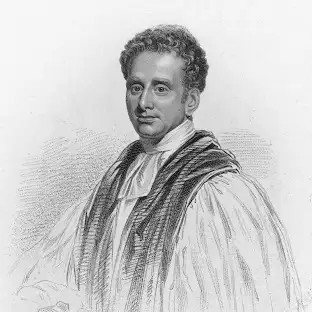
The most widely used English translation of the carol was provided by John Freeman Young, born in 1820 in Pittston, Kennebec County, Maryland. Young was ordained in the Episcopal Church and later served as a bishop in Florida. Deeply devoted to sacred music, he translated Mohr’s original German text into English in 1863, and his version was first published in Service and Tune Book, edited by Clark Hollister. Young’s translation captured the serene spirit of the original while making it accessible to English-speaking congregations. In addition to this enduring translation, Young also contributed to hymnody as editor of two influential collections: Hymns and Music for the Young (1861) and Great Hymns of the Church, the latter published posthumously in 1887. Thanks to the faithful work of Joseph Mohr, Franz Gruber, and John F. Young, the world continues to lift its voice each Christmas in the peaceful strains of “Silent Night”, a carol that transcends time, language, and culture.
Staff Visualizer
Open in MIDI StudioPowered by HTML MIDI PLAYER, MIDI FILE Made by Hymnal Library. · Study chords & lyrics in MIDI Studio

Want weekly hymns and devotionals?
⭐ Recommend This Hymn
Share this beautiful hymn with others
This hymn also appears in these hymnals
Click a spine to pull out the hymnal, then open it.
Hymns with the same subject
More hymns about Children, Christmas, Jesus Christ, Ministry
- Angels from the Realms of Glory - James Montgomery
- See, amid the Winter's Snow - Edward Caswall
- Exult in the Savior's Birth - Matt Boswell
- Go, Tell It on the Mountain - John W. Work
- God Rest Ye Merry, Gentlemen - Anonymous
- While Shepherds Watched Their Flocks - Nahum Tate
- Mary's Boy Child - Jester Hairston
- A Great and Mighty Wonder - J. M. Neale
More hymn subjects
Latest Updated Hymnals
-
Open
 Book of Common Praise (BoCP1915)Updated 13 hours ago · 1915
-
Open
 The New Apostolic Church HymnalUpdated 6 days, 3 hours ago · 2008
-
Open
 400+ Christmas Carols Book: Sheet Music for PianoUpdated 1 week ago · 2014
-
Open
 The Temple HymnalUpdated 1 week ago · 1918
-
Open
 The Popular HymnalUpdated 1 week ago · 1918
Hymn Information

Click a linked name to open their biography.
MIDI File
More Hymns by Joseph Mohr
Popular Hymns
Recent Blog Posts

Popular Blog Posts
-
 Lessons from the Book of Haggai: Putting God…5 months ago
-
 Easter vs Passover: How a Biblical Feast Bec…6 months, 4 weeks ago
-
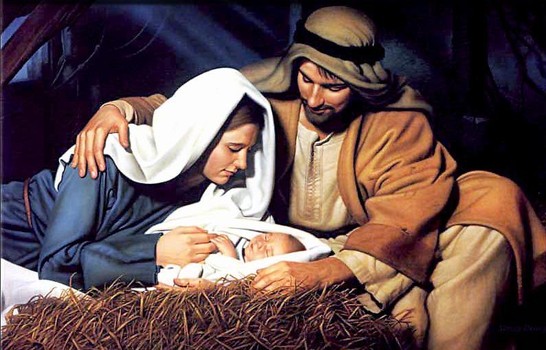 The Full Story of the Birth of Jesus Christ:…10 months, 3 weeks ago
-
 The 30 Most Famous Christmas Hymns and Carols1 year, 2 months ago
-
 The Story Behind the Hymn “Amazing Grace”10 months, 2 weeks ago
Visit Us on Social Media
Latest from X (Twitter)
Tweets by HymnalLibraryLatest from Facebook
Latest on YouTube
Loading latest video...
Daily Bible Verse
Disclaimer
The hymns, sheet music, MIDI files, and related content on this website are provided for educational and research purposes only.
- Public Domain: Many of the hymns featured here are in the public domain and may be freely used.
- Copyrighted Works: Some hymns may still be under copyright protection. Where applicable, permission has either been requested from the copyright owner, or the content is shared under the principles of fair use for educational purposes.
⚠️ Important Notice: If you wish to reproduce, distribute, or use any copyrighted hymn beyond personal study or educational use, you must obtain permission directly from the copyright holder. This website does not grant any rights for commercial use yet.
If there is any other question please address it to us in our Contact Page, for further assistance. Thank you for using the site. May God Bless You.
Recently Added · Dictionary of Hymnology
Browse dictionary →
Can’t find a hymn or lyric?
Leave your question in the forum for others to answer — requests, missing lines, writers, and worship ideas welcome.