


The Latin poem "Ad perennis vitae fontem mens sitivit arida" stands as a peak achievement of medieval rhythmic hymnody, widely celebrated under the thematic title of the Glory of Paradise or the Heavenly City. The history of the text is marked by centuries of intense authorship debates alongside a vast transmission across European sacred literature.
Attribution Disputes and Textual Transmission
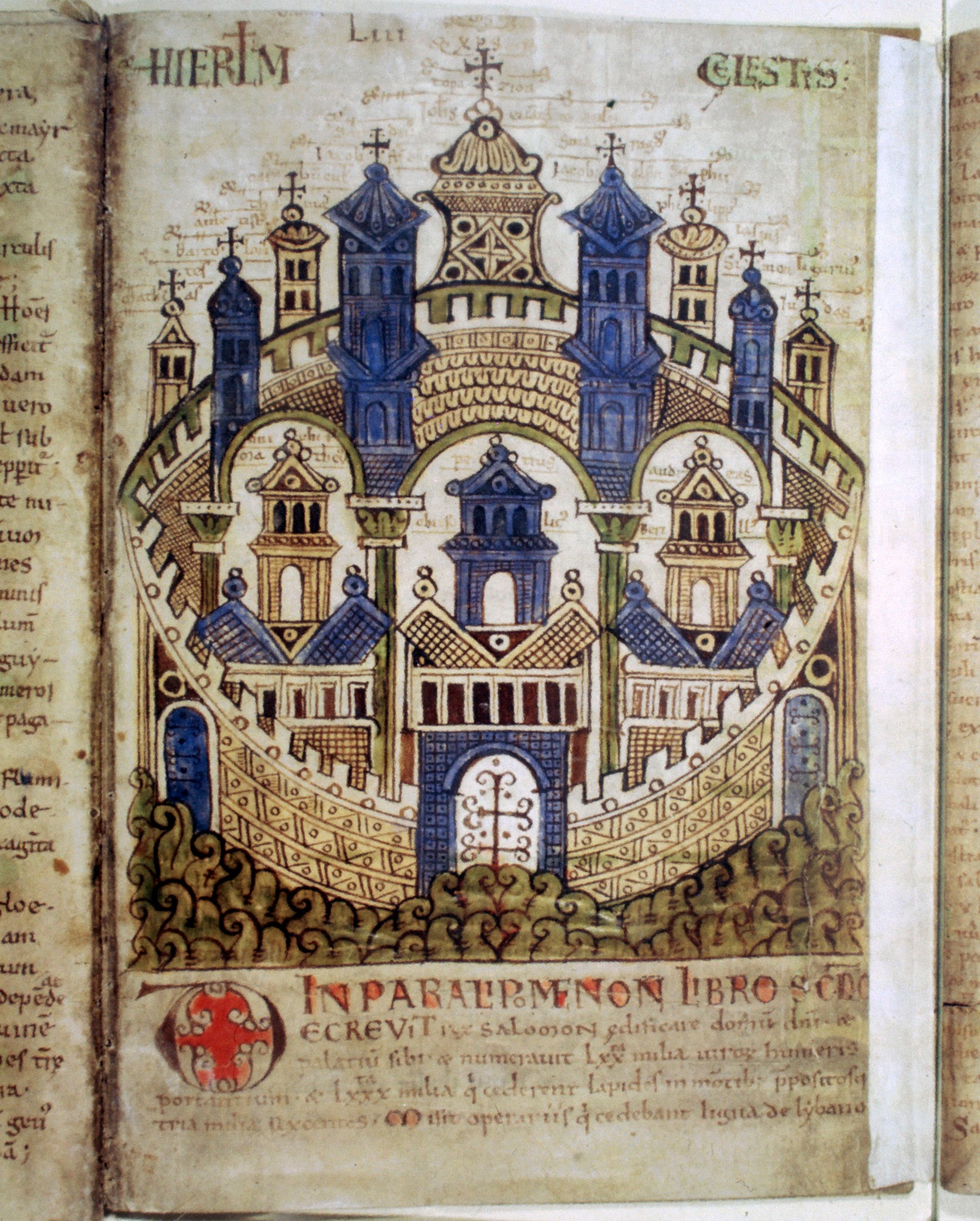
For centuries, the poem was widely ascribed to Saint Augustine because of its inclusion in the Liber Meditationum, a devotional text long treated as an authentic Augustinian work. Early printed editions of Saint Augustine's works, including those published at Strasburg in 1489 and Venice in 1729, presented the poem under this traditional heading.
The Benedictine editors of Saint Augustine later separated the poem from his authentic canon. In his 1849 volume Sacred Latin Poetry, Archbishop Richard Chenevix Trench decisively clarified the authorship, noting that the Meditationes was actually a late cento compiled from the writings of Anselm, Gregory the Great, and Augustine. Trench declared the hymn to be the work of Cardinal Peter Damiani, calling it quite the noblest piece he left behind.
This correction built upon the earlier work of Constantino Cajetan, who inserted the poem into the third volume of his complete edition of Damiani's works (Petri Damiani Opera, issued across Rome, Lyons, and Paris between 1606 and 1643). Cajetan styled the piece "Hymnus de Gloria Paradisi," adding the qualification that it was built ex dictis beati Augustini (from the sayings of blessed Augustine).
During the nineteenth-century revival of hymnological scholarship, the full text and critical apparatuses were heavily studied and reprinted. Hermann Adalbert Daniel published the text in his first volume with subsequent additions in volumes two, three, and four, drawing from a variety of historical sources. The text was also printed with critical notes by Édélestand Du Méril in 1843, by Franz Joseph Mone in 1853, and within Jacques Paul Migne's massive Patrologia Latina (Volume 145, columns 861-864). A particularly notable single edition was prepared in London in 1857 by Dr. Herbert Kynaston, who published the Latin text alongside a dedicated rhythmic English translation.
English Translations and Centos
The poem was adapted into English verse through several widely circulated versions, both for general reading and for direct congregational use:
Edward Caswall translated the text into a 20-stanza format of 6 lines each, first published in his 1858 collection The Masque of Mary, and Other Poems and later reissued in his Hymns and Poems (1873). Caswall's massive translation served as the source for two distinct liturgical centos:
-
The first cento appeared as entry Number 614 in The Hymnary, retaining Caswall's opening line, "On the fount of life eternal," and utilizing stanzas one, three, five, eight, nine, fifteen, seventeen, nineteen, and twenty with minor editorial modifications.
-
The second cento opened with the line "Who can paint that lovely city" and was adopted into the Roman Catholic collection Hymns for the Year as entry Number 51, selecting stanzas three, five, six, seven, and nineteen.
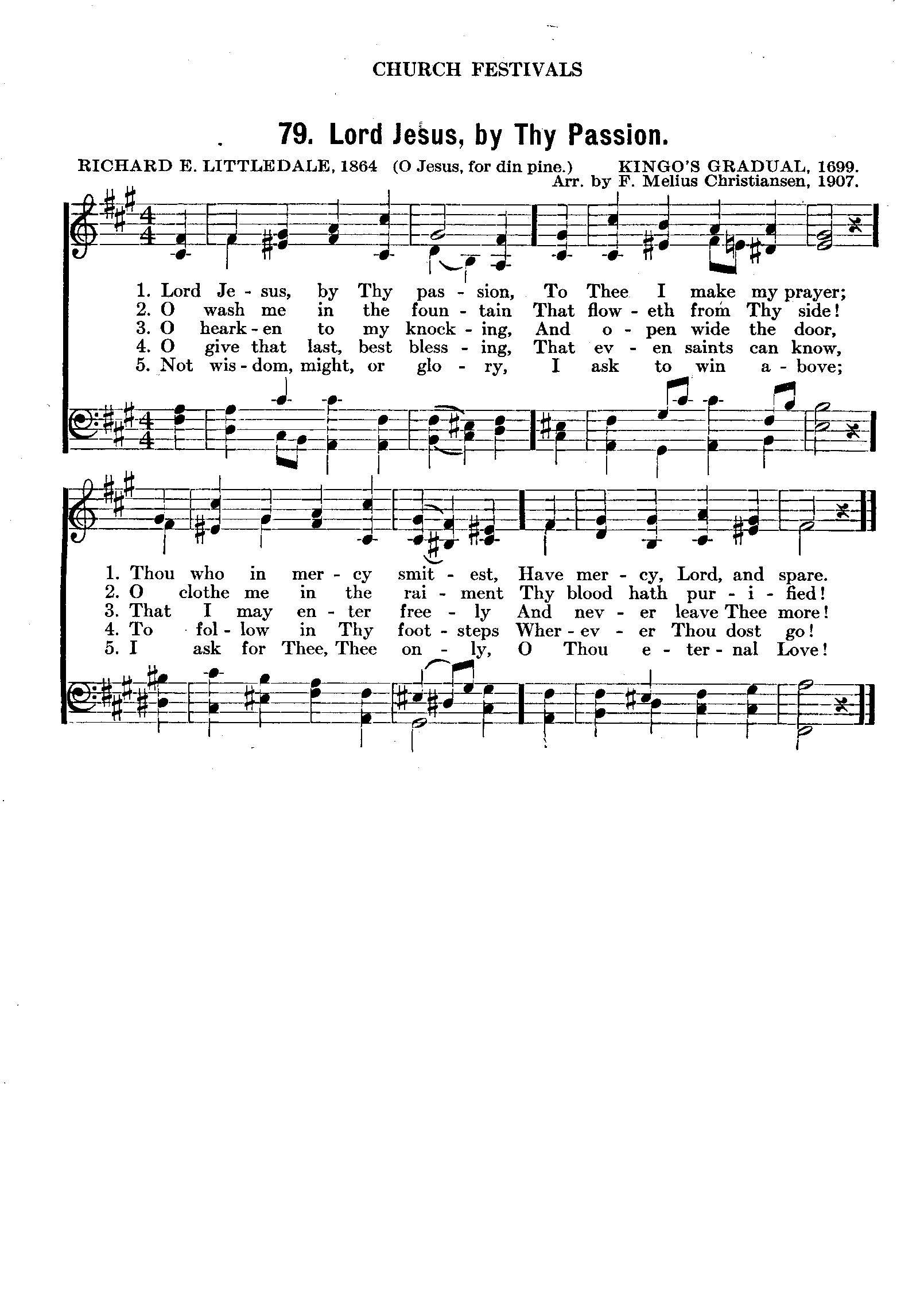
Another prominent version, "For the Fount of life eternal, Is my thirsting," was introduced into The People's Hymnal in 1867 as entry Number 484. This text was arranged as a collaborative cento by Dr. Richard Frederick Littledale, who blended elements from a 1846 translation by Francis R. Wackerbarth, a 1865 translation from John Mason Neale's Joys and Glories of Paradise, and lines from Littledale's own translation previously published in the 1865 volume Lyra Mystica.
The Reverend John Dayman produced a independent version opening with "For the Fount of life eternal, thirstily," which was published as entry Number 320 in The Sarum Hymnal in 1868, structured in 13 stanzas of 6 lines each.
Related Hymns
Hymns in the library connected to this dictionary topic.
Related Hymn Sheets
3 shown at a time — use the arrows to browse all 5 sheets.
Related Authors
Writers connected to this dictionary topic.
Keywords
Related terms for this dictionary entry.
Recent Dictionary Entries
Newly added terms from the Dictionary of Hymnology.
If you notice any mistake or have suggestions, please contact us on our contact page.