Robert Burns
Biography
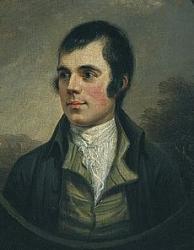
Robert Burns, Scotland's national poet, was an 18th-century literary figure whose celebrated oeuvre rests largely on secular lyricism, folk song preservation, and romantic poetry. Born on January 25, 1759, in the parish of Alloway, near Ayr, he experienced a life of severe financial hardship, intense personal trials, and recurring physical illness before his early death at Dumfries on July 21, 1796, at the age of thirty-seven. Although Burns is best remembered for iconic secular masterpieces such as "Auld Lang Syne," "Scots Wha Hae," and "A Man's a Man for A' That," his personal struggles and periods of spiritual crisis produced several notable sacred poems and metrical psalm paraphrases that were eventually adapted into Christian hymnals in Great Britain and North America.
Burns's contributions to sacred song arose primarily during acute episodes of illness, grief, and financial ruin. In 1781, following the failure of his flax-dressing business and a severe bout of depression, he composed "O Thou great Being! What Thou art" (titled A Prayer, written under the pressure of violent anguish) and "Thou Power Supreme, Whose mighty scheme" (extracted from Winter, a Dirge). Later, during a dangerous illness in 1784, he wrote A Prayer in the prospect of death ("O Thou unknown, Almighty Cause"), alongside metrical paraphrases of Psalm 1 and Psalm 19. These devotional pieces were featured in his landmark publication Poems, Chiefly in the Scottish Dialect (Kilmarnock, 1786; Edinburgh, 1787) and were subsequently incorporated into major 19th-century collections, including James Martineau's Hymns for the Christian Church and Home (1840).
His recognized hymnological compositions and sacred verse include:
-
"O Thou unknown, Almighty Cause" — A penitential prayer composed during a life-threatening illness in the summer of 1784.
-
"Thou Power Supreme, Whose mighty scheme" — A stanzaic prayer expressing humble trust in God amidst suffering, taken from Winter, a Dirge.
-
"O Thou great Being! What Thou art" — A plea for divine mercy and emotional healing written during severe depression in 1781.
-
"The man in life wherever placed" — Burns's metrical paraphrase of Psalm 1, contrasting the path of the righteous with that of the ungodly.
-
"O Thou, the first, the greatest Friend" — A devotional paraphrase based on Psalm 19, praising God's majesty and seeking spiritual guidance.
While Burns's direct involvement in organized church hymnody was minimal, his sacred verse offers a poignant record of his spiritual reflections, providing 19th- and 20th-century hymnals with prayers of profound personal honesty and resignation.
Dictionary of Hymnology
Burns, James Drummond Biography
James Drummond Burns, M.A. (1823–1864), Free Church and Presbyterian minister and hymn-writer; this entry also notes Robert Burns’s few sacred pieces used as hymns.
ReadHymns by Robert Burns
Includes hymns they wrote and hymns where they are credited as co-author, translator, paraphraser, or adapter.
| # | Title | Year | Views | |
|---|---|---|---|---|
| 1 | Auld Lang Syne | 1788 | 43 | View |
Recently added hymns
Updated hymnals
Suggestions or corrections: contact us.
Leave it in the forum for others to answer — hymn requests, lyrics help, writers, worship planning, and more.