






The Biblical Interpretation of Romans 13: Go…
2 days, 7 hours ago
It Is a Thing Most Wonderful
By William Walsham How (1872)
Lyrics
1. It is a thing most wonderful,
almost too wonderful to be,
that God's own Son should come from heav'n,
and die to save a child like me.
almost too wonderful to be,
that God's own Son should come from heav'n,
and die to save a child like me.
2. And yet I know that it is true:
He chose a poor and humble lot,
and wept and toiled and mourned and died
for love of those who loved Him not.
He chose a poor and humble lot,
and wept and toiled and mourned and died
for love of those who loved Him not.
3. I cannot tell how He could love
a child so weak and full of sin;
His love must be most wonderful
if He could die my love to win.
a child so weak and full of sin;
His love must be most wonderful
if He could die my love to win.
4. I sometimes think about the cross,
and shut my eyes, and try to see
the cruel nails and crown of thorns,
and Jesus crucified for me.
and shut my eyes, and try to see
the cruel nails and crown of thorns,
and Jesus crucified for me.
5. But even could I see Him die,
I could but see a little part
of that great love which, like a fire,
is always burning in His heart.
I could but see a little part
of that great love which, like a fire,
is always burning in His heart.
6. It is most wonderful to know
His love for me so free and sure;
but 'tis more wonderful to see
my love for Him so faint and poor.
His love for me so free and sure;
but 'tis more wonderful to see
my love for Him so faint and poor.
7. And yet I want to love Thee, Lord;
O light the flame within my heart,
and I will love Thee more and more,
until I see Thee as Thou art.
O light the flame within my heart,
and I will love Thee more and more,
until I see Thee as Thou art.
Bible Reference
1 John 4:10
Lectionary & readings
Open today’s (or any date’s) assigned scriptures and find related hymns across church calendars. Useful when planning worship around this song’s themes or its Bible reference.
Hymn scripture: 1 John 4:10
About This Hymn
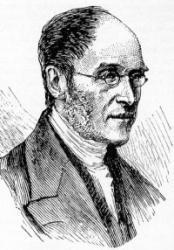
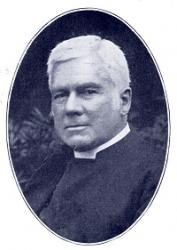
“It Is a Thing Most Wonderful” by William Walsham How is one of the most tender and reflective hymns ever written on the love of Christ. Composed in 1872, it expresses a deep and humble wonder at the mystery of divine love revealed through the cross. The hymn beautifully captures the awe of a believer who marvels that Jesus would love him personally, not merely in a general sense but with an intimate, redeeming affection that reaches into the depths of the soul.
William Walsham How, known for his pastoral heart and poetic sensitivity, wrote this hymn to help children and adults alike grasp the personal reality of God’s love. Its tone is gentle and contemplative, making it especially fitting for worship focused on the themes of grace, redemption, and thanksgiving. The opening line, “It is a thing most wonderful, almost too wonderful to be,” immediately draws the heart into reverence and amazement. How’s language is simple yet profound, enabling the hymn to communicate eternal truths in a way that stirs both mind and heart.
Each stanza unfolds a new aspect of the believer’s relationship with Christ. The hymn moves from awe to intimacy: first marveling that Christ would die for sinners, then realizing that He died for “me.” This personal recognition transforms doctrine into devotion, turning theology into heartfelt gratitude. The phrase “But even could I see Him die, I could but see a little part of that great love” expresses both human limitation and divine vastness. The love of God, though beyond full comprehension, remains the believer’s greatest treasure.
The hymn’s strength lies in its honesty. It acknowledges the weakness of human love compared to the steadfast love of Christ. The singer confesses, “I sometimes think about the cross, and shut my eyes and try to see,” capturing the believer’s yearning to understand more fully what Jesus endured out of love. This reflective tone invites worshippers to meditate quietly on the cost of redemption and to respond with deeper devotion.
Musically, “It Is a Thing Most Wonderful” has often been set to gentle and flowing tunes such as Herongate or My God, I Love Thee, enhancing its mood of humility and wonder. The melody allows the text to breathe, giving worshippers space to reflect on each line’s meaning.
William Walsham How, sometimes called “the children’s bishop,” was deeply concerned with making faith accessible and heartfelt. This hymn exemplifies that mission. It is simple enough for a child to understand, yet profound enough to move a mature believer to tears.
From the Dictionary of Hymnology
Related terms and concepts automatically matched to this hymn.
How welcome was the call Hymn
Sir H. W. Baker’s marriage hymn in Hymns Ancient and Modern (1861/1875); the raw note then gives Bishop William Walsham How’s life, books, and principal hymns.
Read moreAscended Lord, accept our praise Hymn
Bishop W. W. How's Thursday hymn, one of three Week-day Hymns printed in a parish magazine in March 1871 and included in Church Hymns the same year.
Read moreStaff Visualizer
Open in MIDI StudioPowered by HTML MIDI PLAYER, MIDI FILE Made by Hymnal Library. · Study chords & lyrics in MIDI Studio

Want weekly hymns and devotionals?
⭐ Recommend This Hymn
Share this beautiful hymn with others
This hymn also appears in these hymnals
Click a spine to pull out the hymnal, then open it.
Hymns with the same subject
More hymns about Cross, Humility
- Thou Didst Leave Thy Throne - E. S. Elliot
- According To Thy Gracious Word - James Montgomery
- Christ Triumphant, Ever Reigning - Michael Saward
- O God, We Pray for All Mankind - Howard J. Conover
- Because He Lives - Bill & Gloria Gaither
- How Great Thou Art - Carl Boberg
- Will You Come and Follow Me (The Summons) - John L. Bell
- Salvation Has Been Brought Down - Albert E. Brumley
More hymn subjects
Explore other themes across the library.
Hymns about Hope
Hymns about The Holy Trinity
Hymns about Presence of God
Hymns about Atonement
Hymns about Battle
Hymns about Funeral
Hymns about Comfort
Hymns about Strength
Browse all subjects →
Recently Added Hymns
Latest Updated Hymnals
-
Open
 Book of Common Praise (BoCP1915)Updated 6 days, 8 hours ago · 1915
-
Open
 The New Apostolic Church HymnalUpdated 1 week, 4 days ago · 2008
-
Open
 400+ Christmas Carols Book: Sheet Music for PianoUpdated 1 week, 6 days ago · 2014
-
Open
 The Temple HymnalUpdated 1 week, 6 days ago · 1918
-
Open
 The Popular HymnalUpdated 1 week, 6 days ago · 1918
Hymn Information
Click a linked name to open their biography.
MIDI File
Popular Hymns
Recent Blog Posts


Popular Blog Posts
-
 Lessons from the Book of Haggai: Putting God…5 months, 1 week ago
-
 Easter vs Passover: How a Biblical Feast Bec…7 months ago
-
 The Full Story of the Birth of Jesus Christ:…10 months, 4 weeks ago
-
 The 30 Most Famous Christmas Hymns and Carols1 year, 2 months ago
-
 The Story Behind the Hymn “Amazing Grace”10 months, 3 weeks ago
Visit Us on Social Media
Latest from X (Twitter)
Tweets by HymnalLibraryLatest from Facebook
Latest on YouTube
Loading latest video...
Daily Bible Verse
Disclaimer
The hymns, sheet music, MIDI files, and related content on this website are provided for educational and research purposes only.
- Public Domain: Many of the hymns featured here are in the public domain and may be freely used.
- Copyrighted Works: Some hymns may still be under copyright protection. Where applicable, permission has either been requested from the copyright owner, or the content is shared under the principles of fair use for educational purposes.
⚠️ Important Notice: If you wish to reproduce, distribute, or use any copyrighted hymn beyond personal study or educational use, you must obtain permission directly from the copyright holder. This website does not grant any rights for commercial use yet.
If there is any other question please address it to us in our Contact Page, for further assistance. Thank you for using the site. May God Bless You.
Recently Added · Dictionary of Hymnology
Browse dictionary →- Light of life, seraphic Fire 2 days, 6 hours ago · Hymn 0
- Lift up your heads, ye gates of brass 2 days, 6 hours ago · Hymn 2
- Lift the strain of high thanksgiving 2 days, 6 hours ago · Hymn 1
- Lift it gently to the steeple 2 days, 6 hours ago · Hymn 1
- Life nor death shall us dissever 2 days, 6 hours ago · Hymn 0
Can’t find a hymn or lyric?
Leave your question in the forum for others to answer — requests, missing lines, writers, and worship ideas welcome.