The German hymn "Dank, Dank, sey dir für dein Erbarmen" is a late eighteenth-century eucharistic text written for the corporate thanksgiving following the celebration of Holy Communion.
The hymn was first published as entry Number 158 in the Hamburg Gesang-Buch of 1787, structured in 5 stanzas of 6 lines. It retained its liturgical prominence in the region across successive generations, being reprinted as entry Number 357 in the Berlin Gesang-Buch (1829) and as entry Number 298 in the revised Hamburg Gesang-Buch of 1842. Within the historical notes (Nachricht) appended to the 1842 Hamburg edition, hymnologist Dr. August Jakob Rambach identified the text as the probable work of the celebrated pastor and poet Christoph Christian Sturm, confirming its initial appearance in the 1787 volume. Liturgical scholars note that the text was likely modeled on an earlier 9-stanza Post-Communion hymn, "Nun habe Dank für deine Liebe," which was published in 1766 within Johannes Joachim Zollikofer's Leipzig Gesang-Buch and credited to Zollikofer himself.
English Translations
The German text was translated into English during the mid-nineteenth century and entered congregational use in both complete and abbreviated forms:
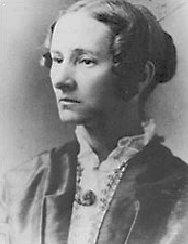
"Thanks, thanks be to Thee for Thy pity" was translated by Anna Bartlett Warner and published in her collection, Wayfaring Hymns, in 1869 (reprinted 1877, page 49). Warner's rendering was noted for its fidelity to the original meters and sentiments of the German text.
An abbreviated cento derived directly from Warner's translation was prepared by William Fleming Stevenson for his collection, Hymns for Church and Home (1873). Cataloged as entry Number 442, Stevenson omitted the second stanza of Warner’s text, creating a 4-stanza version that achieved moderate circulation in late Victorian nonconformist congregations.
Related Authors
Writers connected to this dictionary topic.
Keywords
Related terms for this dictionary entry.
Recent Dictionary Entries
Newly added terms from the Dictionary of Hymnology.
If you notice any mistake or have suggestions, please contact us on our contact page.