Frances Ridley Havergal wrote the deeply theological hymn "Accepted, Perfect, and Complete" to systematically explore the believer's secure identity in Christ. She composed the piece while staying at Hastings on September 3, 1870. The work was deliberately structured into 5 stanzas of 3 lines each, with each structural division drawing directly from a precise trio of New Testament passages: Ephesians 1:6 ("Accepted in the beloved"), Colossians 1:28 ("Perfect in Christ Jesus"), and Colossians 2:10 ("Complete in Him").
The text initially entered public circulation as a standalone religious leaflet, published by J. and R. Parlane in Paisley in 1871.
The hymn was soon adapted for musical settings and congregational worship. In 1872, the Reverend Charles Dent Snepp included the text in his prominent collection, Songs of Grace and Glory. For this printing, the verses were paired with an original tune named "Tryphena," which Havergal had composed herself. This musical arrangement was subsequently preserved in the hymnal's formal musical edition of 1875.
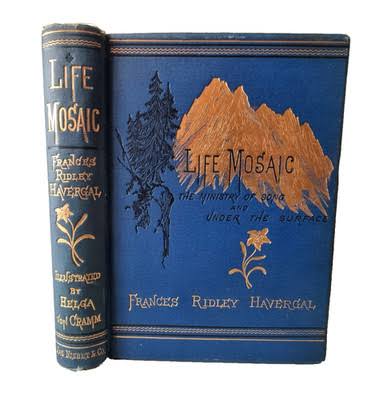
Havergal also saw fit to preserve the lyric within her main literary anthologies. The hymn was integrated into her poetic volume Under the Surface in 1874 and was later featured prominently in her posthumous compilation, Life Mosaic, in 1879. The primary historical record for the tracking of this piece is maintained through the specialized collection of the Havergal Manuscripts.
Related Hymn Sheets
3 shown at a time — use the arrows to browse all 2 sheets.
Related Authors
Writers connected to this dictionary topic.
Keywords
Related terms for this dictionary entry.
Recent Dictionary Entries
Newly added terms from the Dictionary of Hymnology.
If you notice any mistake or have suggestions, please contact us on our contact page.