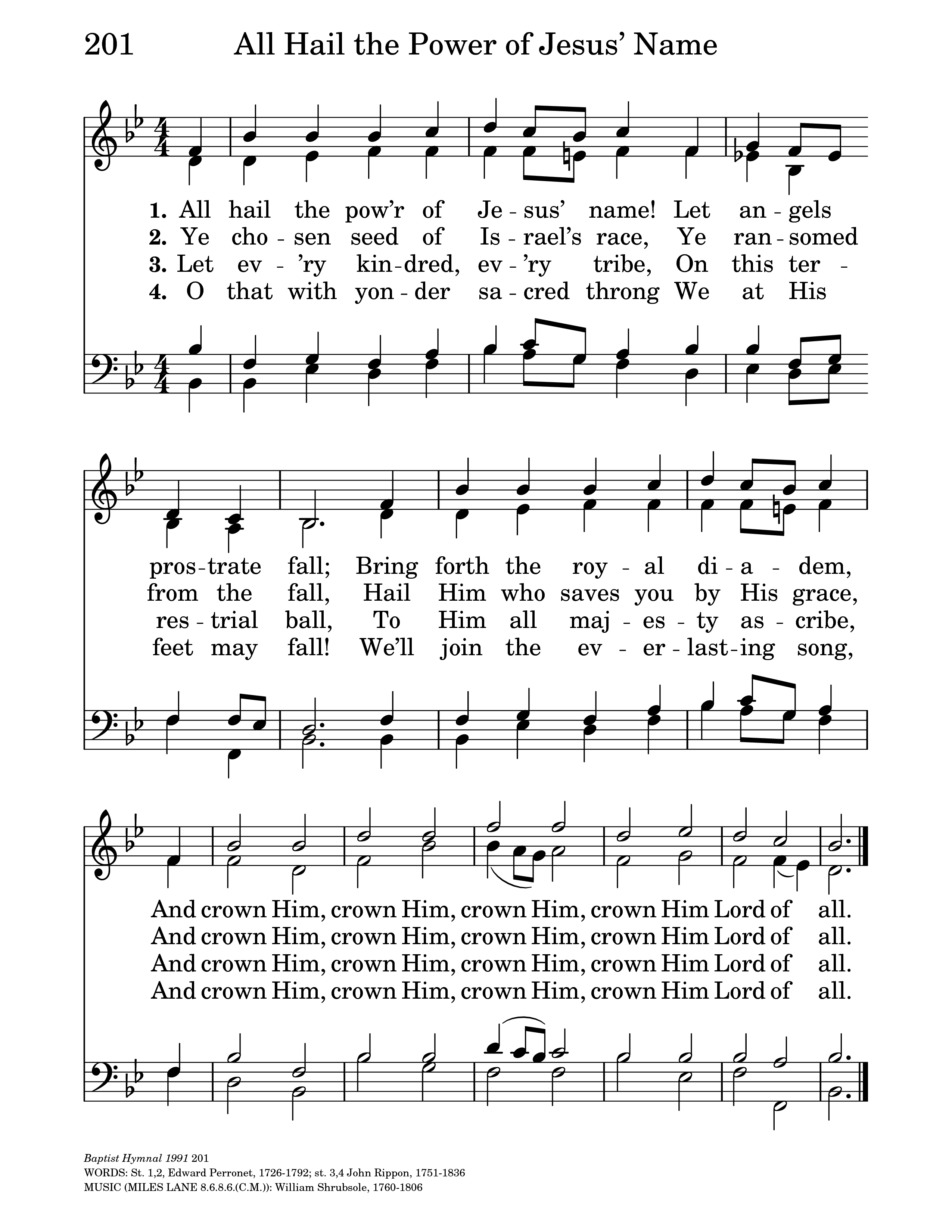
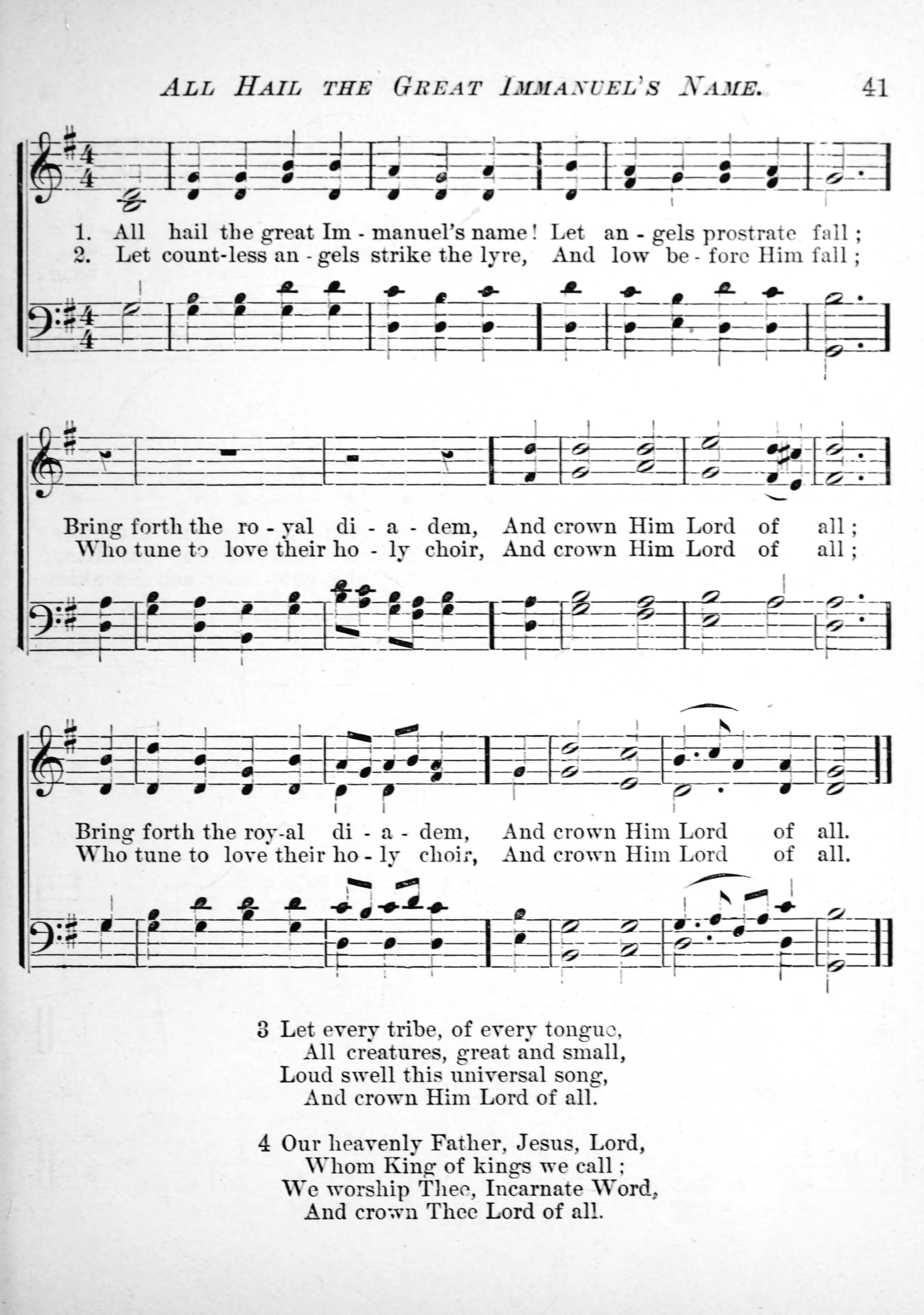
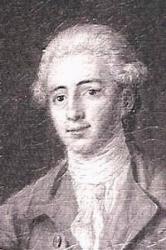

"All hail! the power of Jesus' Name" is one of the most widely published hymns in the English language, written by Edward Perronet. The first stanza originally appeared in the November 1779 issue of the Gospel Magazine, accompanied by the tune "Miles Lane," composed by twenty-year-old former Canterbury Cathedral chorister William Shrubsole. In April 1780, the complete eight-stanza text was published in the same magazine under the title "On the Resurrection, the Lord is King." Perronet subsequently included the full poem in his anonymous collection Occasional Verses, Moral and Sacred in 1785.
The hymn underwent several early adaptations, beginning with George Burder's four-stanza arrangement titled "The Coronation Hymn" in 1784. The definitive version accepted across modern English-speaking hymnals was created by Dr. John Rippon for his Selection of Hymns in 1787. Entitled "The Spiritual Coronation," Rippon's recast introduced new stanzas, reorganized the text, and added thematic headers for each verse, such as "Angels," "Martyrs," and "Converted Jews." Because of these substantial contributions, the standard text is officially credited to both Edward Perronet (1779–1780) and John Rippon (1787).
During the nineteenth century, an erroneous claim of authorship was raised on behalf of the Reverend John Duncan, minister of the Scots Church in London. This misattribution originated in John Dobell's 1806 Selection, where Duncan had served as an advisor, and developed into a persistent family tradition among Duncan's descendants. However, hymnological research conclusively established Perronet's authorship through earlier printed tracts from 1756, 1772, and 1782, as well as the 1785 edition of Occasional Verses containing Perronet's personal autograph.
The tune "Miles Lane" achieved rapid popularity among English dissenters and derived its name from an Independent chapel located in Miles Lane, London. The hymn has been translated into numerous languages for worldwide Christian worship, including a notable nineteenth-century Latin translation by Richard Bingham, titled "Salve, nomen potestatis."
Related Hymns
Hymns in the library connected to this dictionary topic.
Related Hymn Sheets
3 shown at a time — use the arrows to browse all 2 sheets.
Related Authors
Writers connected to this dictionary topic.
Keywords
Related terms for this dictionary entry.
Recent Dictionary Entries
Newly added terms from the Dictionary of Hymnology.
If you notice any mistake or have suggestions, please contact us on our contact page.