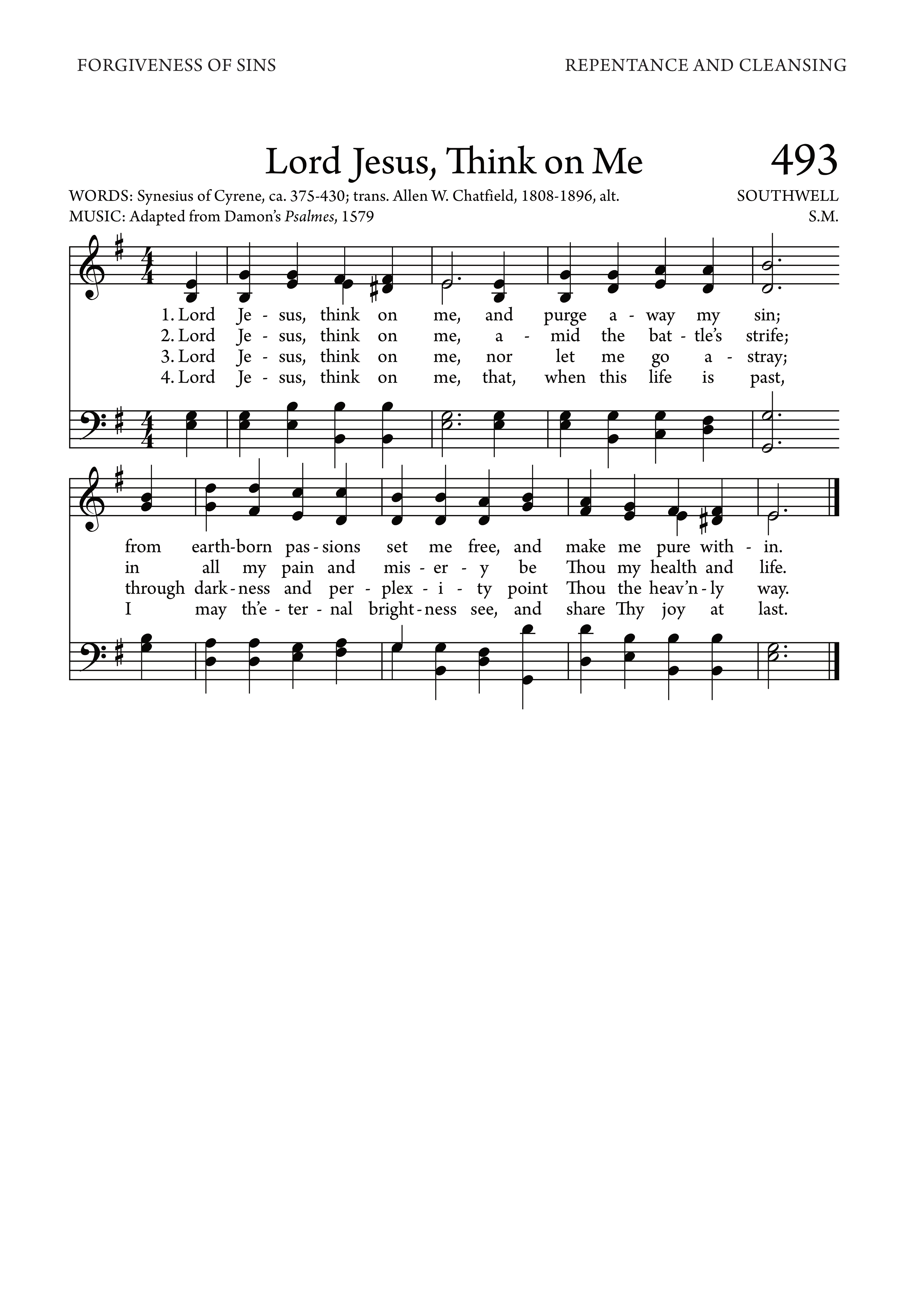

"Aye phorge, Lygia phorminx" is the opening Greek text of the first Ode composed by Synesius, Bishop of Ptolemais (c. 375–430). It stands as the initial piece among the ten sacred odes he wrote at various periods throughout his life.
The full Greek text was preserved and published in Christ and Paranikas's Anthologia Graeca Carminum Christianorum (1871). Although the original text did not enter common congregational use in its untranslated form, several nineteenth-century English scholars and poets produced verse translations:
-
"Come, sweet harp, resounding": Translated by Isaac Williams and published in his Thoughts in Past Years (1838). Hymnologists noted that this rendering was the only English translation from which a suitable cento could be compiled for congregational hymnal use.
-
"Come, sweet-voiced lyre, to the soft Teian measure": Translated by Alan Stevenson in his volume Ten Hymns of Synesius, Bp. of Ptolemais, Prolegomena and Notes (1865).
-
"Wake, wake, I pray thee, shrill-toned lyre!": Translated by Allen William Chatfield in his Songs and Hymns of the Earliest Greek Christian Poets (1876).
-
Boyd's Partial Translation: A partial translation was produced by Hugh Stuart Boyd and published in his Select Poems of Synesius and Gregory Nazianzen (1814).
Related Hymns
Hymns in the library connected to this dictionary topic.
Related Hymn Sheets
3 shown at a time — use the arrows to browse all 1 sheet.
Related Authors
Writers connected to this dictionary topic.
Keywords
Related terms for this dictionary entry.
Recent Dictionary Entries
Newly added terms from the Dictionary of Hymnology.
If you notice any mistake or have suggestions, please contact us on our contact page.